Why I Finally Put a Strength Training Machine in My Garage
I spent a decade telling everyone that all you need is a barbell, a rack, and a flat bench. I looked at anyone with a strength training machine in their garage like they were a tourist in my world. Then I hit 35, my elbows started screaming during heavy skull crushers, and my accessory work felt like a chore rather than a gains-builder. I realized that my purist attitude was actually holding back my hypertrophy.
Quick Takeaways
- Pulleys provide constant tension that barbells simply cannot match.
- Look for 11-gauge steel and aluminum pulleys over plastic ones.
- Understand your pulley ratio (2:1 vs 1:1) before you buy.
- Plate-loaded machines save money; selectorized stacks save time and sanity.
My Beef With the Classic Home Multi-Gym
We all remember those flimsy, all-in-one stations from the 90s. You’d try to do a lat pulldown and the whole frame would lift off the ground. The cables felt like they were coated in sandpaper, and the weight increments were usually about 20 pounds—too heavy for curls, too light for rows. That junk gave modern strength fitness machines a bad name for a long time.
Today, the market is different. We’ve seen a shift from 'jack of all trades, master of none' designs to heavy-duty, commercial-lite gear. When looking for home equipment for strength training, you have to filter out the gimmicks. A real muscle training machine shouldn't wobble when you load it to 200 pounds. If the frame is made of thin 2x2 tubing, walk away. You want a unit that mimics the feel of a commercial gym, using high-tensile cables and smooth guide rods.
The difference between a toy and legitimate strength workout equipment is the friction. If you feel a 'hitch' in the movement, the pulleys are cheap. I’ve wasted enough money on budget gear to know that if it feels light in the box, it’ll feel like trash under load.
What Actually Makes a Machine Worth the Floor Space?
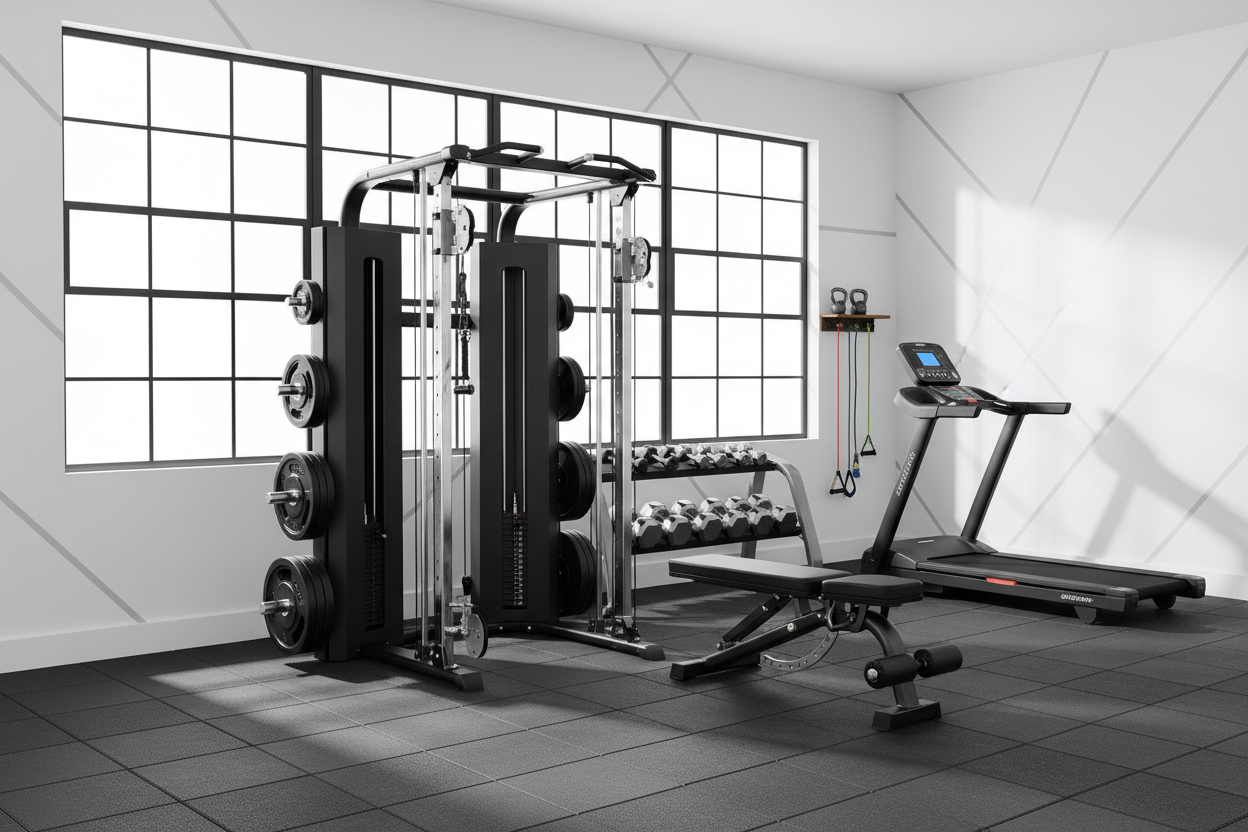
Garage space is more valuable than gold. If I’m giving up a 4x4 foot section of my floor, that machine better do more than one thing. This is why functional trainers have taken over. They offer a massive range of gym equipment strength in a relatively small footprint. You can hit chest flies, face pulls, and even low rows all in the same spot.
Check the height. Most standard garages have 8-foot ceilings, but many commercial power workout equipment units are taller. I once bought a lat tower that I had to bolt between my ceiling joists because I didn't measure. Don't be that guy. Look for 'short' versions of functional trainers if you're working in a basement or a low-clearance garage.
Build quality is non-negotiable. Look for 11-gauge steel. If the manufacturer doesn't list the steel gauge, it's probably thin stuff that will flex under heavy weight. You also want to check the weight capacity of the cables. A 2,000-lb aircraft-grade cable is the standard for anything that won't snap and hit you in the face mid-set.
The Cable Pulley Ratio Trap (and Why It Matters)
This is where most people get confused. If a machine has a 2:1 ratio, 100 pounds on the stack feels like 50 pounds in your hand. This is common in functional trainers because it allows for a longer cable travel—perfect for lunges or explosive movements. However, if you are a heavy lifter, a 200-lb stack with a 2:1 ratio maxes out at 100 effective pounds. That is not enough for a heavy chest press.
A 1:1 ratio is 'true' weight. If the stack says 100, you are pulling 100. These are harder to find in compact units because they require thicker cables and sturdier frames. I personally prefer a 2:1 for most accessory work because the movement is smoother and the increments are smaller, allowing for better progressive overload on small muscle groups.
Plate-Loaded vs. Selectorized Weight Stacks
This is the biggest price fork in the road. Plate-loaded strength building machines are significantly cheaper because you are providing the weight. If you already have a massive collection of iron, it makes sense to buy a plate-loaded cable tower and just slide your own 45s on there. It’s a great way to access high-end strength equipment without the four-figure price tag of a dedicated stack.
But man, selectorized stacks are convenient. Being able to move a pin and change weight in two seconds is a luxury that makes supersets actually possible. If you have the budget, go selectorized. If you want to save $600 and don't mind the extra 30 seconds of loading plates, go plate-loaded. Just make sure the weight horns are long enough to hold the poundage you actually plan to lift.
The 3 Exercises That Justify Buying One
I didn't buy a machine to replace my barbell; I bought it to do things the barbell sucks at. First: the face pull. Doing these with a band is okay, but doing them with a cable stack and high-quality strength training accessories like a heavy-duty rope is a total game-changer for shoulder health. The constant tension keeps the rear delts engaged through the whole range of motion.
Second: Triceps pushdowns. Doing these with a cable allows you to flare your wrists at the bottom, which you can't really do with a straight bar. It’s saved my elbows from the repetitive stress of heavy extensions. Third: Accessory work to finish off a strength training leg workout. After I’m done with heavy squats, I don't want to stabilize a heavy dumbbell for lunges or step-ups. Using a cable for single-leg work allows me to focus entirely on the quad or glute without my balance being the limiting factor.
How to Protect Your Concrete (and Your Joints)
Most garage floors are sloped for drainage. If you put a heavy weight stack on a slope, the guide rods won't stay vertical, and the plates will rub, causing friction and noise. Use shims to level the base of your machine. It sounds like a small detail, but it prevents the internal bushings from wearing out prematurely.
Also, don't just bolt it to the bare concrete. A heavy weight stack slamming down can crack your slab over time. Use high-density protective gym flooring to dampen the vibration and protect the foundation. It also makes the machine significantly quieter, which your family or neighbors will appreciate during those 6 AM sessions.
The Final Verdict: Do You Actually Need One?
If you are just starting out, buy a rack and a barbell. That is your foundation. But if you find yourself skipping your accessory work because you're tired of setting up bands or dumbbells, a dedicated machine is worth the investment. It makes the 'boring' part of training—the high-rep hypertrophy work—actually enjoyable. Just don't cheap out on the pulleys. If it feels like a toy, you'll treat it like one, and it'll eventually just become an expensive coat rack in your garage.
FAQ
Is a 200lb stack enough?
For a 2:1 ratio machine, it might feel light for rows or lat pulldowns. For a 1:1 ratio, 200lbs is plenty for almost everyone's accessory work. Always check the ratio before buying.
Can I leave a cable machine in an unheated garage?
Yes, but you need to maintain it. Wipe down the guide rods with a dry silicone spray once a month to prevent rust and keep the movement smooth. Avoid WD-40 as it attracts dust.
Are plate-loaded machines as smooth as stacks?
Generally, no. Selectorized stacks use high-end bushings and guide rods that are perfectly aligned. Plate-loaded units often have a bit more 'play' in the carriage, though high-end models come very close to that stack feel.