Why I Do the Cable Pull In Exercise Sitting on the Floor
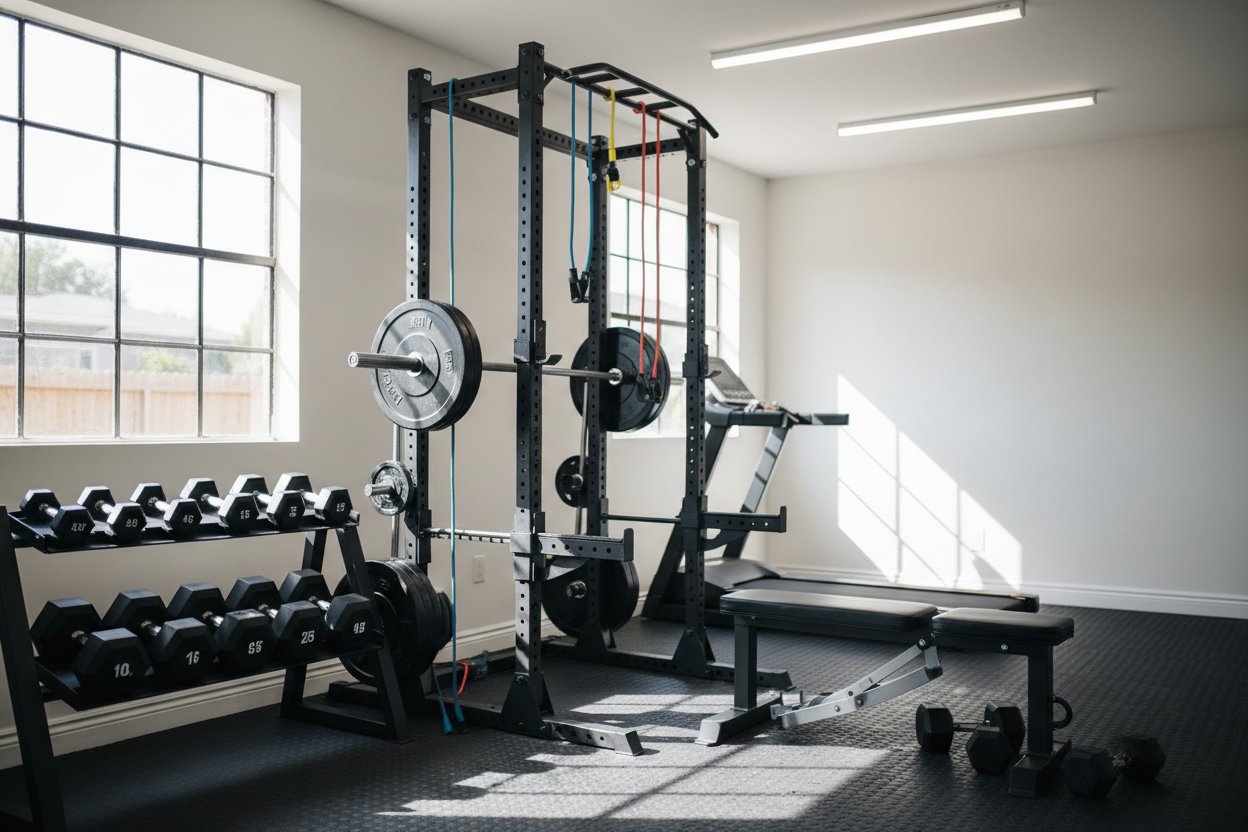
I remember the day I realized my expensive utility bench was actually my biggest enemy in the garage. I was trying to set up a heavy seated row at the base of my functional trainer, but the bench kept sliding across the stall mats every time I loaded more than 150 pounds. It was frustrating, clunky, and took up way too much room in a 12x12 space. I spent more time bracing the equipment than I did actually training my lats.
That is when I started doing the cable pull in exercise sitting directly on the floor. It felt weird for about thirty seconds, and then it felt like the most locked-in back pump I had ever experienced. If you are tired of wrestling with gear just to get a decent row in, it is time to ground yourself. Ditching the bench is not just a space-saver; it is a better way to build a thick back.
- Maximize Stretch: Sitting on the floor allows for a deeper eccentric phase without the bench frame getting in the way.
- Rock-Solid Stability: Your center of gravity is at its lowest possible point, meaning you are the anchor, not the bench.
- Space Saver: No need for a dedicated seated row station or dragging a 70-lb bench around.
- Better Leverage: It is significantly easier to maintain a neutral spine when your feet are braced at a natural floor-level angle.
The Problem With Most Home Gym Seated Rows
Most home gym owners try to mimic commercial gym setups by dragging a bench over to their low pulley. It sounds good in theory, but in practice, it is a logistical nightmare. Most utility benches are about 17 to 18 inches high. When you sit that high and pull from a low pulley, the line of pull is often angled too far downward. This shifts the load from your lats to your upper traps and neck, which is exactly where you do not want it.
Then there is the sliding issue. Unless you have a bolt-down bench or a $2,000 dedicated rowing station, that bench is going to move. I have tried using 45-lb plates to anchor my bench legs, but it never stays put once the weight stack gets heavy. You end up spending more energy trying not to slide forward than you do actually pulling the weight. It kills your mind-muscle connection and limits your top-end strength because you can not safely pull to failure.
How the Floor Cable Pull In Exercise Changes Your Leverage
When you drop your butt to the floor, the physics of the movement shift in your favor. You are now perfectly inline with the low pulley. This grounded hip position provides a level of stability that a bench simply cannot match. Because your entire lower body is connected to the ground, you can lean into the stretch without feeling like you are going to tip over or slide forward. I have found that I can move about 15% more weight on the floor than I can on a sliding bench.
The biomechanics here are superior for lat recruitment. By sitting flat, you can allow your arms to be fully pulled forward by the weight, opening up the scapula and creating an agonizingly good stretch in the lower lats. This is what the pros call stretch-mediated hypertrophy, and it is much easier to achieve when you are not worried about falling off a 12-inch wide bench pad. When you pull back, you are driving your heels into the ground and pulling through your elbows. It turns the cable pulls exercise into a true powerhouse movement for back thickness without the lower back fatigue usually associated with bent-over rows.
My Exact Low Pulley Floor Setup
Setting this up is simple, but do not just sit on the bare concrete. I learned that the hard way after a week of tailbone pain that felt like I had fallen off a skateboard. You need a dedicated Large Exercise Mat to provide enough cushion for your sit-bones while still being firm enough that you do not sink and lose power. A thin yoga mat will not cut it here; you want something with enough density to handle 200+ pounds of pressure without bottoming out.
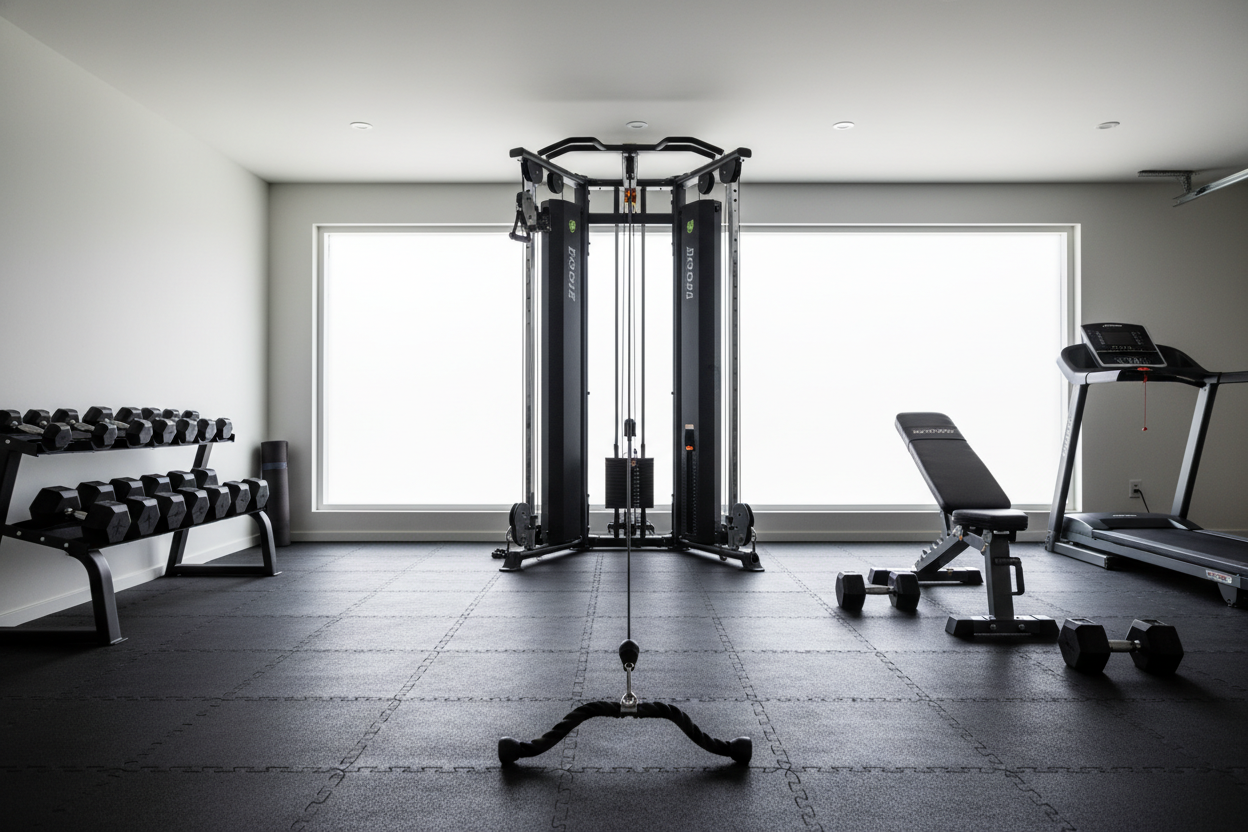
I prefer a high-density 6X8Ft Exercise Mat Yoga Mat Gym Flooring For Home Workout because it gives you enough surface area to keep your heels and hips on the same grippy material. I usually grab a close-grip V-bar or a pair of neutral-grip handles. Sit down, scoot back until there is tension on the cable even when your arms are fully extended, and keep a slight bend in your knees. The key is to keep your chest up—do not let the weight stack round your spine into a C-shape at the bottom of the rep.
Fixing the Foot Brace Issue
If you are pulling heavy—and you should be—your feet need a stop. If your cable machine does not have built-in footpegs at the bottom, do not sweat it. I use a spare barbell loaded with a couple of 45s pushed up against the rack uprights. It creates a perfect DIY footrest that will not move an inch. Alternatively, if your power rack has a low crossmember or a base tube, just plant your feet directly against that steel. It allows you to transfer 100% of your force into the pull rather than wasting it on friction.
Programming the Ultimate Garage Gym Back Day
I do not treat the floor pull-in as a secondary movement. I treat it as a primary builder. I usually program this after my main heavy lift (like a deadlift or weighted chin-up) for 3 to 4 sets of 10-12 reps. Focus on a 3-second negative to really feel those lats tearing. If you want to see how this fits into a full routine, check out our Cable Pulls Exercise The Complete Guide For Home Gyms.
To finish the workout, I like to move from a heavy horizontal pull to a high-volume isolation move. Pairing the floor row with a Pullover Cable Exercise The Missing Link In Your Back Day is a brutal combination. The row hits the thickness, and the pullover fries the remaining fibers with a vertical stretch. You will walk out of the garage feeling like you have grown wings. It is the most efficient way to get a commercial-gym-quality back workout in a space the size of a parking spot.
FAQ
Is sitting on the floor bad for my lower back?
Actually, it is often safer. Because you are grounded, it is easier to keep your pelvis neutral. Just avoid ego-lifting where you start swinging your torso back and forth like a pendulum. Keep the movement in the lats, not the lumbar.
What if my cable machine pulley is too high?
This only works if your pulley can be set within 6-12 inches of the floor. If your lowest setting is at waist height, the angle will be too steep, and you will be better off doing standing rows or using a bench.
What handles should I use?
A close-grip V-handle is the standard for a reason—it allows for a massive stretch. However, if you have shoulder issues, try using two individual D-handles so your wrists can rotate naturally as you pull.