Cable Pulls Exercise: The Complete Guide for Home Gyms
Are you tired of hitting a plateau with just dumbbells and barbells? One of the biggest things people miss when transitioning from a commercial facility to a garage setup is the constant, smooth tension of a cable machine. Incorporating the cable pulls exercise into your routine can completely change the way you train, offering unmatched versatility without taking up your entire floor plan.
Whether you are looking to isolate stubborn muscle groups, protect your joints, or add dynamic, functional movements to your regimen, this guide will help you build the ultimate setup. Let us dive into the gear, the space requirements, and the training strategies you need to succeed.
Key Takeaways
- Cable pulls provide constant tension throughout the entire range of motion, maximizing muscle hypertrophy and joint health.
- You do not need a massive commercial footprint; a simple wall-mounted pulley can unlock a highly effective cable workout at home.
- Single cable exercises are incredible for unilateral training, helping to correct muscle imbalances and engage the core.
- Investing in a few high-quality attachments (ropes, D-handles, straight bars) dramatically increases your exercise library without breaking the bank.
Why You Need a Cable Workout at Home
The Power of Constant Tension
Unlike free weights where gravity dictates the resistance curve, cables keep your muscles engaged from start to finish. This makes the cable pulls exercise incredibly efficient for building a strong mind-muscle connection. When you are pulling a cable, there is no resting point at the top or bottom of the movement, which forces the target muscles—especially the lats, rhomboids, and rear deltoids—to work harder for longer.
Unilateral Focus with Single Cable Exercises
You do not necessarily need a massive, expensive dual-stack functional trainer to get results. Focusing on single cable exercises allows you to train one side of the body at a time. This unilateral focus forces your core to engage for stability and ensures your dominant side is not overcompensating during heavy pulls.
Space Planning: Fitting Cables into Your Setup
Wall-Mounted vs. Rack-Attached Pulleys
If you are working with a tight basement or a single-car garage, floor space is your most valuable asset. Rack-attached pulley systems are incredibly space-efficient, bolting directly to your existing power rack. If you want a dedicated station, a wall-mounted single pulley system typically only requires a 2-foot by 2-foot footprint, leaving plenty of room for your bench and barbell work.
Executing a Single Cable Workout
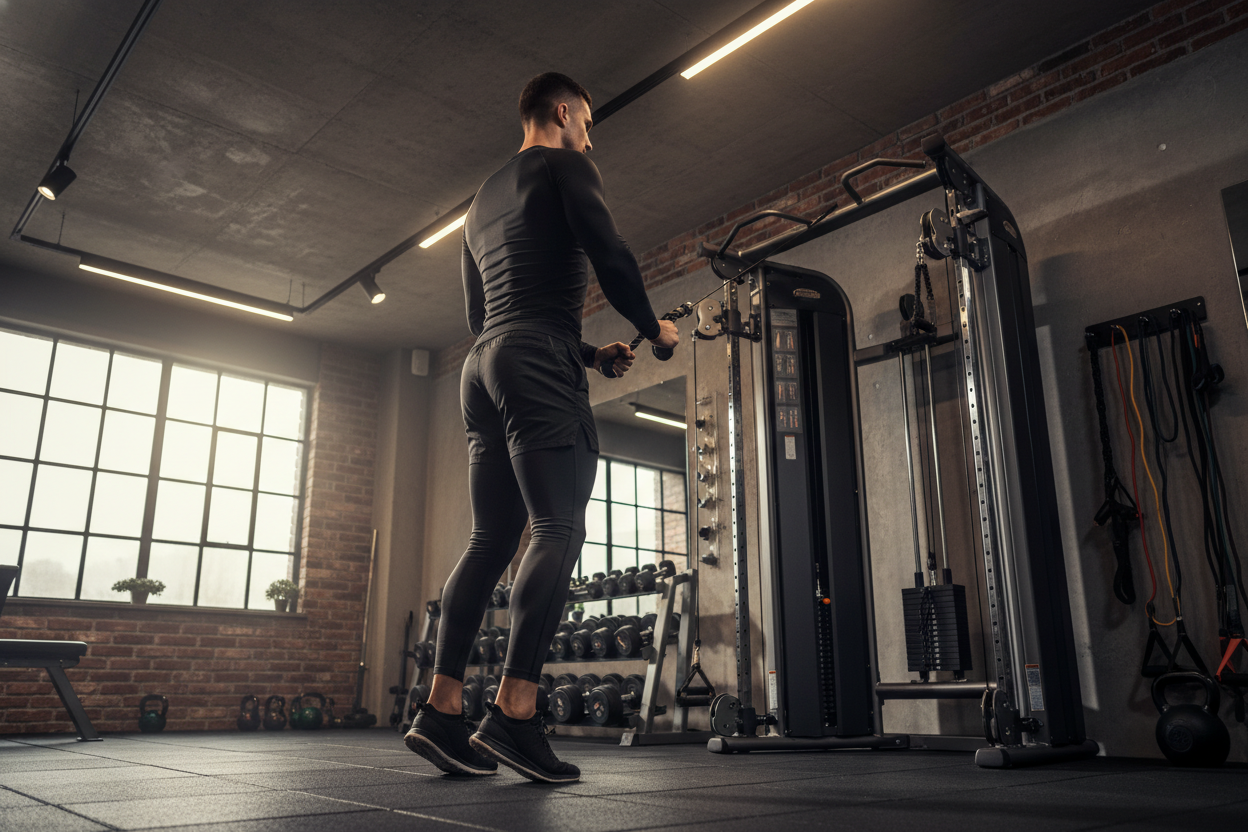
A full single cable workout is entirely possible with minimal gear. By easily adjusting the pulley height, you can seamlessly transition from low rows to high-pulley face pulls and triceps pushdowns. Just ensure you have about 4 to 5 feet of clearance in front of the machine to allow for a full stretch and contraction without bumping into other equipment.
From Our Gym: Honest Take
When we first installed a plate-loaded single cable column in our test garage gym, I was skeptical about how smooth it would feel compared to the commercial selectorized stacks I was used to. Honestly, after greasing the dual guide rods with a little silicone spray, the glide was buttery smooth. During heavy seated cable pulls, the 11-gauge steel frame did not budge an inch.
However, there is one minor caveat: at 6'2, I found that performing standing overhead triceps extensions required me to step out a bit further than expected to keep the weight plates from bottoming out on the base. Always double-check the maximum cable travel length on the product spec sheet before buying if you are on the taller side!
Frequently Asked Questions
What muscles do cable pulls work?
Depending on the angle and the attachment used, cable pulls primarily target the latissimus dorsi, rhomboids, trapezius, and rear deltoids. They also heavily engage the biceps, forearms, and core as secondary movers to stabilize your posture.
Can I build muscle with just a single cable machine?
Absolutely. A single cable machine provides enough resistance and versatility to train your entire body. By manipulating angles and utilizing progressive overload, you can stimulate significant muscle growth without needing a dozen different machines.
Are plate-loaded cable machines as good as weight stacks?
Plate-loaded systems are fantastic for home gyms because they are much more budget-friendly and utilize the weight plates you already own. While selectorized weight stacks offer faster weight changes, a high-quality plate-loaded pulley will provide the exact same muscle-building tension.