Why I Ditched Spreadsheets for Simple Strength Building Workout Plans
I remember sitting in my garage at 5:30 AM, breath visible in the freezing air, squinting at a Google Sheet that had more tabs than a Chrome window on a Friday afternoon. I was trying to figure out if today was a '78% of 1RM for 4 sets of 6' day or an 'RPE 8 accessory block' day. I spent fifteen minutes doing mental math and zero minutes actually moving iron. That was the exact moment I realized my strength building workout plans were actually preventing me from getting strong.
Quick Takeaways
- Complexity is the enemy of consistency; if you can't explain your workout in two sentences, it's too complicated.
- The best programs are designed to be successful even on your worst, most sleep-deprived days.
- Focus on four primary movement patterns: squat, hinge, push, and pull.
- Progress comes from adding reps or weight, not from 'confusing' your muscles with new exercises every week.
The Spreadsheet Trap We All Fall Into
We've all been there. You see a program used by a world-class powerlifter and you think, 'If I just follow these exact percentages, I'll get those exact results.' You spend hours setting up your macros, your RPE charts, and your 12-week peaking block. But here is the cold, hard truth: the best strength training program for an elite athlete with a coach and a massage therapist is usually a disaster for a guy training in a garage between work calls and family dinners.
We get obsessed with 'optimal' programming. We think if we aren't micro-managing every single percentage point, we're leaving gains on the table. In reality, complexity is often just a mask for a lack of effort. I've seen guys build world-class physiques with nothing but a rusty barbell and a simple 5x5 template. Meanwhile, the guys with the most colorful spreadsheets are often the ones who haven't added ten pounds to their squat in a year. If you're spending more time adjusting cells in Excel than you are adding plates to the bar, you're playing at being a scientist instead of being a lifter.
The spreadsheet trap makes you feel productive without you having to actually sweat. It gives you the illusion of progress because you're 'planning.' But a plan is only as good as its execution. When the percentages are so rigid that you feel like a failure for missing one rep on a Tuesday, the program has failed you, not the other way around. Strip away the tabs and the formulas. Get back to the basic physics of moving a heavy object from point A to point B.
Why Your Routine Needs to Survive the 'Bad Day' Test
Consistency is the only variable that actually matters over a ten-year horizon. The best weight lifting programs aren't the ones you execute perfectly when you've had ten hours of sleep and a perfect pre-workout meal. They are the ones that are simple enough to survive your absolute worst days. We're talking about the days when the boss yelled at you, the kids are sick, and you've had four hours of sleep. If your program requires you to be 100% focused just to understand the warm-up, you're going to skip it when life gets heavy.
A 'Bad Day' program is built on a simple template. It allows for auto-regulation without the fancy terminology. If you’re exhausted, you hit your minimum effective dose—maybe just your main lift for three sets—and you go inside. If you’re feeling like a god, you push the AMRAP set or add an extra accessory. That flexibility is what keeps you under the bar year after year. When your program is too complex, a bad day feels like a 'broken' program. When your program is simple, a bad day is just a low-volume day.
I've found that the more I simplified my training, the more I actually looked forward to it. There's a psychological weight to complex programming. When you know you have to go out there and fight through a 90-minute session of 'optimal' volume, it's easy to find excuses. But when the plan is 'Squat, Bench, and Row,' it's much harder to talk yourself out of it. You can always manage three big lifts. It’s the 14-tab spreadsheet that kills the motivation.
The Non-Negotiables of a Real Weight Lifting Training Program
Stop overcomplicating the movement selection. You don't need twelve different variations of a lateral raise to build shoulders. You need a squat, a hinge, a push, and a pull. Everything else is just seasoning. When you are choosing the best strength and weight training equipment, you should focus almost exclusively on the tools that facilitate these big four. You need a rack made of 11-gauge steel that won’t wobble when you re-rack a heavy set of squats, and you need a barbell with knurling that actually bites into your palms.
A real weight lifting training program is built around the barbell row, the overhead press, the deadlift, and the squat. These movements recruit the most muscle mass and allow for the greatest amount of mechanical tension. If you have 45 minutes to train, spending 15 of them on a cable crossover machine is a waste of your time. Focus on the 'Big Rocks' first. If you have time left over for bicep curls, great. But don't let the fluff crowd out the foundation.
I see people all the time buying specialized machines before they even own a decent set of iron plates. Your equipment should reflect your goals. If your goal is raw strength, your gym should look like a dungeon, not a showroom. You need a solid flat bench, a power rack with safety pins that you actually trust, and enough weight to make you nervous. Strip the fluff. If an exercise doesn't directly contribute to your ability to move more total weight next month, it shouldn't be the centerpiece of your routine.
How to Progress Without a Math Degree
You don't need fancy wave loading or block periodization to get strong. Linear progression—adding weight every single session—works until it doesn't. And even when that stops, simple double progression can take you incredibly far. I often tell people that the best beginner weight lifting program is simply doing one more rep than you did last week. It’s not flashy, but it’s the most effective way to ensure you're actually getting stronger.
Here is how double progression works: pick a rep range, say 5 to 8 reps. You start with a weight you can do for 5 reps. You stay at that weight until you can hit 8 reps with clean form. Once you hit 8, you add five pounds and go back to 5 reps. It’s boring. It’s repetitive. It’s also the best lifting program for anyone who wants to see their numbers actually move. We love to talk about 'muscle confusion,' but the only thing you’re confusing is your own progress by switching routines every three weeks.
The human body adapts to stress. If you provide a slightly greater stress this week than you did last week, you will get stronger. You don't need a calculator to figure that out. You just need a logbook and the discipline to stay the course. Most people quit a program right when the 'newbie gains' slow down, thinking they need something more complex. In reality, that’s exactly when they need to double down on the basics and embrace the grind of adding one rep at a time.
Gear That Supports Simple, Heavy Lifting
You don't need a commercial gym's worth of machines to run the best weightlifting program. You need a solid foundation that allows you to fail safely. That starts with a rack and a bench that doesn't feel like it's going to collapse under a heavy load. I’ve gone through cheap benches that creaked and wobbled; it’s a distraction you don’t need when you have 225 pounds hovering over your face. The Gxmmat Adjustable Weight Bench is a solid example of gear that just works—it’s stable, has a high weight capacity, and doesn't have that annoying gap between the pads that ruins your back position.
Once you have the bench and the rack, you only need a few basic strength training accessories to round things out. A decent pair of spring or muscle collars is non-negotiable—nobody wants plates sliding off during a heavy set of overhead presses. A lifting belt and maybe some chalk are the only other 'extras' you really need. Everything else is just noise.
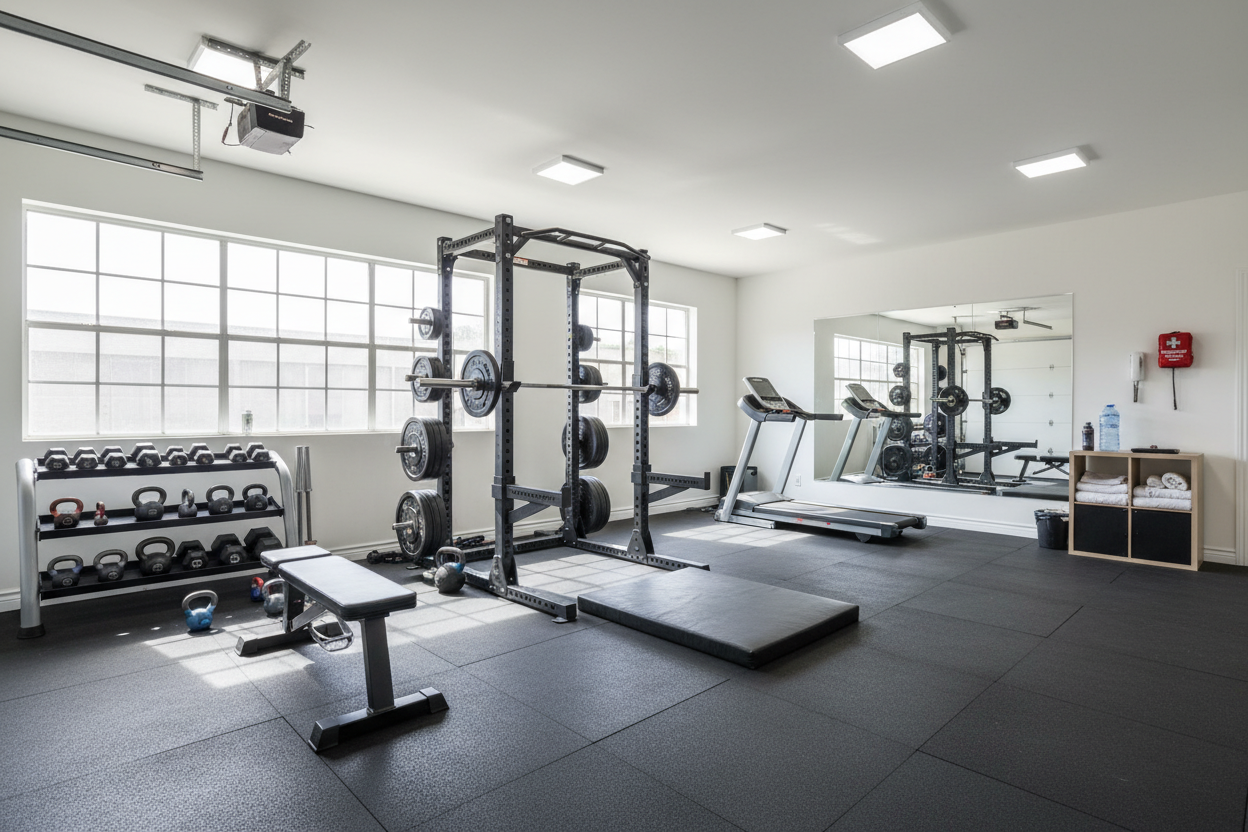
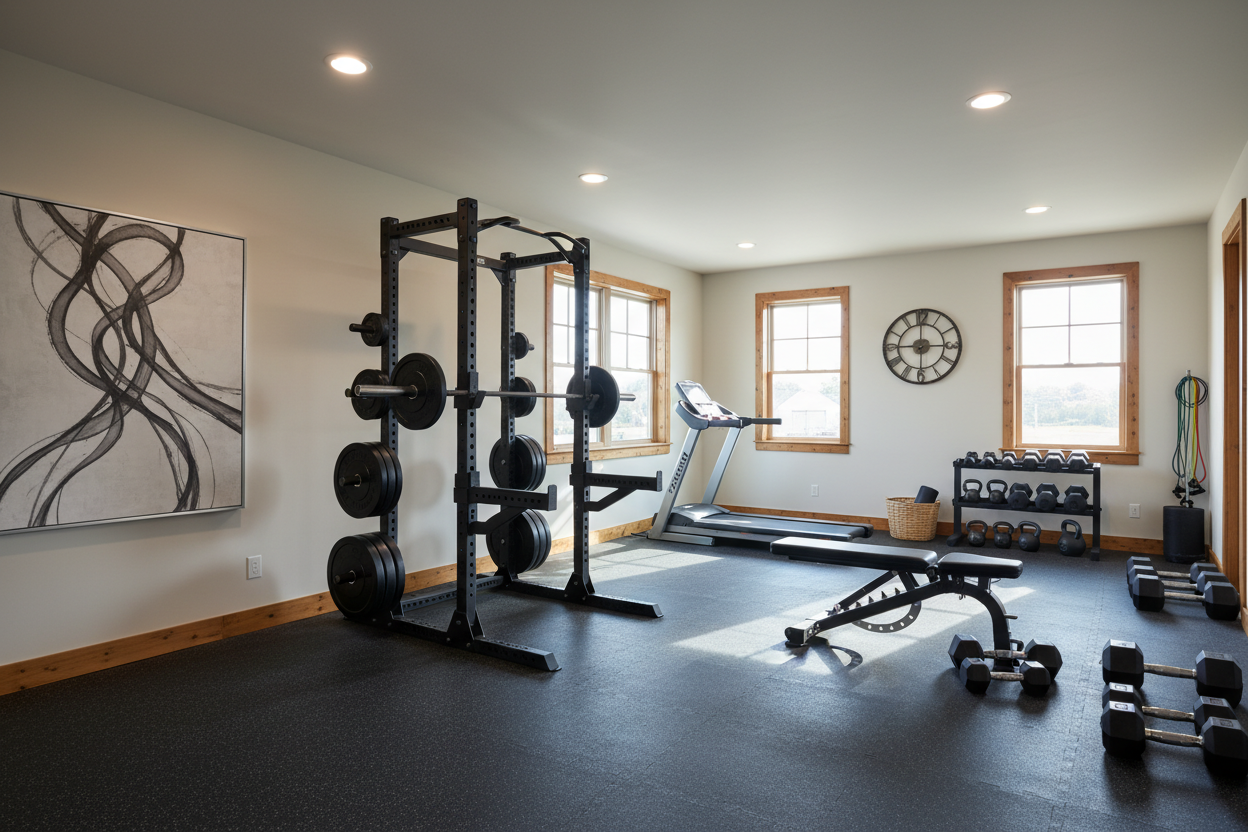
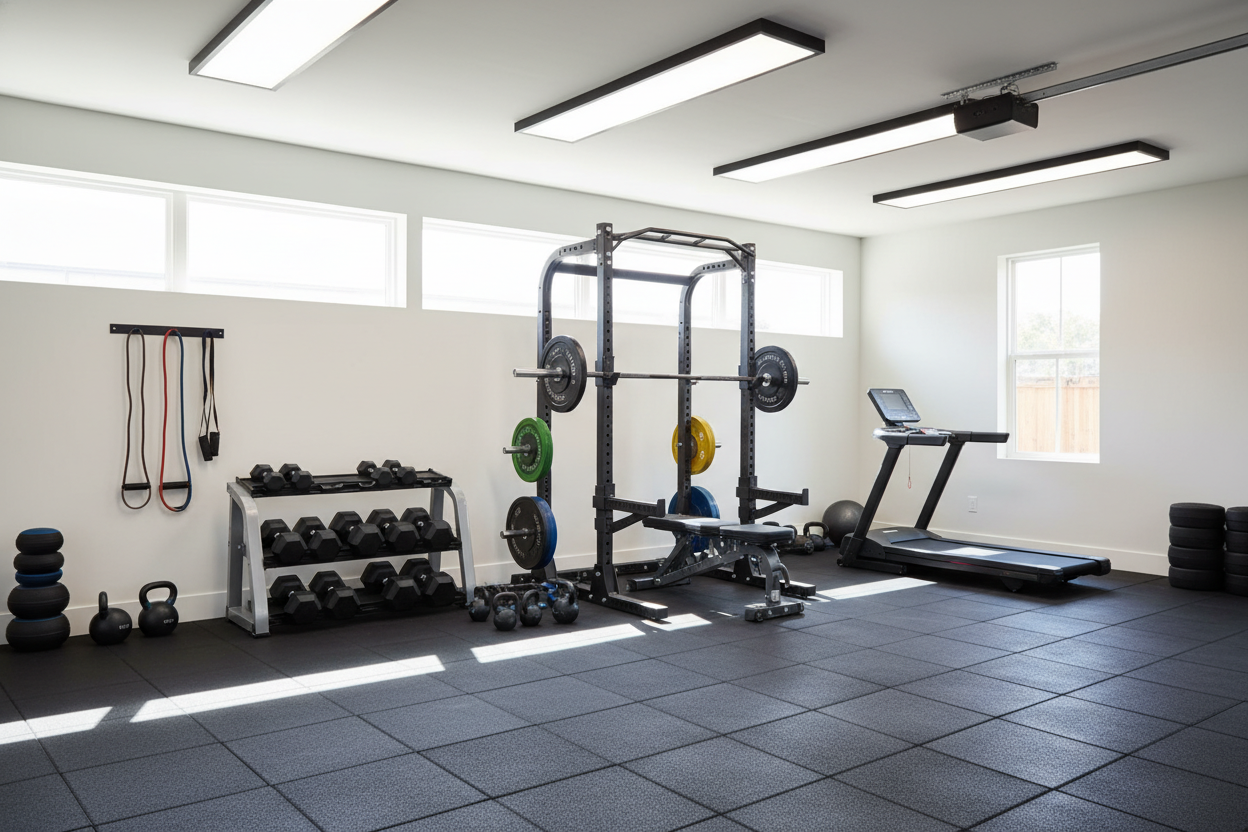
When you buy gear, look for durability over features. I'd rather have a bench with a 1,000-lb capacity and zero 'folding' features than a fancy adjustable one that feels like a lawn chair. Simple gear supports simple lifting. When your equipment is reliable, you stop worrying about the tools and start focusing on the work. My own garage gym is just a rack, a bar, a pile of plates, and a rock-solid bench. It’s not pretty, but it’s built more muscle than any fancy health club I’ve ever joined.
My Honest Mistake
A few years back, I got it into my head that I needed to run a high-frequency Bulgarian-style squat program. I was squatting six days a week, often twice a day. I had a spreadsheet that calculated my daily minimums and my 'emotional maxes.' On paper, I was going to be elite. In reality, after six weeks, my elbows were screaming from holding the bar, my sleep was non-existent, and I actually ended up weaker because my body couldn't recover from the complexity. I went back to a simple three-day-a-week full-body split, and my total jumped 50 pounds in three months. Simplicity isn't just for beginners; it's a tool for anyone who has a life outside the gym.
FAQ
How many days a week should I lift?
For 90% of people, 3 to 4 days is the sweet spot. It allows for maximum intensity during the session and enough recovery time between sessions to actually grow. More isn't always better; better is better.
Do I need to change my exercises every month?
No. In fact, that's a great way to stay weak. Pick the big movements and stick with them for months or years. You want to get so good at the movement pattern that the only thing left to change is the amount of weight on the bar.
Can I build muscle with just a barbell and a bench?
Absolutely. The barbell is the king of hypertrophy because it allows for the most weight to be moved. If you can't build a massive chest with a barbell bench press and a solid bench, more machines aren't going to fix the problem.