The Best Gym Program for Lean Muscle Doesn't Give You a Rep Goal
I’ve been there—staring at a spreadsheet in a cold garage at 6:00 AM, trying to figure out how I’m supposed to hit a heavy triple when I haven’t eaten a carb in twelve hours. You feel flat, your joints ache, and that 'perfect' PDF you downloaded is starting to look like a suicide pact. Finding the best gym program for lean muscle isn't about finding the most grueling list of exercises; it’s about learning when to shut it down before your central nervous system decides to quit on you.
Quick Takeaways
- Rigid rep goals are the enemy of recovery when you're in a caloric deficit.
- Autoregulation (RPE) allows you to train hard on good days and back off on bad ones.
- Bar speed is a more honest metric than your ego.
- A 3-day baseline is often superior to a 6-day 'bro split' for retaining mass.
Why Rigid Spreadsheets Turn Into Garbage During a Cut
We’ve all been told that consistency is king. While that’s true for showing up, it’s a lie when it refers to your lifting numbers during a fat-loss phase. When you're eating below maintenance, your recovery window shrinks. If you force a rigid 5x5 or a high-volume 4x10 just because the paper says so, you aren't building muscle; you're digging a recovery hole you can't climb out of.
I’ve seen guys try to maintain their off-season volume while cutting for a show, and it always ends the same way: nagging shoulder pain, 'brain fog' during sets, and eventually, a total plateau. The Best Workout Program for Building Muscle Ignores Your Spreadsheet when your biology changes. In a deficit, your body is looking for excuses to shed expensive muscle tissue to save energy. If you crush yourself with junk volume, you’re giving it exactly what it wants.
The goal of the best workout plan for lean muscle is to provide enough stimulus to keep the muscle you have, without triggering a cortisol spike that leaves you looking 'soft' despite the weight loss. You need to be a sniper, not a machine gunner.
The Autoregulation Trick: Earning Your Sets
Enter the concept of Autoregulation. This is the 'secret sauce' for the best workout program for lean muscle. Instead of saying 'I must do 4 sets of 8,' you use RPE (Rate of Perceived Exertion) or bar speed. If you’re moving a weight and the bar speed drops significantly—what we call 'velocity loss'—you stop. You don't grind out a 'grunter' rep that ruins your form and your spine.
I use a 1-10 scale. If a set feels like a 7 or 8 (meaning you had 2-3 reps left in the tank), you earn another set. If that next set feels like a 9.5 and the bar is shaking, you’re done for that movement. This ensures that every rep you perform is high quality. You can find foundational movement patterns to apply this to in our workout hub, but the logic remains: the quality of the contraction beats the quantity of the sets every single time.
Using bar speed as a guide keeps you honest. On days when your sleep was 10/10 and your stress is low, you might end up doing 5 sets. On days when work was a nightmare and you're running on black coffee, you might only do 2. Both days are 'perfect' because they matched your body's actual capacity that morning.
Setting Up a Flexible Baseline Week
The best workout schedule for lean muscle isn't a 6-day-a-week marathon. For most garage gym lifters, a 3-day or 4-day split is the sweet spot. This allows for 48 to 72 hours of recovery between sessions, which is vital when calories are low. You set a 'Minimum Effective Dose'—usually two heavy compound movements and one or two accessories.
If you finish your primary lifts and still feel like a superhero, you can add 'bonus' volume. If not, you pack it up. Contrast this with the typical high-frequency approach. I’ve found that The Best Lean Muscle Mass Workout Plan Only Takes 3 Days when you prioritize intensity over a crowded calendar. It’s better to have three legendary sessions than six mediocre ones where you’re just going through the motions.
My preferred best workout routines for lean muscle follow a Full Body or Upper/Lower split. This keeps frequency high enough to signal muscle protein synthesis but keeps the total daily workload manageable. You aren't trying to win a marathon; you're trying to look like you lift while getting lean.
Don't Ignore Your Between-Set Recovery
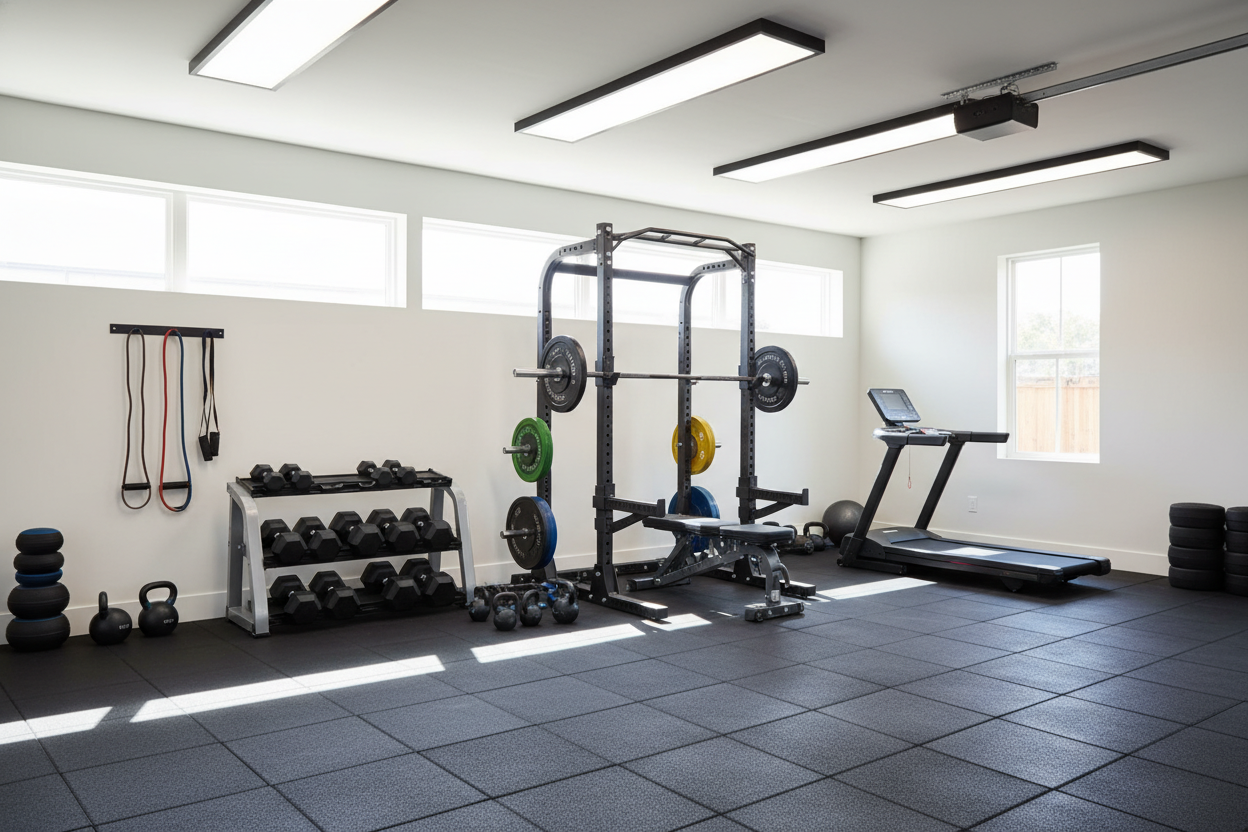
Autoregulation requires you to actually pay attention to your body. You can't do that if you're pacing around a concrete floor or checking your emails between sets. You need a dedicated space to reset your nervous system. I tell everyone to get off the cold concrete and onto something that doesn't sap your body heat or kill your joints.
A solid 6X8Ft Exercise Mat is a must for this. Between sets of heavy squats or presses, I’m not just sitting there; I’m doing active recovery or light mobility work on the mat. It keeps the blood flowing without adding fatigue. If your 'rest' is uncomfortable, your next set will suffer. Treat your rest periods as part of the training, not an intermission.
How to Actually Run This Setup Without Cheating Yourself
To run the best lean muscle workout plan, start your session with a goal, but be ready to pivot. Warm up slowly. Your last warm-up set should tell you everything you need to know. If 225 lbs feels like a house, today is a 'Minimum' day. If it flies up like a PVC pipe, today is a 'Push' day.
Here is the step-by-step: Pick your main lift (e.g., Bench Press). Aim for a weight you can do for 6-8 reps at an RPE 8. Perform your first set. If the bar speed was fast and your form was crisp, rest 3 minutes and repeat. If your second set feels significantly slower (RPE 9), stop there. Move to your next exercise. By cutting the 'junk' sets at the end of a workout, you preserve your energy for the next session. This is how you stay strong while the scale goes down.
Personal Experience: My Ego vs. My Elbows
A few years ago, I was deep into a cut, trying to maintain a 315-lb bench press for 5x5. I was stubborn. By the third set, I was grinding, arching my back like a cat, and using every ounce of momentum. I 'hit' the reps, but my elbows were inflamed for a month. I had to stop pressing entirely for three weeks, and I lost more muscle during that layoff than I would have by just doing 2 high-quality sets. Now, I live by the 'stop at the slow rep' rule. I’m leaner, my joints don't click, and my strength has actually stayed within 5% of my all-time bests.
FAQ
Is autoregulation better for beginners?
It’s actually harder for beginners because they don’t know what a 'hard' set really feels like. If you have less than a year of lifting, stick to a basic linear program. Once you know your limits, switch to RPE.
Do I need a fancy app to track bar speed?
No. You can use your phone to record a set from the side. If you see a noticeable 'hitch' or slowdown on the third or fourth rep, you’ve reached your threshold for that day.
Can I do cardio on this program?
Yes, but keep it low impact. Walking is your best friend. High-intensity intervals (HIIT) on top of an autoregulated lifting plan can often lead to overtraining when calories are restricted.