Why I Ditched My Multi-Station Setup for Real Home Gym Weights
I still remember the day the freight truck dropped off my first 'all-in-one' weight gym. It was a 600-pound beast with more pulleys than a Victorian clock. I thought I was being smart, saving space by getting every exercise in a single footprint. I was wrong. Within three months, that massive machine became the world's most expensive clothes rack because it actually made me hate training. I realized that if I wanted real results, I needed to get back to basics with high-quality home gym weights.
- Multi-station machines have 'dead spots' in the resistance curve that ruin your pump.
- Free weights force you to use stabilizer muscles that machines completely ignore.
- Stand-alone iron retains its resale value; cheap cable machines are almost impossible to sell.
- A modular setup (rack, bench, bar) actually takes up less usable space than a bulky multi-station.
The 'All-in-One' Trap: Why I Regret My First Big Purchase
I fell for the marketing. You've seen the ads—a guy with 20-inch arms doing fifteen different exercises on one chrome-plated machine. It looks efficient. But the reality of owning a selectorized weight gym in a garage is a nightmare. First, there is the assembly. It took me twelve hours, three wrenches, and several existential crises to put that thing together. By the time I was done, I had a machine that felt 'crunchy' every time I pulled the handles.
The biggest issue was the weight stack. Most of these home units come with a 150-lb or 200-lb stack. On paper, that sounds like enough for a high-rep day. But because of the pulley ratios—often 2:1 or even 4:1—that 200-lb stack actually feels like 100 lbs or 50 lbs of actual resistance. I was maxing out the lat pulldown and row stations within weeks. There is nothing more demoralizing than hitting the bottom of the stack and realizing you have nowhere left to go.
Then there is the range of motion. I am 6'1", and these machines are built for the 'average' person. My bench press felt like a half-rep because the handles hit the frame before I could get a full stretch. My squats on the 'built-in' leg press felt like a weird, vertical torture device. It was a jack-of-all-trades and a master of absolutely none. I wasn't getting stronger; I was just getting frustrated with the mechanical friction.
The Hidden Flaws of a Home Gym With Weights Included
When you buy a home gym with weights included, you are usually getting the lowest common denominator of equipment. The manufacturers know that the 'all-in-one' buyer is looking for convenience, not performance. The weights themselves are often 'cement-filled plastic' or low-grade alloy that isn't even accurately calibrated. I once weighed the plates on my old stack and found a 10-pound plate that actually weighed 8.4 pounds. That is a massive discrepancy when you are trying to track progress.
The cables are another failure point. On cheap machines, the nylon coating starts to fray within six months. Once that happens, the cable starts dragging against the plastic pulleys, creating a jerky, inconsistent resistance. It ruins your mind-muscle connection. If you are hell-bent on having some cable work in your life, you should learn how to build a safe home gym with weight machines cheap by looking for commercial-grade single-function units on the used market rather than buying a flimsy all-in-one.
Real iron doesn't have these problems. A 45-pound plate is a 45-pound plate. Gravity doesn't have 'friction' or 'cable drag.' When you move 200 pounds on a barbell, you are moving 200 pounds of cold, hard reality. That is how you build density and actual strength. Machines are fine for accessories, but they are a terrible foundation for a serious home setup.
Trading Cables for Iron: Building a Custom Weight Home Gym Set
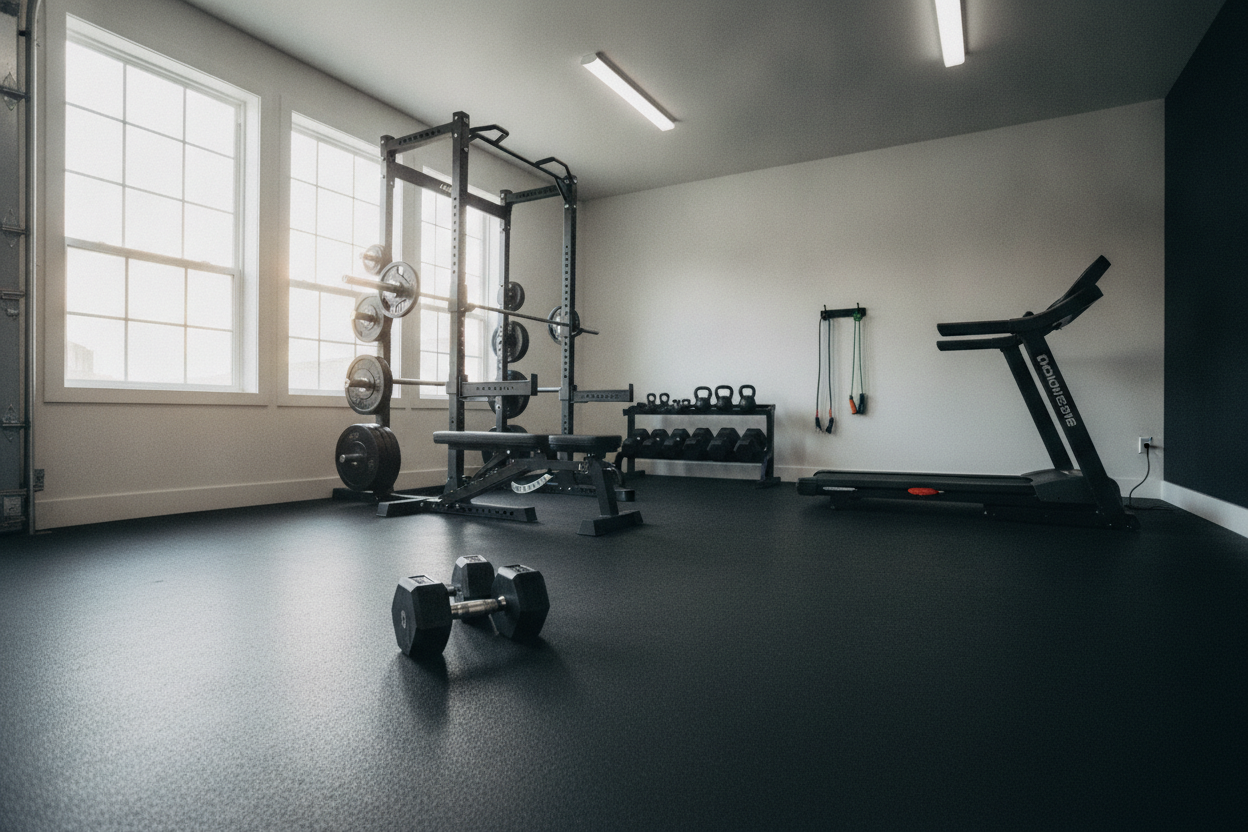
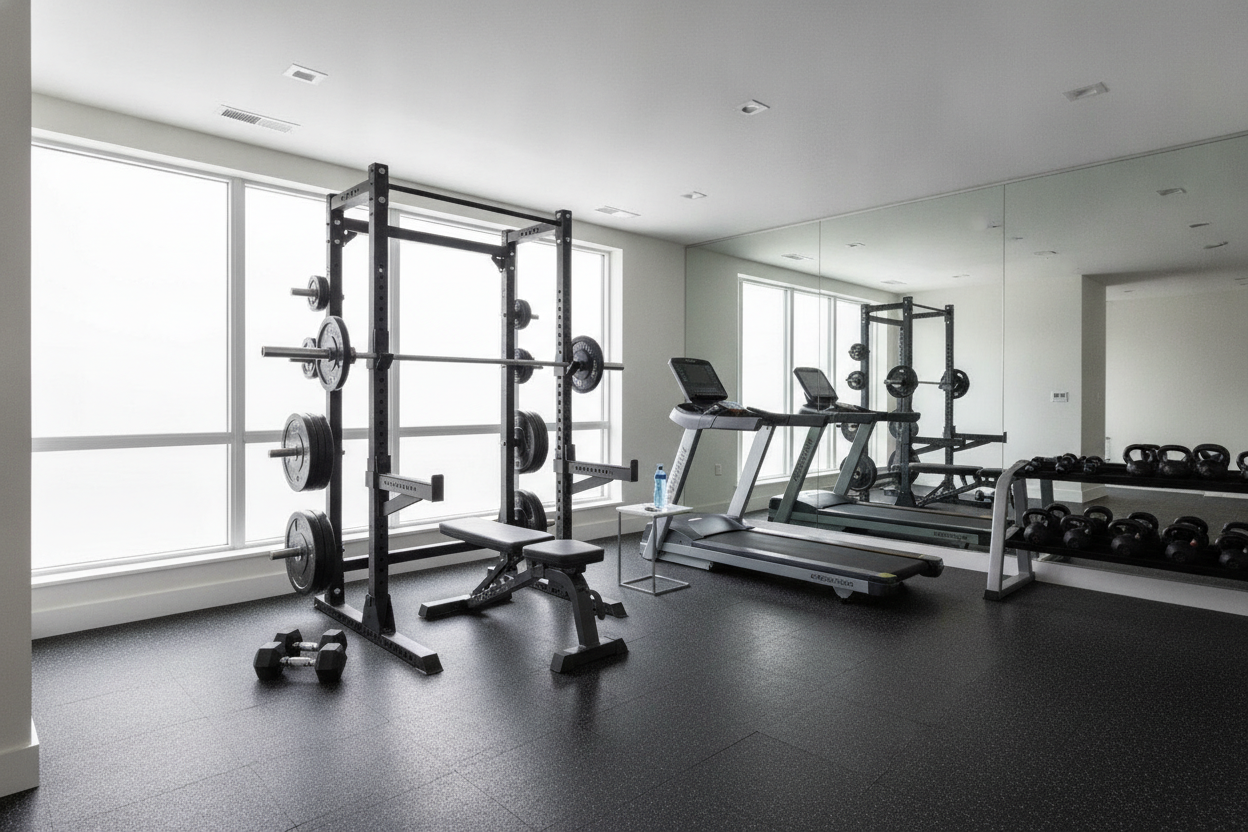
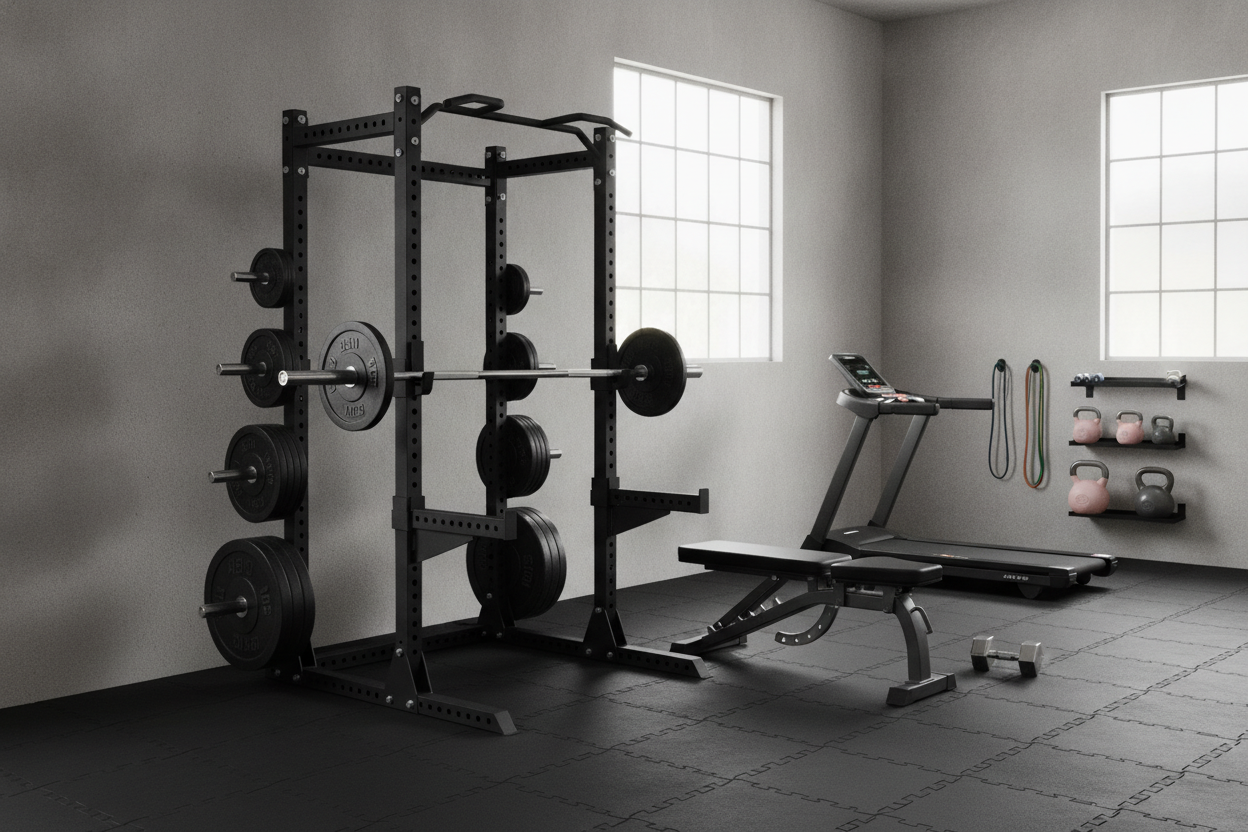
I finally snapped. I sold the multi-station for a third of what I paid for it and started building a real weight home gym set. I started with a power rack, a decent barbell, and 300 pounds of iron plates. The difference in my training was immediate. Suddenly, I wasn't fighting the machine; I was fighting the weight. My joints felt better because I could move in a natural path, rather than the fixed track of a selectorized arm.
The secret to a great setup is modularity. Instead of one machine that does ten things poorly, buy three pieces that do everything perfectly. A solid power rack is your centerpiece. Pair it with a versatile home gym set with weights that includes a 7-foot Olympic bar. If you are just starting, my ultimate home gym weight equipment guide breaks down the specific bar knurling and plate types you should look for to avoid buying junk twice.
I also realized that free weights are much easier to upgrade. If you get stronger, you just buy two more 45-lb plates. You don't have to buy a whole new machine. I opted for machined iron plates because I love the sound they make, but bumper plates are great if you plan on doing any Olympic lifting or if you have neighbors who complain about the 'clink.' Building piece-by-piece allows you to invest in quality where it matters—like a bar that won't bend under a 400-pound load.
Don't Wreck Your Foundation (Fixing the Floor First)
One thing the multi-station owners don't tell you is how much more abuse your floor takes when you switch to real home gym equipment weights. A machine distributes its weight across a large, static frame. When you start deadlifting or even just racking a heavy squat, you are putting a lot of localized pressure on your subfloor. If you are lifting on bare concrete, you are going to see cracks sooner or later.
Don't trust those cheap foam puzzle tiles from the big-box stores. They are fine for yoga, but they compress instantly under a heavy rack or a dropped dumbbell. You need high-density rubber. I recommend at least 3/4-inch stall mats or a dedicated gym flooring for home workout solution that can absorb the impact. It protects your equipment, your floor, and your ears. Plus, it makes the whole space feel like a real gym instead of a garage with some stuff in it.
My Blueprint for a Brutally Effective Small Home Weight Set
You don't need a massive footprint to get elite-level results. If you are working in a tight space, a small home weight set centered around adjustable dumbbells is actually superior to any cable machine. I use a pair of adjustable dumbbells that go up to 80 pounds each. Combined with a folding bench, I can do almost everything I need in a 6x8 foot area. It is cleaner, more effective, and much easier to move if I ever change houses.
If you are on a budget, keep an eye on home gym equipment deals for 'open box' items. You can often find high-end adjustable benches or plate sets for 30% off just because the cardboard box got dinged in shipping. The goal is to buy the heaviest, most durable stuff you can afford. Iron doesn't expire. A well-made barbell will outlive you. That multi-station machine? It'll be in a landfill in five years. Build for the long haul.
Is a multi-station machine okay for beginners?
It can be, but you will outgrow it fast. It is better to start with a set of dumbbells and a bench. You will learn better form and won't have to sell a heavy machine in six months when you realize the weight stack is too light.
How much floor space do I need for a power rack?
Most standard power racks need a 4x4 foot footprint, but you need at least 7 feet of width to accommodate a standard Olympic barbell. Total 'working' space should be about 8x8 feet to move safely around the bar.
Which is better: Iron or Bumper plates?
Iron is thinner, so you can fit more weight on the bar, and it is usually cheaper. Bumper plates are made of dense rubber, allowing you to drop them safely. If you aren't doing cleans or snatches, iron is usually the better value for a home gym.