Why Every 'Perfect' Guide for Gym Exercises Fails in Real Life
You’ve seen the PDF. It’s got 12 exercises, three supersets, and a strict 60-second rest period. Then you walk into the gym at 5:30 PM on a Monday and realize the leg press is out of order, the only squat rack is occupied by a guy doing curls, and the cable machine has a line three people deep. This is why every guide for gym exercises you find online feels like it was written for a private facility in Beverly Hills, not your local $20-a-month sweatbox.
Quick Takeaways
- Movement patterns (push, pull, squat) are more important than specific machines.
- Always have a dumbbell or kettlebell alternative ready for barbell movements.
- Stop trying to hog three pieces of equipment at once during peak hours.
- If the rack is full, heavy lunges or Bulgarian split squats are your best friend.
The Illusion of the Empty Weight Room
Most online programs are built on the fantasy that you have VIP access to every piece of equipment. They tell you to superset a barbell bench press with a cable row and then immediately jump onto a pull-up bar. Try that at a commercial gym after work, and you’ll find your bench has been 'borrowed' and your weights stripped before you finish your first set of rows.
The reality of a guide gym workout in the wild is chaos. Cables fray, pins go missing, and people sit on their phones for ten minutes between sets of mediocre bicep curls. If your plan doesn't account for these bottlenecks, you’re going to spend more time checking your watch than actually moving weight. I've seen lifters give up and go home just because the smith machine was taken. That’s a failure of planning, not a lack of motivation.
How to Build a Modular Guide Gym Workout
To survive the rush, you need to stop thinking in terms of 'The Leg Press' and start thinking in terms of 'The Squat Pattern.' I categorize every exercise into movement buckets: Push, Pull, Hinge, Squat, and Carry. If my plan calls for a Barbell Overhead Press (Vertical Push) but the racks are full, I don't stand around waiting. I grab a pair of 50-lb dumbbells and do a seated or standing dumbbell press.
This modular approach keeps your heart rate up and your workout on track. It requires you to know the 'why' behind the movement. Are you doing a chest fly to isolate the pecs? If the pec deck is busy, grab some light dumbbells or use a single cable column. The muscle doesn't know if the resistance comes from a $3,000 machine or a piece of cast iron; it only knows tension and load.
The 'Plan B' Strategy for Every Major Muscle
Pivoting isn't just about finding a similar machine; it's about knowing which tools are usually 'safe' from the crowds. While everyone fights over the three cable stations, the dumbbell rack usually has plenty of options, and the floor is always available. I always have a 'Plan B' burned into my brain for my primary lifts.
If the Lat Pulldown is hoarded, I go for Single-Arm Dumbbell Rows. If the Leg Extension is broken, I do Sissy Squats or high-rep Goblet Squats. The goal is to maintain the intensity without the frustration of the 'gym-wait.' Your 'Plan B' should be just as demanding as your 'Plan A,' just more accessible.
Leg Day Swaps That Actually Work
Leg day is usually where workouts go to die because the squat racks and leg presses are the most popular real estate in the building. If you're following a lower body workout at the gym, don't let a crowded rack stop your progress. You can easily swap a back squat for a heavy Goblet Squat or a Bulgarian Split Squat using a standard bench.
In fact, most people would get better results from doing high-rep lunges with a pair of 40-lb dumbbells than they would from waiting 20 minutes to do three sets of half-assed squats. If the seated leg curl is taken, grab a single dumbbell, lie on your stomach, and do lying dumbbell leg curls. It’s old school, it burns like hell, and nobody is ever waiting for that 'machine.'
When the Chaos Isn't Worth the Commute
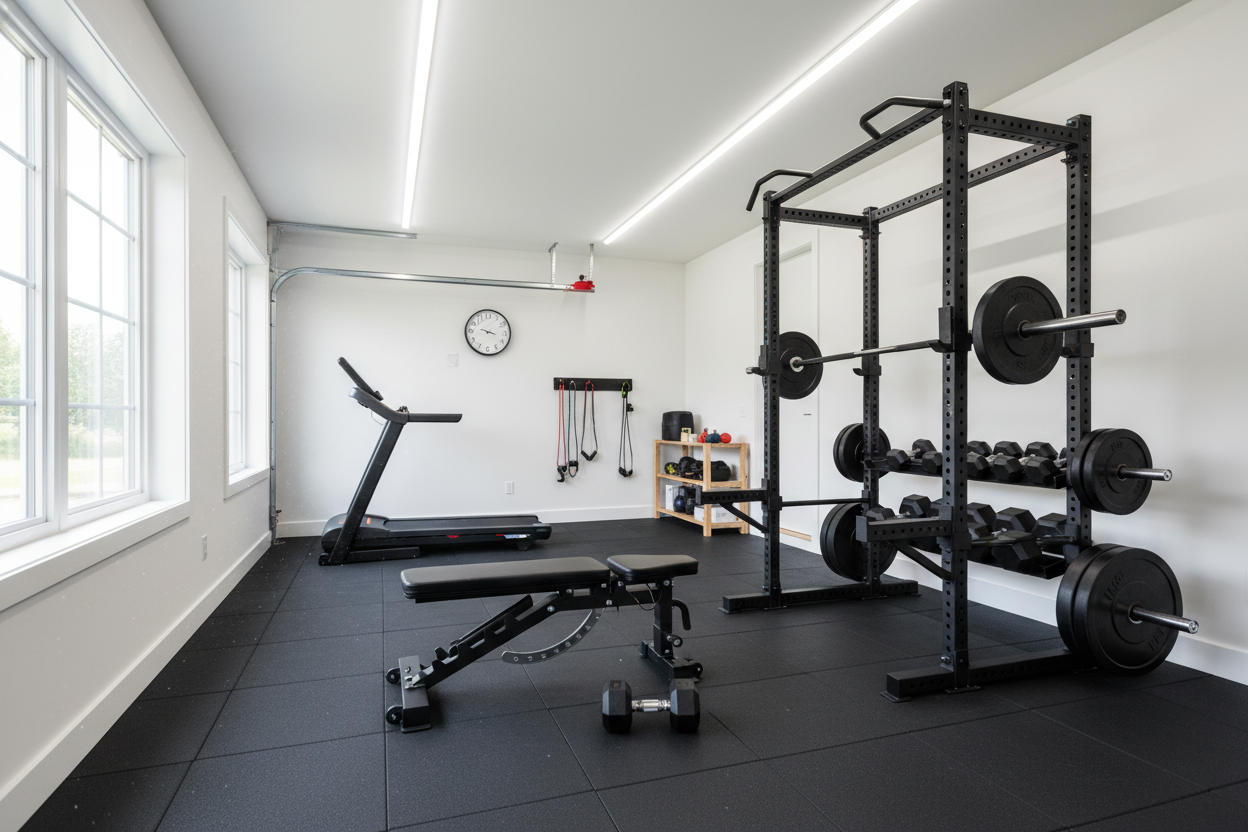
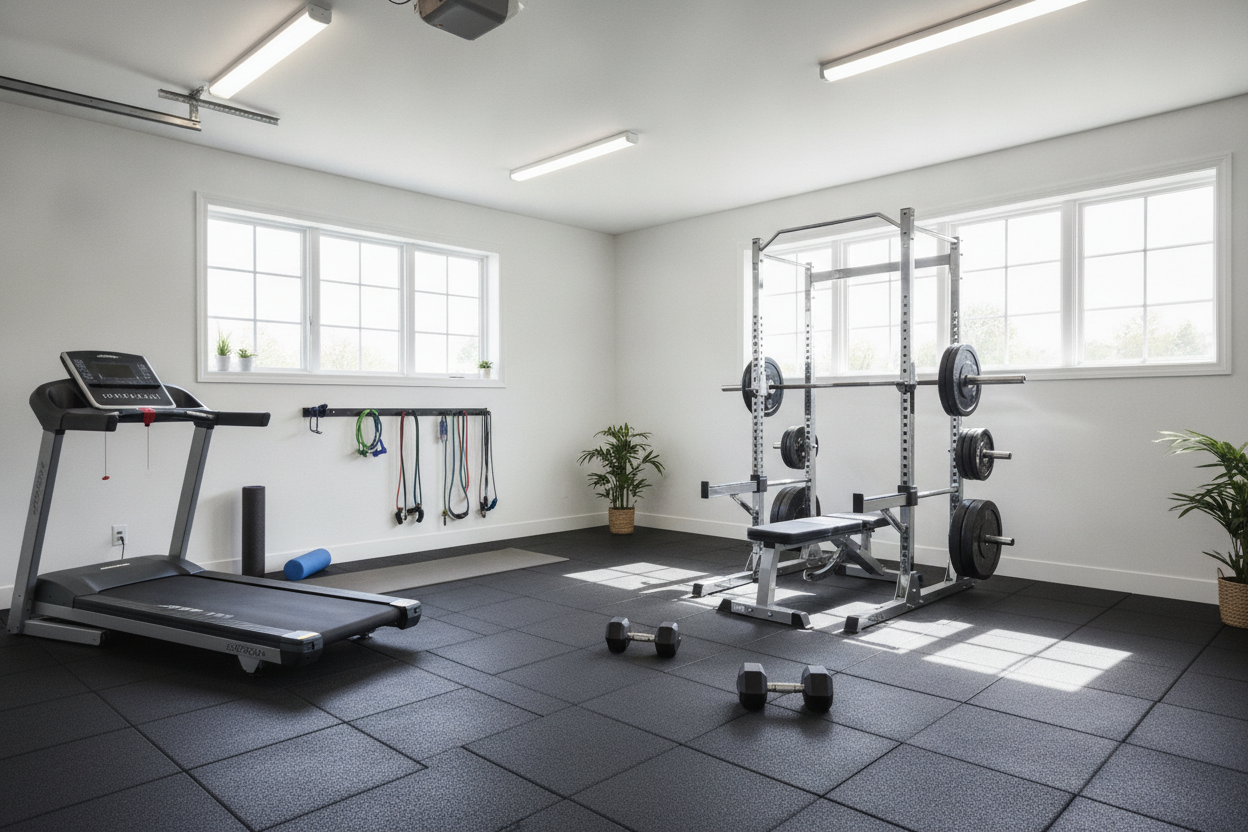
There are some days when the commercial gym is just a lost cause. Maybe it's the first week of January, or maybe your local spot just signed up 500 new members. On those days, I’d rather train at home than fight for a square foot of rubber flooring. You don't need a full power rack to get a good sweat.
Claiming your own space with a large exercise mat in your living room can save your sanity. A 6x8 ft mat is enough space for burpees, kettlebell swings, or heavy dumbbell work. I've found that having a dedicated home setup—even just the basics—prevents the 'I’ll just skip today' mentality that happens when you realize the gym will be packed and loud.
Stop Memorizing Routines and Start Learning Mechanics
The ultimate cheat code isn't a better guide for gym exercises; it's understanding how your joints move. Once you realize that a cable row and a dumbbell row are essentially the same horizontal pull, you become unshakeable. You stop being a slave to the paper routine and start being an athlete who can train anywhere.
Focus on the stimulus, not the equipment. If you want to hit your triceps and the cable machine is gone, do diamond pushups or overhead dumbbell extensions. When you understand mechanics, every object in the gym becomes a tool you can use. That’s how you actually make progress year-round.
Personal Experience: The 15-Minute Wait
I once spent 15 minutes hovering near a cable crossover machine just to do face pulls because my 'perfect' program said I had to. I watched three different people cycle through, felt my blood pressure rising, and realized I was wasting my life. I could have grabbed a $10 resistance band from my bag and finished the set in 45 seconds against a pillar. Now, if a machine isn't open, I give it 30 seconds before I move to the dumbbell alternative. My workouts are faster, and my gains haven't suffered one bit.
FAQ
What if all the benches are taken for chest day?
Do floor presses. Lay on the ground with your dumbbells. It limits your range of motion slightly, which actually helps tricep lockout and saves your shoulders. It's a legitimate powerlifting accessory that doesn't require a bench.
How do I swap a machine exercise for a free weight one?
Match the movement. If it's a pushing motion (like a chest press machine), find a way to push a dumbbell or barbell. If it's a pulling motion (like a lat pulldown), find a way to pull something toward you, like a pull-up or a row.
Is it okay to change my workout on the fly?
Yes. Consistency and intensity matter more than following a specific sequence of exercises. If you hit the same muscle groups with similar effort, your body won't know the difference.