Do You Really Need Weights for the Best Beginner Workout at Home?
I remember scrolling through Amazon at midnight, convinced that a set of neon-colored 5-pound dumbbells was the missing link to my fitness. I spent forty bucks on plastic-coated weights that eventually became very expensive doorstops. Most people think they need a rack of iron to start, but the best beginner workout at home doesn't require a single plate or a monthly subscription.
- Skip the cheap plastic weights; they lack longevity and stimulus.
- Your floor is your primary piece of equipment—treat it that way.
- Mastering bodyweight mechanics prevents injury before you touch a barbell.
- Consistency is the only metric that actually matters for long-term results.
The Trap of Cheap Starter Weights
People buy 'starter sets' because it feels like progress. It is a psychological safety net. In reality, those flimsy resistance bands snap after a month, and those tiny dumbbells don't provide enough stimulus for the best workouts for beginners at home. You already have a massive amount of resistance available: your own body weight.
When you start with zero equipment, you force your nervous system to learn how to stabilize your joints. Buying your way into fitness with gear that has a 20-lb limit is a dead end. You will outgrow that weight in three weeks, and then you are left with clutter. Focus on the movement, not the accessory.
Why Your Floor Is Actually Your Best Asset
If you are slipping on hardwood or sinking into plush carpet, your form is going to be trash. I have seen people tweak an ankle trying to do lunges on a bath mat. You need a stable, high-friction surface that stays put. A large 6x8 exercise mat gives you enough real estate to move freely without hitting the coffee table.
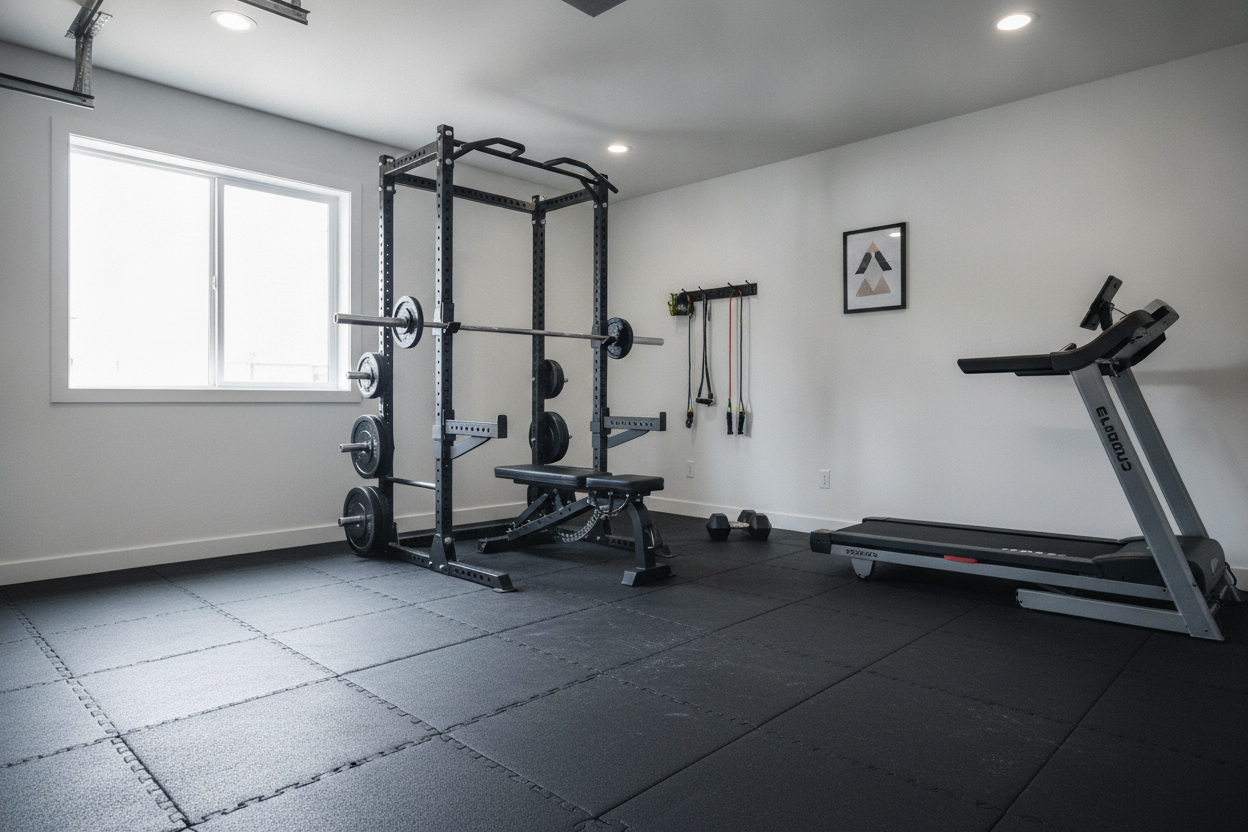
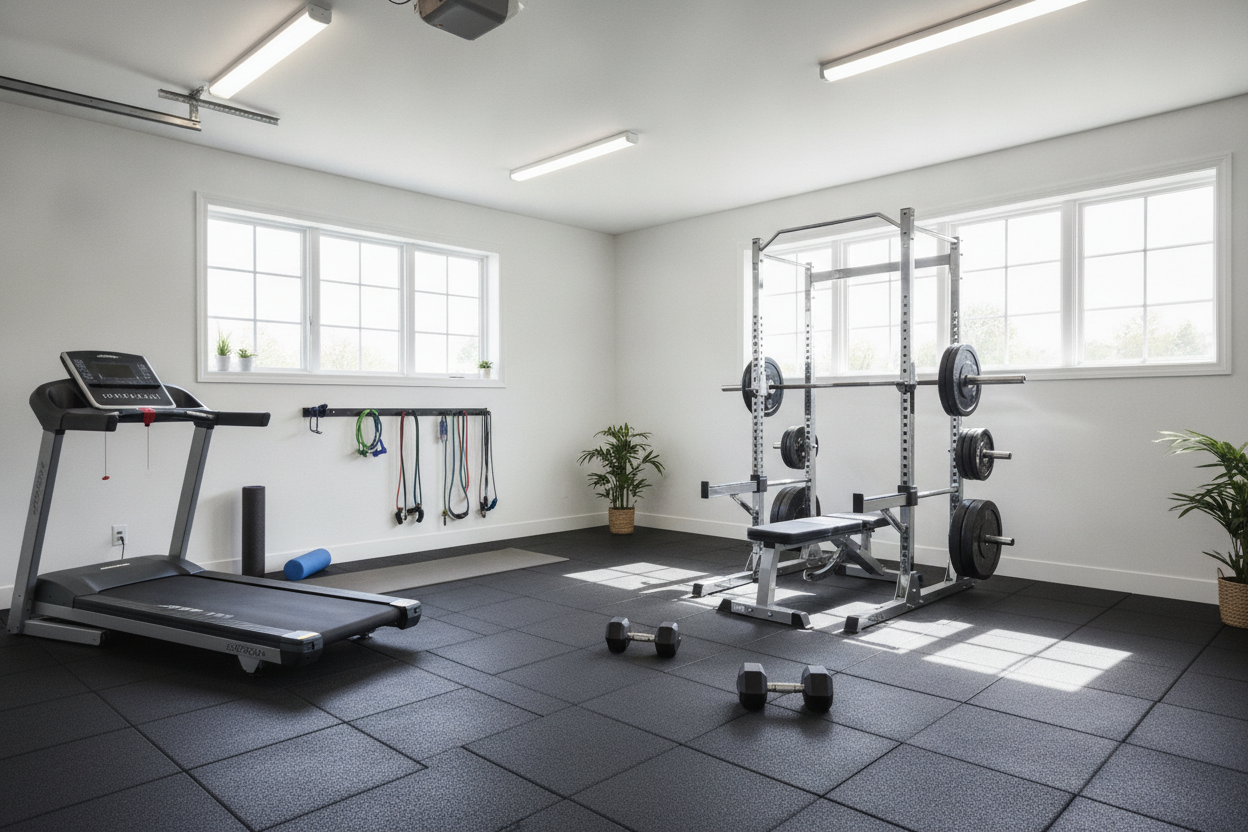
Think of your floor as the foundation of your building. If the foundation is shaky, the rest of the structure fails. Investing in dependable home gym flooring is the only 'gear' purchase I recommend on day one. It protects your joints from impact and gives you the tactile feedback you need to keep your balance during a squat or a plank.
The Routine: Simple, Brutal, and Effective
The best exercise for beginners at home is the one that hits multiple muscle groups at once. We are talking about compound movements: squats, push-ups, and lunges. Don't worry about high-intensity jumping that leaves you gasping for air. Focus on a 3-second descent on every single rep. That time under tension is what builds real strength.
If a standard push-up feels impossible right now, do not sweat it. Use the furniture scaling method to adjust the angle of your body. A sturdy couch cushion or the arm of a chair is a far better tool for progression than a cheap set of weights. By changing the incline, you can perfectly calibrate the difficulty to your current strength level.
When to Make Things Harder
Once you can knock out 15 clean reps of a movement, do not run to the store for dumbbells yet. Change the tempo. Add a two-second pause at the bottom of your squat. This is how you build a best beginner home workout program that actually sticks without costing a fortune. You are teaching your muscles to work under load without needing external iron.
When you eventually hit a wall where bodyweight movements feel too easy, that is when you transition. Look into smart at-home workout programs that teach you how to layer in resistance safely. Progression is about intensity and volume, not just buying a heavier object to lift.
Consistency Beats Complexity Every Single Time
Stop overthinking the gear list. I have owned three-thousand-dollar power racks and ten-dollar jump ropes. The workouts that actually changed my physique were the ones I did consistently in a small corner of my living room when I did not feel like moving. The best program is the one you can execute three times a week without dreading the setup.
My Personal Take: The $99 Mistake
I once bought a 'complete home gym' in a box for $99. The first time I tried a chest press, the frame creaked so loudly my neighbor knocked on the wall to see if I was okay. I ended up selling it for twenty bucks on Craigslist and went back to floor-based movements for six months. It taught me that stability is more valuable than variety. If the equipment feels like it might break, you will never train hard on it. Stick to the floor until you can afford the good stuff.
Frequently Asked Questions
How much space do I actually need?
A 6x8 foot area is the sweet spot. It is enough room to lie down fully and reach your arms out without hitting a wall. If you can fit a standard yoga mat and have a foot of clearance on all sides, you are golden.
Can I really build muscle with just bodyweight?
Absolutely. Muscle doesn't know the difference between a 20-lb dumbbell and the weight of your own torso. If you manipulate the leverage and the tempo, you can create enough tension to trigger growth.
How many days a week should a beginner train?
Start with three days a week with a rest day in between. Your tendons and ligaments need more time to recover than your muscles do when you are just starting out. Consistency over intensity, every time.