Why Copying a Pro Fitness Leg Day Will Wreck Your Knees
I remember scrolling through a pro bodybuilder’s feed while sitting on my weight bench in a 40-degree garage. He was hitting a $5,000 pendulum squat machine with eight plates, and I thought I could just mimic that fitness leg day with a barbell and a little extra grit. I was wrong, and my patellar tendons paid the price for three months. Most of us don't have a warehouse full of specialized machines, and trying to force those movements into a free-weight environment is a fast track to the physical therapist.
- Machines provide stability; free weights require it from your joints.
- Barbell hack squats often create excessive shear stress on the patella.
- High-density flooring is a safety requirement, not an aesthetic choice.
- Tempo and tension are more effective than 'ego weight' at home.
The Trap of the Magazine Lower Body Circuit
Most leg day workout exercises you see in fitness magazines rely on fixed-path machines. These setups allow you to move massive weight without stabilizing your core or ankles. When you try to force that same leg routine for the gym into a garage setup using dumbbells, you lose the mechanical leverage. You end up in awkward positions trying to balance while your joints take the brunt of the load.
The transition to building strong legs at home requires a total mindset shift. You can't just look at a leg press and think 'I'll just do more squats.' You have to account for the fact that your nervous system is working ten times harder to keep you upright when you aren't locked into a steel frame. If you copy-paste a pro routine, you're likely ignoring the stabilizers that machines let you skip.
Why Your Knees Hate Barbell Hack Squats
Let's talk about the barbell hack squat—the 'poor man's' version of a typical leg day at gym workout. You reach behind your calves, grab the bar, and try to stand up. It looks cool in old-school black-and-white photos, but for anyone with average limb lengths, it creates massive shear stress on the knees. Your center of gravity is pulled backward, and your knees are forced into an aggressive forward position that quads alone can't support.
Instead of stimulating muscle growth, you're often just grinding your kneecaps into the joint space. If you don't have a 45-degree sled, stop trying to turn a barbell into one. Exercises for leg day at the gym usually involve machines because they isolate muscles safely at high volumes. At home, forcing that isolation with a barbell usually results in compensation patterns that eventually lead to chronic inflammation.
The Foundation: Stabilizing Your Training Surface
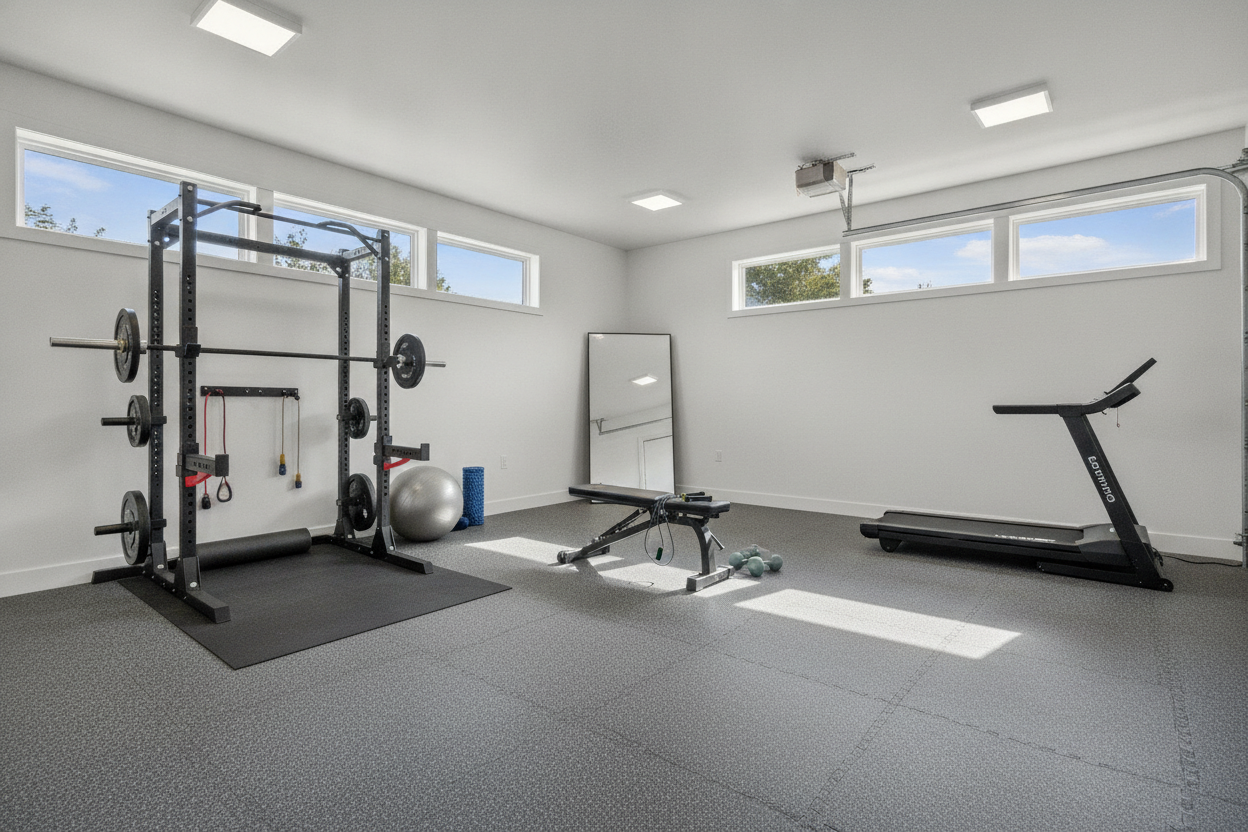
You cannot execute a heavy leg training routine if your feet are sliding on dusty concrete or sinking into a squishy carpet. I’ve seen guys try to do max-effort Bulgarian split squats on a thin yoga mat. It is a recipe for a torn groin or a rolled ankle. I finally invested in a 6x8ft exercise mat because I needed a surface that wouldn't budge during walking lunges.
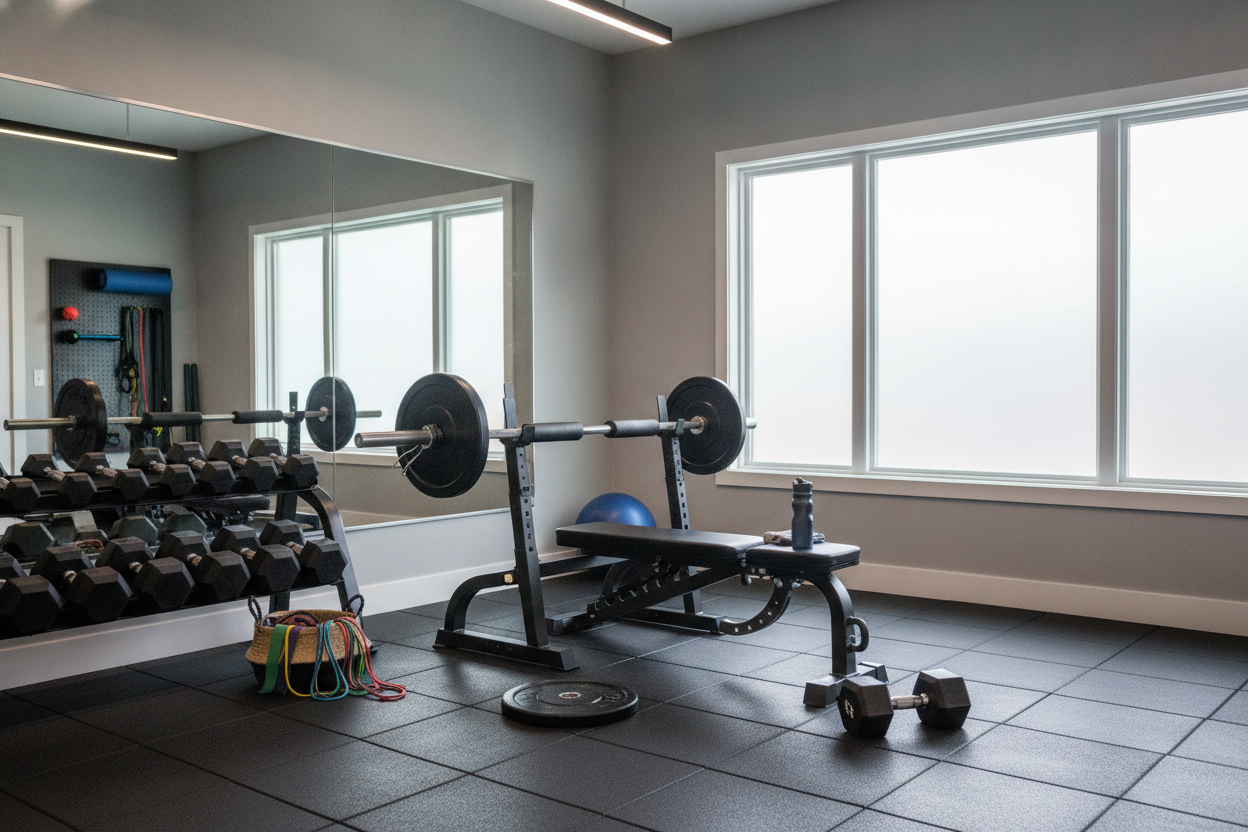
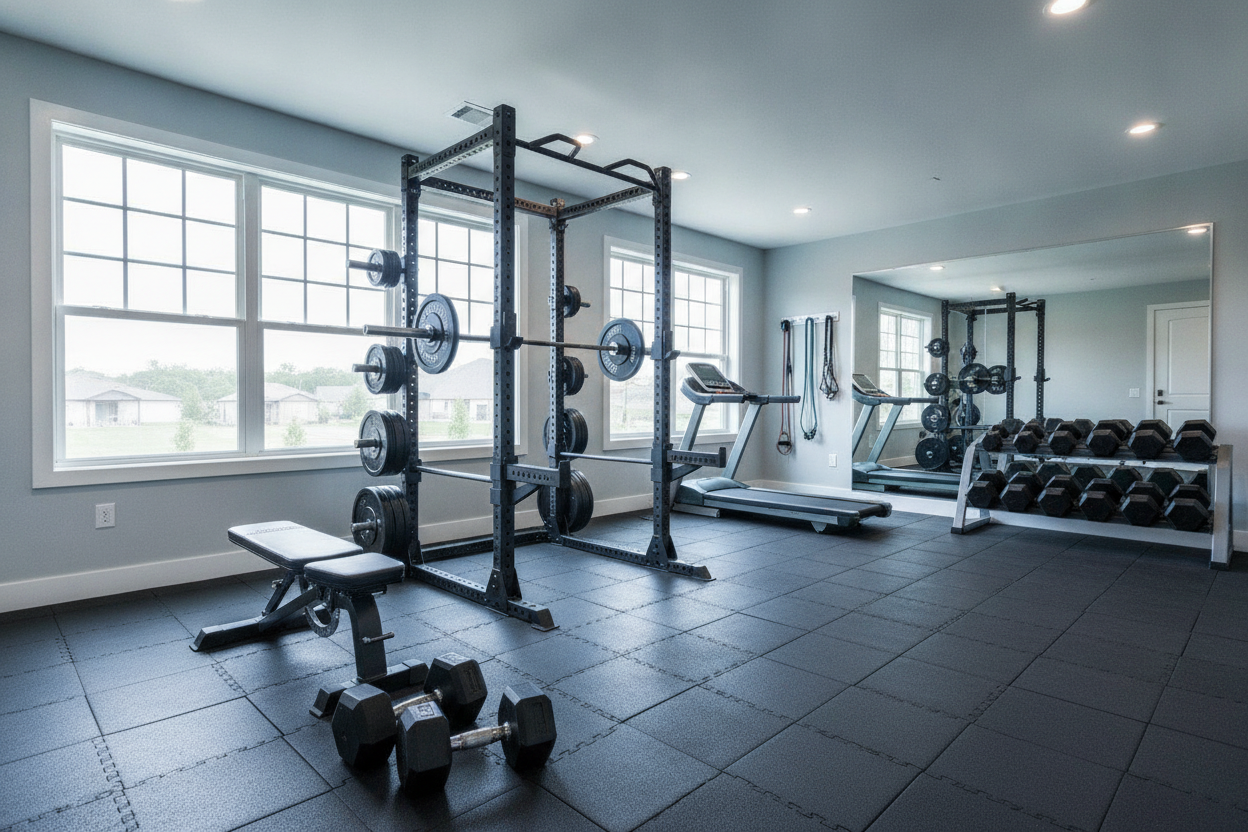
If you're dropping 100-lb dumbbells or doing explosive movements, you need a large exercise mat for home gym use that actually absorbs impact. High-density rubber isn't just about protecting the floor; it's about joint longevity. When your brain senses an unstable surface, it actually limits the amount of force your muscles can produce. Better grip equals more weight moved and less stress on your connective tissue.
A Smarter Blueprint for Free Weight Muscle
A real leg exercises routine for the home gym focuses on 'mechanical tension.' Since you don't have a leg press to hide behind, you have to use tempo. Think three-second descents and one-second pauses at the bottom of a squat. This makes a 50-lb dumbbell feel like 150 lbs without the joint-crushing load of an actual 150-lb weight. Your leg workout routine at gym settings might be about moving the stack, but at home, it's about making the weight feel heavier than it is.
Focus on your gym routine legs by prioritizing movements that allow for a deep range of motion. Elevate your heels on a couple of small plates to get a deeper squat without your lower back rounding. This mimics the quad-dominance of a hack squat machine without the awkward barbell-behind-the-back setup. You want to maximize the stretch on the muscle, not the pressure on the bone.
The 4-Movement Joint-Friendly Routine
Here is the gym workouts leg day alternative I actually run in my own garage. It’s simple, brutal, and doesn't require a $10,000 equipment lease. First, Rear-Foot Elevated Split Squats—the undisputed king of leg routines. Second, Romanian Deadlifts with a slow, four-second eccentric to hammer the hamstrings. Third, Goblet Squats with a heel wedge for quad depth. Finally, Nordic Curls using a doorway or the bottom of a rack.
This leg day at the gym routine replacement focuses on unilateral stability. By working one leg at a time, you double the load on the muscle without doubling the load on your spine. If you want more variety, there are plenty of ways of sculpting lean legs at home using just a pair of 50-lb dumbbells and some creativity. Stop chasing the machine feel and start mastering the movement.
My Experience with 'Budget' Solutions
I once bought a $400 'compact' leg press that took up half my garage and felt like a rickety roller coaster. It creaked, the bearings were trash, and the range of motion was so shallow it was basically a calf raise. I eventually sold it for half price and went back to heavy lunges on a proper mat. My legs grew more in six months of lunging than two years of using that sub-par machine. Don't buy cheap machines; buy good flooring and heavy weights.
Leg Day FAQ
How do I stop my knees from clicking during squats?
Warm up with five minutes of bodyweight squats and check your ankle mobility. Tight ankles often force the knees to track poorly. If your heels lift off the ground, your knees are taking the hit.
Can I build big legs with just dumbbells?
Absolutely. You just have to embrace high-rep sets and short rest periods. A pair of 50-lb dumbbells will wreck your quads if you're doing sets of 20 with controlled eccentrics and zero momentum.
Is flooring really that important for leg day?
Yes. If your feet shift even a centimeter during a heavy lift, your brain will 'cut power' to your muscles to prevent injury. Stability equals strength. Get off the concrete and onto a high-density mat.