Why Changing Your Routine for Workout Variety is a Trap
I remember the night I bought a set of sliding discs and a Bulgarian bag because I was convinced my progress had stalled due to 'boredom.' I was scrolling through forums at 2:00 AM, looking for a way to shock my system. The truth? I wasn't bored; I was just tired of the hard work that comes with a consistent routine for workout progression. I wanted a shortcut, but all I got was a cluttered garage and a softer physique.
Quick Takeaways
- Muscle confusion is a marketing myth designed to sell new programs and equipment.
- True growth happens through neurological adaptation and progressive overload on the same lifts.
- The best routine for working out is usually the one you can stick to for six months, not six days.
- Changing exercises too often makes it impossible to track real strength gains.
The Variety Trap: Why Muscle Confusion is Total Garbage
Fitness magazines and influencers love to push the idea that you need to 'keep the body guessing.' They claim that if you don't swap your lunges for pistol squats every other week, your muscles will somehow fall asleep. This is total garbage. This obsession with variety is why so many home gym lifters find themselves stuck in an endless plateau, never actually getting stronger at the fundamentals. They are constantly looking for good workouts routines that promise 'novelty' instead of results.
When you constantly rotate your exercises, you never give your central nervous system a chance to get efficient at a movement. If you're always doing something new, you aren't building muscle; you're just practicing coordination. You might feel sore because the movement is unfamiliar, but soreness is not a proxy for growth. Most of the best workout regimens are actually quite repetitive, and that is exactly why they work.
The Case for a Boring Routine for Workout Progress
Real strength is built on neurological adaptation. The first few weeks of any new movement are spent teaching your brain how to fire the right muscles in the right order. If you change your routine every week, you are perpetually in this 'learning phase.' You never reach the point where you can move enough weight to actually trigger hypertrophy. You need to stop looking for what is a great workout routine and start looking for a plan you can execute for twelve weeks straight.
I tell people to look for proven training programs and templates that focus on the big rocks. When you stick to the same lifts, you can objectively measure progress. If you benched 185 for five last week and 190 for five this week, you got stronger. If you switched to a weird cable press because you saw it on Instagram, you have no baseline to compare it to. Consistency is the only way to ensure an optimal workout routine actually delivers.
What's a Good Workout Plan Actually Consist Of?
If you're wondering what are good workout routines, they all share three things: progressive overload, compound movements, and recovery. You don't need forty different isolation exercises. You need a squat, a hinge, a push, and a pull. Most of the best workout routines are built around these pillars. Strip away the fluff. You don't need 'finishers' or 'burnouts' if you're putting 100% effort into your main lifts.
I’ve found that structuring a full-body training cycle three days a week is often more effective for home lifters than a complex six-day body part split. It allows for higher frequency on the lifts that matter and gives your joints a break. People ask me, 'what is a good workout plan?' and I tell them: it's the one that lets you add weight to the bar every week without burning out your CNS. That's the secret to a long-term work out regimen.
Stop Overthinking Your Home Gym Setup
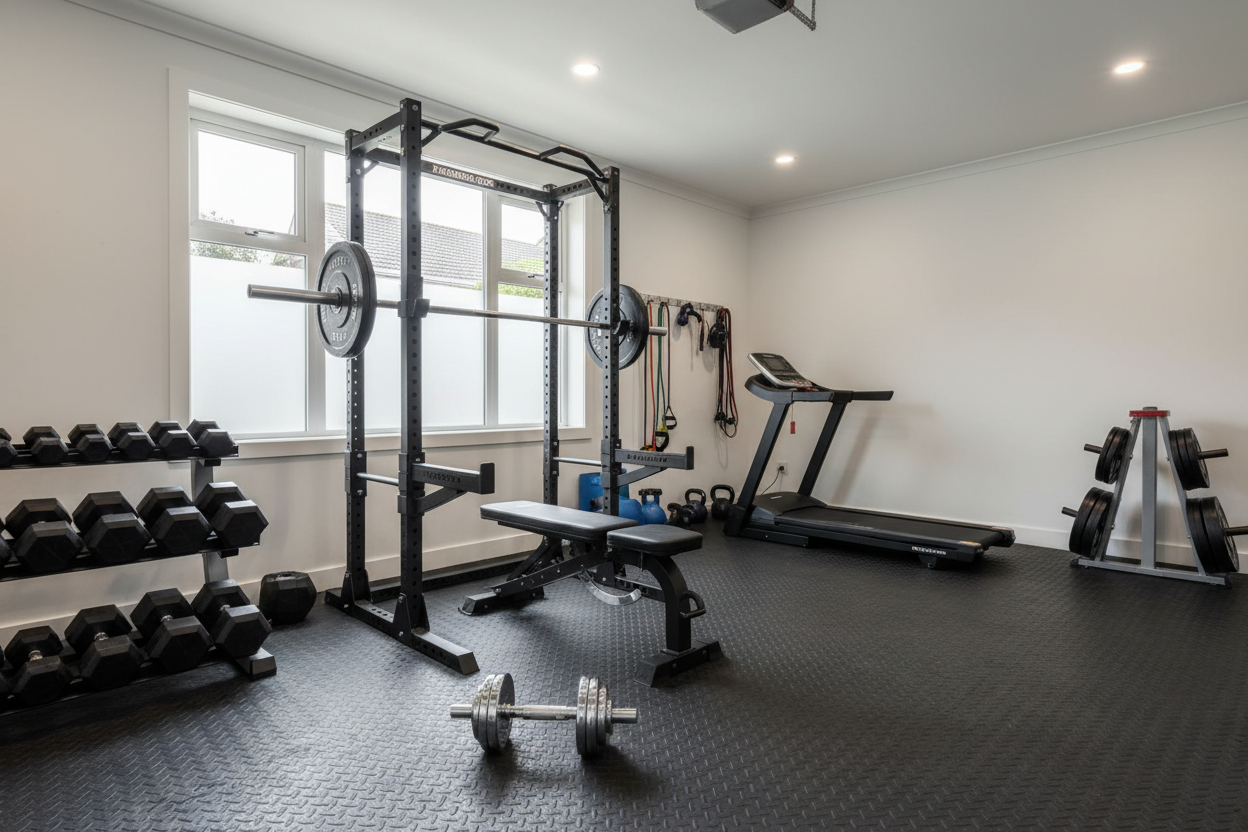
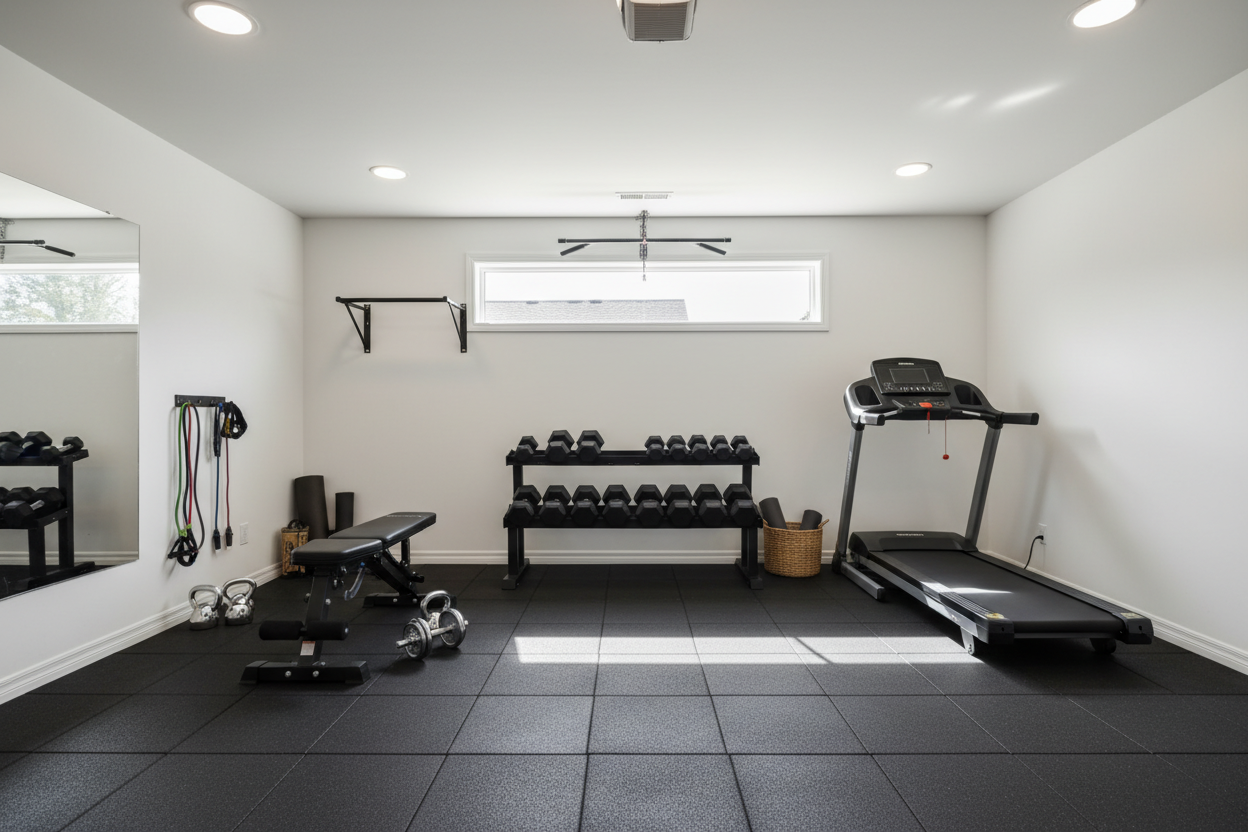
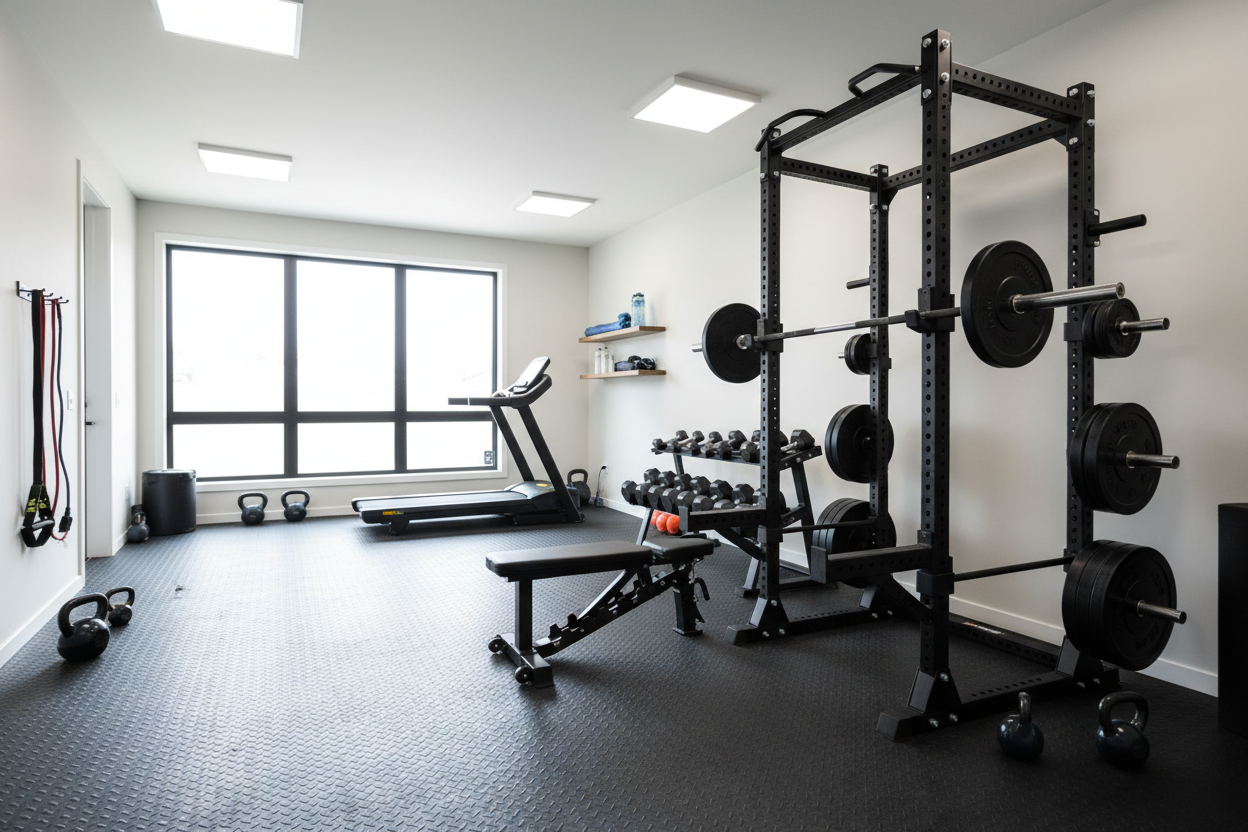
One of the biggest obstacles to a consistent routine for workout success is a cluttered space and a cluttered mind. You don't need a commercial-grade leg press or five different types of pull-up bars. A solid power rack, a bench with a 1,000-lb capacity, and a clear floor are all you need for the best routine for workout longevity. I’ve seen guys with $10,000 setups who can’t squat their body weight because they spend more time adjusting cables than lifting.
I highly recommend clearing out the junk and investing in a heavy-duty 6x8ft exercise mat. Having a dedicated, non-slip space for your heavy compound lifts makes a massive difference in your confidence under the bar. When your feet are planted and your gear is simple, you can focus on the only thing that matters: the weight. What's a good workout routine worth if you're constantly tripping over equipment you don't use?
When (and How) to Actually Switch Up Your Training
So, when should you actually change things? Not when you're bored, but when you've genuinely stalled. If you haven't added a single rep or pound to your main lifts in three consecutive weeks—and your sleep and diet are on point—then it might be time to pivot. This is usually the point where you're transitioning from beginner to intermediate programming, moving from linear progression to more complex periodization.
Don't scrap the whole plan. If your bench is stalled, maybe swap the barbell for dumbbells for a block, but keep the rest of the structure. The goal is to solve a specific problem, not to entertain yourself. People always ask what are the best workout routines, but the answer is always the one that you’ve mastered to the point of stagnation. Only then do you earn the right to change it.
My Personal Experience
I spent 18 months 'program hopping' between every viral work out regimen I could find. My garage was full of half-used equipment, and my strength was exactly where I started. It wasn't until I committed to a boring, basic 5x5 program for six months—using nothing but a rack and a barbell—that my physique actually changed. I hated the repetition at first, but I loved seeing the numbers go up. The lesson? Boredom is often a sign that you're finally doing something right.
Frequently Asked Questions
What is a good workout plan for beginners?
A good plan for beginners focuses on compound lifts (squat, bench, deadlift, overhead press) performed 2-3 times per week. The goal should be linear progression—adding a small amount of weight every single session.
How often should I change my workout routine?
Avoid changing your routine more than once every 12 to 16 weeks. You need that time to actually adapt to the movements and push through the initial learning curve to see real muscle growth.
Is variety necessary for muscle growth?
Variety is useful for preventing overuse injuries and hitting muscles from different angles, but it is secondary to progressive overload. If you are getting stronger at a few key movements, you will grow.