Can You Actually Build Muscle With Exercise In Home Without Equipment?
I remember the first time I tried to get serious about fitness in a cramped studio apartment. I did 100 air squats, 50 push-ups, and enough burpees to make my downstairs neighbor bang on the ceiling with a broomstick. I was drenched in sweat, but my muscles felt like they had just gone for a light jog, not a heavy lifting session. If you want to see actual hypertrophy when you exercise in home without equipment, you have to stop treating your body like a cardio machine and start treating it like a barbell.
Quick Takeaways
- Muscle growth requires mechanical tension, not just a high heart rate.
- Leverage is your weight plate—shifting your center of gravity increases the load.
- Tempo is the secret weapon; slow down the eccentric (lowering) phase to 4 seconds.
- A stable, non-slip floor is the only 'equipment' that is truly non-negotiable.
Why Your High-Rep Living Room Circuits Keep You Skinny
Most workout routines without equipment you find on social media are basically just aggressive aerobics. They focus on 'the burn'—that metabolic waste buildup that makes you feel like you're working hard while your muscles stay exactly the same size. If you can do 50 reps of something, you aren't building mass; you're building endurance. To spark real growth, you need to reach mechanical failure within the 8-12 rep range.
The problem is that a standard push-up or squat becomes too easy very quickly. This is why people think the best workouts without machines are inferior to the gym. They aren't inferior; you're just not making them hard enough. You need to stop counting reps and start counting the seconds of tension you’re forcing on the muscle fibers. If you aren't shaking by rep eight, you're just moving, not training.
Gravity is Your New Barbell: How to Hack Leverage
In a non gym workout, you don't have the luxury of sliding another 45-lb plate onto the bar. Instead, you have to manipulate biomechanics. Take the standard push-up. If it’s too easy, stop doing more of them. Instead, shift into an archer push-up by extending one arm out to the side. Now, one arm is doing 70% of the work. You just 'added' weight without picking up a single dumbbell.
The same applies to your legs. Air squats are useless for growth once you can do twenty. Move to Bulgarian split squats with your rear foot elevated on a couch. By isolating one leg and increasing the range of motion, you’re forcing the quads to handle a massive load. This shift in leverage turns a basic movement into a without equipment exercise that actually demands a recovery shake afterward.
Why You Need to Slow Down (The Tempo Trick)
If you want to know how to get in shape at home without equipment, you have to master the eccentric phase. Most people drop like a stone during a squat or push-up, using momentum to bounce back up. You’re stealing your own gains. Try a '4-2-1' tempo: four seconds on the way down, a two-second pause at the bottom (the most difficult part), and one second to explode up.
This massive increase in time-under-tension creates the micro-tears in the muscle tissue needed for repair and growth. It turns a 'light' bodyweight move into a brutal struggle. When you remove the ability to use momentum, you realize just how heavy your own body actually is. This is the difference between 'exercising' and 'training.'
The One Upgrade Bare-Floor Lifters Actually Need
I’ve tried training on hardwood, and I’ve tried training on cheap area rugs. Both are recipes for a shoulder injury or a faceplant. When you're doing high-tension movements like pike push-ups or Bulgarian split squats, your feet and hands need to be locked in place. If you're sliding even half an inch, you're losing force production and risking your joints.
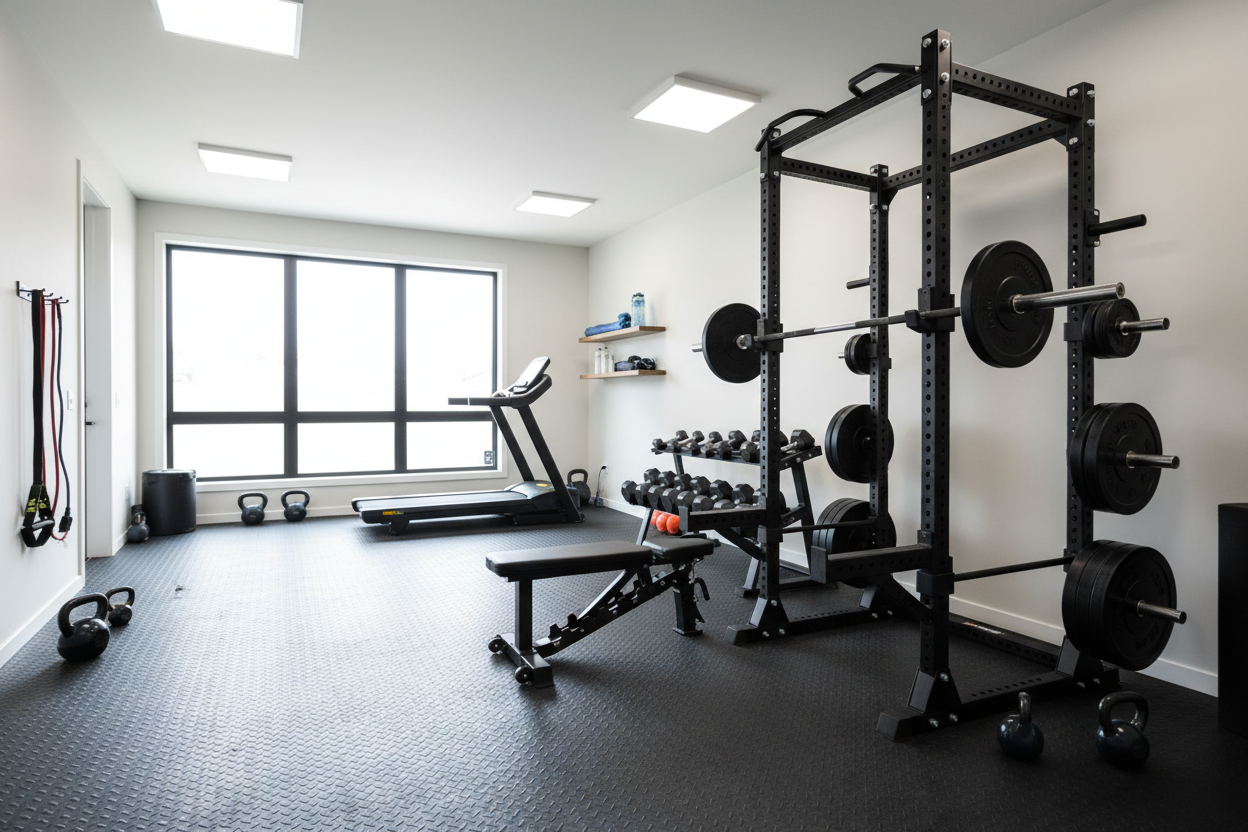
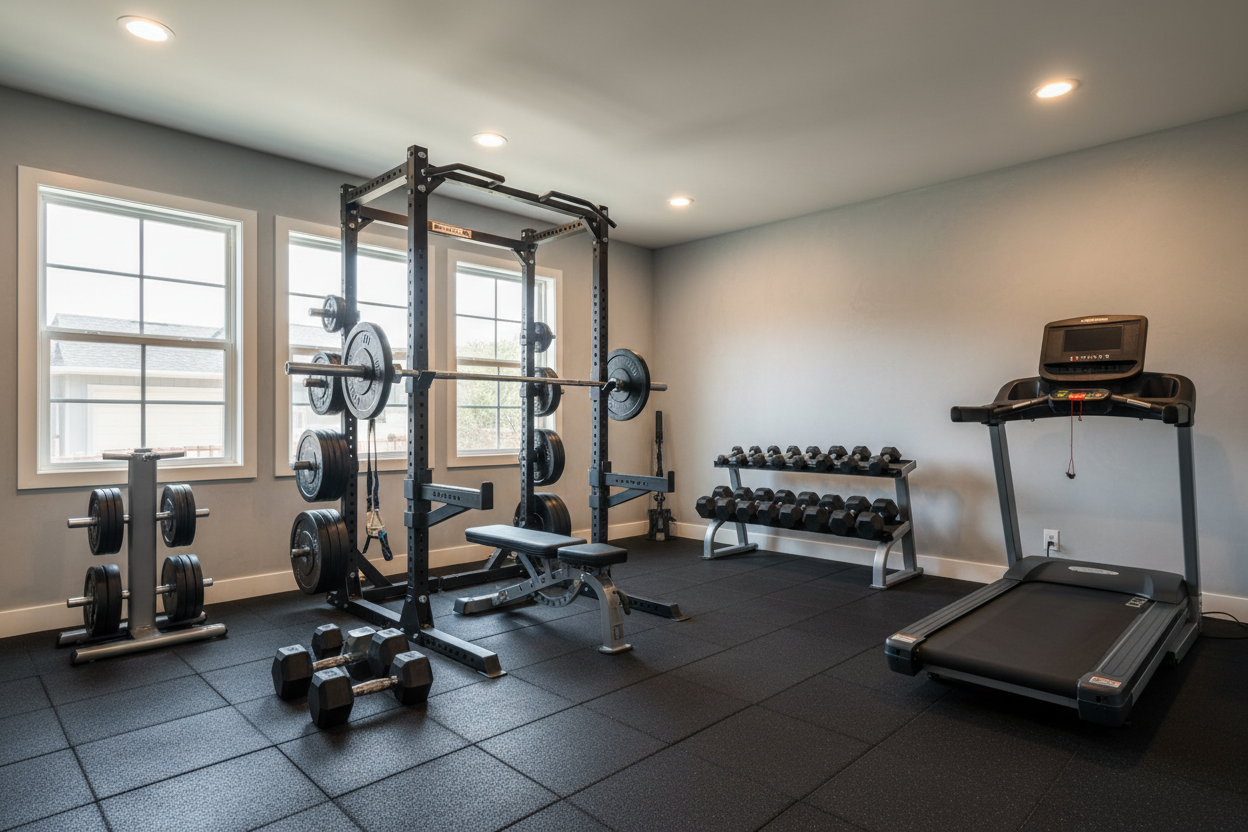
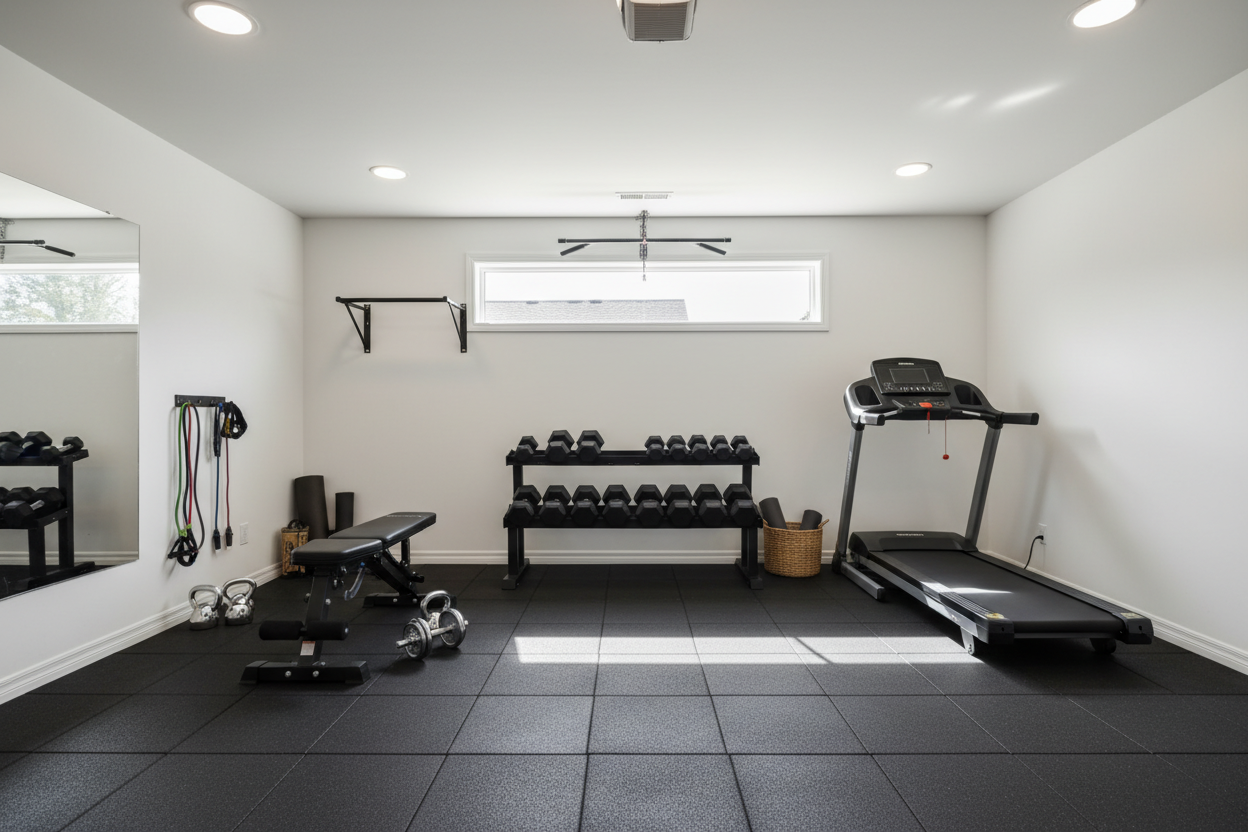
A solid large exercise mat for home gym is the only piece of gear I’ll insist on. It’s not about 'cushion'—though your knees will thank you—it’s about traction. You need a surface that bites back so you can focus 100% of your mental energy on the muscle contraction rather than trying not to slip on your own sweat. Hardwood is for walking; a high-density mat is for working.
A Brutal 4-Movement Routine That Sparks Growth
A good exercise without equipment doesn't need to be fancy. Forget the '30-day squat challenges.' Use this protocol three times a week, focusing on perfect form and hitting failure. 1. Archer Push-ups (3 sets to failure), 2. Bulgarian Split Squats (3 sets of 8-12 per leg with a 4-second descent), 3. Inverted Rows (using a sturdy table or a low bar in a park), 4. Pistol Squat progressions.
Make sure your setup is stable. If you're doing explosive movements or deep lunges, having dedicated gym flooring for home workout ensures you aren't wobbling. Stability equals strength. If your base is shaky, your brain will neurologically 'gate' your strength to prevent injury. Give yourself a solid floor, and your numbers will climb faster.
The Next Step: Evolving Your Space When You Max Out
Look, I love bodyweight training, but eventually, your legs are going to outgrow your body weight. You can only do so many one-legged squats before you need external load. When that day comes, don't go out and buy a massive multi-gym that doubles as a coat rack. Start small and smart.
Learning how to exercise at home with equipment is about strategic additions. A single heavy kettlebell or a pair of adjustable dumbbells can take the foundation you’ve built with leverage and tempo and push it to the next level. The goal is a home gym that evolves with your strength, not one that takes over your entire living room before you've even mastered a proper push-up.
Personal Experience: The Rug Burn Lesson
Early in my training, I thought I could save money by using an old yoga mat I found in the back of a closet for my 'heavy' bodyweight days. During a set of decline push-ups, the mat slid forward on the hardwood, and I went chin-first into the floor. It wasn't just embarrassing; it tweaked my wrist so badly I couldn't train for two weeks. My mistake was thinking that 'no equipment' meant I didn't need a professional environment. You don't need a rack, but you absolutely need a floor you can trust.
FAQ
Can you really build a big chest with just push-ups?
Yes, but not standard ones. You have to use decline angles to hit the upper pecs and archer or one-arm variations to increase the load. If you aren't struggling to finish 10 reps, the stimulus isn't high enough for growth.
How many days a week should I do a no-equipment workout?
Three to four days is the sweet spot. Because you’re using high-tension techniques like slow tempos and pauses, your central nervous system needs time to recover just as much as it would after a heavy barbell session.
Do I need to wear shoes for home workouts?
It depends on your floor. If you have a high-traction mat, training barefoot is great for foot strength. If you're on a slicker surface, a pair of minimalist training shoes will provide the grip you need to stay stable during lateral movements.