Don't Buy Another Gadget Until You Have These Lifting Essentials
I remember staring at my first home gym setup—a plastic-coated weight set from a yard sale that smelled like a tire fire and rattled every time I moved it. I thought I needed every attachment under the sun to see progress. I was wrong. You don't need a twelve-station cable crossover to get strong; you need a few lifting essentials that won't fail when the weight gets heavy.
Quick Takeaways
- Focus on the Core Four: Barbell, plates, rack, and bench.
- Prioritize a high-tensile strength barbell over fancy machines.
- Choose bumper plates if you train on concrete or do Olympic lifts.
- Safety first: Never skimp on the gauge of steel in your squat rack.
The Trap of the 'Perfect' Garage Gym
It is incredibly easy to get lost in gear acquisition syndrome. You see these massive, single-use weight lifting machines on social media and think that is the secret sauce. In reality, those behemoths just eat up your floor space and your budget without providing the versatility of free weights.
I have seen lifters spend three thousand dollars on a selectorized lat pulldown before they even owned a decent barbell. Massive machines crowd out the space you need for basic, heavy work. If you cannot move around your gym without tripping over a cable attachment, you have too much fluff and not enough steel.
The Core Four: My Non-Negotiable Strength Training Essentials
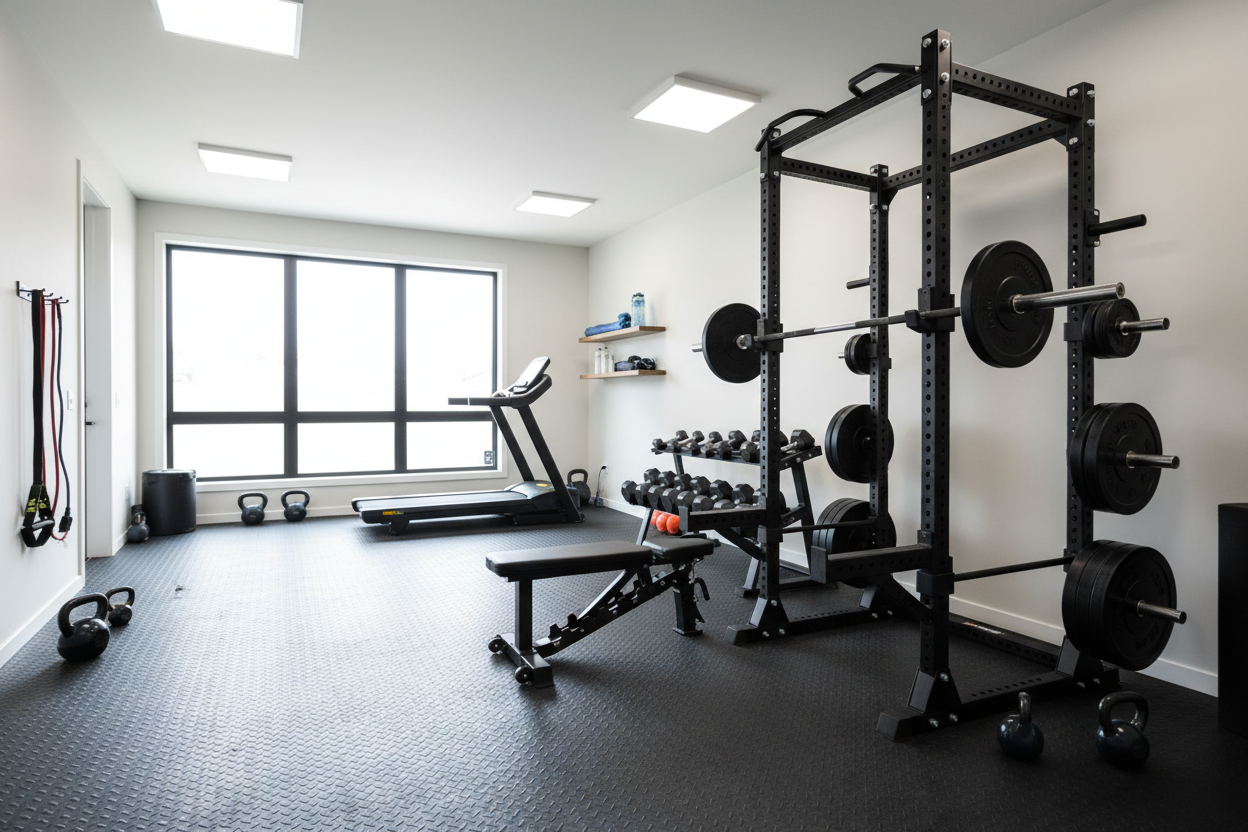
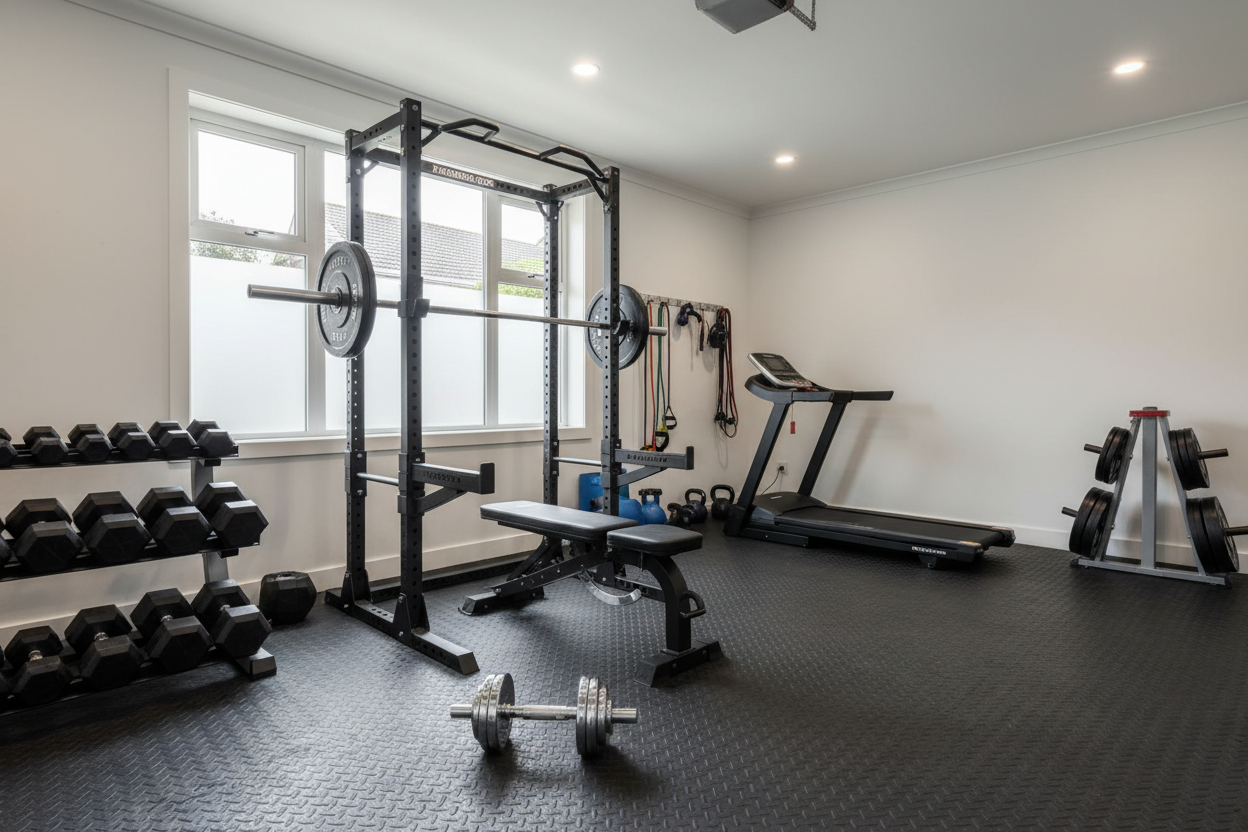
If you have a barbell, plates, a rack, and a bench, you can do ninety-nine percent of the movements that actually matter. These are the non-negotiable strength training essentials. Mastering the big compound movements on this equipment will yield more results than any 'innovative' gadget ever could.
A Barbell That Can Actually Take a Beating
Your barbell is the most important connection you have to the weight. Do not buy a cheap bar from a big-box store. Those bars often have 'mystery metal' cores that bend permanently after a few heavy deadlifts. I look for a bar with at least 190,000 PSI tensile strength and knurling that actually grips your hand without shredding your skin like a cheese grater. A good bar should have a predictable whip and sleeves that spin smoothly without sounding like a bucket of bolts.
Plates: Navigating the Iron vs. Bumper Debate
The choice between iron and bumpers depends on your floor and your style. If you are doing cleans or snatches, bumpers are weightlifting essentials because they will not shatter your foundation when you drop them. If you are strictly powerlifting, old-school cast iron is thinner, meaning you can fit more weight on the sleeves. Just be prepared for the noise; iron plates clanging at 5 AM is a quick way to make enemies with your neighbors.
A Rack You Can Trust With Your Life
A rack is your insurance policy. If you are training alone in a garage, you need safety pins that can catch four hundred pounds without buckling. I prefer a rack with 11-gauge steel and a wide footprint. A flimsy squat stand might save you a hundred bucks, but the moment you miss a rep and that stand starts to tip, you will realize it was a bad investment. Look for 2x3 or 3x3-inch uprights for maximum stability.
A Bench That Won't Collapse Mid-Press
A wobbly bench is a mental block. You cannot press your max if you are worried about the legs tipping or the frame shifting. I have used the Gxmmat Adjustable Weight Bench for everything from heavy inclines to flat presses, and it stays planted. You want a pad that is at least eleven inches wide so your shoulders have a stable base to drive from, and high-density foam that does not bottom out under a heavy load.
The 'Nice-to-Haves' vs. True Weight Training Essentials
Once the big stuff is sorted, you will be tempted by the endless wall of strength training accessories. Things like liquid chalk, lifting straps, and belts are weight training essentials once the numbers on the bar start getting serious. However, do not buy a hundred-dollar leather belt before you have even learned how to breathe and brace your core properly. Start with the basics and earn the upgrades as your strength increases.
How to Phase Your Gym Upgrades Over Time
Do not try to build a commercial-grade facility in a weekend. Start with the barbell and plates. Then get the rack. Then the bench. This prevents the common mistake of buying a bunch of specialized equipment you will never use. When you are ready for more, focus on choosing the best strength training equipment that aligns with your specific goals—whether that is bodybuilding, powerlifting, or general health.
Personal Experience: The 'Bargain' Mistake
I once bought a cheap squat stand because I wanted to save money for more plates. The first time I racked 315 pounds, the whole stand shifted six inches backward. It was terrifying. I sold it for half what I paid and bought a real power rack the next week. Buy once, cry once. Your safety is worth the extra couple hundred dollars.
FAQ
Is iron better than rubber bumper plates?
Iron is better for space-saving and cost. Rubber is better for floor protection and noise reduction. If you drop your weights, get rubber.
How much weight capacity should my bench have?
Look for a total capacity of at least 600 to 800 pounds. Remember, that includes your body weight plus the weight you are lifting.
Do I really need a rack if I only do floor presses?
Yes. A rack is for safety on squats and overhead presses, not just benching. It is the centerpiece of a safe home gym.