Why Building a Homemade Gym Out of Wood is a Terrible Idea
I remember staring at a $1,200 power rack online, then looking at a stack of 4x4 posts at the local hardware store. I thought I was a genius. I figured I could build a homemade gym for the price of a couple of pizzas and a single weekend of labor. I was wrong, and my garage floor—and my lower back—still remember the mistake.
Quick Takeaways
- Wood lacks the shear strength and fatigue resistance of steel for structural lifting frames.
- Hardware costs for heavy-duty bolts and flanges often negate the savings of DIY.
- Small accessories like plyo boxes and sandbags are great DIY wins; racks are not.
- Rough-cut lumber and galvanized pipe will destroy your flooring without proper mats.
The Lure of the Lumber Yard (Why We All Try It)
The temptation to build a diy at home gym usually starts with a sticker-shock moment. You see a commercial rack, add $200 for shipping, and suddenly building it yourself seems like the ultimate life hack. We've all been there, thinking we can outsmart the industry with some 2x4s and a handful of deck screws.
But here is the reality check: lumber prices aren't what they used to be. By the time you buy structural-grade timber, heavy-duty lag bolts, and the drill bits you'll inevitably snap, you are dangerously close to the price of a budget steel rack. When you factor in the four trips to the store because you forgot a washer, the 'savings' of a diy gym at home start to evaporate.
The DIY Projects That Actually Make Sense
I am not a total hater. There is a place for homemade exercise equipment. If you want a plyo box, a pulling sled, or a heavy sandbag, go for it. These are low-risk items where wood and fabric actually perform well. A wooden box for step-ups is a classic project that saves you fifty bucks easily.
The key is staying within the limits of the materials. Following established DIY home gym equipment plans for things like weight storage trees or jerk blocks is a smart move. These items aren't catching a falling 300-lb barbell; they are just holding static weight or providing a platform. That is where diy fitness equipment shines.
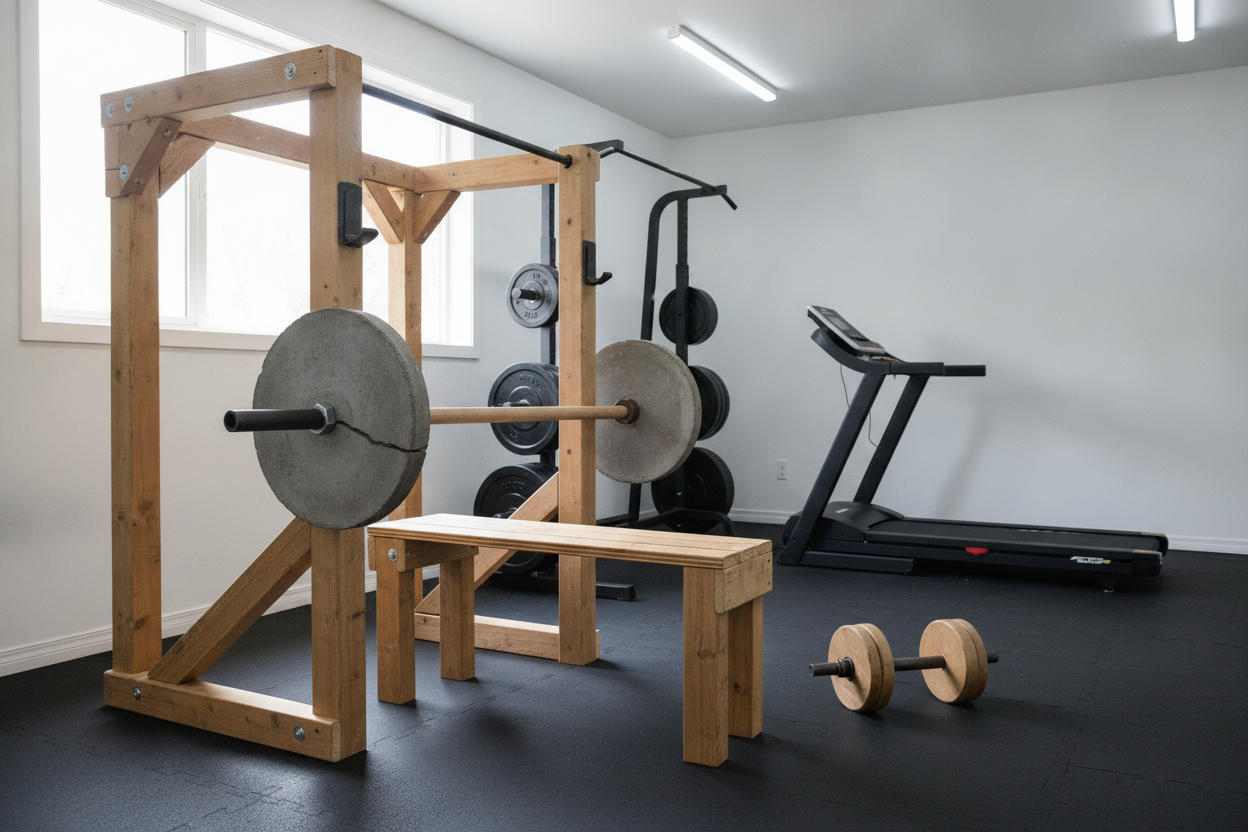
Please Do Not Build a Squat Rack Out of 4x4s
This is where things get dangerous. Wood is an organic material with grain, knots, and moisture content that changes. It splits. It warps. A 11-gauge steel upright is predictable; a 4x4 post from the local yard is not. When you are under a heavy bar, you need to know the rack won't shear at the bolt holes.
The shear strength of a wood screw is nothing compared to a welded steel joint. I have seen 'homemade gym machine' setups where the uprights started to lean after just six months of use. Your safety is worth more than the money you're trying to save. Instead of risking a structural disaster, keep an eye out for home gym equipment deals on real steel racks that are actually rated for the weight you're moving.
The Hidden Floor Damage from Untreated Wood
If you do decide to go the homemade route for smaller items, don't forget about your foundation. Raw, rough-cut 2x4s and heavy galvanized pipe flanges are abrasive. They will scratch, gouge, and eventually crack your garage concrete or interior flooring if you're sliding them around during a workout.
I learned this the hard way after dragging a homemade pipe sled across my driveway. It looked like I’d used a chisel on the concrete. You absolutely must have a buffer. Investing in high-quality gym flooring for home workout is the only way to protect your house from the jagged edges of diy workout equipment. Do not skip this, or your 'cheap' gym will cost you a flooring repair bill later.
The Final Math: Time vs. Money vs. Hospital Bills
Building do it yourself home gym equipment is a hobby, not a shortcut. If you enjoy the craft, that's one thing. But if you're doing it strictly to save cash, the math rarely adds up. Between the cost of high-grade hardware and the hours spent measuring and cutting, you could have worked a few hours of overtime and bought a rack that will last thirty years.
My advice? Build the small stuff. Build a box, build a storage rack for your plates, maybe even a weight bench if you're a hell of a carpenter. But for anything that holds a barbell over your face or back, buy the steel. The peace of mind during a heavy set of squats is worth every penny.
Personal Experience: My Wooden Dip Station Disaster
Years ago, I built a dip station out of 4x4s and plumbing pipe. It felt solid for about three weeks. Then I started doing weighted dips with a 45-lb plate. Every time I hit the bottom of the rep, I heard a sickening 'creak' from the wood grain. One afternoon, I noticed a hairline split running right through the main support bolt. I took it apart that day and bought a steel station. Wood just isn't meant for the repetitive, dynamic stress of heavy lifting.
FAQ
Is it safe to use a wooden squat rack?
Generally, no. While some people use them for years, wood is susceptible to splitting and rotting. It cannot match the structural integrity or safety ratings of 11-gauge or 14-gauge steel.
What is the best DIY gym equipment for beginners?
Start with a plyo box or a sandbag. These are simple builds, require minimal tools, and have a very low risk of injury if they happen to fail.
Does DIY gym equipment save money?
For small accessories, yes. For large machines or racks, usually not once you factor in the cost of high-quality lumber, heavy-duty hardware, and your own time.