I Finally Built a Big Home Gym (And Almost Ruined It)
I spent five years training in a single-car garage where I had to move my lawnmower just to do a set of clean and presses. When I finally moved into a house with a triple-bay shop, I thought I had reached the summit of lifting. I spent weeks imagining a big home gym that would rival the local powerhouse powerhouse facility.
But space is a double-edged sword. Within a month, my massive shop looked less like a training center and more like a cluttered storage unit for half-finished projects and impulse-bought Craigslist machines. I realized quickly that a huge home gym requires more discipline to design than a small one.
Quick Takeaways
- Zone your floor plan by movement type to prevent the 'clutter creep.'
- Avoid cheap puzzle mats; they will shift and separate in a large room.
- Prioritize equipment with a high utility-to-footprint ratio, like functional trainers.
- Leave at least 3-4 feet of 'dead space' around your rack for plate loading and spotting.
The 'Empty Space' Trap of a Massive Garage
The biggest mistake I see when people get a large home gym is the urge to fill every square inch immediately. You start browsing Facebook Marketplace and suddenly you’re buying a 1990s leg extension machine that only goes up to 150 lbs and has a footprint the size of a Smart car. Just because you have the floor space doesn't mean you should waste it on single-use equipment.
Empty space is actually a luxury. It allows for better airflow, easier cleaning, and the ability to drop a heavy deadlift without worrying about shattering a mirror or hitting a secondary rack. Resist the temptation to hoard. A massive room filled with junk is just a junkyard with a barbell.
Why Zoning Is Your Best Friend
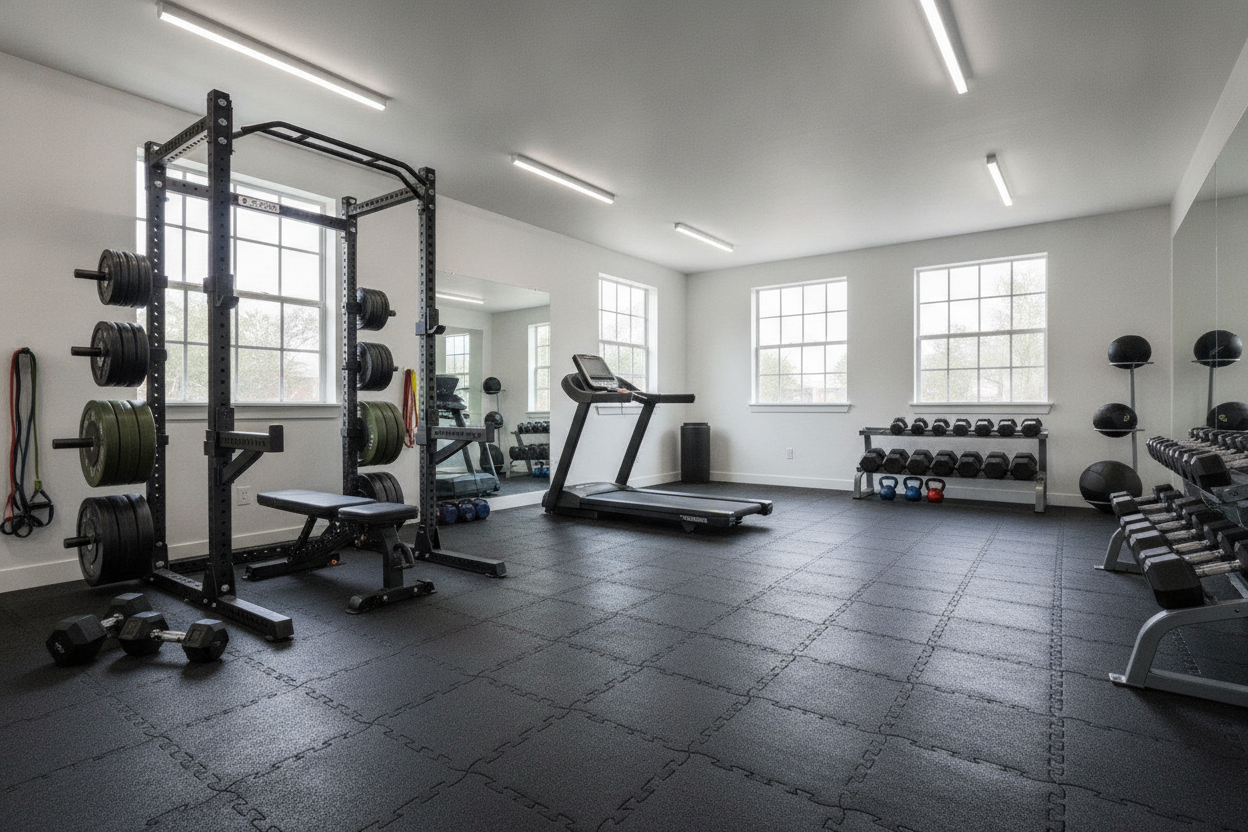
If you don't zone your space, you'll find yourself walking 20 feet between every set just to grab a different pair of dumbbells. Think like a commercial gym owner. You want 'pods' of activity. In my setup, I grouped all the heavy iron in the back, kept the cardio near the door for ventilation, and left the center open for dynamic work.
This flow keeps your heart rate up and your focus sharp. You aren't hunting for a foam roller under a pile of weight plates. You finish your heavy sets, move to the accessory zone, and finish in the recovery area. It makes a 1,000-square-foot room feel cohesive rather than overwhelming.
The Heavy Iron Zone
Your power rack is the anchor. Don't shove it flush against a wall. I leave at least 3 feet of clearance behind my rack so I can easily adjust pull-up bars or clean out the chalk dust that inevitably accumulates. If you're running a program like 5/3/1, you need your plates—including those 1.25 lb micro-plates—within arm's reach of the bar.
Keep your deadlift platform away from high-traffic paths. There is nothing more distracting than someone walking inches from your face while you're pulling a PR. Position your plate storage so you aren't carrying 45s across the entire room; your lower back will thank you before the workout even starts.
The Movement and Recovery Zone
One of the perks of a large space is never having to do burpees or mountain climbers on cold concrete because your rack is in the way. I dedicated a corner specifically to mobility and kettlebell work. I used a 6x8ft exercise mat to anchor this zone. It’s the perfect size to define the area without feeling cramped during a long stretching session.
Having a dedicated spot for your rollers, bands, and light kettlebells means you actually use them. When the floor is wide open and comfortable, you're more likely to spend ten minutes on pre-hab rather than skipping it because the floor is covered in metal and dust.
Stop Buying Tiny Puzzle Mats for a Huge Room
I’m going to be blunt: those 24-inch interlocking foam tiles are garbage for a big home gym. They look okay for about a week, then they start to stretch, gap, and slide. In a large space, the cumulative shift of fifty small mats will drive you insane. You’ll be constantly kicking them back into place like a losing game of Tetris.
You need heavy-duty, seamless coverage. If you want to protect your foundation and your joints, look for a large exercise mat for home gym setup that stays put under its own weight. I’ve tried the cheap route, and I ended up spending twice as much replacing it. Before you buy, spend time choosing the right large exercise mat based on whether you're doing high-impact plyometrics or strictly heavy lifting. Real rubber or high-density PVC is the only way to go when you have hundreds of square feet to cover.
Equipment That Actually Justifies Its Footprint
In a small gym, you buy a folding rack. In a huge home gym, you buy a 6-post monster. But even with space, some things are better than others. A high-quality functional trainer is worth its weight in gold. It replaces ten different machines and provides a smooth cable feel that you just can't replicate with bands.
I also advocate for a dedicated reverse hyper or a GHD if you have the room. These are 'footprint hogs,' but the specialized stimulus they provide for posterior chain health is hard to beat. Skip the chest press machines and the pec decks unless you’re training for a bodybuilding stage; a good adjustable bench and a set of dumbbells that go up to 100 lbs will always be more versatile.
The Final Layout Check (Before You Bolt Anything Down)
Before you drill a single hole into your concrete floor, do a 'ghost workout.' Walk through your typical leg day. Do you have to walk around the treadmill to get to the squat rack? Is the sun hitting your eyes during bench presses? If the flow feels clunky during a mock session, it will be infuriating during a real one.
Use painter's tape to mark the corners of every major piece of equipment. I realized my original plan for the deadlift platform blocked the path to the water cooler. Moving it two feet to the left saved me years of annoyance. Once it's bolted, it's permanent—take the extra hour to get the geometry right.
My Biggest Layout Fail
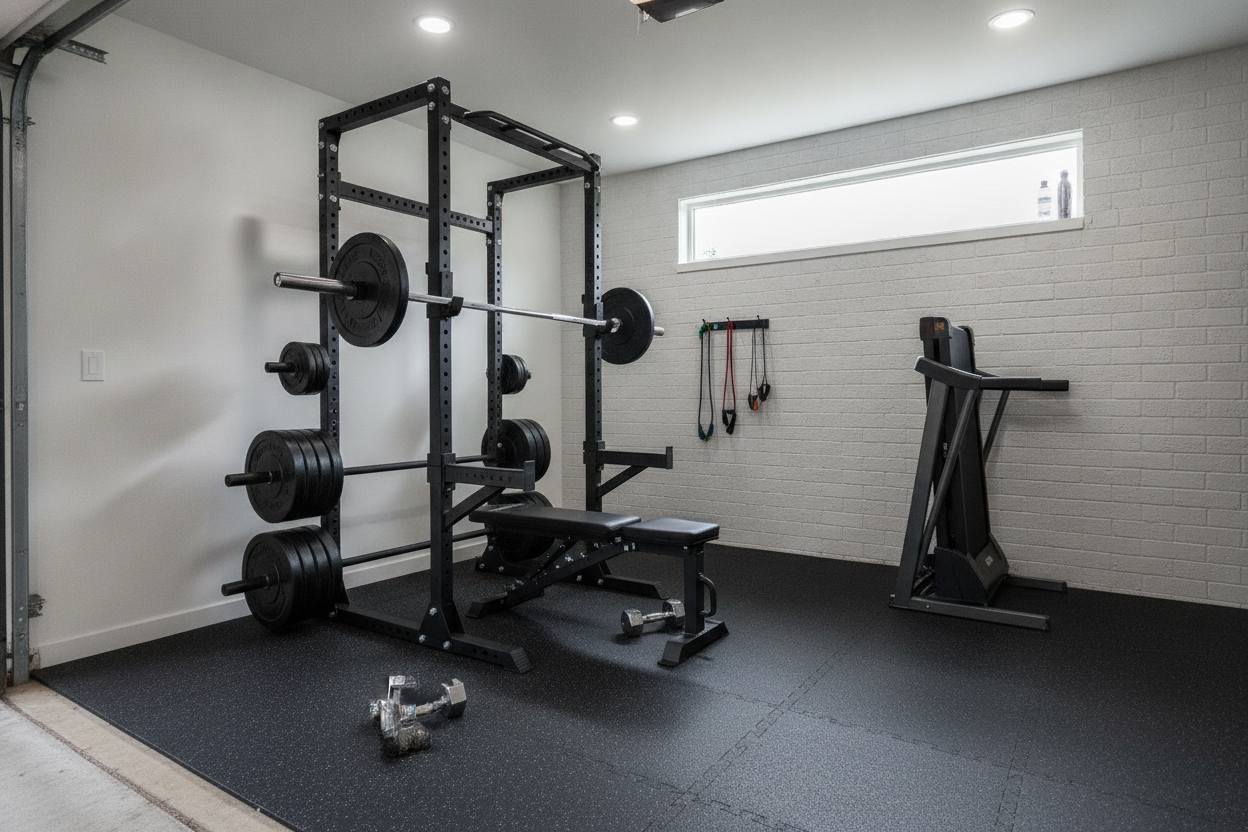
When I first set up my large home gym, I put my rack right against a beautiful brick wall. It looked great for photos. Then I tried to load a bar. I realized I only had about 4 inches of clearance between the end of the barbell and the brick. I couldn't slide a 45-lb plate on without scraping my knuckles or the wall. I had to unbolt the entire 400-lb rack, move it, and redrill the anchors. Measure twice, drill once.
FAQ
How much space do I need for a power rack?
While the rack itself might only be 4x4 feet, you need at least an 8-foot width to accommodate a standard Olympic barbell and another 3 feet of 'working' space in front and behind for safety and loading.
What is the best flooring for a large garage gym?
Heavy-duty rubber rolls or large-format mats are best. Avoid thin foam. If you're dropping heavy weights, 3/4-inch stall mats or high-density gym mats are the industry standard for a reason.
Should I buy a multi-gym or separate machines?
In a large space, separate high-quality pieces usually perform better than a 'do-it-all' machine. A dedicated rack, a cable crossover, and a good bench will always feel more stable than a residential multi-gym.