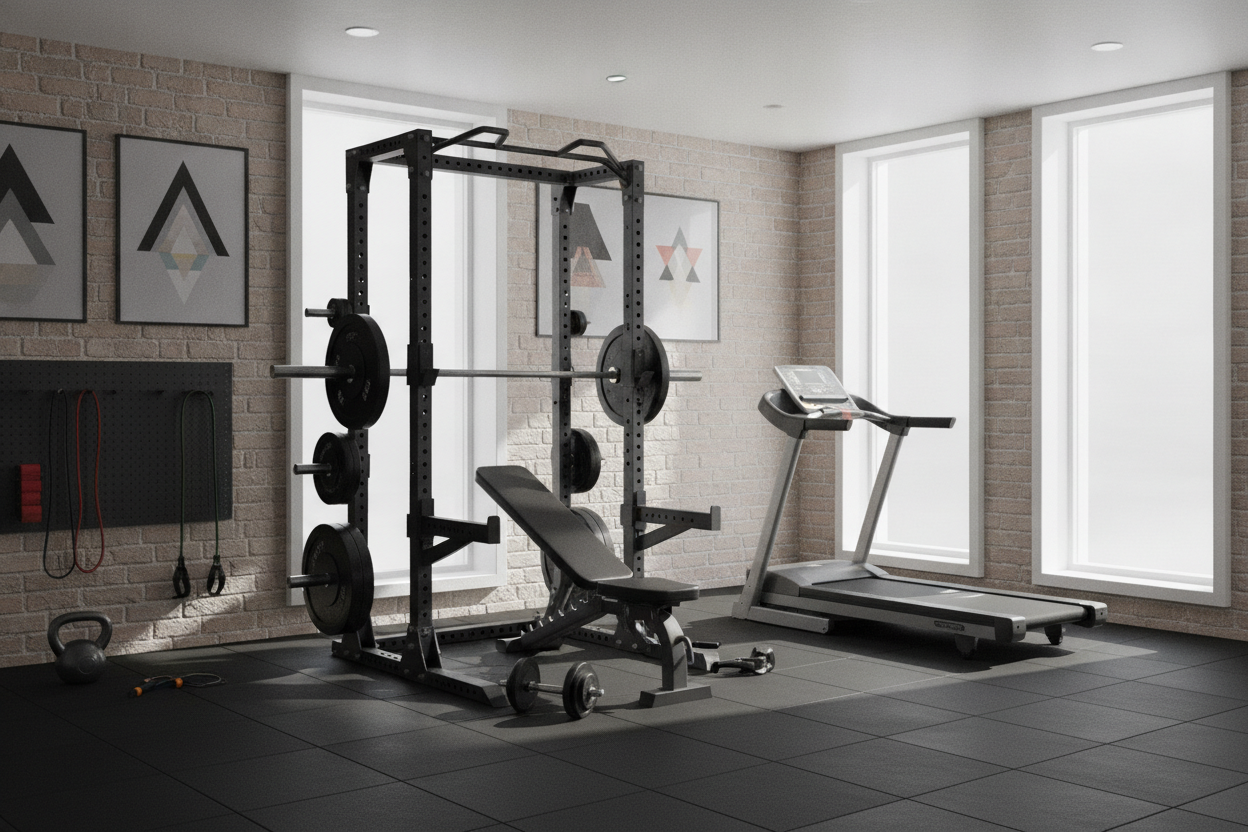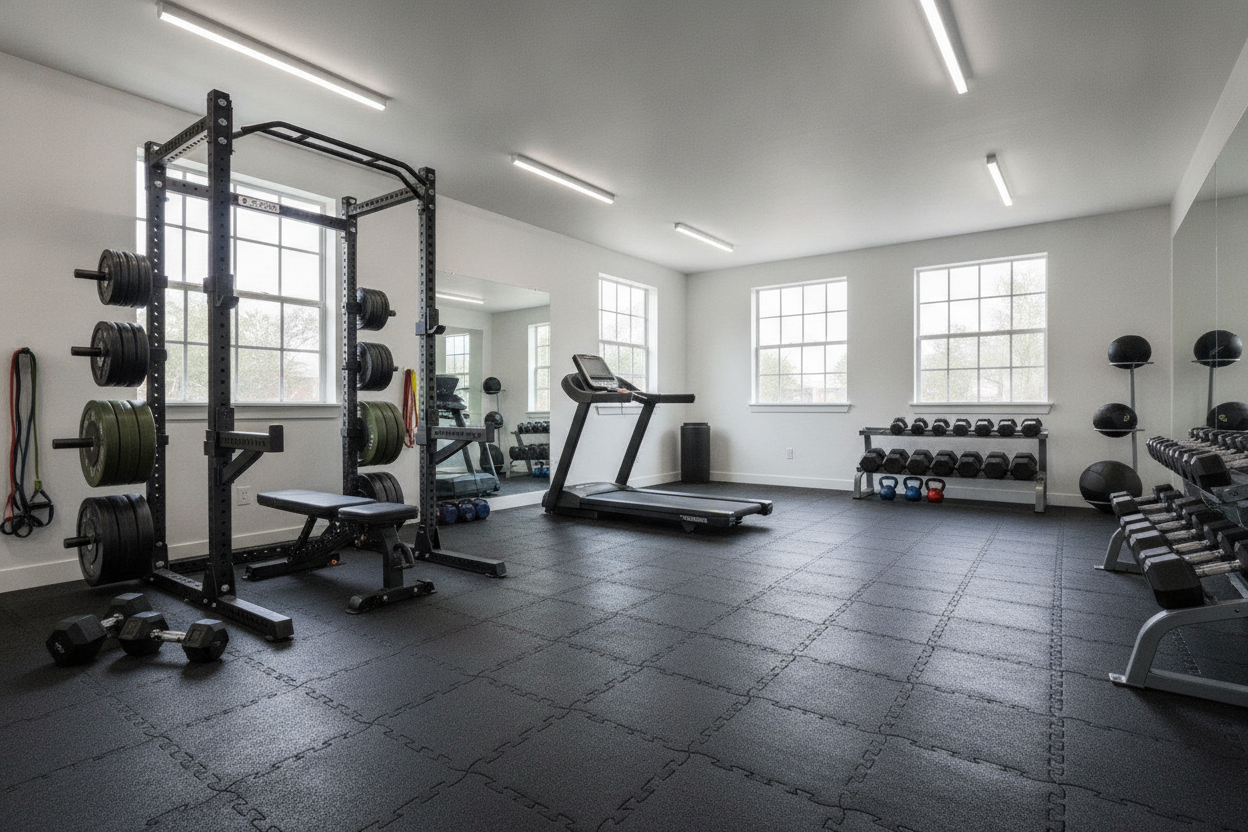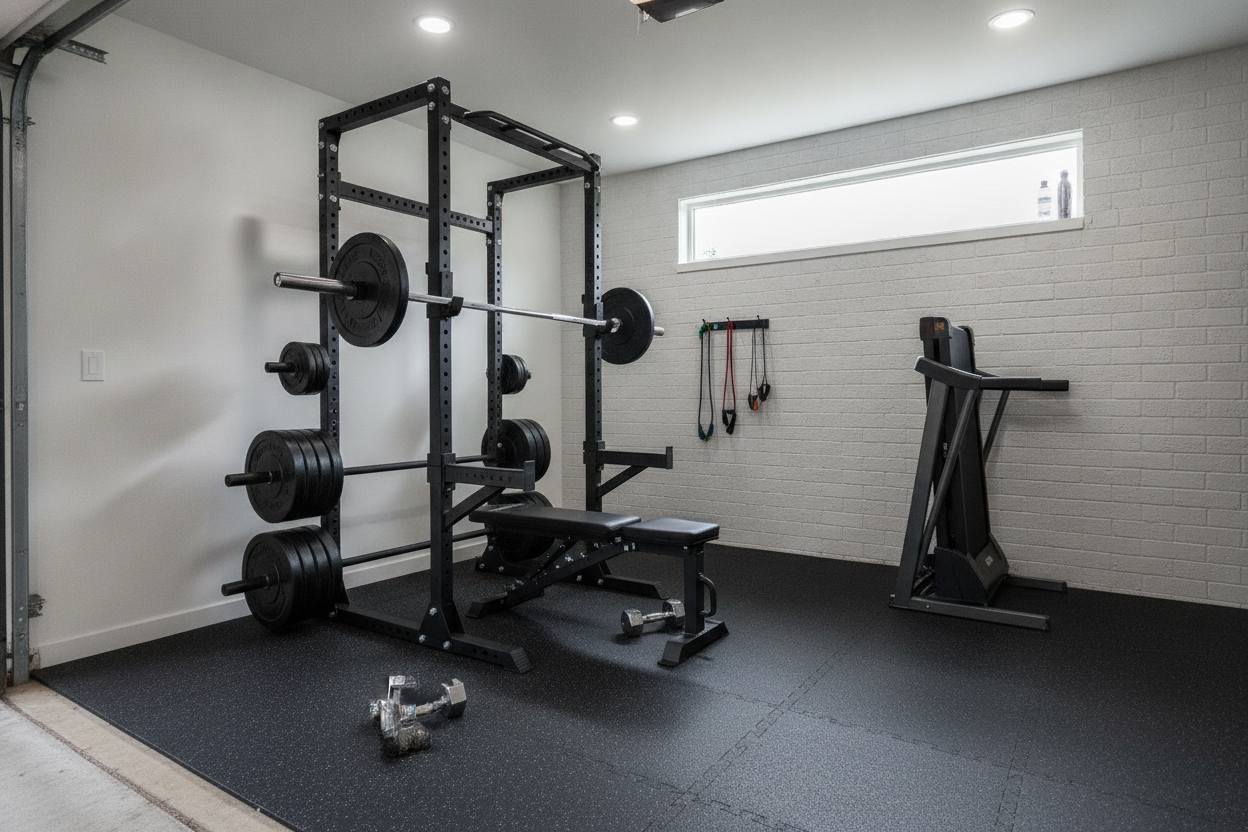
I Fit Real Garage Gym Equipment Into Half a Bay (Here's How)
I remember staring at my SUV and my power rack like they were two magnets with the same polarity. My wife wanted to park inside during the winter, and I wanted to hit a 405-lb squat without driving twenty minutes to a commercial box. Most people think you need a three-car palace for a serious garage gym equipment setup, but that is just a lie told by people who want to sell you bigger houses.
You can train for a powerlifting meet or a Spartan race in the same space it takes to park a sedan. I have spent the last five years testing every piece of kit that claims to be 'compact,' and most of it is junk. But if you choose the right foundational pieces, you can have a world-class training center that leaves enough room for your car to stay out of the rain.
- Footprint First: Prioritize gear that folds, stacks, or hangs.
- The 7-Foot Rule: Your barbell is 84 inches long; that is your non-negotiable width.
- Verticality: If it is on the floor, it is in your way.
- Adjustability over Quantity: One pair of handles beats fifteen pairs of fixed weights.
The 'Half-Bay' Reality Check for Shared Spaces
A standard garage bay is roughly 10 to 12 feet wide and 20 feet deep. When we talk about a small garage gym, we are usually looking at an 8x10 or 9x12 foot rectangle. This is plenty of space for a human to move, but it is a tight squeeze for a human plus a bunch of steel. The biggest mistake I see is people trying to recreate a commercial gym layout in their home gym garage.
You do not need a dedicated leg press machine or a cable crossover. You need a 'dead zone' where the car tires go. In my garage workout setup, the car sits over the deadlift platform when I am not training. This requires low-profile flooring and a rack that stays out of the way. If you can clear a 100-square-foot patch, you have enough room for a professional-grade garage weight room.
Why Your Rack Dictates Your Entire Layout
The squat rack is the heart of any at home garage gym. In a tight space, you have two real choices: a folding wall-mounted rack or a short-post squat stand. Wall-mounted racks are incredible because they fold to within 4 inches of the wall. When you are done, you pull a few pins, swing the uprights in, and your garage gym setup effectively disappears.
However, if you are renting or have weird studs, a compact squat stand with a 48x48 inch footprint is the better move. I prefer a rack with 3x3 inch 11-gauge steel uprights. It is overkill until you are re-racking a heavy triple and the whole thing does not budge. When building a garage gym, your rack placement determines where the bar travels. You need at least 1.5 feet of clearance on either side of a 7-foot Olympic bar to load plates without hitting the wall or the lawnmower. If you are still in the planning phase, check out this guide on building a garage gym to avoid the most common layout blunders.
Protecting Your Foundation (and Your Tires)
Concrete is the enemy of your joints and your garage weight set. Dropping a loaded barbell on bare concrete will eventually crack the slab or, more likely, destroy the inner ring of your bumper plates. Most guys go straight for horse stall mats from a farm supply store. They are cheap and durable, but they smell like a tire fire for the first month and they are a nightmare to move.
If you want a simple garage gym ideas approach that does not involve lugging 100-pound rubber slabs, consider a high-density foam or rubber hybrid. For targeted floor work or a temporary workout room in garage, a 6x8ft exercise mat is a lifter's best friend. You can roll it out for lunges or ab work and tuck it away so it does not get covered in road salt and oil from your car tires. Whatever you choose, make sure the edges are tapered or secured; you do not want to trip while carrying a pair of 70-pounders.
Ditch the Massive Dumbbell Rack
I love a full run of dumbbells as much as the next guy, but a 5-50lb set takes up about six linear feet of wall space. In a small garage home gym, that is prime real estate you cannot afford to waste. A garage gym set should be built around high-quality adjustable dumbbells. I am talking about the ones that feel like real weight, not the plastic-clanking toys.
Modern adjustables can replace 15 to 20 pairs of fixed dumbbells. Look for sets that go up to at least 80 lbs per handle. Yes, the initial cost is higher, but when you factor in the saved space and the cost of a heavy-duty rack, adjustables win every time. They allow for a compact garage gym that still lets you do heavy rows and presses without tripping over a stray 25-pounder every time you walk to your car.
How to Source Compact Gear Without Overpaying
The best garage gym equipment is the stuff you actually use, not the stuff that looks cool on Instagram. Focus on vertical storage. Get your barbells off the floor and onto wall-mounted hangers. Use weight horns on your rack to store plates so the rack itself acts as the weight tree. This adds stability to the rack and keeps your floor clear for garage gym ideas small space enthusiasts.
Don't buy everything at once. Start with a bar, plates, and a rack. Wait for seasonal sales to grab the extras like benches or cable attachments. I always keep an eye on home gym equipment deals to snag high-end gear at a fraction of the retail price. Buying used is also a great option for iron plates, but I always buy my barbells and racks new to ensure the structural integrity is there.
My Biggest Mistake
When I first started my gym garage setup, I bought a full-sized power cage that was 92 inches tall. I measured my ceiling height (96 inches) but I forgot to account for the garage door tracks. Every time I opened the garage door, it would slam into the top of my rack. I had to take a hacksaw to my brand-new uprights. It was a miserable afternoon. Measure your overhead clearance with the garage door *open* before you buy anything.
FAQ
How much space do I really need for a garage gym?
You need a minimum of 8x10 feet. This allows for a 7-foot barbell and enough room to move around the ends of the bar. If you want to park a car in the same bay, a folding rack is mandatory.
Will a garage gym lower my home value?
Not if you do it right. Use wall-mounted storage and avoid bolting anything into the middle of the floor. A clean, organized gym for garage use can actually be a selling point for fitness-minded buyers.
Is it too cold to train in a garage?
It depends on where you live, but a small space heater can usually take the edge off a single-bay setup in 15 minutes. The bar will be cold, so get some chalk or wear lifting gloves until you warm up.