Why All-In-One Exercise Equipment Is Finally Good
I remember staring at my garage floor a few years back, trying to figure out how to fit a power rack, a cable crossover, and a Smith machine into a space meant for a single sedan. It felt impossible. Then I started looking at all-in-one exercise equipment, and honestly, I was skeptical. Most of the stuff I had seen in the past felt like it belonged in a 3 AM infomercial, not under a 400-pound squat bar.
Quick Takeaways
- Space savings: You save about 30-50 sq ft compared to buying separate standalone stations.
- Pulley ratios: A 2:1 ratio is smoother for isolation; a 1:1 ratio is better for heavy rows and pulldowns.
- Steel gauge: Don't buy anything thinner than 14-gauge steel if you plan on actually lifting heavy.
- Versatility: Modern units now combine a squat rack, Smith machine, and functional trainer into one footprint.
The Dark Ages of the Multifunction Exerciser
Early all in one gym equipment earned its bad reputation. I have used machines where the cables felt like they were rubbing against sandpaper because the pulleys were cheap plastic. The frames were often made of thin, 16-gauge steel that would sway if you breathed on it too hard. It was a compromise that satisfied nobody—too wobbly for heavy compounds and too friction-heavy for smooth cable work.
Back then, an all in one workout machine was usually a 'bolt-together' mess from a big-box store that took twelve hours to assemble and three days to break. You couldn't trust the safety catches, and the weight increments were often fixed at awkward intervals. If you were serious about training, you bought a rack and just dealt with the fact that you had no room left for a car.
What Changed? The Rise of the Functional Trainer Hybrid
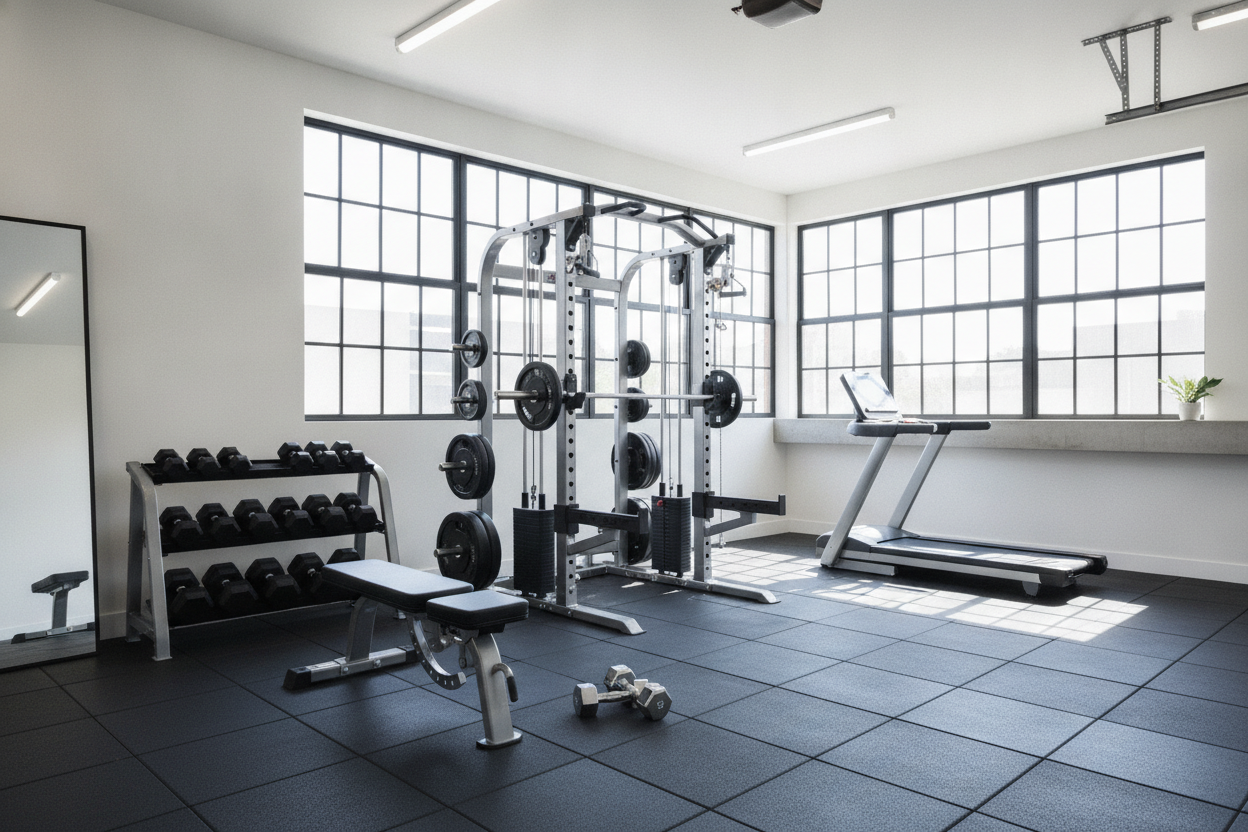
Everything changed when manufacturers started shrinking commercial gym designs for the home market. By integrating dual cable columns with a multifunctional Smith machine setup, these units became legitimate hypertrophy tools. You get the stability of a fixed track for things like calf raises or heavy overhead presses, plus the freedom of adjustable cables for chest flies and face pulls.
An all in one gym machine for home now actually feels like the equipment you would pay $100 a month to use at a luxury club. The transition from a squat rack to a cable station takes seconds, not minutes. This efficiency is why the all-in-one fitness machine has moved from 'gimmick' status to the centerpiece of the modern garage gym.
The 3 Specs That Separate Good Racks from Garbage
If you are hunting for an all in one workout machine for home, check the steel first. 11-gauge is the gold standard for commercial durability, but 14-gauge is perfectly fine for most home lifters. Anything higher than 14 (like 16 or 18) is going to feel like a toy when you start adding plates.
Then look at the pulley ratio. A 2:1 ratio means 100 lbs on the stack feels like 50 lbs of resistance, which is great because you get more cable travel for lunges or crossovers. A 1:1 ratio is better for heavy lat pulldowns where you want the full weight. For a deeper dive into these technicalities, check out this definitive guide to all-in-one Smith machines.
Finally, check the weight capacity of the Smith bar. A high-quality all in one gym set should have a Smith bar rated for at least 600 lbs. If they don't list a rating, walk away.
Protecting Your Floor from a 500-Pound Footprint
One thing people forget: these machines are incredibly heavy. Once you add two 200-lb weight stacks and a steel frame, you are looking at 600+ lbs concentrated in a tiny footprint. Dropping a plate or just the sheer static pressure can crack your garage concrete or leave permanent indents in your hardwood.
I always recommend putting down a heavy-duty 6x8ft exercise mat before you even unbox the machine. It saves your floor and significantly dampens the noise of the weight stacks clicking together. Trust me, your family and your neighbors will thank you when you are hitting late-night sets.
Are You Ready to Ditch Your Separate Stations?
If you are a competitive powerlifter hitting 600-lb squats every week, you still need a dedicated, heavy-duty power rack. But for 95% of us, an at home all in one gym is simply the smarter move. It cleans up the clutter and lets you superset movements without walking across the room.
Consolidating into a home gym all in one machine means you actually have room to move. You can add a bench, some dumbbells, and still have space to stretch. It turns a cramped storage unit into a functional training space.
My Experience: The 'Cheap' Mistake
I once bought a cheap 'all-in-one' off a local marketplace for $200. The first time I tried to do a pull-up, the whole thing tipped forward because the base wasn't wide enough. I learned the hard way that a multifunction exerciser usually means 'does five things poorly' unless you invest in a unit with a wide, heavy-base design. Don't skimp on the footprint width; that stability is what keeps you safe when you're training alone.
FAQ
Does an all-in-one machine replace a squat rack?
Yes, most modern all in one gym sets include J-cups and spotter arms on the front uprights, allowing you to perform traditional free-weight squats and presses outside of the Smith machine track.
How much ceiling height do I need?
Most units require between 82 and 90 inches of clearance. Always measure your ceiling—especially if you have a finished basement with drop ceilings—before ordering.
Is assembly difficult?
It is time-consuming. Budget at least 4 to 6 hours and have a real socket wrench set ready. The 'tools' included in the box are usually just flat pieces of metal that will strip your bolts and hurt your hands.