All In One Smith Machine: The Definitive Home Gym Guide
Building a home gym usually involves a difficult trade-off: sacrifice half your garage for multiple machines, or sacrifice workout variety to save space. The all in one smith machine promises to solve this dilemma by cramming an entire commercial facility’s worth of utility into a single footprint. But does it actually deliver on that promise, or is it a jack-of-all-trades that masters none?
If you are tired of waiting for equipment at the gym or paying monthly fees, this guide breaks down the biomechanics, utility, and reality of owning these hybrid machines.
Key Takeaways: Is It Worth It?
- Space Efficiency: Replaces a power rack, functional trainer, dip station, and leg press in roughly 20-30 sq ft.
- Safety First: The Smith component allows for self-spotting, making heavy solo lifting safer than free weights alone.
- Cost vs. Value: High upfront cost ($1,500–$5,000+), but cheaper than buying individual machines over time.
- Versatility: Best for bodybuilders and general fitness enthusiasts; powerlifters may still prefer a standalone rack.
The Anatomy of an All-In-One System
To understand the value, you have to understand the engineering. An all-in-one smith machine isn't just a bar on rails. It is a hybrid ecosystem designed to target every muscle group.
The Smith Mechanism
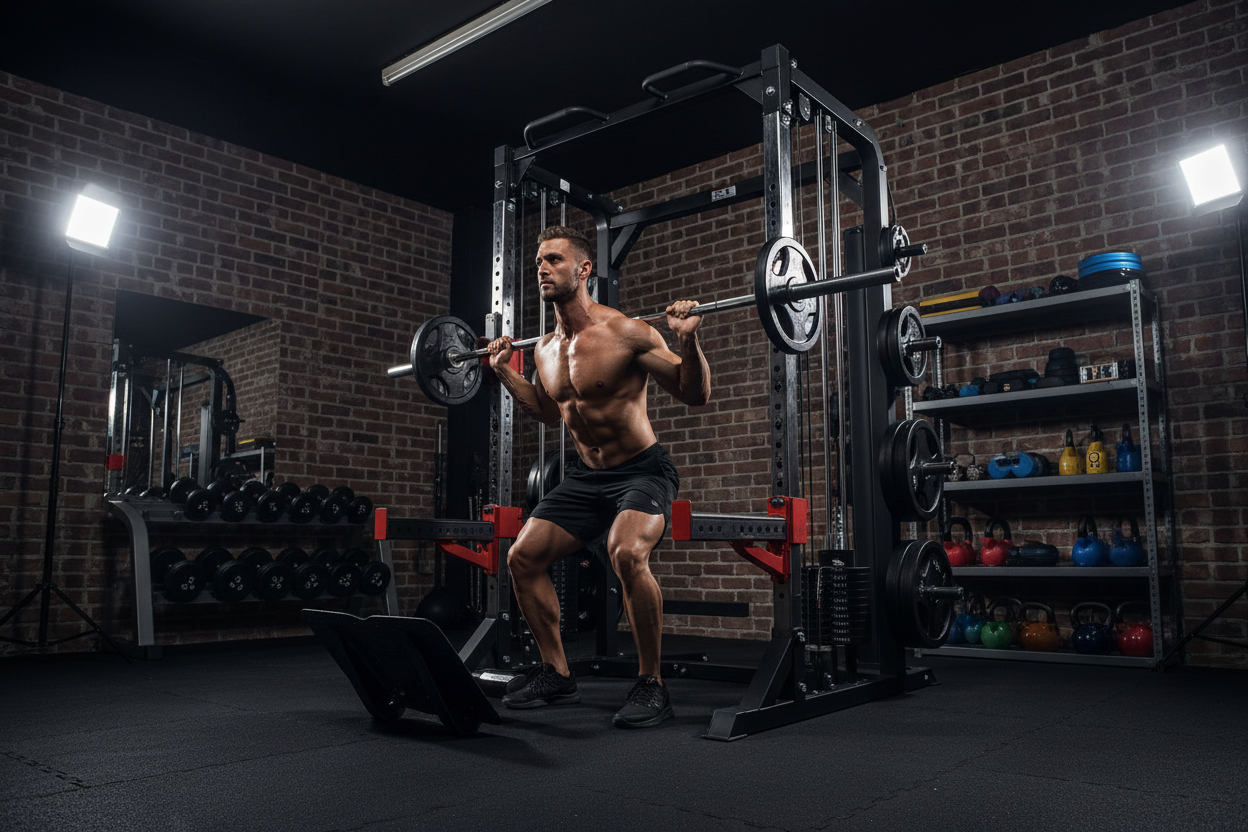
The core feature is the guided barbell. Unlike free weights, the Smith machine stabilizes the weight for you. This isolates the muscle group more effectively because your stabilizer muscles aren't working overtime to balance the load. For hypertrophy (muscle growth), this is a massive advantage. You can push to failure safely without fear of getting crushed under a bench press.
The Functional Trainer Integration
Most quality units, often marketed as an all in one home gym smith machine, include dual adjustable pulley systems. This is where the magic happens. These cables allow you to perform flyes, lat pulldowns, rows, and tricep pushdowns.
Pro Tip: Look for a machine with a 2:1 pulley ratio. This provides a smoother travel for the cables and allows for more explosive movements, which is crucial for athletic conditioning.
Why the "All-In-One" Approach Wins
The biggest friction point in home workouts is transition time. If you have to move from a squat rack in the corner to a wall-mounted pulley system, you lose intensity.
With an all-in-one smith machine, you can superset a heavy compound movement (like a Smith Squat) immediately with an isolation movement (like a Cable Lateral Raise) without taking more than two steps. This density of training keeps your heart rate up and maximizes hypertrophy in a shorter window.
Common Mistakes When Buying
Don't just look at the price tag. Here is where people get burned:
- Ignoring the Weight Stack: Some machines use plate-loaded cables (cheaper but annoying to change), while others use selectorized weight stacks (faster but pricier). If you value flow, get the stack.
- Overlooking Depth: While these machines save width, they often require significant depth for the Smith bar path and bench placement. Measure your room twice.
- The "Wobble" Factor: Lighter machines (under 300 lbs assembled weight) will shake when you re-rack heavy weights. Look for heavy-gauge steel construction (11-12 gauge is the gold standard).
My Training Log: Real Talk
I want to be transparent about what living with an all-in-one smith machine is actually like, beyond the glossy product photos.
I tested a popular mid-range model for three months. The first thing that hit me wasn't the workout—it was the maintenance. About three weeks in, the guide rods for the Smith bar started to get "sticky." There was a specific point, right at the bottom of the eccentric part of my chest press, where the bar would catch just slightly. It threw off my rhythm completely.
I learned the hard way that you must keep silicone spray on hand. Once I lubricated the rods, it was smooth sailing.
Another detail people don't mention is the cable drag. On a commercial gym cable machine, the pull is usually frictionless. On my all-in-one unit, because the cables travel through so many pulleys to accommodate the compact frame, there is a slight drag sensation. It’s not a dealbreaker, but it adds a different kind of resistance that feels heavier than the number on the stack suggests. You have to check your ego at the door; 50lbs on this machine feels like 70lbs at the commercial gym.
Conclusion
The all in one smith machine is the single most efficient investment for a serious home gym. It eliminates the clutter of multiple stations and provides a safety net for solo lifters. While the initial setup and maintenance require attention, the ability to perform 95% of commercial gym exercises in your garage is unmatched.
Frequently Asked Questions
Can I build muscle effectively with just a Smith machine?
Absolutely. Your muscles do not know the difference between free weights and machines; they only recognize tension. The Smith machine allows for high tension and safe failure points, which are excellent drivers for muscle growth.
Does an all-in-one machine replace a squat rack?
For most people, yes. Many all-in-one units come with "J-Hooks" and "Spotter Arms" attached to the front uprights, allowing you to use a free barbell for squats and deadlifts outside of the Smith system.
How much ceiling height do I need?
Most all-in-one machines are between 83 and 90 inches tall. You generally need at least 6 to 12 inches of clearance above the machine to assemble it properly, specifically for inserting the guide rods and top pulleys.