Why a Simple Door Stretch Beats Any Mobility Tool I Own
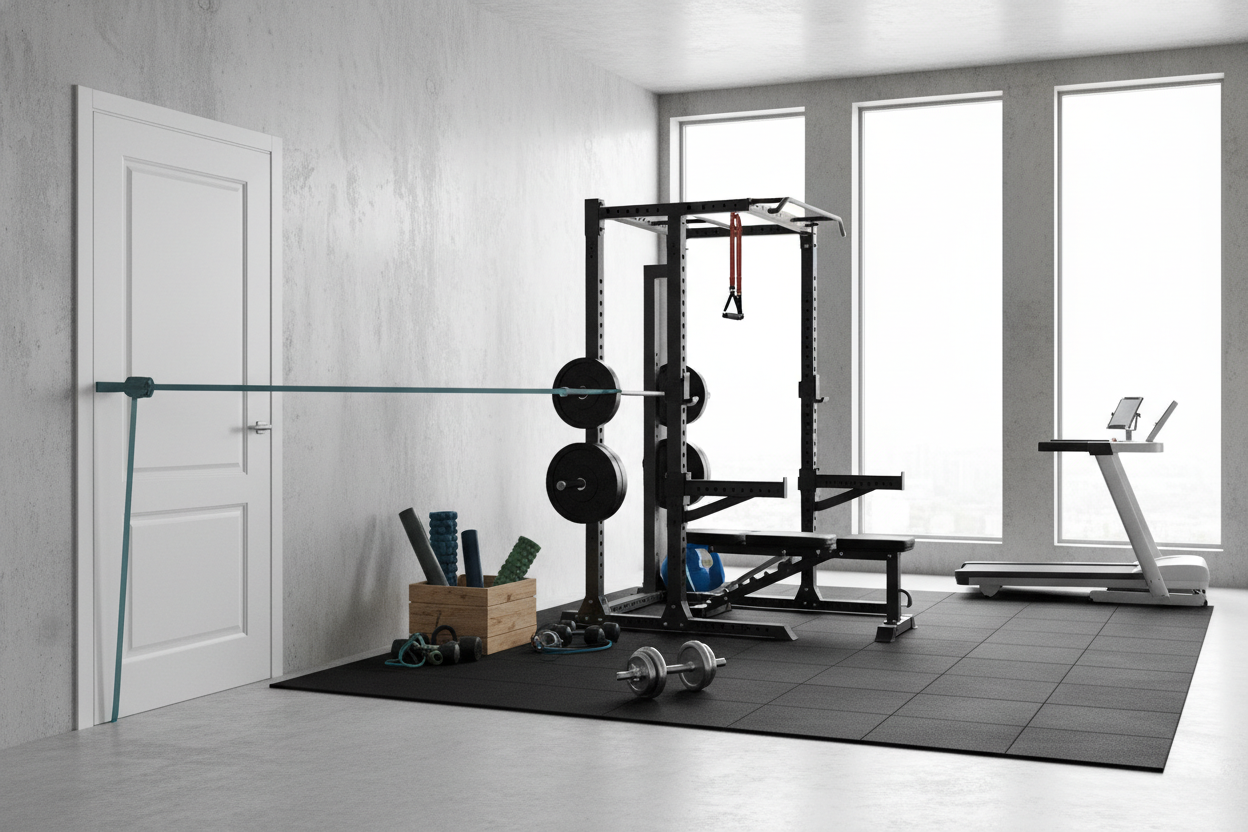
I spent $200 on a fancy percussion massager last year. It currently sits under my power rack, covered in chalk and dog hair. Meanwhile, the most effective piece of mobility gear in my house is the 36-inch wide wooden frame leading into my kitchen. If you are struggling with tight shoulders, a door stretch is more valuable than any vibrating gadget or expensive massage gun.
- Zero cost: No fancy bands or PVC pipes required.
- High leverage: Use your body weight and the house's structure to create deep tension.
- Versatile: Targets the pecs, delts, and even the lats with simple angle changes.
- Fast: A complete routine takes less than three minutes before you hit the bench.
The Real Reason Your Shoulders Are Always Rolled Forward
Most of us are a postural mess. Between chasing a new bench press PR and hunched-over laptop sessions, our anterior chains are permanently shortened. This creates that 'gorilla posture' where the shoulders roll forward, putting your rotator cuffs in a vulnerable position for every overhead movement.
The doorway stretch is the ultimate fix for this. Unlike a resistance band that loses tension as it stretches, a door frame provides a fixed, immovable point. This allows you to lean your entire body weight into the stretch, providing a level of leverage you simply cannot get with a foam roller. It is a zero-cost physical therapy tool that instantly opens up the chest and resets your posture.
How to Do the Classic Pec Stretch in Doorway (Without Cheating)
I see guys in the gym doing a doorway pectoral stretch all wrong. They lean in and immediately arch their lower back, thinking they are getting deeper. They aren't. They are just compensating for tight tissue by stressing their lumbar spine. To perform a proper doorway pec stretch, you need to keep your core braced and your ribs tucked.
The gold standard is the doorway pec stretch at 90 degrees abduction. Place your forearms against the frame with your elbows at shoulder height. Step through the door with one leg, keeping your torso upright. You should feel an intense pull across the chest fibers. If you want to hit the pec minor specifically, slide your arms slightly higher up the frame. This pec minor doorway stretch is crucial for releasing the muscle that pulls the shoulder blade forward and down.
Targeting the Joints: The Shoulder Stretch in Doorway
While the chest is usually the main target, a dedicated shoulder stretch in doorway can save your training longevity. If you feel a 'pinch' at the front of your shoulder during dips or presses, your anterior deltoid is likely the culprit. By adjusting your arm position, you can turn a basic door frame stretch into a targeted joint mobilizer.
I personally prefer a kneeling variation for this to lock down the pelvis and prevent that lower back arching I mentioned earlier. If you have hard floors, I recommend tossing down a 6X4Ft Yoga Mat Exercise Mat Gym Flooring For Home Workout to protect your knees while you work through these angles. From a kneeling position, place one hand high on the frame and lean your chest toward the floor to create a doorway shoulder stretch that actually hits the capsule.
Wait, Can You Do a Doorway Stretch for Upper Back?
Most people only think about pushing into the frame, but pulling is just as effective. Grabbing the sides of the door frame and sitting back into a squat creates an incredible doorway back stretch. This 'hang' releases the lats and pulls the shoulder blades away from the spine, which is a massive relief if you carry tension in your traps.
This door frame back stretch is a great entry point for those who find traditional bar hangs too taxing on their grip. It is a gateway to more Stretch Mobility For Back Traps Spine Advanced Movements that you can eventually transition to on a pull-up bar. Just make sure the door frame is sturdy—I have definitely heard some creaking in older houses when I really lean into a doorway stretch for back.
My 3-Minute Pre-Lift Doorway Routine
Before I touch a barbell on upper body days, I run through a quick circuit. I start with a 30-second chest doorway stretch on each side, followed by a doorway stretch for rotator cuff by placing my hand behind my back and using the frame to gently pull the shoulder into internal rotation. This sequence improves my mind-muscle connection and ensures I am not fighting my own tight muscles during the lift.
This is a perfect primer, but it is just the start. I usually follow this up with a broader routine, similar to the one found in this guide on Stretch Mobility For Back Traps Spine Great For Pre Lifting Increased Range Of Motion. Combining the door frame work with dynamic movements on the gym floor ensures your joints are lubricated and ready for heavy loads.
Personal Experience: The Gadget Trap
I used to be the guy who bought every mobility tool on the market. I have a box full of lacrosse balls, weirdly shaped plastic hooks, and expensive bands. Most of them are useless. One time, I spent 20 minutes trying to set up a complex band distraction for my shoulder, only to realize I could have gotten the same result from a 30-second doorway arm stretch. I have learned the hard way: the simplest solution is usually the one you will actually do every day.
FAQ
Is the doorway stretch safe for everyone?
If you have a history of shoulder dislocations, be careful. Don't 'drop' your weight into the stretch. Ease into it and maintain tension in your muscles rather than just hanging on your ligaments.
How long should I hold a door stretch?
For a pre-workout warm-up, 30 seconds of active holding is plenty. For long-term postural changes after a workday, try to hold the doorway pectoral stretches for 2 minutes to allow the fascia to actually adapt.
Can a doorway stretch help with lower back pain?
Indirectly, yes. If your upper back is incredibly tight, your lower back often overcompensates. Using a doorway stretch for lower back pain usually involves the lat-stretch variation (the pull) to take pressure off the thoracolumbar fascia.