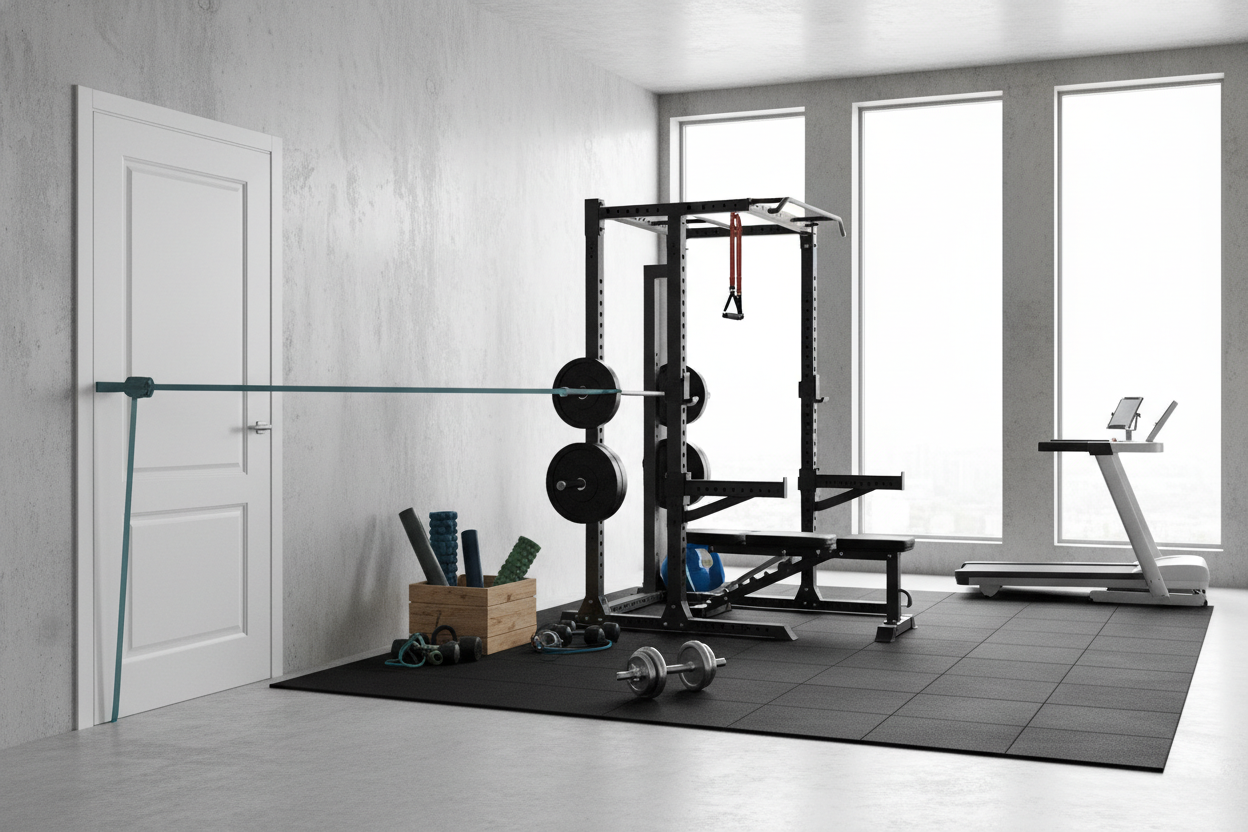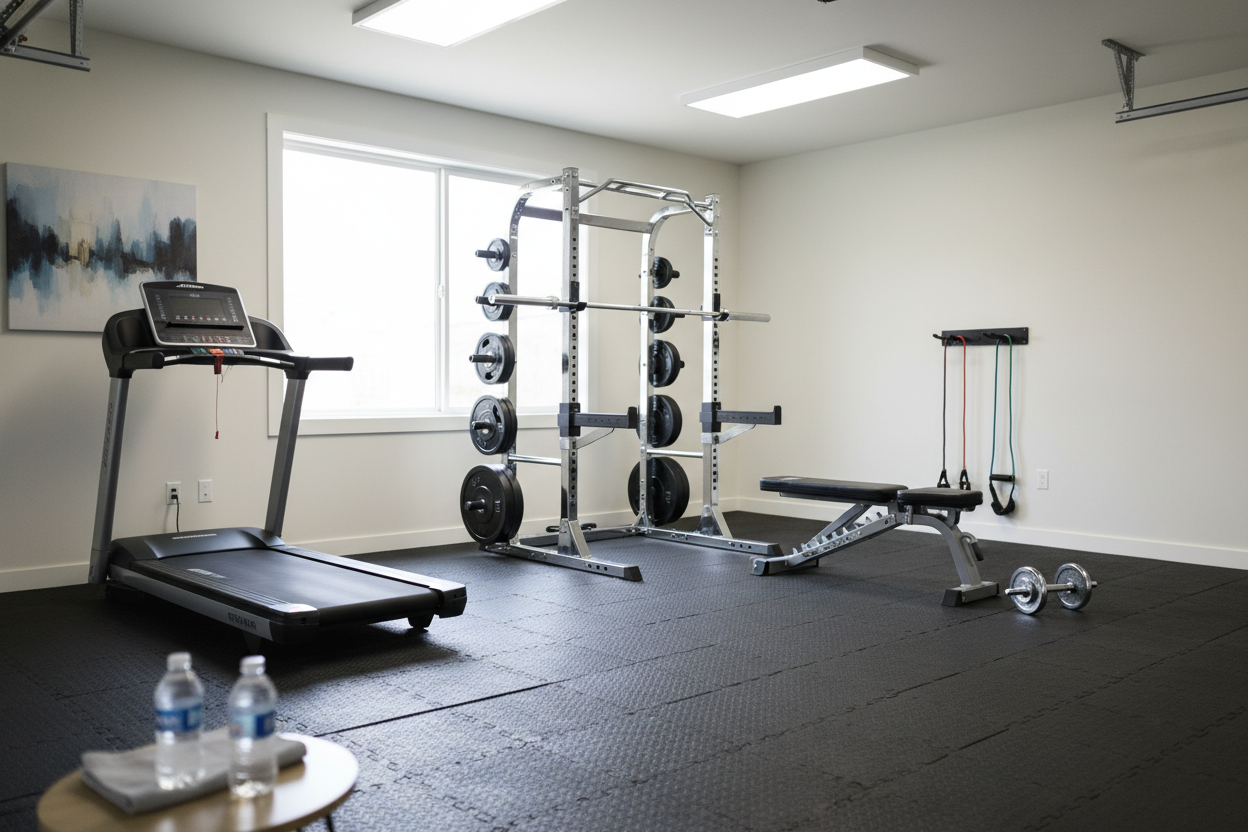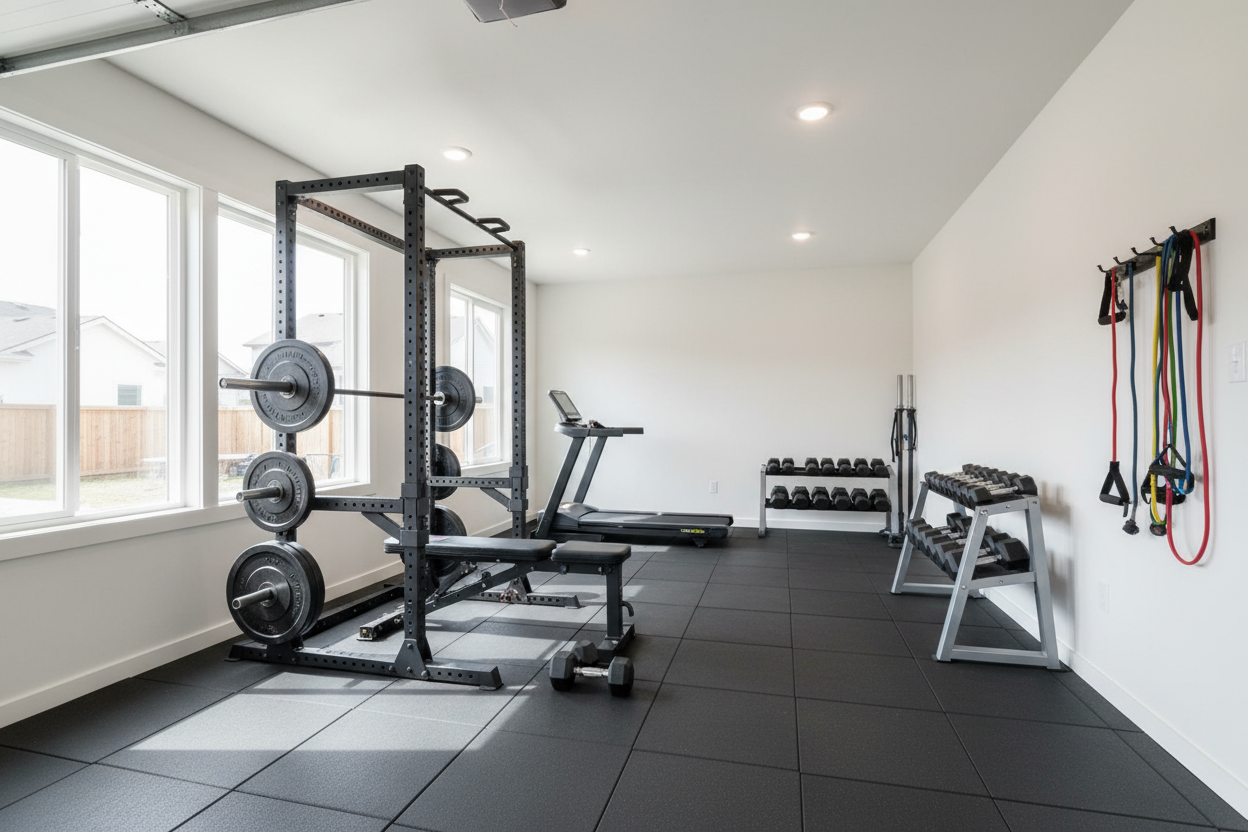
The Exact Strength Training Equipment List I Give My Friends
Every month, I get a text from a buddy who finally realized his $80-a-month commercial gym membership is a scam. They usually send me a screenshot of a $3,000 multi-gym machine that looks like a Transformer and ask, 'Is this good?' My answer is always a hard 'no.' You do not need a chrome-plated monstrosity to get strong; you need a solid strength training equipment list that focuses on physics, not marketing.
- Buy the rack once: Don't cheap out on the thing that catches the weight.
- Iron is iron: Used cast iron plates work just as well as brand-new ones.
- Floor space is king: Adjustable dumbbells save you a 10-foot wall of clutter.
- Skip the gadgets: If it has a 'vibration' feature, it's a paperweight.
Stop Buying Gear You Don't Have the Muscle For
Most guys start by buying for the gym they think they'll have in five years. They want the cable crossovers and the leg press before they can even squat their own body weight. Building a resistance training equipment list that actually works means starting with the things that allow for the most loading. If you can't move 200 pounds on it, it's probably a toy.
I’ve seen garages filled with 'total body' machines that end up serving as expensive laundry racks. A minimal setup of heavy iron beats a room full of pulleys every single time. Focus on the big movements—squat, bench, deadlift, and press. Everything else is just noise until you have a foundation.
Phase 1: The Non-Negotiable Iron Foundation
You need a power rack. Not a half-rack, not a squat stand—a full cage with 11-gauge steel. Look for 2x3 or 3x3 tubing with 1-inch or 5/8-inch holes. This is the centerpiece of your gym. Then, get a 20kg (45lb) barbell with a decent knurl. I prefer a multi-purpose bar with dual knurl marks so you can use it for both powerlifting and general training. You need reliable strength equipment that won't bend when you finally hit a 405-lb deadlift.
For plates, stick to cast iron. They are loud, they are old school, and they are usually 30% cheaper than fancy urethane-coated ones. If you plan on doing Olympic lifts, buy one pair of 45-lb bumper plates to protect your floor, then stack iron for the rest. A standard 300-lb set is the perfect starting point for any garage setup.
Phase 2: Things That Actually Expand Your Workouts
Once you've got the big stuff, get an adjustable bench. It needs to handle at least 600 lbs—and remember, that includes your body weight plus the bar. I've seen cheap $100 benches fold under a heavy incline press, and it isn't a pretty sight. Look for a bench with a 'ladder' style adjustment rather than a pin; it's much faster to swap between sets.
Pair that bench with a set of heavy adjustable dumbbells. I’m a fan of the ones that go up to at least 80 lbs per handle. They take up a 2x2 foot footprint instead of a massive rack of individual weights. This allows you to add rows, curls, and lateral raises without needing a 2,000-square-foot warehouse.
Phase 3: The Cheap Stuff That Saves Your Joints
This is where you buy the strength training accessories that keep you from falling apart. You don't need a $200 designer belt, but a 10mm leather lever belt is a godsend for your lower back during heavy sets. It gives you something to brace against and keeps your spine neutral under load.
Basic 7mm neoprene knee sleeves are another must. They keep the joints warm, which matters more than you think when your garage is 40 degrees in January. Finally, grab a pair of $15 cotton lifting straps. When your back can handle 400 lbs but your grip gives out at 300, these are the only thing that will keep your progress moving forward.
The 'Do Not Buy' Graveyard
Stay away from the 'As Seen on TV' section. Ab rollers are fine, but those electronic 'muscle stimulators' and vibration plates are useless. If a piece of equipment promises to build muscle while you sit on the couch, it's a lie. Also, avoid those 'all-in-one' home gyms with the plastic-coated weights and cables that feel like they're grinding through sand. They have a terrible resale value and the range of motion is usually designed for someone exactly 5'9'.
How to Hunt for Gear Without Getting Scammed
Buy your plates used. Rust doesn't make 45 lbs weigh any less, and you can usually find them on Marketplace for 50 cents on the dollar. However, buy your barbell and your bench new. You want a warranty on the things that keep the weight from crushing your chest. Check out home gym equipment deals before you pull the trigger on a full-price rack. Most of the big manufacturers have 'boneyard' sections where they sell gear with cosmetic scratches for a massive discount.
My Biggest Mistake
I once bought a 'budget' squat rack for $180. The steel was so thin I could practically dent it with my thumb. Every time I racked 225 lbs, the whole thing swayed like a tree in a hurricane. One afternoon, I missed the J-cup on a squat, and the entire rack nearly tipped over onto my lawnmower. I sold it for $40 and bought a real 3x3 rack the next day. Buy once, cry once.
FAQ
How much space do I really need?
An 8x8 foot space is the bare minimum for a rack and a barbell. If you have a standard one-car garage, you have more than enough room for a pro-level setup.
Are bumper plates worth the extra money?
Only if you are doing cleans or snatches where you drop the bar from overhead. For squats and deadlifts, iron is better because it's thinner, meaning you can fit more weight on the bar.
Should I get a 1-inch or 2-inch barbell?
Always get a 2-inch (Olympic) barbell. The 1-inch 'standard' bars are flimsy, have a low weight capacity, and the plates are harder to find used.