Why a Boring Logbook is the Best Way to Gain Muscle Quick
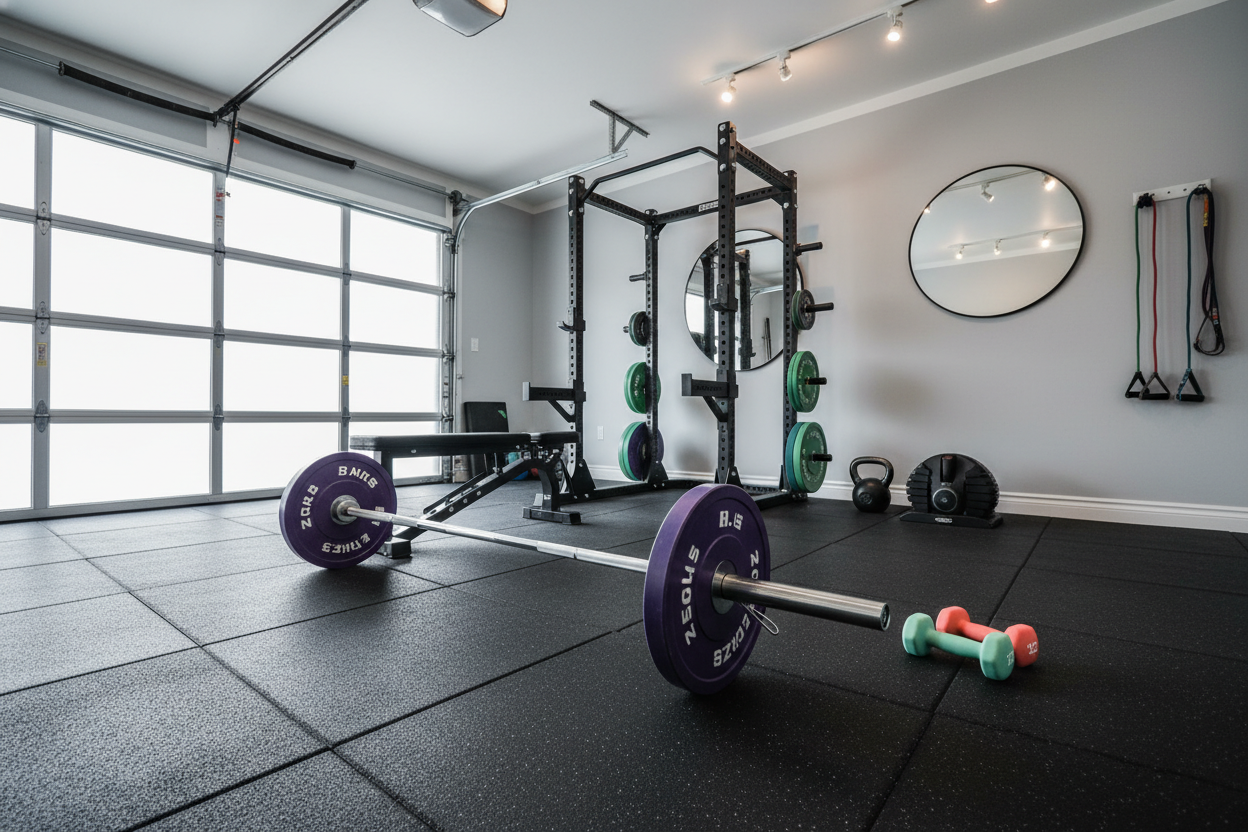
I spent years scrolling through fitness influencers' feeds, trying to find the 'secret' exercise that would finally fill out my sleeves. I’d swap my barbell rows for single-arm cable pulls, then trade those for landmine presses the following week, all in the name of 'shocking' my body. I was always sore, but I never looked any different in the mirror. It turns out, I was just spinning my wheels in a high-tech garage gym filled with equipment I didn't know how to use effectively.
The truth is, the best way to gain muscle quick isn't found in a new piece of gear or a complex app with a monthly subscription. It’s found in a $2 spiral-bound notebook and the willingness to be incredibly bored for three months straight. Real hypertrophy is a mathematical equation, not a creative endeavor.
Quick Takeaways
- Muscle confusion is a marketing lie that prevents you from actually mastering a lift.
- Hypertrophy requires progressive overload, which is impossible to track accurately without a logbook.
- Mastering 4-5 compound movements is the best way to put muscle on fast.
- Double progression is the most effective way to handle plateaus in a home gym setting.
The 'Muscle Confusion' Myth That Keeps You Small
We’ve been told for decades that we need to keep our muscles 'guessing.' If the body knows what’s coming, the theory goes, it stops adapting. This is total nonsense. When you change your exercises every week, you aren't growing; you're just experiencing 'neurological adaptation.' Your brain is learning how to coordinate a new movement, which makes you feel tired and sore, but it doesn't actually trigger the best way to put muscle on fast.
Constant variety creates massive amounts of muscle damage and neurological fatigue without the corresponding growth. You spend all your energy just trying to balance the weight or figure out the form. To actually grow, you need to get so good at a movement that the only thing left for your body to do is build more tissue to handle the load. If you’re constantly 'confusing' your muscles, you’re really just confusing your progress.
Why a Cheap Notebook Beats Every Fancy Fitness App
I’ve tried the apps with the heat maps and the rest timers. They’re distracting. A physical logbook is the ultimate home gym tool because it forces you to face the cold, hard numbers. True hypertrophy relies on strict progression—adding exactly one rep or five pounds to the bar. You can't do that if you're guessing what you did last Tuesday while staring at a blue-light screen.
When you sit down on your bench and see that last week you did 200 pounds for 8 reps, your only job is to do 200 pounds for 9 reps. That’s it. The Best Build Muscle Fast Tips Have Nothing to Do With Weights often center on these data-driven habits. Tracking your sleep, your reps, and your recovery variables in a notebook creates a paper trail of success that an app just can't replicate. It turns your workout into a mission rather than a hobby.
The 'Boring' Big Four: Picking Movements You Won't Change
If you want the best way to grow muscle fast, you need to pick 4 or 5 compound movements that fit your specific setup and stick to them for at least 12 weeks. For most garage gym owners, this means a squat variation, a hinge (like a deadlift or RDL), a horizontal push, and a vertical pull. Don't overcomplicate it. If you have a solid power rack and a barbell, you have everything you need.
Stability is the unsung hero of growth. I always recommend performing these lifts on a dedicated, stable surface like a Best Large Exercise Mat rather than slippery concrete or squishy carpet. Once your feet are planted and your equipment is set, your focus should be entirely on execution. The Best Exercise Plan to Gain Muscle Fits on an Index Card because it doesn't need twenty different isolation moves. It needs five moves done with savage intensity and perfect form.
The Double Progression Method for Garage Gyms
In a home gym, you might not have a full rack of dumbbells in 2.5-lb increments. This is where double progression becomes your best friend. Instead of just trying to add weight every time, you focus on a rep range—let's say 8 to 12 reps. You start with a weight you can do for 8. You stay at that weight every session until you can hit 12 reps with perfect form. Only then do you increase the weight and drop back down to 8 reps.
This method solves the plateau problem. It ensures that you are actually getting stronger and bigger before you move to a heavier load. It’s the safest and most reliable way to ensure you are moving forward, even if you only have a basic set of iron plates and a standard barbell. It’s the best way to grow muscle fast without wrecking your joints by jumping up in weight too quickly.
Stop Entertaining Yourself and Start Working
The hardest part of this approach isn't the physical effort; it's the boredom. Real lifting is repetitive. It’s unglamorous. It feels like manual labor because, biologically, that’s what it is. You are convincing your body that it is in a survival situation where it must get stronger to survive the 'work' you are giving it. This isn't a playground; it's a construction site.
Accepting that your workouts should look almost identical week after week is the best way to put on muscle mass fast. When you stop looking for 'fun' in the gym and start looking for 'progress' in your logbook, everything changes. You stop being the person with the fancy gear and start being the person with the results.
Personal Experience: My Logbook Wake-Up Call
A few years ago, I hit a massive wall. I had a beautiful rack, a high-end Ohio Bar, and I was doing 'new' routines every month. I felt like I was training hard, but my chest and back were stagnant. I finally bought a cheap notebook and committed to a simple 5-move routine for three months. By week four, I realized I had been using the same 50-lb dumbbells for rows for nearly a year because I 'felt' like they were heavy enough. Once I saw the data, I realized I was coasting. I pushed to the 60s, then the 70s, and finally saw the growth I’d been chasing. My mistake was trusting my feelings over my data.
FAQ
Do I really need a physical notebook?
You don't 'need' one, but it's better. It doesn't have notifications, it doesn't break when you drop a plate on it, and you don't have to unlock it with a sweaty thumbprint. It’s a dedicated tool for a dedicated task.
How long should I keep the same exercises?
At least 8 to 12 weeks. If you’re still making progress (adding reps or weight), don't change a thing. Only swap a movement if it starts causing joint pain or if you’ve truly plateaued for three weeks straight.
What if I get bored doing the same thing?
Remind yourself why you're there. If you're in the gym for entertainment, join a kickball league. If you're there to build muscle, find your 'fun' in the fact that the weights are getting heavier and your clothes are getting tighter.