White Rubber Floor Mats: The Secret to a Brighter Home Gym
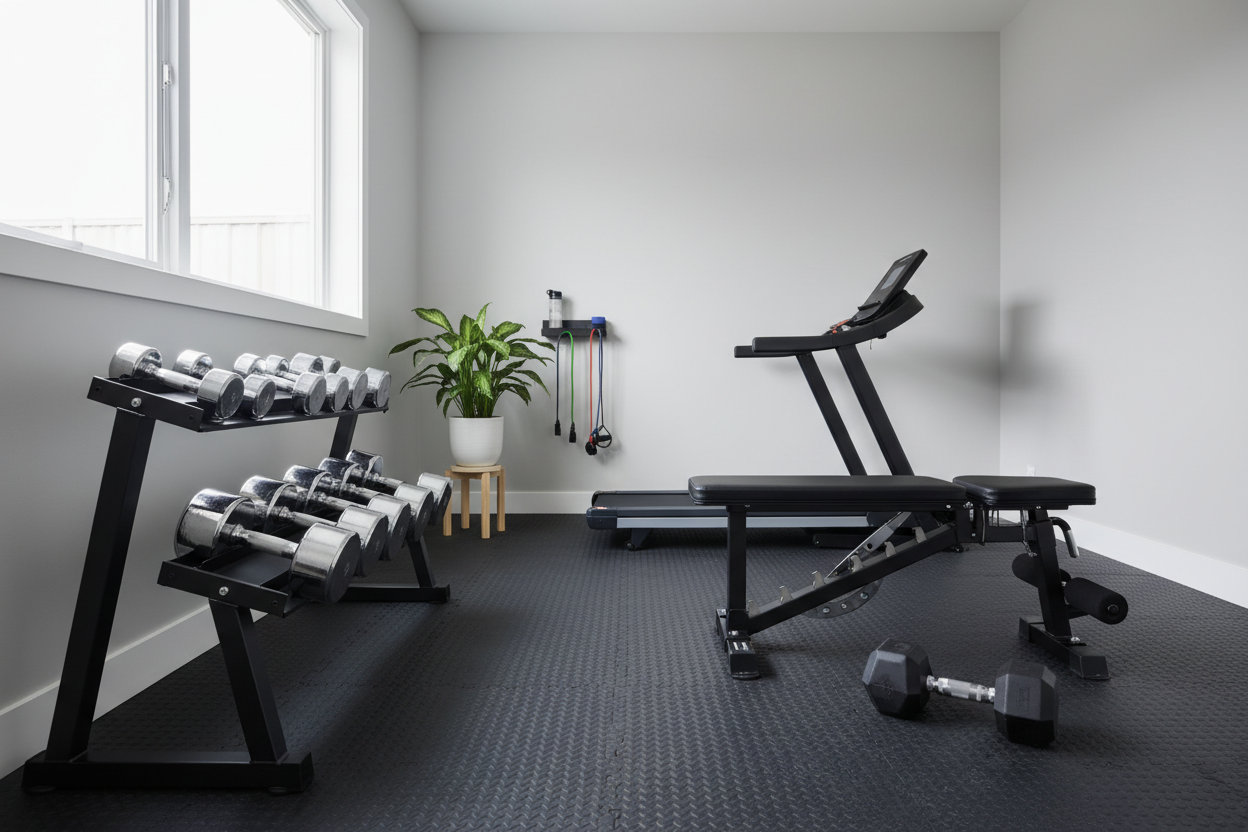
Let's face it: the classic North American home gym is often a dark, black-on-black cave. While the dungeon aesthetic works for some, many lifters are realizing that a brighter space actually boosts energy and makes a cramped garage or basement feel significantly larger. Enter white rubber floor mats—the ultimate hack for transforming a gloomy workout area into a premium, studio-quality training zone.
But before you rip out your standard black stall mats, you need to know what you are getting into. Are they a nightmare to keep clean? Do they offer the same impact protection? In this guide, we will break down everything you need to know to decide if upgrading your foundation is worth the investment.
Key Takeaways
- Visual Expansion: Lighter flooring reflects overhead light, making small basement or garage gyms feel up to 30% larger.
- Dust Camouflage: While shoe scuffs show up faster, white flooring completely hides chalk dust and light debris.
- Format Options: Available in interlocking tiles for easy home installation or a continuous white rubber mat roll for seamless commercial looks.
- Protection: High-density white mats offer the exact same shock absorption and subfloor protection as traditional black mats.
Aesthetics Meets Function: Why Go White?
Brightening Up Your Space
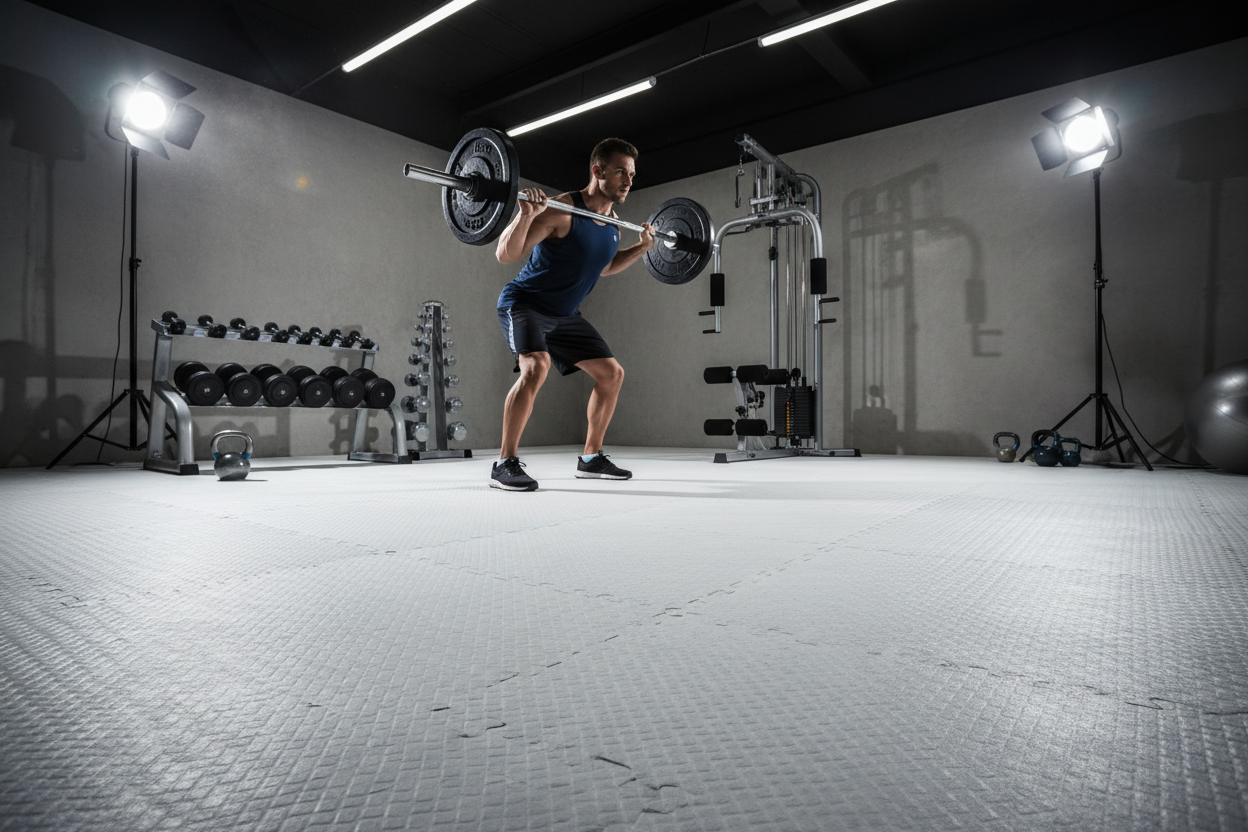
If your home gym is in a basement with limited natural light or a single-car garage, lighting is a constant battle. Standard black mats absorb light, whereas a white rubber mat reflects your overhead LEDs. This does not just make your gym look ready for a fitness magazine; it practically improves visibility for form-checking in the mirror and reduces eye strain during late-night or early-morning sessions.
Buying Guide: Choosing Your Format
The Case for a White Rubber Mat Roll
When shopping for white gym mats, you generally have two choices: interlocking tiles or rolled rubber. Interlocking tiles are fantastic for awkward apartment corners and easy DIY setups. However, if you want a truly premium aesthetic, a white rubber mat roll is the gold standard. It minimizes seams, which prevents dirt and sweat from seeping down to your subfloor, creating a clean, unified look that mimics high-end athletic facilities.
Durability and The Cleanliness Factor
Maintenance Expectations
The biggest hesitation we hear about white rubber flooring is the fear of constant cleaning. Here is the reality: high-quality white gym flooring is manufactured with non-porous EPDM rubber. It will not absorb sweat or spills. However, black scuff marks from lifting shoes or dragging a bench will be more visible. The trade-off? Chalk dust, which makes black mats look perpetually dirty, is virtually invisible on white mats.
From Our Gym: Honest Take
We recently installed a 10x10 foot section of 8mm white gym flooring in our primary testing facility's deadlift corner. The visual upgrade was instant—it completely modernized the space. However, I noticed immediately that dragging our heavy cast-iron plates left faint gray streaks.
My honest takeaway? The shock absorption is identical to our black commercial mats, and my chalk-heavy grip training no longer leaves the floor looking like a bakery. But, I do have to spend about five extra minutes a week spot-cleaning with a simple pH-neutral floor cleaner and a microfiber mop to keep the shoe scuffs at bay. If you are someone who hates maintenance, stick to speckled or black mats. If you value a bright, premium aesthetic, the extra five minutes of mopping is absolutely worth it.
Frequently Asked Questions
Do white rubber floor mats get dirty easily?
They do not attract more dirt, but they do show dark shoe scuffs and equipment marks more readily than black mats. Conversely, they hide white dust, chalk, and pet hair much better. Regular mopping with a mild detergent is usually enough to keep them looking fresh.
What thickness should I buy for a home gym?
For general fitness, dumbbell work, and machine use, 8mm (5/16 inch) is the industry standard. If you are dropping heavy barbells or doing Olympic weightlifting, you should step up to 1/2 inch or 3/4 inch thickness to protect your concrete subfloor.
Can I drop heavy weights on white gym flooring?
Yes. The color of the rubber does not impact its density or shock absorption. As long as you purchase high-density vulcanized rubber, it will protect your floors and your equipment just as effectively as traditional black or speckled mats.