Build True Power With This Foundational Lower Body Exercise Routine
Most people treat leg training as a necessary evil. They rush through a few sets of leg presses, maybe throw in some calf raises, and call it a day. But if you want athletic longevity and serious muscle density, you need a structured approach. A properly programmed lower body exercise routine is the difference between simply sweating and actually building a physique that functions as well as it looks.
We aren't going to complicate this with twelve different variations of a squat. We are going to focus on the movement patterns that generate the highest return on investment for your nervous system and muscle fibers.
Key Takeaways: The Blueprint
- Prioritize Compound Movements: Your routine must center around multi-joint movements like squats and deadlifts to maximize a strength lower body workout.
- Frequency Matters: Hitting legs once a week is rarely enough for natural lifters. Aim for twice a week to spike muscle protein synthesis.
- Progressive Overload: You must track your lower body workout weights. If you aren't adding weight or reps over time, you aren't growing.
- Balance the Patterns: A complete routine includes a knee-dominant movement (squat), a hip-dominant movement (hinge), and a unilateral movement (lunge).
The Philosophy of Weight Training Lower Body
Leg training is systemic. When you load your spine with heavy weights during a squat or deadlift, you trigger a hormonal response that benefits your entire body. This is why skipping leg day is detrimental to your upper body gains as well.
To execute effective weight training lower body protocols, you need to move away from the machines initially. Machines maximize stability but minimize the recruitment of stabilizer muscles. Free weights force your body to work as a coordinated unit.
The Core Movements for Mass and Strength
This routine is built on three pillars. If you master these, everything else is just accessory work.
1. The Knee-Dominant Compound (The Squat)
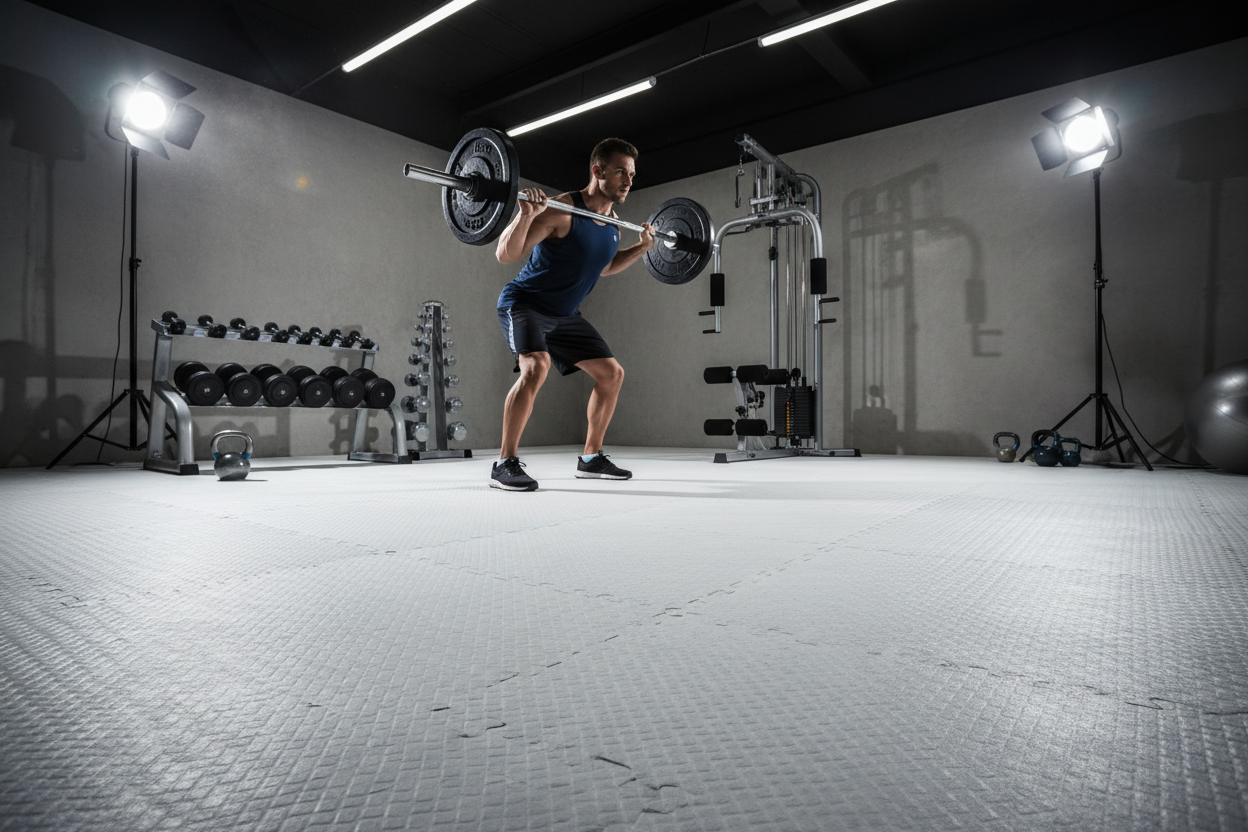
Whether it is a Back Squat, Front Squat, or Goblet Squat, this is non-negotiable. This movement targets the quads and glutes while demanding significant core stability.
For a true lower strength workout, keep the rep range between 5 and 8. Focus on controlling the eccentric (lowering) phase. Do not bounce out of the hole; drive up with intention.
2. The Hip-Dominant Hinge (The RDL)
Most knee pain comes from weak hips and hamstrings. The Romanian Deadlift (RDL) is superior to the conventional deadlift for hypertrophy because it keeps constant tension on the hamstrings.
When selecting your lower body exercises weights for RDLs, leave your ego at the door. If your lower back rounds, the weight is too heavy. Focus on pushing your hips back until you feel a deep stretch in the hamstrings.
3. Unilateral Work (Split Squats or Lunges)
Bilateral training (two legs) hides asymmetries. Unilateral training exposes them. Incorporating lunges or Bulgarian split squats ensures that your dominant side isn't doing all the work.
Managing Intensity and Load
A common mistake is going too heavy too soon. However, going too light is equally problematic. Your lower body weight training needs to approach mechanical failure.
If you finish a set and feel like you could have done 5 more reps, the intensity was too low. You should finish a set feeling like you had maybe 1 or 2 reps left in the tank (RPE 8-9).
When to Use Lower Weight Exercises
There is a time for lower weight exercises. This is typically during your deload week or when performing isolation finishers like leg extensions or hamstring curls. In these instances, focus on metabolic stress (the burn) rather than mechanical tension.
My Training Log: Real Talk
I want to be honest about what this routine actually feels like. When I first switched to this high-frequency hinge/squat focus, the first two weeks were brutal. I specifically remember the feeling of the barbell knurling digging into my upper traps during high-bar squats—it left a red abrasion that stung every time I showered.
But the real reality check was the "RDL wobble." After a heavy session of Romanian Deadlifts, my hamstrings would be so fatigued that walking down the gym stairs felt dangerous. My legs would literally shake uncontrollably on the descent. It wasn't the "good kind of sore" immediately; it was a deep, nervous-system fatigue where my legs felt like they were made of lead. That specific sensation—where you dread sitting on a hard toilet seat the next morning because of the pressure on your hamstrings—is usually the indicator that I hit the stimulus correctly.
Conclusion
Building a powerful lower half doesn't require a degree in biomechanics. It requires consistency with the basics. Implement this lower body exercise routine, track your numbers, and eat enough to recover. The results will follow the effort.
Frequently Asked Questions
How often should I perform this lower body routine?
For most intermediate lifters, twice a week is the sweet spot. This allows for sufficient volume to stimulate growth while providing 2-3 days of rest between sessions for the central nervous system to recover.
Can I do this routine if I don't have heavy weights?
If you don't have access to a gym, you can modify this. However, lower body workout weights are generally required to build maximal strength. If you are limited to bodyweight, you must significantly increase the reps and decrease rest times to achieve a similar stimulus.
What if my lower back hurts during leg workouts?
Lower back pain usually indicates poor form or a weak core. often during the hinge movement. Try reducing the load and switching to lower weight exercises while focusing on bracing your core. If pain persists, consult a physical therapist immediately.