Where Do You Work Out? How Your Space Dictates Results
I remember staring at my cramped apartment living room a few years back, trying to figure out how to swing a 53-pound kettlebell without smashing my television. I was constantly shifting coffee tables, rolling up thin rugs, and warning my downstairs neighbors just to get a 20-minute session in. The friction of setup was destroying my consistency. When friends ask where do you work out, your answer reveals more than just a physical address—it dictates your results. If your training space requires ten minutes of rearranging furniture, you are going to skip days.
As a personal trainer who has designed dozens of home gyms, I have learned that the physical environment you train in is the most overlooked variable in fitness programming. You do not need a massive facility, but you do need a dedicated zone that primes your brain for physical exertion.
Quick Takeaways
- Your brain associates specific physical locations with specific behaviors; dedicating a zone strictly to fitness triggers automatic habit formation.
- Removing setup friction is more important than buying expensive equipment.
- A 6x6 foot area is the minimum required footprint for most dynamic home workouts.
- Visual boundaries, like flooring, define your space and protect your joints from heavy impact.
The Psychology Behind Your Training Space
Environmental psychology suggests that our physical surroundings act as invisible behavioral triggers. If you try to do burpees in the exact same spot where you binge-watch television, your brain experiences cognitive friction. It associates that couch with relaxation, not a heart rate of 160 beats per minute. Establishing a dedicated training location is the first step to building a bulletproof fitness habit.
I constantly see clients fail because their gear is buried in a hall closet. Out of sight means out of mind. When your dumbbells and resistance bands are visible and ready to use, the barrier to entry drops to zero. You want to engineer your environment so that working out becomes the path of least resistance.
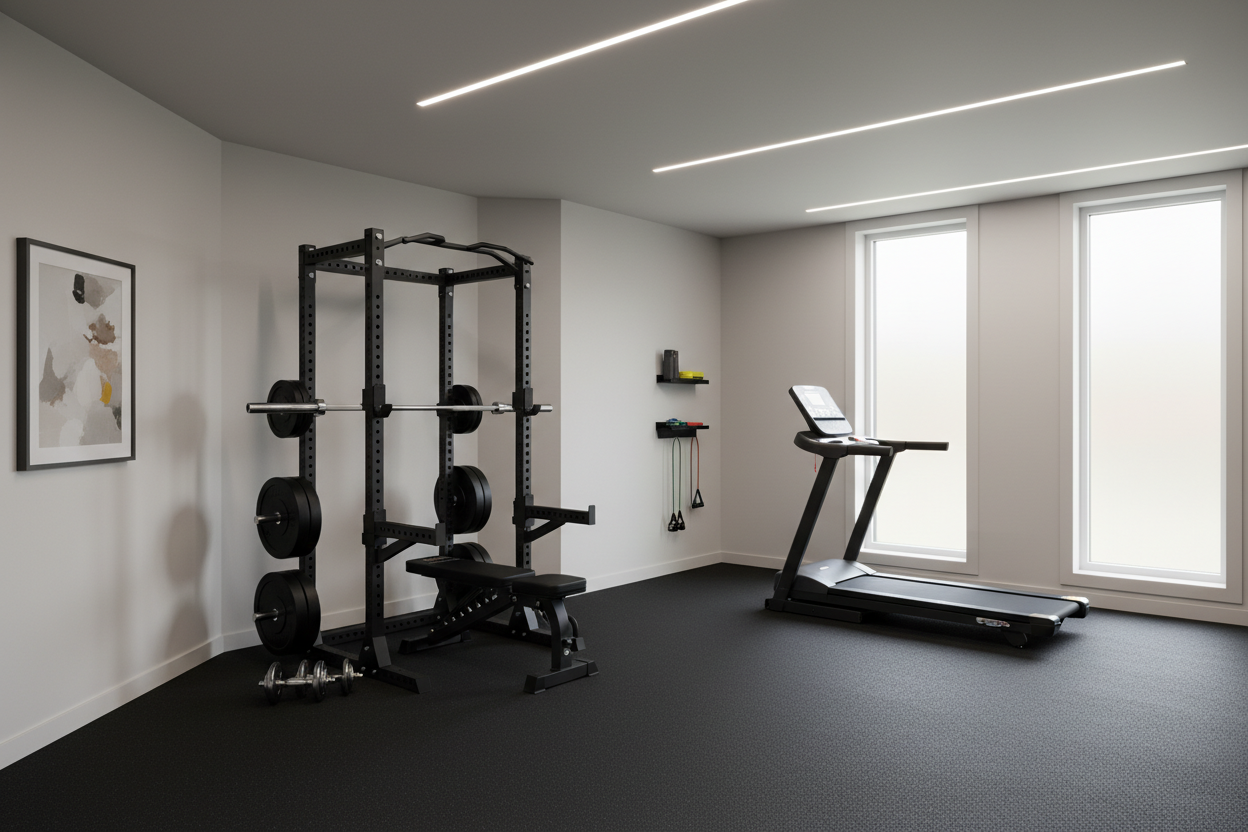
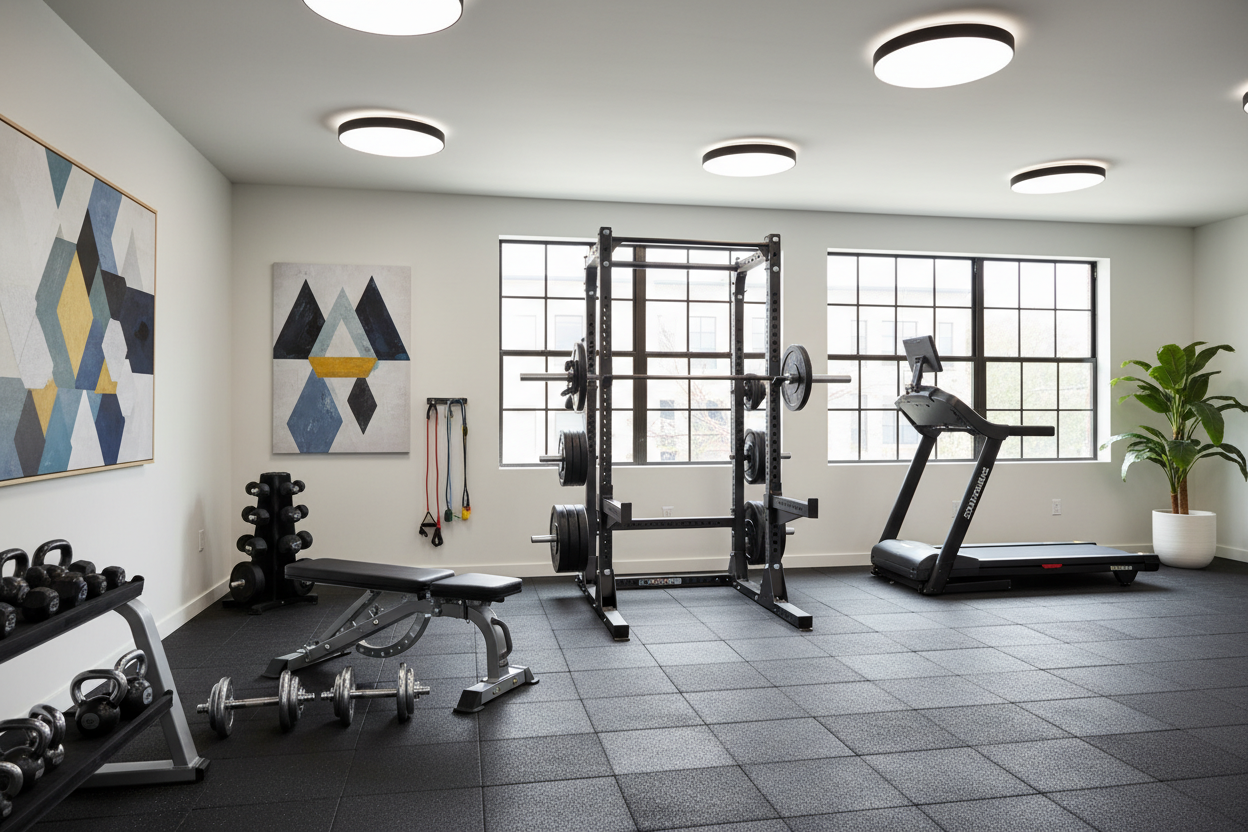
Think about the commercial gym environment. The music, the heavy rubber flooring, the steel racks—it all signals your central nervous system to prepare for work. You can recreate this micro-environment at home by dedicating a corner of a room solely to exercise. Even if it is just a tiny 4x4 foot square, stepping into that specific zone should feel like flipping a switch in your mind.
Where Do You Exercise? Decoding the Best Home Zones
When people ask where do you exercise, they usually assume you need a massive basement or a two-car garage. The reality is that almost any room can work if you understand its limitations and strengths. Matching your training style to your household dynamics prevents frustration and keeps you consistent.
If you live alone, you have the flexibility to leave equipment out permanently. If you share a home with a partner or roommates, you need a space that minimizes noise and visual clutter. I always tell clients to visually anchor their space by laying down durable large exercise mats, which instantly signals to your brain that it is time to train while simultaneously protecting your subfloor.
The Garage: The Raw Performance Zone
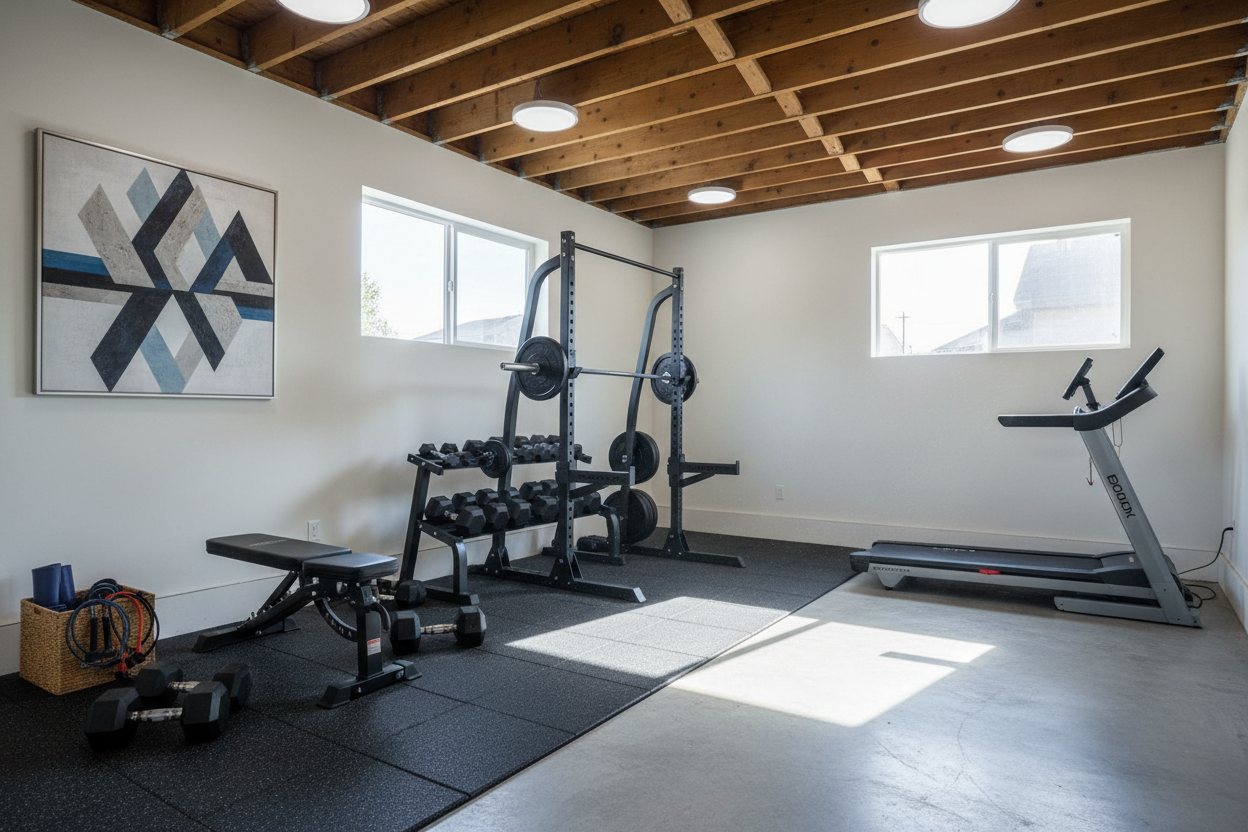
The garage is the holy grail for high-intensity training. It isolates noise, allows for dropped weights, and usually has the ceiling clearance required for standing overhead presses and pull-ups. You do not have to worry about sweating on a nice rug or waking up someone in the bedroom below you.
However, garages come with temperature fluctuations and brutal concrete floors. Dropping a 45-pound bumper plate directly on concrete will eventually crack the foundation. To protect cold concrete and your joints during heavy barbell cycles, a heavy-duty 6x8ft exercise mat provides the exact footprint needed for a squat rack and a deadlift platform. It absorbs shock and insulates your feet during winter sessions.
The Living Room: The Flexible Fitness Hub
For apartment dwellers, the living room is often the only viable option. The key here is mastering the rapid setup and teardown. You need equipment that is quiet and easy to store. Kettlebells, adjustable dumbbells, and suspension trainers are your best friends in this zone.
To avoid damaging hardwood floors or annoying your housemates, you need a protective layer that does not permanently ruin your decor. If you share a space, a compact 6x4ft exercise mat works perfectly because it rolls up in seconds and slides under the couch when you finish your final set. Keep your weights in a decorative woven basket nearby to maintain the aesthetic of the room while keeping your gear accessible.
Adapting Your Routine to Where You Workout
The biggest mistake I see is clients trying to force a commercial gym routine into a tiny bedroom. When deciding where do you workout, you have to modify your programming to fit the constraints of your environment. If you have low ceilings, standing overhead presses might punch a hole in your drywall. Swap them for seated Z-presses or tall kneeling dumbbell presses.
If you live on the third floor of an apartment building, doing high-rep jump squats at 6 AM will earn you a noise complaint. Instead of using space as an excuse to skip a day, adapt the movement. Swap explosive plyometrics for heavy, slow-tempo Bulgarian split squats. You still recruit massive amounts of muscle fibers, but you do it in complete silence.
Even if you are stuck in a tiny bedroom with zero clearance, you can execute a quick 10-minute chest workout using just your body weight and a pair of adjustable dumbbells. Focus on time under tension and strict form rather than wide, sweeping movements that require a massive floor plan.
Upgrading Your Space Over Time
You do not need to drop three thousand dollars on day one. I advise my clients to build their home gyms in phases, scaling the equipment as their strength and commitment levels increase.
Phase one should focus entirely on floor space and basic resistance. A high-quality mat and a pair of adjustable dumbbells ranging from 5 to 52.5 pounds will cover 90 percent of your needs for the first six months. Phase two introduces versatility. Add a heavy-duty resistance band set and a doorway pull-up bar to unlock vertical pulling movements.
Phase three is where you invest in heavy iron. Once you have proven you can stick to a routine for a year, reward yourself with an adjustable bench and a folding squat rack. By pacing your purchases, you ensure every piece of equipment earns its footprint in your home.
My Experience Testing Home Gym Setups
Over the last decade, I have personally built and tested over 30 different home gym configurations, ranging from $200 living room setups to $15,000 custom garage builds. One thing I learned the hard way is that cheap foam puzzle mats pull apart the second you do a lateral lunge. I eventually switched to solid, high-density rubber mats for all my clients. I will be honest about one downside, though: high-density rubber mats often have a strong off-gassing smell for the first week. You have to leave them unrolled in a ventilated garage or on a patio for a few days before bringing them into a tight indoor space. But once that fades, they last a lifetime and never shift underfoot.
Frequently Asked Questions
How much space do I actually need for a home gym?
A 6x6 foot clear space is the golden standard. This gives you enough wingspan to do lateral raises, burpees, and kettlebell swings without hitting a wall or a piece of furniture.
How do I stop annoying my downstairs neighbors?
Invest in shock-absorbing flooring at least 7mm thick, and change your programming. Eliminate jumping and dropping weights. Focus on slow eccentric movements, isometric holds, and sliding exercises using furniture sliders.
Is it bad to work out in my bedroom?
From a sleep hygiene perspective, it is not ideal to mix high-adrenaline activities with your sleeping environment. If the bedroom is your only option, use a visual divider like a rug or a mat to clearly separate the workout zone from the bed.