Staying Fit at Home: The Frictionless Space Strategy
I remember a client who bought a set of 5-52.5 lb adjustable dumbbells and stashed them in his closet. Every evening, he had to drag them out, push his heavy oak coffee table aside, and unroll a flimsy yoga mat just to do a 20-minute circuit. After three weeks, the dumbbells became expensive doorstops. The problem was not his willpower. It was the setup friction.
If you want to stay fit at home, you have to stop relying on motivation and start designing your environment for automatic action. Getting fit from home is entirely about what I call the 'Frictionless Floorplan.'
Quick Takeaways
- Create a permanent workout boundary using visual cues like dedicated flooring.
- Keep setup time under 60 seconds to bypass the brain procrastination reflex.
- Curate a minimalist gear setup rather than hoarding unused equipment.
- Use physical space as a psychological trigger for daily movement.
The Psychology of the Home Workout Space
Human brains are wired to conserve energy. When you finish a nine-hour workday, the thought of rearranging furniture to do burpees feels like an insurmountable obstacle. Relying on raw motivation usually fails because motivation is a finite resource. By the time 6 PM rolls around, your tank is empty.
Environmental design is the true key to consistency. When I consult with clients building their home setups, the first rule is that the space must be ready at all times. If it takes you more than 60 seconds to transition from resting to your first warm-up set, your setup is failing you. We want to eliminate the psychological barriers to working out.
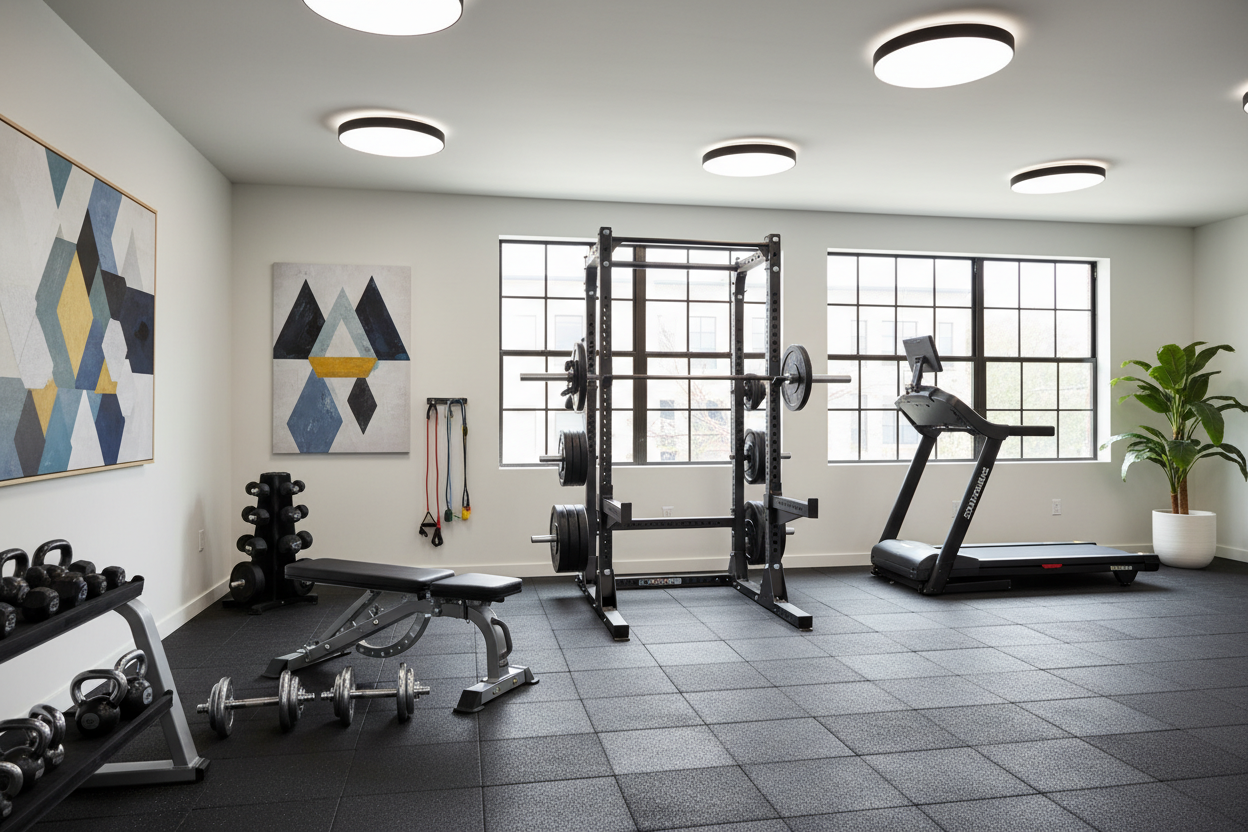
Think about a commercial gym. You walk in, and the equipment is waiting. Your brain instantly recognizes the context and shifts into training mode. You need to recreate that contextual trigger in your house. It does not require a massive garage or a dedicated spare bedroom. It just requires a designated, permanent footprint where fitness happens.
Defining Your Dedicated Training Zone
Creating a distinct visual and physical boundary in your house is crucial, especially if you live in a multi-use space like a studio apartment or a shared living room. You need a way to tell your brain, 'This specific area is for sweating.' The easiest and most effective way to anchor this zone is from the ground up.
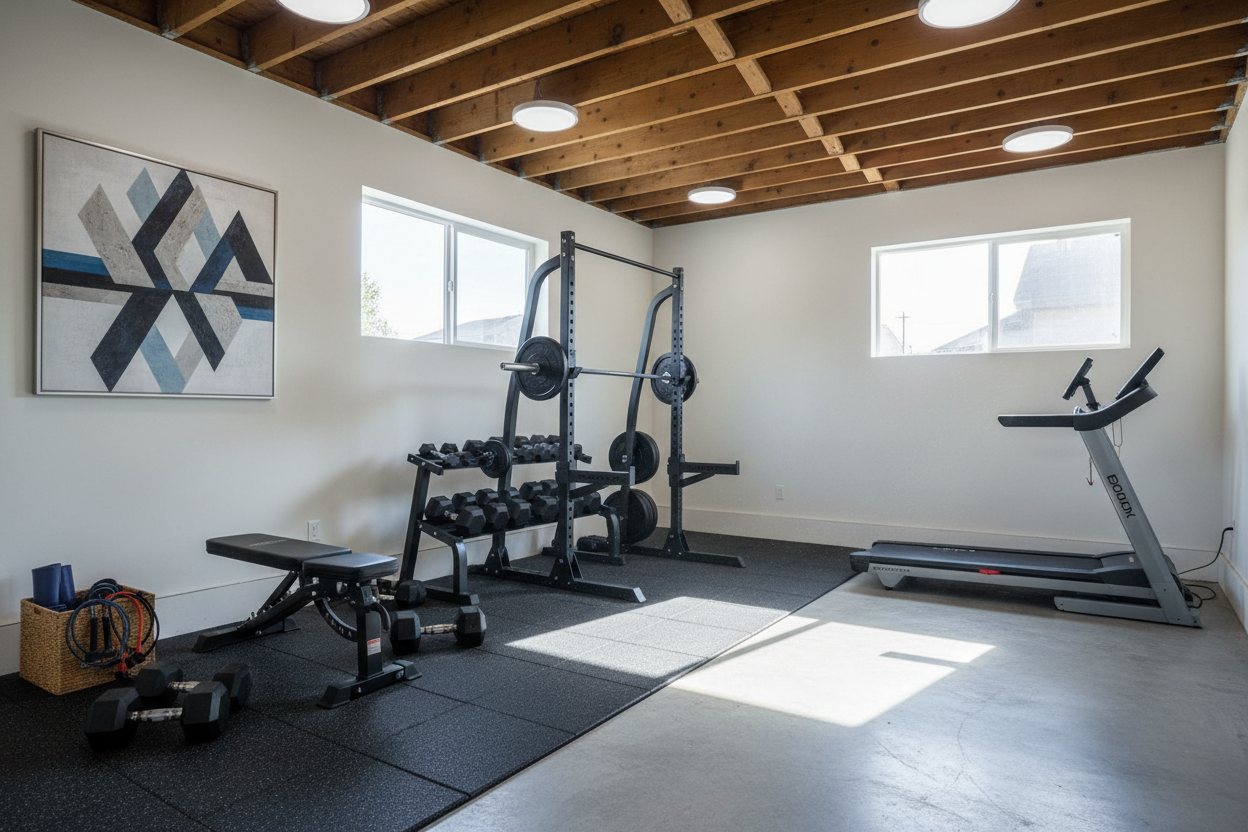
I always have my clients put down a large exercise mat for home gyms. This is not just about protecting your hardwood floors from a dropped 35-pound kettlebell. It creates an island. When you step onto that mat, you cross a psychological threshold. Your living room is for relaxing, but that specific 40-square-foot rectangle is for work.
I tested this with a client living in a 600-square-foot apartment. We could not dedicate an entire room, so we carved out a permanent corner in her bedroom. We laid down a heavy-duty mat, placed her resistance bands on a wall hook, and left the dumbbells at the edge. She stopped skipping workouts because the space was constantly inviting her to train. It was a physical reminder that did not require pulling gear out from under the bed.
Choosing the Right Base for Your Space
Your flooring dictates what you can actually do in your space. If you are doing plyometrics, jump rope, or heavy kettlebell swings, a standard 3mm yoga mat will wreck your knees and annoy your downstairs neighbors. You need high-density material that dampens noise and absorbs impact.
I usually recommend at least 7mm of thickness for high-intensity interval training. A 6x8ft exercise mat gym flooring is often the ideal footprint size. It gives you 48 square feet—plenty of room for lateral lunges, sprawling burpees, and full-body stretches—without taking over the entire room.
When I tested a high-density mat of this exact size, the noise reduction was immediate. I could do 100 jump squats at 5 AM without waking my family. The only downside I found is that heavy, pointed equipment like a stationary bike can leave temporary indentations in the foam if left in the exact same spot for months. But for free weights and bodyweight training, it creates the perfect, permanent base.
Eliminating Setup Friction
Friction is the enemy of action. If you have to dig your resistance bands out of a tangled bin or screw the collars onto your adjustable dumbbells every single time, you will find an excuse to skip the workout. Staging your gear is critical. Keep your equipment visible and accessible.
I use a small, tiered storage rack that sits directly on the edge of my mat. My 15, 25, and 40-pound dumbbells are racked at waist height. My jump rope hangs on a wall hook. I can walk into the room, grab a weight, and start a goblet squat in under 15 seconds.
You do not need a massive collection of gear to get results. In fact, clutter creates mental friction. Curate your space with essential and simple workout equipment. A pair of adjustable dumbbells, a kettlebell, some loop bands, and a pull-up bar are enough to program thousands of challenging workouts. Keep the floor clear of tripping hazards. Your dedicated zone should look clean, organized, and ready for immediate action.
Integrating Daily Movement Cues
A frictionless setup does not just help with your scheduled 45-minute lifting sessions. It completely changes how you interact with your body throughout the day. When your space is permanently staged, it acts as a visual cue for micro-workouts.
If you work remotely, you probably spend eight hours hunched over a laptop. Having a dedicated fitness zone just a few feet away makes it incredibly easy to break up that sedentary time. I make it a rule to step onto my mat every time I finish a long video call. Sometimes I just do 20 air squats or hang from my pull-up bar for 60 seconds to decompress my spine.
Other times, I will drop down for a quick stretching workout at home to open up my tight hip flexors. Because I do not have to unroll a mat or move a chair, the barrier to entry is zero. These daily movement snacks add up. An extra 50 squats and 5 minutes of mobility work every day yields massive improvements in your joint health and overall calorie expenditure over a year.
Maintaining the Fit from Home Lifestyle
Getting fit from home is a marathon of consistency, not a sprint of motivation. By treating your workout space with respect and making it a permanent fixture in your house, you remove the daily negotiation with yourself. You no longer have to ask if you have the energy to set up the living room. The room is already set.
A frictionless floorplan respects your time and your mental energy. It turns exercise from a daunting chore into an automatic habit. Build your boundary, lay down a solid base, stage your gear, and watch how much easier it becomes to stay consistent.
Frequently Asked Questions
How much space do I actually need for a home workout?
For most bodyweight and free weight programs, a 6x6 or 6x8 foot area is plenty. This gives you enough room to lie down fully extended and perform lateral movements without hitting furniture.
What is the best way to clean my gym flooring?
Sweep or vacuum loose debris first. Then, wipe it down with a damp cloth using a mild soap and water solution. Avoid harsh chemicals like bleach, which can degrade the foam or rubber over time.
How can I work out at home without bothering my neighbors?
Invest in thick, high-density flooring (at least 7mm) to absorb impact. Swap out jumping exercises for low-impact variations, like stepping lunges instead of jump lunges, and lift with control to avoid dropping heavy weights.