Full Body Exercises for Beginners: Stop Rushing Your Reps
I remember watching a new client try to cram a workout into their tiny apartment living room right after the 2020 lockdowns. They were blasting through squats like they were late for a train, joints popping, heels lifting off the floor, and holding their breath until they turned red. It is the most common mistake I see. When you are just starting out, counting reps usually leads to rushing. That is why I teach my clients to completely ignore the numbers and use their lungs as a metronome. If you want to master full body exercises for beginners, your breathing is the only pace you need to track.
Quick Takeaways
- Stop counting reps and start counting your breaths to naturally slow down your movements.
- Use a three-second inhalation on the lowering phase of an exercise to build control and protect your joints.
- A forceful exhalation on the pushing phase automatically braces your core without complex cues.
- Create a dedicated, slip-free zone in your home so you can focus entirely on your rhythm.
Why Your Breath is the Ultimate Workout Pacer
As a trainer, telling someone to brace their core usually results in them sucking in their stomach and holding their breath. This is exactly what you do not want. When full body workout beginners use their breath to dictate the speed of an exercise, magic happens. The movement slows down. The muscles spend more time under tension. The core engages naturally without you having to overthink human anatomy.
Think of your breath as a metronome. If you force yourself to take three full seconds to inhale on the way down into a squat, you cannot rush it. You eliminate the momentum that causes sloppy, dangerous repetitions. I have tested this method with dozens of clients in their living rooms, and the results are always the same: better form, less joint pain, and a much harder workout using zero equipment. It forces you to be present in the movement and respect your body's limits.
Setting Up Your Space for Focused Breathing
To make this work, you need an environment where you can actually hear yourself breathe. Turn down the TV, silence your phone, and clear a 6x6 foot area. More importantly, you need stability. If you are doing barefoot squats on a slippery hardwood floor or a cheap, bunching yoga mat, your brain will be focused on not falling over instead of your breathing cadence.
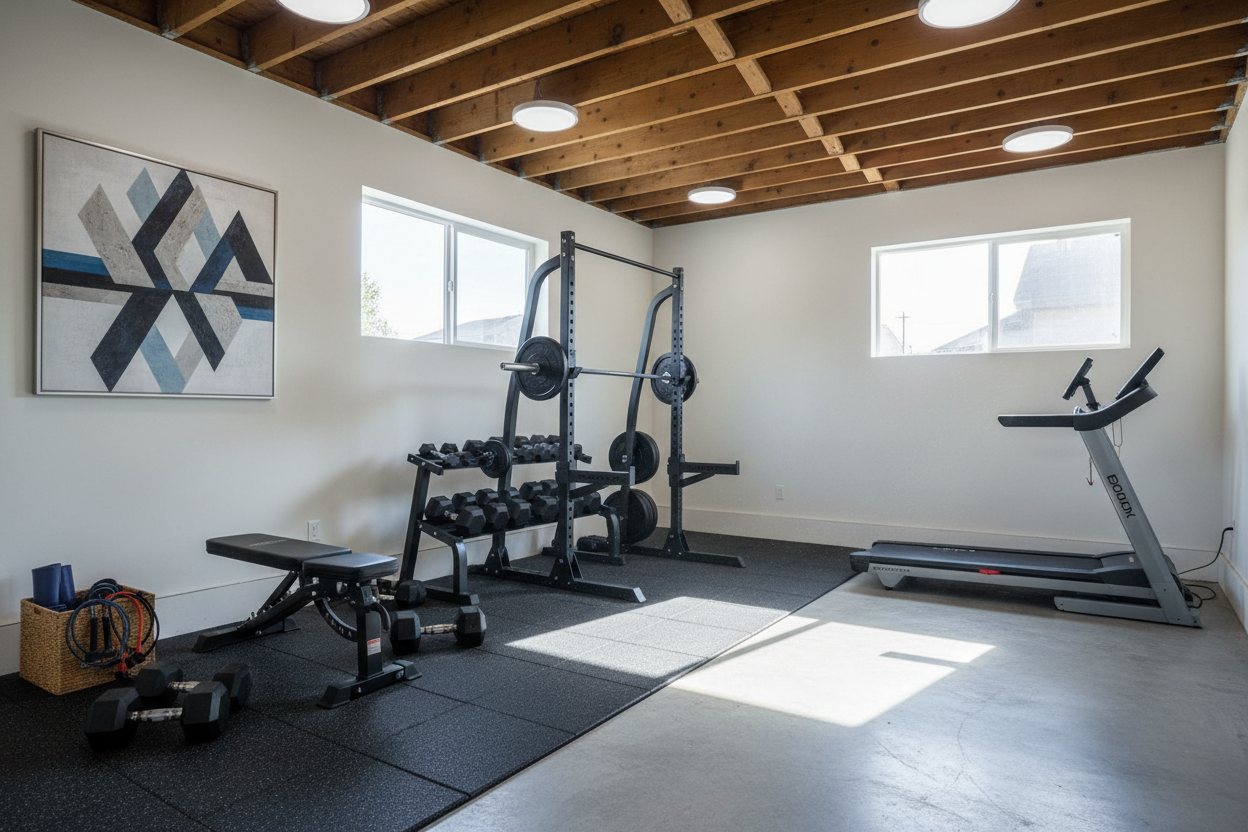
I always have my home gym clients invest in a proper foundation first. A large exercise mat gym flooring provides the wide, non-slip surface you need. When your feet feel glued to the floor, you can put 100 percent of your mental energy into your inhalation and exhalation. I have tested paper-thin mats that slide around and distract you; a heavy, dense mat is a non-negotiable starting point for safe home training.
The Breath-Paced Total Body Exercises for Beginners
We are going to focus on three foundational movements. These total body exercises for beginners are designed to hit your legs, chest, back, and core simultaneously. By pairing them with specific breathing patterns, you turn basic bodyweight moves into a highly effective, tension-focused routine.
The Inhale-Down Squat
The bodyweight squat is the king of lower body movements, but beginners almost always drop down too fast. Stand with your feet shoulder-width apart. As you begin to sit your hips back, start a slow, deep inhalation through your nose. Time it so that your lungs are completely full right as your thighs hit parallel to the floor. This should take about three to four seconds.
Pause for a split second at the bottom. Then, exhale forcefully through your mouth as you drive your heels into the ground and stand back up. That sharp exhale naturally tightens your abdominal wall, protecting your lower back. If you are breathing correctly, a set of ten will leave your legs burning far more than twenty rushed reps.
The Exhale-Push Elevated Push-Up
Standard push-ups on the floor are too difficult for most beginners to do with perfect form, leading to sagging hips and shoulder pain. Instead, place your hands on a sturdy piece of furniture, like a heavy desk or the back of a couch, or simply stand facing a wall.
Slowly lower your chest toward the surface while taking a deep, three-second inhale. Feel your shoulder blades squeeze together. As you push yourself back to the starting position, let out a sharp, audible exhale. This forceful breath out is crucial. It acts as an internal weight belt, engaging your core so your body moves as one solid plank of wood rather than a wet noodle.
The Rhythmic Glute Bridge
The glute bridge targets the posterior chain, specifically your hamstrings, glutes, and lower back. Lie on your back with your knees bent and feet flat on your mat. Press your lower back into the floor, then drive through your heels to lift your hips toward the ceiling.
Instead of moving up and down quickly, we use a holding pattern here. Lift your hips on a strong exhale. Once you reach the top, hold that bridge position for one complete, slow breath cycle. Inhale deeply into your belly, then exhale fully. Lower your hips back down on the next inhale. This isometric hold builds incredible endurance in muscles that usually get weak from sitting at a desk all day.
Building a Simple Full Body Workout Routine
Now we tie it all together. Instead of aiming for 3 sets of 10 reps, I want you to aim for breath counts. This takes the pressure off hitting a specific number and keeps you focused on the quality of the movement. A simple full body workout routine using this method takes less than 15 minutes.
Set a timer for 12 minutes. Perform 5 to 8 breath-paced squats. Move directly to the elevated push-ups for 5 to 8 breaths. Finish the circuit with 5 to 8 rhythmic glute bridges. Rest for about 60 seconds, taking slow, normal breaths, and repeat the circuit until the timer goes off.
This continuous, controlled loop is how you stop wasting your gym time. You aren't resting for three minutes between sets or scrolling on your phone. You are locked into a steady, methodical pace that builds cardiovascular endurance alongside muscular strength.
Progressing Your All Over Body Workout for Beginners
Eventually, your body will adapt. After a few weeks, doing an all over body workout for beginners with just your body weight will feel less taxing. You will notice your breathing stays calm even during the last few reps. That is your signal to add resistance.
I always recommend starting with a pair of adjustable dumbbells, something in the 5 to 52.5-pound range, or a few high-quality resistance bands. You can hold a single dumbbell vertically at your chest for a goblet squat using the exact same three-second inhale-down technique. The added weight will force your muscles to work harder, but your breath will still dictate the pace. If you are looking for the next step up, check out the best exercises for a full body workout to expand your movement library.
One honest downside to home bodyweight training is that eventually, your legs will outgrow what bodyweight squats can provide. Your lower body is incredibly strong. When that time comes, investing in a dedicated lower body strength machine can help you safely load the hamstrings and quads without needing a massive power rack in your spare bedroom.
Frequently Asked Questions
How many days a week should a beginner do a full body workout?
Aim for three days a week, with at least one day of rest between sessions. This gives your muscles the 48 hours they typically need to recover and rebuild stronger.
Should I breathe through my nose or mouth?
I recommend inhaling deeply through your nose to better engage your diaphragm, and exhaling forcefully through your mouth through pursed lips to create intra-abdominal pressure.
What if I get dizzy pacing my breath?
If you feel lightheaded, you are likely breathing too shallowly or forcefully hyperventilating. Take a break, sit down, and return to your normal breathing pattern. Next time, soften the exhale slightly.