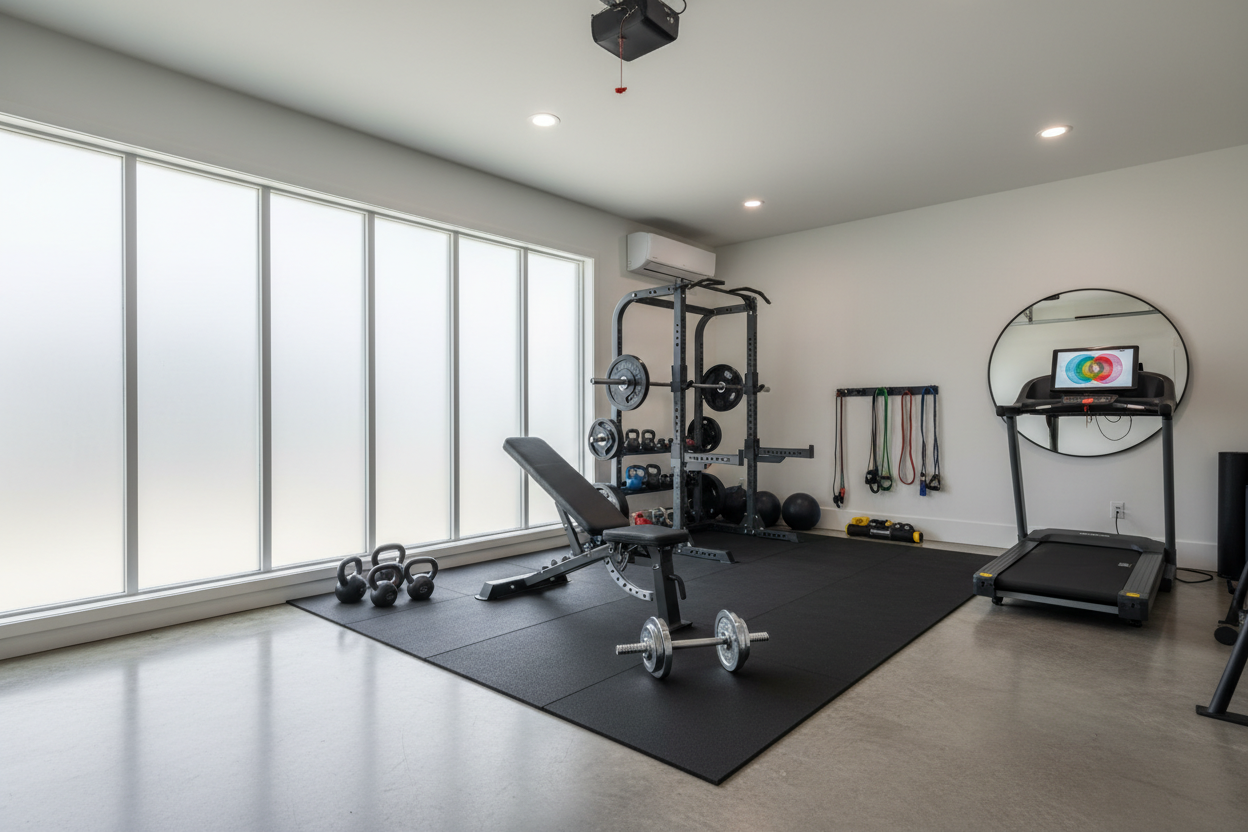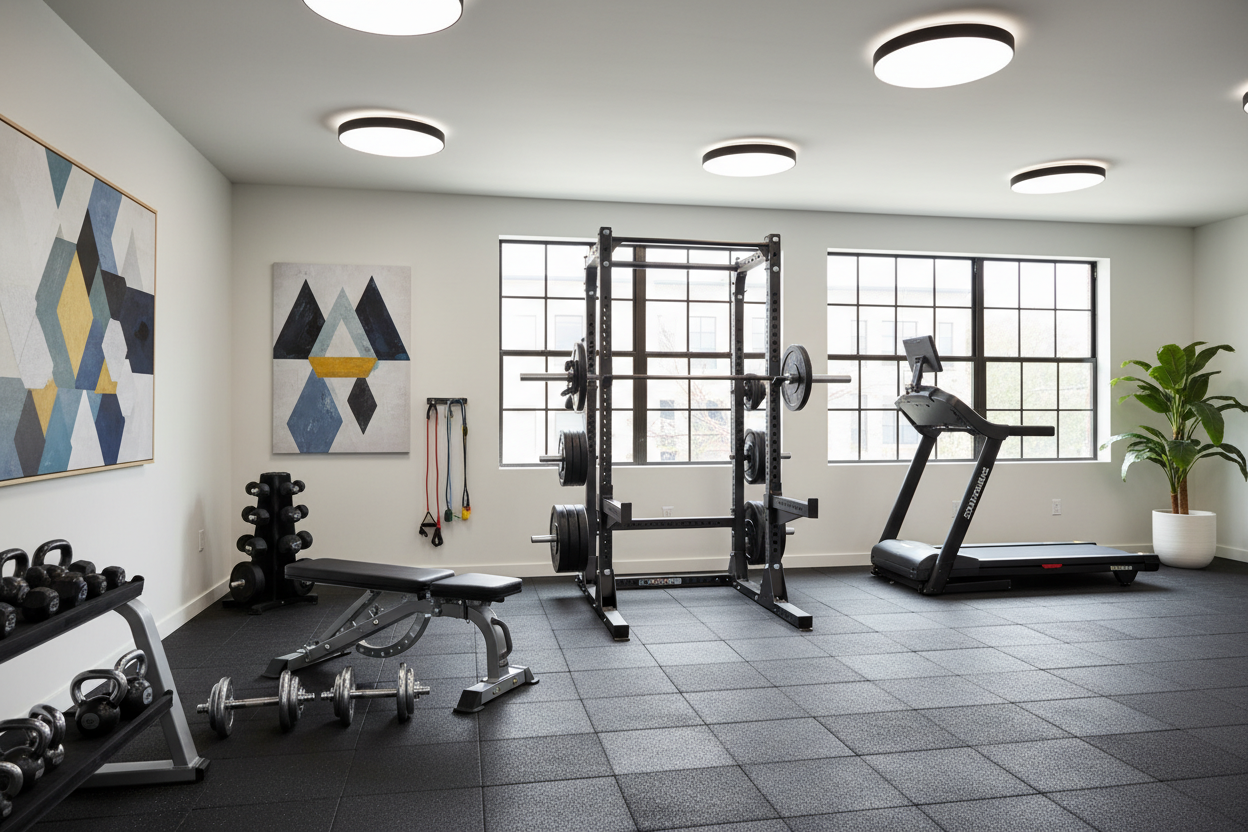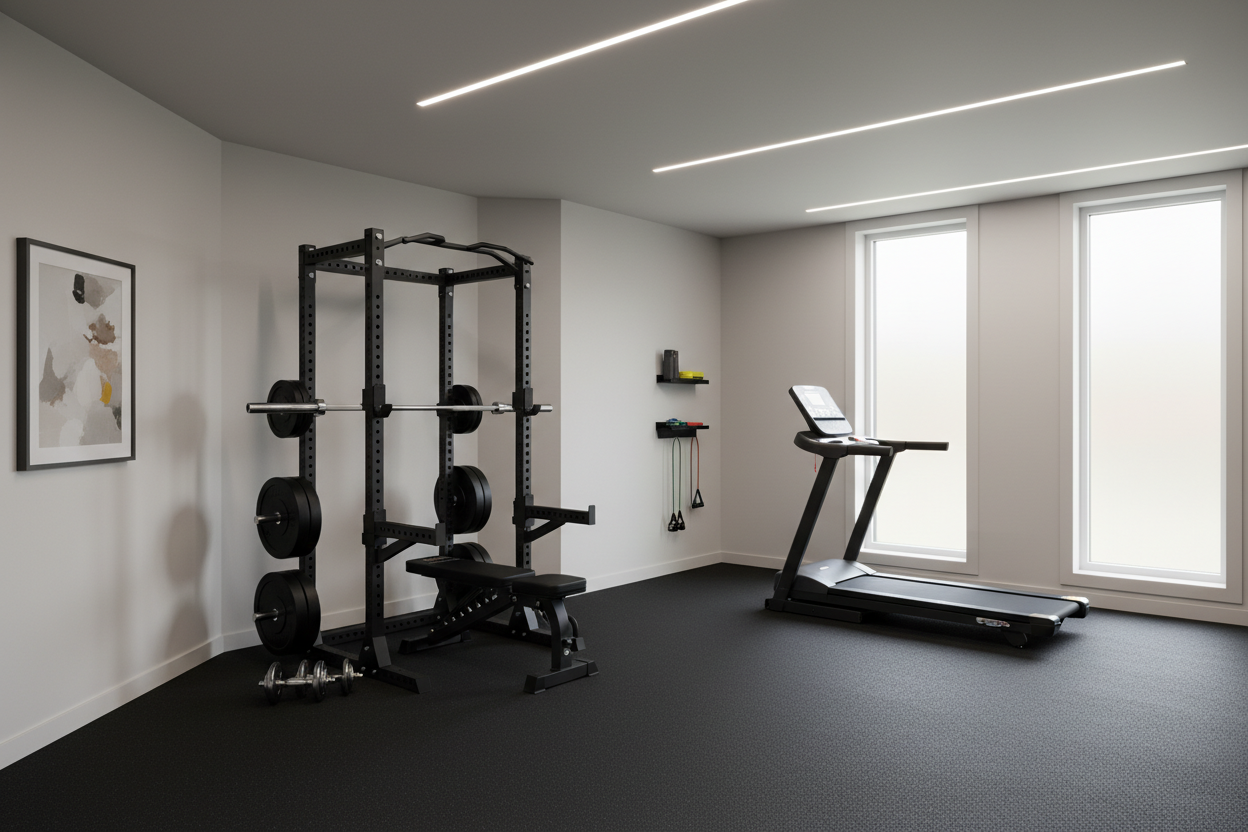
Build an Exercise Body Gym Without the Clutter
I remember walking into a client's downtown loft a few years ago. She wanted to train at home but refused to let her minimalist living room turn into a clunky, iron-filled dungeon. She thought she needed a garage to build an effective setup. I told her we were going to build an exercise body gym right between her sofa and her TV console.
Creating a functional workout space doesn't mean sacrificing your interior design. You can absolutely perform complete gym exercises without a power rack dominating your floor plan. If you are a work-from-home professional trying to squeeze in a training session between Zoom calls, you need a setup that appears when you need it and vanishes when you are done.
Quick Takeaways
- Define your workout zone with roll-away, floor-safe mats.
- Prioritize adjustable, high-ROI equipment like 5-52.5 lb adjustable dumbbells.
- Utilize under-sofa and decorative ottoman storage for a minimal visual footprint.
- Manage sweat and odors with specialized enzyme cleaners and charcoal bags.
Rethinking the Traditional Home Setup
When people hear the phrase home gym, they immediately picture a cavernous two-car garage lined with horse stall mats, a massive squat rack, and heavy plates scattered everywhere. That works if you have the square footage, but what if you live in an 800-square-foot apartment? Over the last five years, I have helped dozens of remote workers build highly effective training spaces right in their living rooms or home offices.
The secret is treating your fitness gear like modular furniture. You want pieces that serve a distinct purpose and then tuck away out of sight. A true workout body gym relies on spatial efficiency, not sheer volume. You don't need 400 pounds of bumper plates to get strong. You just need the right resistance curve and a smart layout.
By focusing on multi-planar movements and strategic equipment choices, you can hit every muscle group effectively in a compact 6x6 foot footprint. It is all about maximizing the utility of the space you already live in.
The Foundation: Creating the Invisible Workout Zone
The biggest mistake I see clients make is resting a heavy cast-iron kettlebell directly onto their hardwood floors. You need a dedicated surface, but it shouldn't look like a commercial facility 24/7. The foundation of your hidden gym starts with the floor. I always recommend defining your space with a roll-away surface that protects your house but seamlessly blends into a living room or home office when rolled up and stored in a closet.
When discussing the specific dimensions needed to protect hardwood floors during intense movements, I point clients toward a 6x8 foot gym flooring for home workout. It provides enough lateral space for lunges and burpees without permanently taking over the room.
If your living room has a different layout, you might need varying sizing options depending on your available floor space. In those cases, a large exercise mat for home gym collection gives you the flexibility to find exactly what fits under your coffee table or rolls out neatly next to your desk. The key here is density. You want a mat thick enough (at least 7mm) to absorb the shock of a dropped dumbbell, but light enough to roll up tightly in under thirty seconds.
Selecting Equipment for Maximum Versatility
Once your floor is protected, it is time to select the hardware. The goal is maximum versatility with a minimal footprint. I tell my clients to avoid single-use equipment like leg extension machines or bulky stationary bikes unless they double as a coat rack. Instead, invest in a pair of adjustable dumbbells.
A set that ranges from 5 to 52.5 pounds replaces 15 pairs of traditional weights and easily slides under a standard sofa. Combine that with a high-quality set of resistance bands with door anchors, and you can replicate nearly every cable machine movement from a commercial facility. You can perform complete gym exercises for all major muscle groups—chest presses, rows, squats, and deadlifts—using just these two items.
For those who have a slightly larger corner to spare, space-saving all-in-one full body workout machines might be worth the investment, provided they fold flat or tuck away behind a decorative room divider.
I personally tested a popular folding bench last year with a client in a studio apartment. While it was fantastic for saving space—folding down to just 8 inches thick—the downside was a slight wobble during heavy step-ups. Always check the weight capacity; aim for a bench rated for at least 500 pounds to ensure stability during dynamic movements.
Structuring Your Multi-Purpose Room Routine
Having the right gear tucked away in your living room is only half the battle. You need a structured routine to actually make progress. I program my clients using a push-pull-legs split that requires zero transition time between stations. Since you are working in a multi-purpose room, supersets are your best friend.
For example, pair a dumbbell goblet squat with a resistance band row. You hit the lower body and upper back back-to-back, keeping your heart rate elevated and cutting your workout time in half. Aim for 3 to 4 sets of 8 to 12 reps for hypertrophy, keeping the rest periods strictly to 60 seconds.
Building leg strength with minimal equipment can be tricky, but it is entirely possible with the right biomechanics. Focus on unilateral movements like Bulgarian split squats and single-leg Romanian deadlifts. These exercises require less absolute weight to challenge the muscle, making them perfect for a minimalist setup.
If you are looking for a highly structured blueprint, I often direct clients to a complete lower body gym workout that focuses on maximizing time under tension. Remember to track your workouts. Just because you are training in your home office doesn't mean you should abandon progressive overload. Add a rep or increase the resistance band tension each week.
Maintaining the Aesthetic and Cleanliness
A major concern for work-from-home professionals is turning their pristine living room into a smelly locker room. Sweat management is non-negotiable. I advise keeping a dedicated microfiber towel and a spray bottle of natural enzyme cleaner in your equipment basket.
Wipe down your adjustable dumbbells and bands immediately after your last set. Never roll up a sweaty mat. Let it air dry for ten minutes while you cool down, spray it lightly, and then roll it up. For odor control, I recommend placing a small activated charcoal bag inside the closet or storage bin where you keep your gear. It absorbs moisture and neutralizes smells naturally without relying on overpowering chemical air fresheners.
Finally, use aesthetic storage solutions. A woven wicker trunk or a sleek mid-century modern storage ottoman can easily hide a 50-pound dumbbell set, a foam roller, and your rolled-up floor mat. Your guests will just see a stylish piece of furniture, completely unaware that it houses a highly effective training facility.
Frequently Asked Questions
How much space do I actually need for a living room gym?
A 6x6 foot clear area is plenty for most standing and floor exercises. As long as you can lie flat with your arms extended and lunge forward without hitting furniture, you have enough room to train effectively.
Will dropping weights damage my apartment floors?
Yes, if unprotected. Always use a high-density mat of at least 7mm thickness. For heavy dumbbell work, control the eccentric portion of the lift so you never have to drop the weights from waist height.
Can I build significant muscle with just adjustable dumbbells and bands?
Absolutely. Muscle growth requires mechanical tension, metabolic stress, and progressive overload. Adjustable dumbbells and heavy bands provide all three, provided you push close to failure on your working sets.