What Is Considered Heavy Weight? (And Why You're Wrong)
I remember the first time I walked into a serious black-iron gym. I had just managed to grind out a 225-pound bench press in my garage and felt like a king. Then I saw a guy who looked like he lived on a diet of gravel and spite warming up with my max for sets of ten. It was a reality check that every lifter eventually faces. We spend so much time looking at what is considered heavy weight on social media that our internal gauge for effort is completely broken.
- Heavy is a relative percentage of your 1-rep max (1RM), usually 85% or higher.
- Intensity is measured by RPE (Rate of Perceived Exertion), not just the number of plates on the bar.
- Safety gear is mandatory when you start pushing into true heavy territory.
- Consistent progressive overload is the only way to move from light to heavy safely.
Stop Letting the Internet Define Your 1RM
Social media has poisoned the well of strength standards. You see a teenager squatting 500 pounds for reps and suddenly your hard-earned 315 feels like a toy. That is a trap. If you want to understand what is heavy weight lifting, you have to look at your own biology. Heavy isn't an arbitrary 300-pound benchmark; it is the point where your motor units are fully recruited and your central nervous system starts screaming for help.
For most of us, what is considered lifting heavy is anything that falls into the 1 to 5 rep range at roughly 85% to 95% of your maximum capacity. If you can do 12 reps with a weight, it isn't heavy for you—even if it's more than the guy next to you is lifting. Strength is an individual pursuit. When you stop chasing the numbers of influencers and start chasing your own 5-pound PRs, that is when you actually start lifting weights to get stronger.
The Real Definition of Heavy (It's Not Just Math)
We need to talk about relative intensity. If I ask you to do a set of 10 on the overhead press, lifting heavy dumbbells might mean grabbing the 50s. For a pro strongman, those 50s are literally what he uses to warm up his rotator cuffs. The stimulus is what matters. If those 50s put you at an RPE 9 (meaning you could maybe do one more rep with decent form), then that is a heavy set for your shoulders.
Biologically, your muscles don't know the difference between a 45-pound plate and a heavy rock; they only know tension and fatigue. When you are why lift heavy weights, you are looking for that specific mechanical tension that triggers muscle protein synthesis and neurological adaptation. There is a huge debate about building mass with heavy versus light weight, but the consensus among guys who actually train is that you need a mix of both. However, 'heavy' is the only thing that builds the 'hard' look of dense muscle and the raw power that carries over to real life.
I Can't Lift Heavy Weights (Yet): Where Do I Start?
If you're looking at a barbell and thinking, i can t lift heavy weights without snapping in half, take a breath. Everyone starts at zero. If the empty 45-pound bar feels like a struggle, then that is your heavy weight. The goal is to establish a baseline without ending up in the physical therapist's office. You don't need to jump straight into a powerlifting meet.
A great way to build the structural integrity needed for a workout with heavy weights is to start with machines. Using safe weight lifting machines allows you to push your muscles to failure without worrying about a barbell crushing your windpipe. It builds the 'base' of the pyramid. Once you have the coordination and the connective tissue strength, you can transition to free weights and start the real journey toward becoming a powerhouse.
How to Lift Heavier Weights Faster Without Breaking
Everyone wants to know how to lift more weight faster, but the answer isn't a magic supplement. It's programming logic. First, you need to decide if you should do heavy weights first or last in your session. The answer is almost always first. Your central nervous system (CNS) is a battery; if you spend all your energy on accessory curls and lateral raises, you won't have the juice left to move a heavy squat. Hit your big compound lifts while you're fresh.
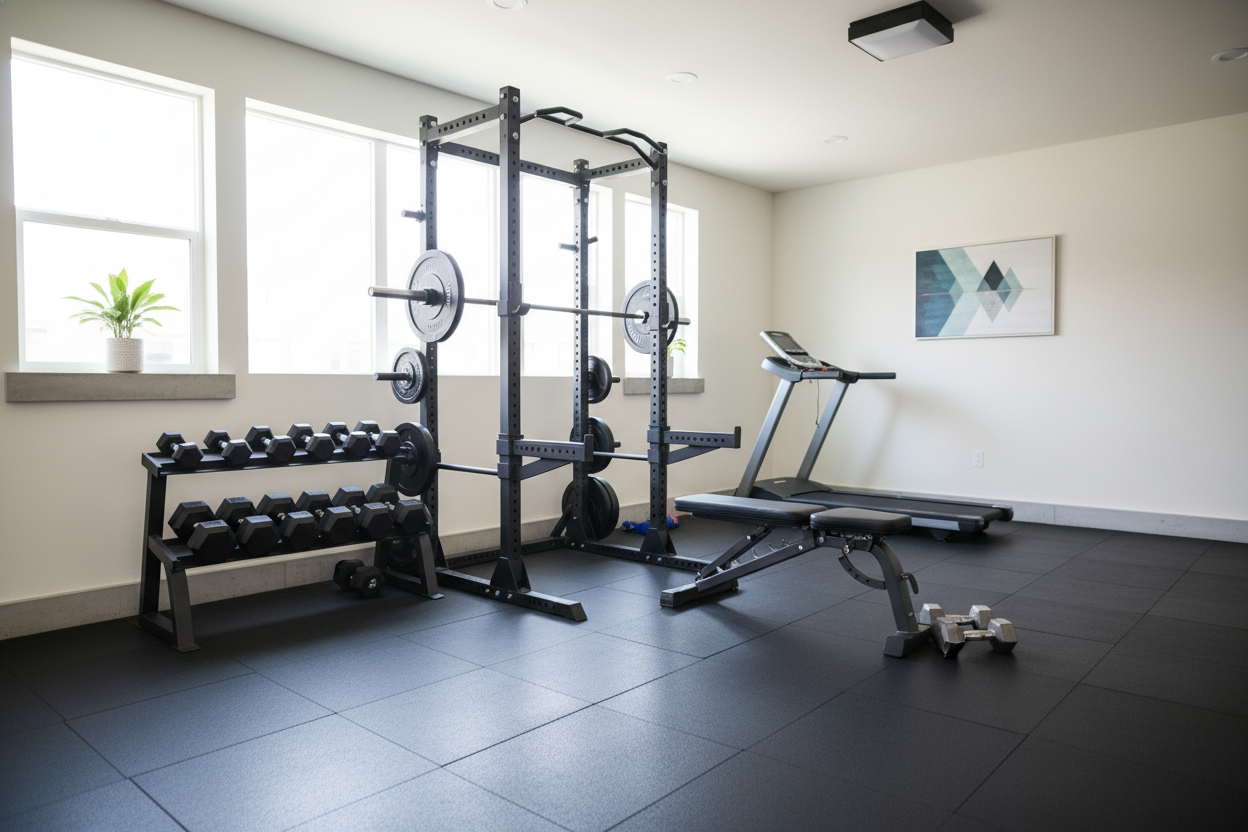
To how to increase weight lifting power, you need to embrace micro-loading. Jumping 10 pounds every week works for a month, then you hit a wall. Invest in a pair of 1.25-pound fractional plates. Adding 2.5 pounds total to the bar every week is 130 pounds in a year. That is how to lift heavier weights faster over the long haul. Also, don't be a hero. If you're training at home, you need a heavy-duty power rack and barbell package with spotter arms. Failing a heavy rep is part of the process; getting pinned under it shouldn't be.
Can You Lift More Than Your Weight? The Strength Standards
So, can you lift more than your weight? For most people, this is the first real milestone of being 'strong.' In the lifting community, we usually look at multipliers. A 1x bodyweight bench press is the entry fee for being an intermediate lifter. A 1.5x bodyweight squat and a 2x bodyweight deadlift are the gold standards for a 'strong' regular person. If you weigh 200 pounds and you can deadlift 400, you are officially in the top 5% of the general population.
Remember that to lift more weight, you have to treat it like a marathon. I've seen guys try to hit these standards in three months, blow out a disc, and never lift again. Strength is a skill. You are training your brain to fire your muscles in the right order. Every time you step under the bar, you are practicing that skill. Respect the weight, and the weight will eventually respect you back.
When to Push Your Limits and When to Back Off
Longevity is the most underrated stat in the gym. If you want to lift more weight, you have to stay healthy enough to train. This means knowing the difference between 'good pain' (muscle fatigue) and 'bad pain' (joint sharp shoots). It also means being honest about your gear. I’ve seen people try to hit a new 1RM on a bench that has more wobble than a bowl of Jello. There is a serious risk in trusting cheap gear for heavy sets when you are moving serious iron.
Personal Experience: The 1.25-Pound Lesson
I spent two years stuck at a 225-pound bench press. I kept trying to jump to 235 and failing miserably. My ego wouldn't let me use 'tiny' plates. Finally, I bought a set of fractional plates and added exactly 1 pound a week. It felt stupid and slow. But six months later, I hit 250 for a double. My mistake wasn't a lack of effort; it was a lack of patience. Heavy is a moving target, and sometimes you have to sneak up on it.
FAQ
Is lifting 100 lbs heavy?
It depends on the lift. For a bicep curl, 100 lbs is elite. For a deadlift, it is a beginner-level weight. Heavy is always relative to the muscle group and your personal maximum.
How many reps is considered heavy?
Generally, anything between 1 and 5 reps where you are close to failure is considered heavy. If you can do more than 6-8 reps, you are moving into the hypertrophy or endurance range.
Should I lift heavy every day?
No. Heavy lifting taxes the central nervous system significantly. Most effective programs alternate heavy days with lighter 'volume' days or rest days to allow for recovery.