I Rebuilt My Home Gym Setup 4 Times (Here is the Right Way)
I remember staring at my third gym iteration—a cramped garage corner—wondering why I was constantly bruising my shins on the bench while trying to deadlift. I had spent thousands on high-end gear, but zero time thinking about the actual flow of the room. Designing a home gym setup isn't just about clicking 'buy' on a power rack; it is about spatial geometry and making sure you don't hate your life during a superset.
Quick Takeaways
- Flooring is your foundation, not an afterthought—get it right before the rack arrives.
- The rack dictates every other measurement; give it 2 feet of lateral clearance for plate loading.
- Negative space is just as valuable as a new piece of equipment.
- Wall-mounted storage is the only way to keep a small gym from feeling like a closet.
The Tetris Phase: Why My First Three Gyms Failed
My first gym was a 10x10 spare bedroom. I shoved a full-sized power rack, a treadmill, and a 12-pair dumbbell rack in there. I had about 18 inches of walking space. It looked great for a single photo, but training in it was a nightmare. I spent more time shuffling equipment around than I did actually lifting.
The mistake was ignoring 'negative space.' You need room to fail a lift, room to breathe between sets, and room to move a bench without performing a three-point turn. If you can't walk from your rack to your dumbbells without turning sideways, your layout is broken. I had to tear it all down three times before I realized that less gear with more floor space equals a better workout.
Step 1: Anchor Your Space With the Right Flooring
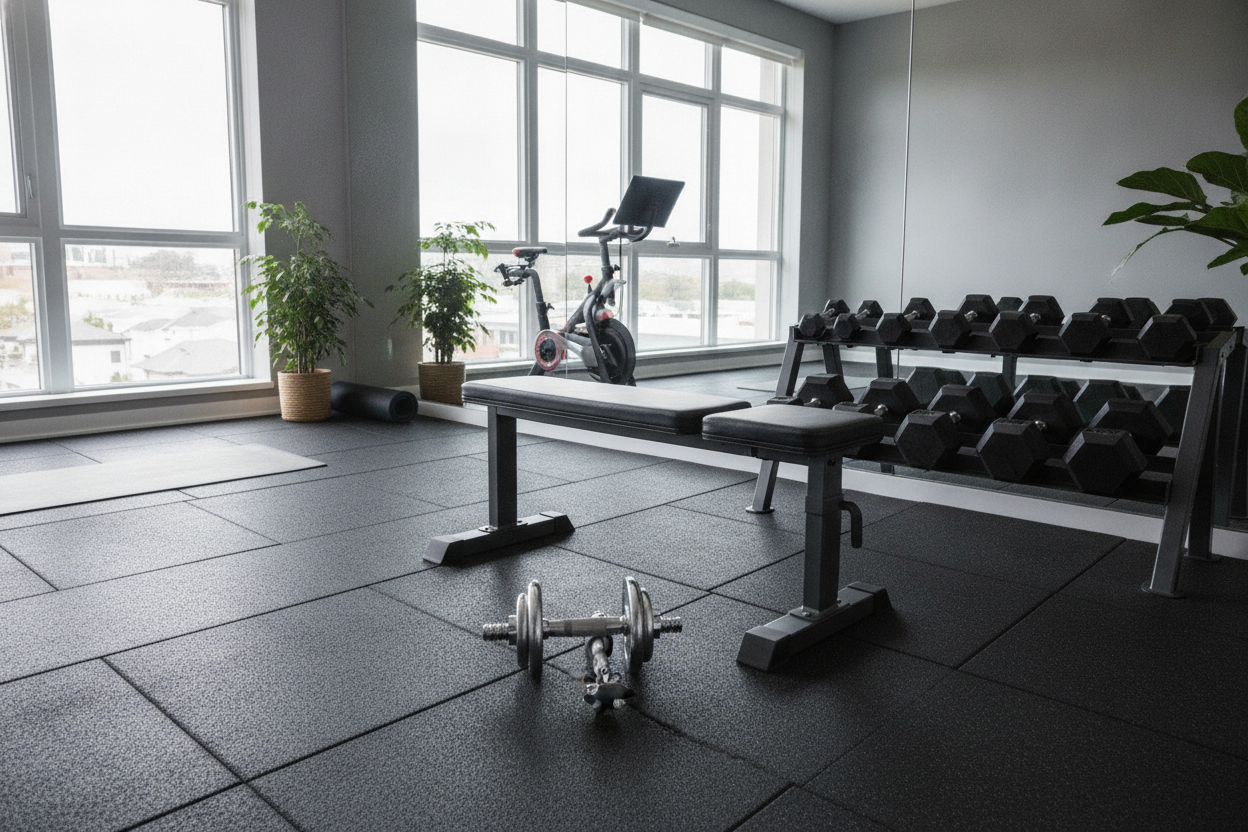
Stop buying those cheap foam puzzle tiles from the big box store. They slip, they compress under a 300-lb squat, and they look like a preschool playroom. Before you bolt down a single upright, map your floor. I eventually ditched the individual mats and went with a large exercise mat for home gym use because seams are the enemy of a clean, stable lifting surface.
If you are planning on pulling heavy deadlifts or doing high-impact plyometrics, you need a dedicated heavy-duty 6x8ft exercise mat to protect your subfloor. I’ve seen guys crack their garage slab because they thought 1/2-inch foam was enough protection for a 400-lb drop. It isn't. Get a solid, high-density rubber base first.
Step 2: The Rack Goes First (And Dictates Everything Else)
The rack is the sun; everything else in your gym orbits it. When positioning it, check your ceiling height twice. If you have 8-foot ceilings and a 90-inch rack, you aren't doing pull-ups without scalping yourself. You also need to account for the barbell. A standard Olympic bar is 7.2 feet long. If your rack is tucked too close to a wall, you won't be able to slide plates on without hitting the drywall.
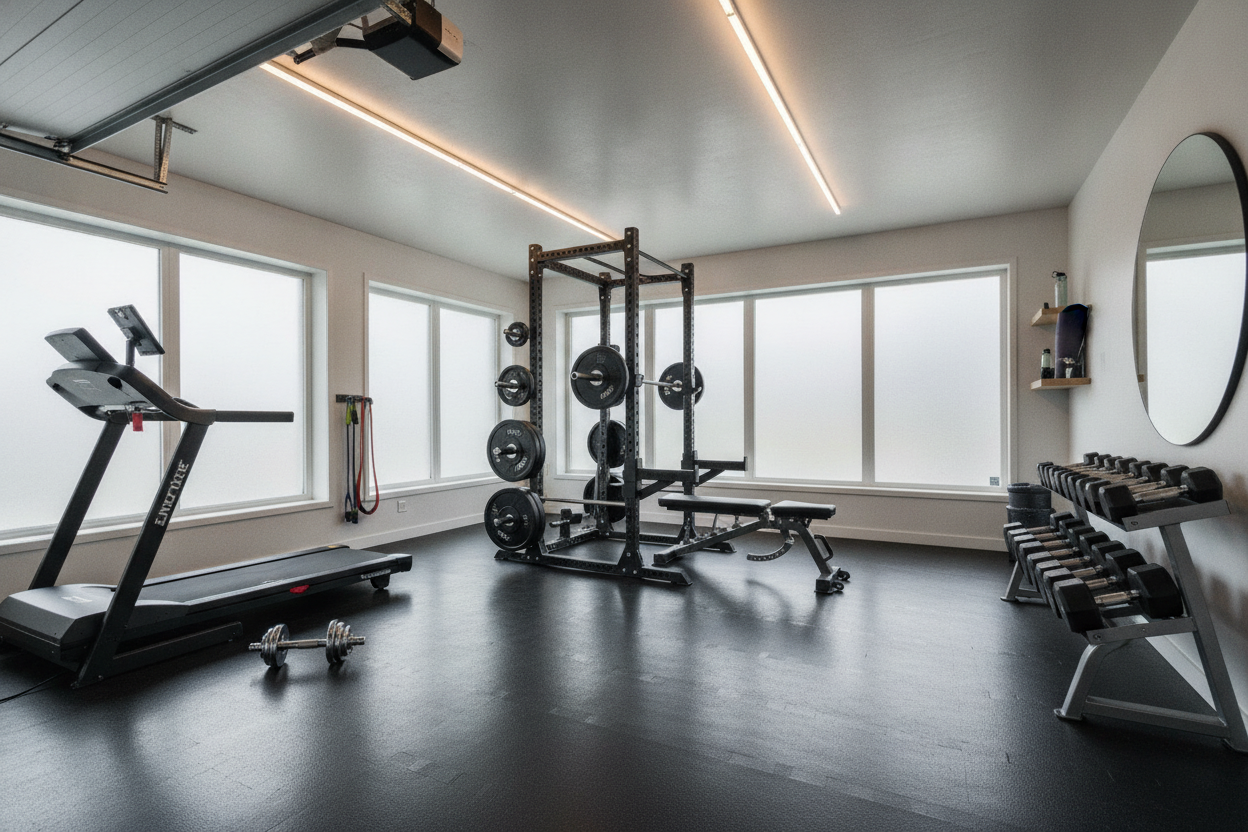
For most people, a simple home gym setup guide will suggest centering the rack on the main wall. I actually prefer offsetting it. By pushing the rack toward one side (while maintaining that 2-foot plate-loading gap), you open up a much larger contiguous floor area for everything else. This prevents the room from feeling bisected and cramped.
Step 3: Mapping Out the 'Drop Zone' for Free Weights
You need a 'Drop Zone'—a 4x8 foot area that remains permanently clear. This is where you do your dumbbell lunges, kettlebell swings, or stretching. In my second rebuild, I put my dumbbell rack right in the middle of my open floor. I constantly tripped over it. Now, the weights stay on the periphery, and the center of the room is sacred ground.
This zone is also your safety net. If you are doing overhead presses and need to bail, you don't want to be worrying about crashing into a bench or a TV stand. Keep this area clear of clutter. If you find yourself storing extra plates or bands in this space, you need better wall storage, not more floor space.
Do You Actually Have Room for Machines?
Everyone wants a functional trainer or a leg press, but machines are absolute space hogs. A lat pulldown might only take up a 4x4 foot footprint on the floor, but when you are seated and pulling, your body and the movement of the weight stack require significantly more breathing room. When fitting gym machines at home, I always add 20% to the manufacturer's listed dimensions for 'functional footprint.'
I’ve made the mistake of buying a plate-loaded leg press that looked fine on paper but made it impossible to use my squat rack simultaneously. If a machine forces you to move three other things just to use it, it’s a bad fit for a basic home gym setup. Stick to versatile cable towers or wall-mounted units if you're tight on square footage.
My Current Layout: A Walkthrough of a Space That Works
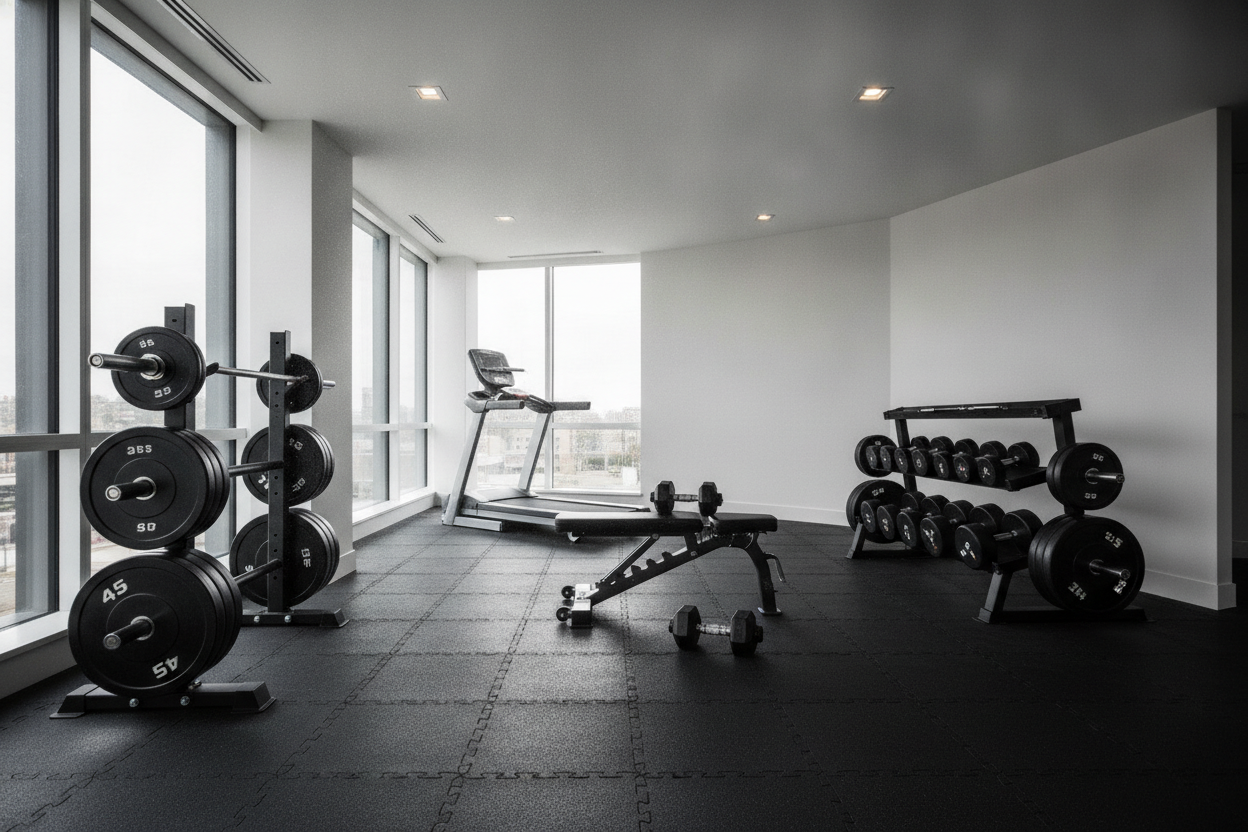
My final, current setup is built on efficiency. I use wall-mounted racks for my barbells and a folding bench that hangs up when not in use. This keeps the floor completely clear for cleaning and movement. The flow is logical: the rack is in the back corner, the dumbbells are on a side wall, and the 'drop zone' is front and center.
The biggest improvement wasn't the gear—it was the organization. I stopped leaving plates on the floor and started using wall pegs. It makes the gym feel inviting rather than like a chore to enter. When the space flows, you actually want to train in it. That's the secret to a perfect home gym.
FAQ
How much space do I really need for a home gym?
At minimum, an 8x10 foot area can fit a rack and a bar. However, 12x12 is the 'sweet spot' where you can have a rack, a bench, and a small area for dumbbells without feeling claustrophobic.
Can I set up a gym on a carpeted floor?
You can, but it’s unstable for heavy lifting. If you must use a carpeted room, lay down a sheet of 3/4-inch plywood first, then put your rubber mats on top of that to create a solid, level platform.
What is the most common layout mistake?
Putting the rack in the exact center of the room. It feels intuitive, but it kills your open floor space. Offset it to a wall so you have a large, uninterrupted 'active' area for dynamic movements.