Gym Machines at Home: The Complete Setup Guide for Real Gains
You are tired of the commute, the waiting for equipment, and the monthly fees. You want the freedom to train on your terms. Building a sanctuary for fitness isn't just about convenience; it is about controlling your environment to maximize hypertrophy and strength. However, selecting the right gym machines at home is often where the dream turns into a logistical nightmare of confusing specs and wasted square footage.
This guide cuts through the marketing noise. We aren't looking at flimsy gear that becomes a clothes rack. We are looking at biomechanically sound equipment that replicates—or exceeds—the commercial gym experience within your four walls.
Key Takeaways
- Biomechanics Matter: A weight machine for home must align with your natural joint path; otherwise, you risk injury over growth.
- Footprint vs. Function: Home gym systems often sacrifice range of motion for compactness. Look for verticality over horizontal spread.
- Resistance Type: Choose between selectorized (weight stack) for speed or plate-loaded weight lifting machines for home for maximum load capacity.
- Versatility: The best at home gym systems allow for both compound movements and isolation work without a 20-minute setup change.
Defining Your Home Weight System Strategy
Before buying a single bolt, you must define the goal of your space. Are you a powerlifter needing heavy static loads, or a bodybuilder looking for constant tension? The category of home fitness machines is vast, ranging from resistance rods to heavy-duty steel stacks.
For most lifters, the goal is hypertrophy (muscle growth). This requires a weight system for home that offers a smooth resistance curve. If the machine sticks or drags during the eccentric (lowering) phase, you are robbing your muscles of the most growth-producing part of the rep.
The All-in-One Functional Trainer
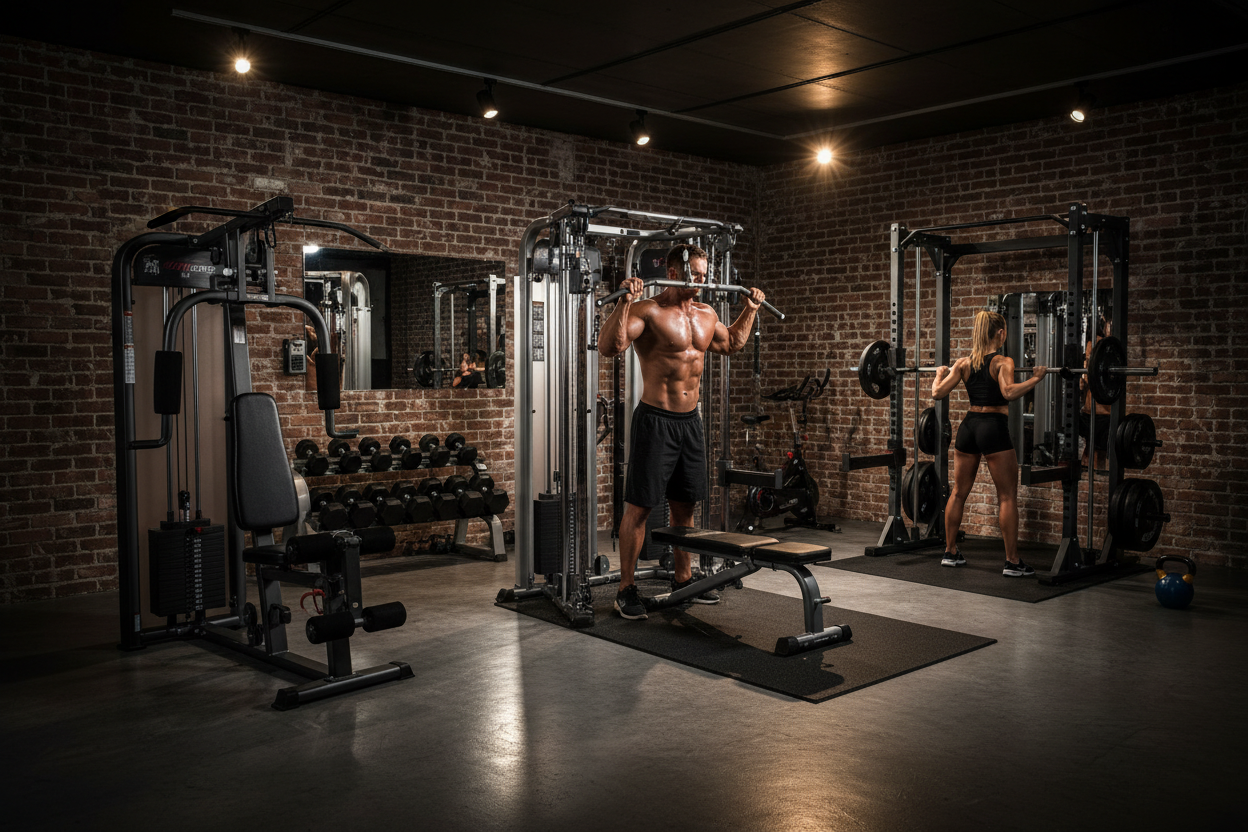
If you have the budget, a functional trainer is the gold standard for a weight machine home gym. These use cable systems with a 2:1 pulley ratio. This means moving 100lbs feels like 50lbs, but the cable travel is longer and smoother.
This is superior to a standard in home weight machine because it allows for freedom of movement. You aren't locked into a fixed plane, which engages stabilizer muscles and reduces joint stress. When looking for weight machines for home gym setups, prioritize adjustable pulley heights.
The Smith Machine Hybrid
For those who want to move heavy iron safely without a spotter, a Smith Machine hybrid is often the best weight system home gym choice. Modern iterations combine a Smith bar (for squats and bench) with a cable crossover system.
This creates a comprehensive at home weight machine ecosystem. You can perform heavy compounds on the Smith bar and immediately switch to isolation work on the cables. It solves the safety issue inherent in solo training.
Compact Solutions: The Mini Gym Machine
Not everyone has a garage or basement. If you are in an apartment, a mini gym machine or a wall-mounted cable station is your answer. These utilize the vertical wall space rather than floor space.
While smaller, these weight systems for home gym use must still be robust. Avoid plastic pulleys. Look for aluminum pulleys and aircraft-grade cables, even on compact units, to ensure the longevity of your home weight system.
The "Invisible" Specs: What Manufacturers Hide
Most product pages list dimensions and max weight. They rarely tell you about the "feel." A high-quality weight machine for home depends on the quality of the bushings and bearings.
Linear bearings are smoother and quieter than nylon bushings. If you are buying a Smith machine or a leg press attachment, insist on linear bearings. If the description doesn't specify, it's likely a cheap bushing that will degrade and create friction within a year.
My Training Log: Real Talk
Let me share something the brochures won't tell you about living with these machines. I own a high-end selectorized functional trainer—on paper, it's perfect. But the first month I had it, I realized I messed up the placement.
I placed it too close to the wall. Every time I tried to do a rear-delt fly, my elbows would smack the drywall. I had to dismantle a 400lb unit just to move it six inches forward.
Also, there is a specific maintenance reality to owning a weight machine home gym. About six months in, the guide rods started making this scratching sound—a dry "zip" noise on every rep. It drove me crazy. I learned the hard way that you can't just use standard WD-40; it gums up with dust. You need 100% silicone lubricant. The difference in the "glide" of the weight stack before and after silicone is night and day. If you don't maintain it, that expensive smooth pull turns into a gritty, stuttering mess that kills your mind-muscle connection.
Conclusion
Building a physique with gym machines at home is entirely possible, and for many, preferable to the commercial gym environment. The key is to ignore the flashy marketing of "300 exercises in one" and focus on biomechanics, stability, and the quality of the moving parts. Invest in a weight machine for home that feels good to use, and you will find yourself training harder and more consistently than ever before.
Frequently Asked Questions
How much space do I really need for a home weight system?
While the footprint of the machine might be 5x5 feet, you need "working room." For a functional trainer or weight lifting machines for home, you typically need a 10x10 foot area to allow for bar clearance, bench movement, and body extension during cable exercises.
Are home gym machines as effective as free weights?
Yes, specifically for hypertrophy. A high-quality weight machine home gym provides constant tension and stability, which allows you to isolate the target muscle without fatigue from stabilizing heavy free weights. A combination of both is usually ideal.
What is the maintenance like for an at home weight machine?
It is minimal but critical. Wipe down upholstery after use to prevent cracking from sweat. Lubricate guide rods with silicone spray every 2-3 months. Check cables for fraying annually. Proper care keeps your home weight system safe and retains its resale value.