What Actually Makes a Lift a True Bulking Exercise?
I remember the first time I tried to 'size up' in my garage. I was doing high-rep kettlebell swings and chasing a massive pump with 15-pound dumbbells, wondering why my t-shirts still fit the exact same way three months later. I was working hard, but I wasn't doing a single real bulking exercise. I was just getting good at being tired.
The truth is, your body doesn't want to grow. Muscle is metabolically expensive, and your biology would rather stay small and efficient. To force a change, you need a specific type of stimulus that most 'functional' or 'cardio-heavy' workouts simply don't provide. You need movements that allow for massive mechanical tension and long-term progression.
Quick Takeaways
- Stability is the foundation of force production; if you are wobbling, you aren't growing.
- A movement must be 'loadable' for years, not just weeks.
- Free weights are king, but only if your floor can handle the impact.
- Range of motion under stretch is the secret sauce for hypertrophy.
Why Some Lifts Build Mass and Others Just Make You Sweat
There is a massive difference between a movement that burns calories and bulk training. When you do a burpee or a box jump, your heart rate redlines, but your muscle fibers aren't necessarily being stretched under a heavy load. Growth happens when you recruit the maximum amount of motor units and subject them to tension they haven't felt before.
The best bulking exercises share one common trait: they are limited by your muscle strength, not your lungs. If you have to stop a set because you're out of breath rather than because your quads are screaming, you're doing a conditioning piece, not a mass builder. For a best workout for bulking, we want movements where the target muscle is the weak link in the chain.
The 3 Non-Negotiable Rules of a Good Bulking Exercise
Not every lift is created equal. To filter out the fluff, I use three strict criteria. If a movement fails even one of these, it gets relegated to the 'accessory' pile rather than being a cornerstone of my good bulking exercises list. We are looking for high-ROI movements that justify the extra calories you're eating.
You need to be able to track progress objectively. If you can't tell if you got stronger because your form changed or you just moved faster, it’s not a best gym routine for bulking candidate. We want repeatable, standardized movements.
Rule 1: Infinite Loadability
If you can 'max out' a movement within six months, it’s a poor choice for a long-term bulk. This is why the barbell is the ultimate tool. You can add 1.25-lb micro-plates to a back squat for years. Muscle bulking exercises need to have a high ceiling. Movements like the Bulgarian Split Squat or the Barbell Row are perfect because you can always add another 5 lbs to the bar or grab a heavier dumbbell.
Rule 2: Unshakable Stability
I see guys trying to do heavy presses on those squishy half-balls, and it drives me crazy. Your brain has a built-in safety mechanism: if it senses instability, it will literally throttle the power output to your muscles to prevent an injury. To perform an exercise to bulk up, you need a solid base. The more stable the movement, the more you can focus on smashing the target muscle into submission.
Do You Need Machines for a Muscle Bulk Workout?
You’ll hear influencers say you need a $5,000 hack squat machine to get big legs. That’s nonsense. While machines offer great stability, you can absolutely build a best muscle bulk workout with a rack and a bench. The key is to find ways to create that same stability at home. For example, doing a 'hatfield squat' with a safety squat bar gives you the stability of a machine while using free weights.
I’ve found that the best exercise routine to gain muscle often relies on basic heavy compounds that allow for natural movement patterns. You don't need fancy cables to see results if you're consistent with a barbell. A solid best bulking program is built on the basics, not the latest gym-tech gimmick.
My Top Free-Weight Bulking Exercises for Home Gyms
When I’m picking the best exercise to bulk up, I go for the big hitters. Romanian Deadlifts (RDLs) are my number one for the posterior chain because of the insane stretch they put on the hamstrings. Then there’s the Weighted Dip—often called the 'upper body squat' for its ability to pack mass on the chest and triceps. These are the best routine for bulking because they hit multiple muscle groups simultaneously.
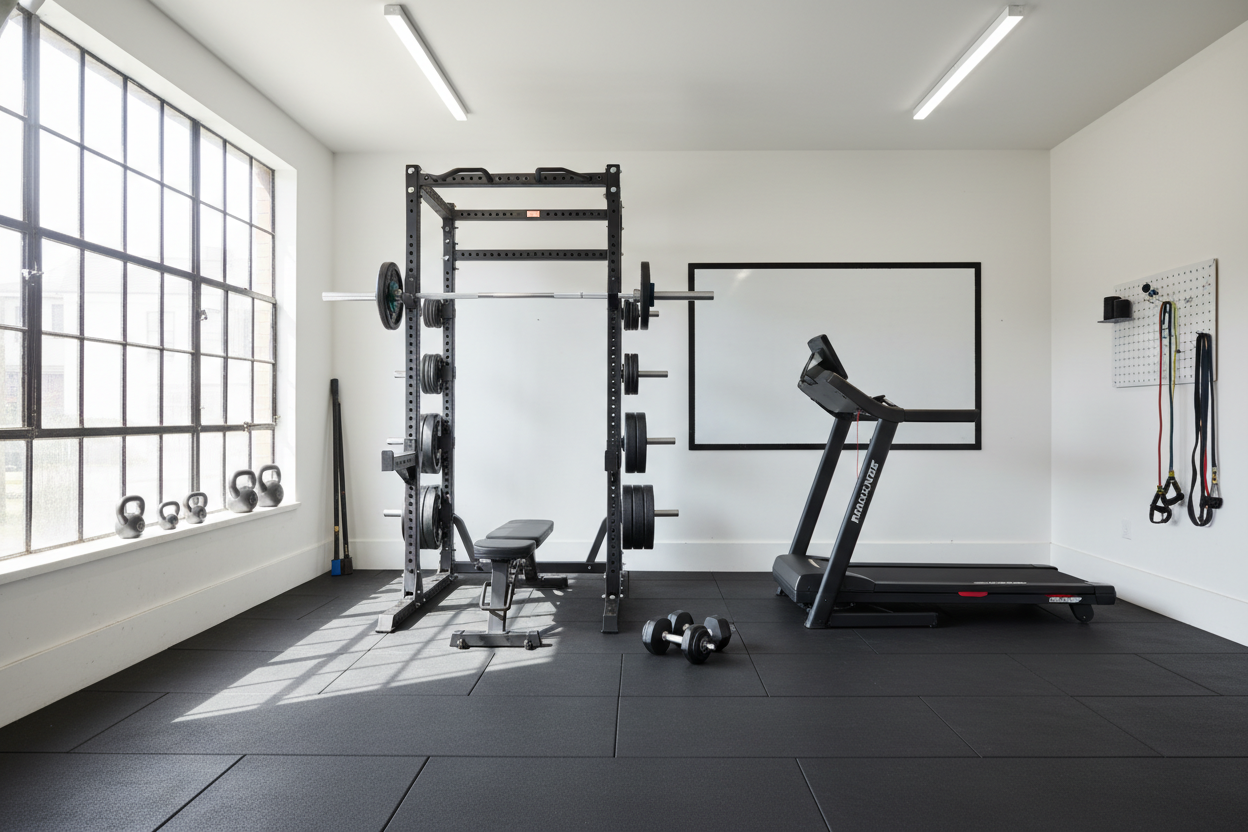
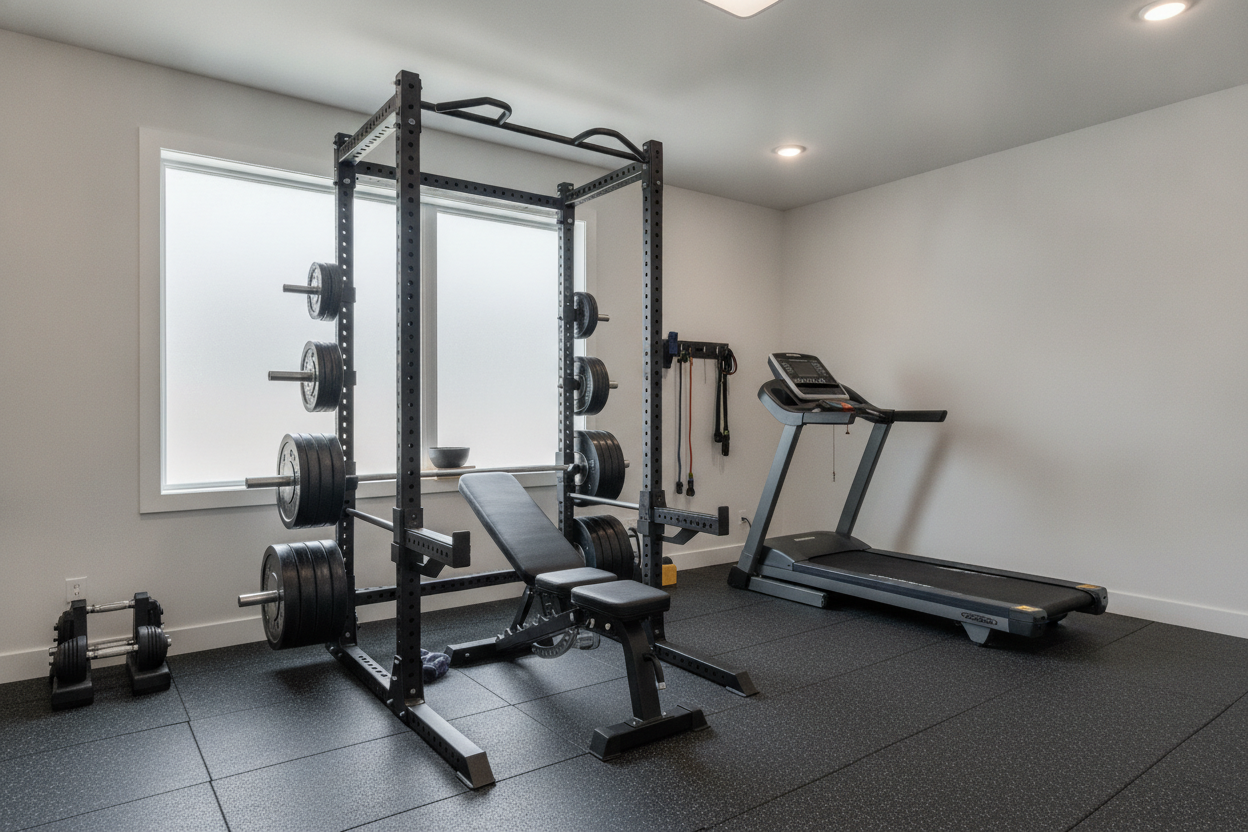
To do these safely, you need the best home workout equipment you can afford. I’m talking about a rack with a high weight capacity and a bar that won't whip like a noodle when you put four plates on it. These best bulk workouts require gear that gives you the confidence to push to failure without worrying about the equipment collapsing.
Don't Ignore Your Stance and Surface
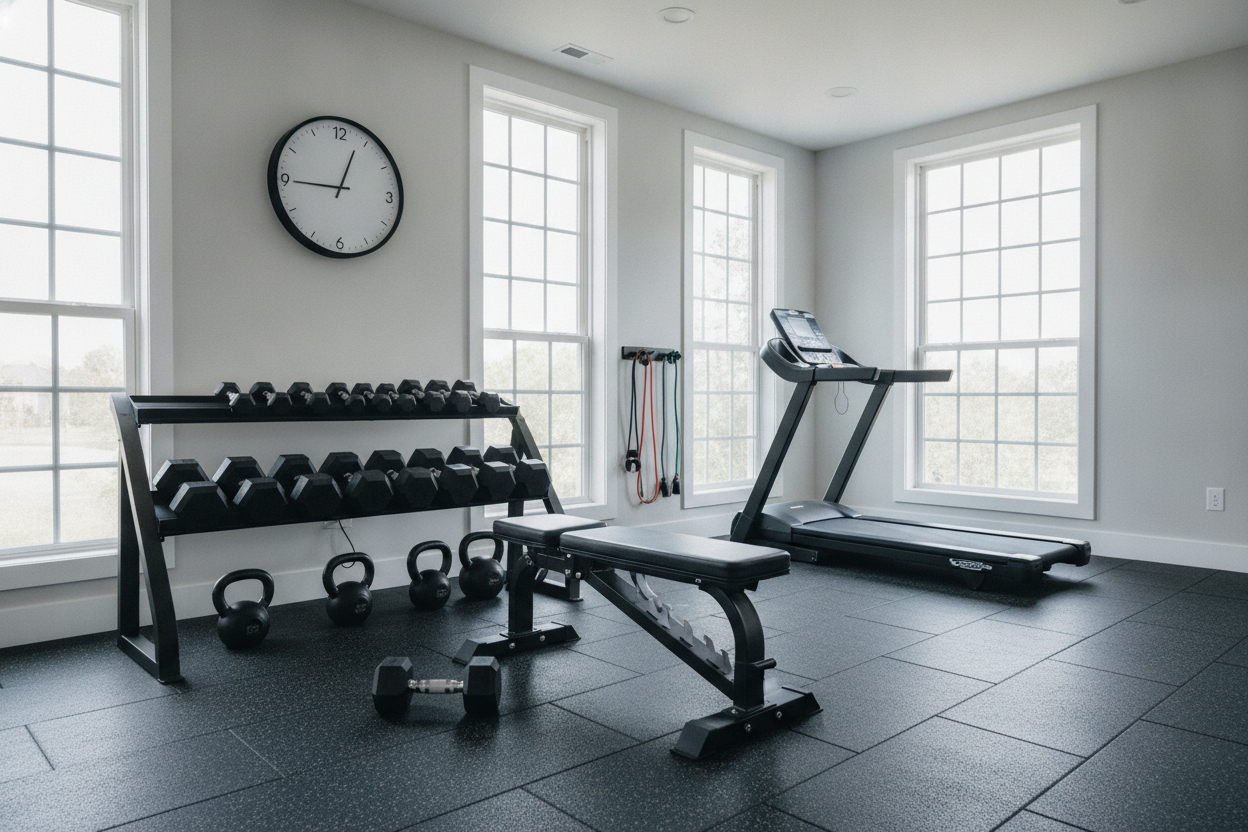
If you’re lifting on a slick concrete floor or those cheap, squishy foam tiles from the toy aisle, you’re leaving gains on the table. You need a high-density surface that doesn't compress under load. I personally use a 6x8ft exercise mat because it provides enough grip for a wide squat stance and protects the subfloor from dropped 100-lb dumbbells.
A stable floor is a prerequisite for any best workout routine for bulking. If your feet are sliding during a heavy row, your back isn't getting the full stimulus. Think of your flooring as the foundation of your best bulk workout plan. It’s a one-time investment that makes every rep of your gym routine for bulking more effective.
My Honest Mistake: The 'Functional' Trap
A few years ago, I got obsessed with 'unilateral balance training.' I was doing single-leg deadlifts on a foam pad. I got really good at balancing, but my legs actually got smaller. I was so focused on not falling over that I couldn't use enough weight to actually challenge my muscles. I learned the hard way: if you want to bulk, stop trying to be an acrobat. Sit your butt down, get stable, and move some heavy iron.
FAQ
How many reps should I do for a bulking exercise?
For most lifts, the 6-12 rep range is the sweet spot. It provides enough tension for growth while allowing you to use enough weight to stay heavy. For bigger movements like squats, even 5 reps can work wonders.
Can I bulk with just dumbbells?
Yes, but you’ll eventually need very heavy ones. Once you're pressing 100-lb dumbbells, the logistics of getting them into position become the limiting factor. That's usually when it's time to switch to a barbell or a dedicated bench press station.
How often should I change my exercises?
Not often. Stick with the same 5-8 movements for at least 12 weeks. You need time to get proficient at the movement so you can actually push the intensity. If you swap exercises every week, you're just 'exercising,' not 'training.'