Weight Lifting Machines: Technical Architecture, Machine Classifications, and Protective Subfloor Staging
Introduction: The Mechanics and Architecture of Weight Lifting Machines
Strength training environments rely heavily on rigid structural frameworks to provide safe, repeatable resistance profiles. Unlike free weights that demand three-dimensional stabilization, weight lifting machines constrain physical movements along predetermined mechanical tracks. By isolating primary movers and controlling vector pathways, these systems allow lifters of all experience levels to train specific muscle groups with reduced technique breakdown. Selecting and installing apparatus from a curated weight lifting machines collection requires an understanding of structural footprints, leverage dynamics, and floor integrity.
Every dedicated training machine exerts concentrated physical pressure downward through a limited number of contact feet. When combined with dynamic external resistance, these stationary units place unique structural demands on gym flooring. Facility planners and home gym designers must balance the biomechanical advantages of mechanical tracks against the spatial footprint and subfloor protection requirements of heavy frame assemblies.
Core Taxonomy of Strength Training Machines: Selectorized vs. Plate Loaded
Modern strength training machinery generally falls into two primary mechanical classifications: selectorized units and plate loaded gym machines. Understanding their architectural differences helps gym owners make informed layout and budgeting decisions. For those looking to identify specific apparatus configurations across diverse training facilities, consulting a detailed weight lifting machines guide offers a helpful reference for gym layouts.
Selectorized Weight Machines: Pin-Loaded Stacks and Constant Tension Dynamics
Selectorized weight machines feature an integrated stack of rectangular weight plates guided along dual solid steel rods. Resistance adjustments occur via a magnetic or tethered selector pin inserted directly into the desired plate increment. The mechanical load transfers through high-tensile aircraft cables routed through engineered pulleys, cams, and counterweights.
Because the cable-and-cam geometry can alter the mechanical advantage across the range of motion, selectorized machines can match human strength curves closely. Cam profiles can reduce resistance at mechanically vulnerable joint angles while increasing load where muscle leverage peaks. These weight machines maintain smooth movement throughout both concentric and eccentric phases, making them ideal for rapid weight changes between working sets and drop sets.
Plate Loaded Gym Machines: Direct Leverage, Arc Paths, and Loading Capacity
Plate loaded machines remove cables and internal weight stacks in favor of rigid leverage arms, structural pivot points, and standard Olympic plate horns. The user loads standard weight plates directly onto the moving assembly. Because they utilize direct mechanical linkages rather than cable-pulley routings, these units provide direct tactile feedback and progressive resistance curves that track natural rotational arcs.
The structural advantage of plate loaded gym machines lies in simplicity and load ceiling. With fewer moving wear parts, maintenance remains minimal. However, these units demand substantial clearance around the machine perimeter to allow safe loading and unloading of plates, resulting in a broader operational footprint than compact selectorized designs.
Essential Machine Types Across Targeted Muscle Groups
Both commercial facilities and home training studios organize resistance equipment around basic functional movement patterns. Incorporating these machines effectively into structured routines aligns with the foundational principles detailed in our foundational weight lifting training guide.
Upper Body Compound Foundations: Chest Press and Lat Pulldown Systems
Upper body compound machines deliver balanced multi-joint development while eliminating the balance demands of free-weight barbells. A dedicated seated chest press utilizes convergent leverage arms or guided track carriages to mirror horizontal pressing patterns. Adjustable backrests and multi-grip handles enable athletes to adjust elbow tracking to emphasize specific muscle groups across the pectorals, anterior deltoids, and triceps.
For vertical pulling mechanics, the lat pulldown serves as an essential counterpart. Utilizing overhead cable routings attached to adjustable thigh pads, this machine locks the lower body securely in place. Lifters can alter grip widths and attachments to emphasize the latissimus dorsi and upper back musculature without requiring bodyweight pull-up capacity. Paired with a seated row station, these compound machines create a solid framework for balanced upper-body development.
Lower Body Isolation and Compound Power: Leg Press, Leg Extension, and Leg Curl
Lower body training machines support high loading while stabilizing the spinal column. The angled leg press uses a heavy-duty sled riding along linear guide rails or industrial pivot arms, allowing heavy quadricep and glute stimulation with minimal axial loading on the back. For builders equipping dedicated training spaces, exploring our dedicated strength machine collection provides access to commercial-grade lower body equipment designed for consistent mechanical alignment.
Isolation units complement these compound sleds by refining joint-specific tension:
- Leg Extension: Targets the quadriceps through seated knee extension, utilizing a self-aligning shin roller and cam mechanism to maintain continuous tension through full terminal extension.
- Leg Curl: Available in prone, seated, or standing formats, this machine isolates the hamstrings along a guided pivot that aligns with the user's anatomical knee axis.
- Calf Raise and Hip Abduction/Adduction: Secondary isolation units that lock peripheral joint mechanics into rigid, repeatable planes for targeted structural balance.
Commercial Weight Lifting Equipment vs. Home Gym Apparatus
Distinguishing between commercial grade equipment and residential apparatus comes down to frame gauge, bearing architecture, and spatial efficiency. Commercial gyms require machines capable of enduring continuous daily use. These units use heavy-gauge structural steel tubing, sealed pillow block bearings at all pivot junctions, and durable powder-coat finishes that resist corrosion and impact chipping.
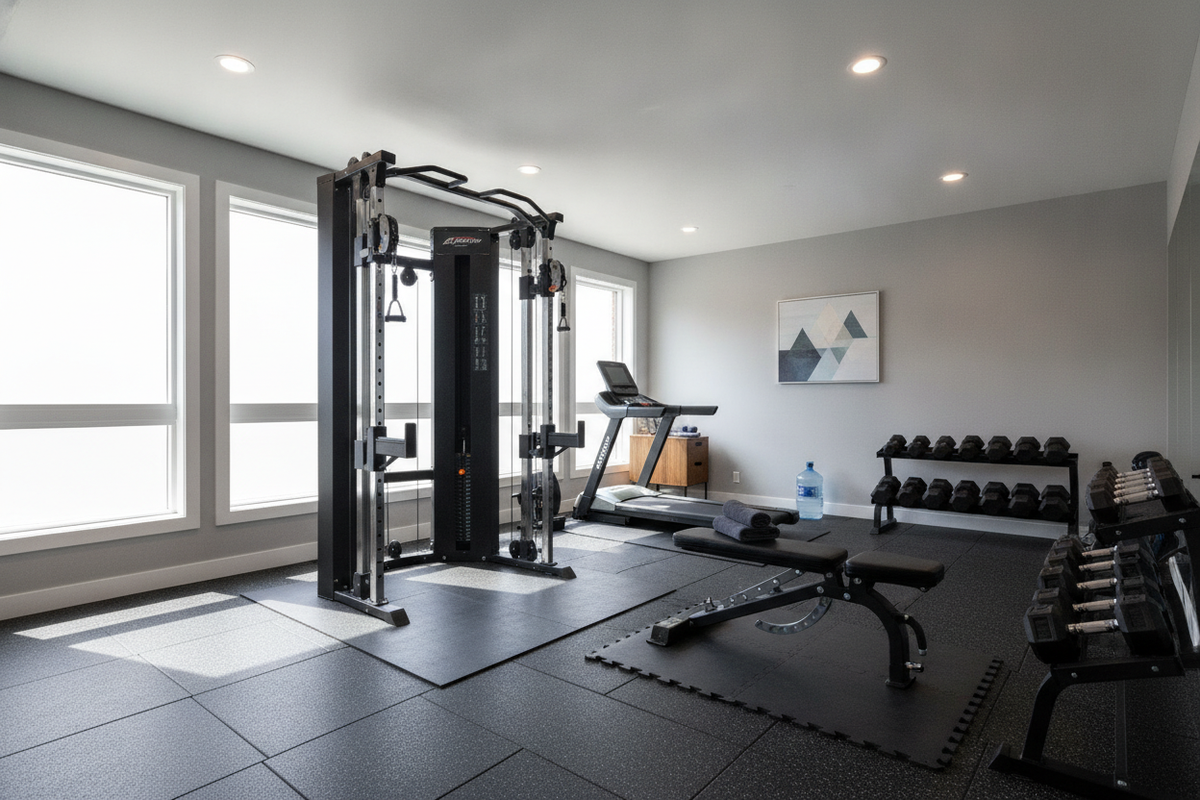
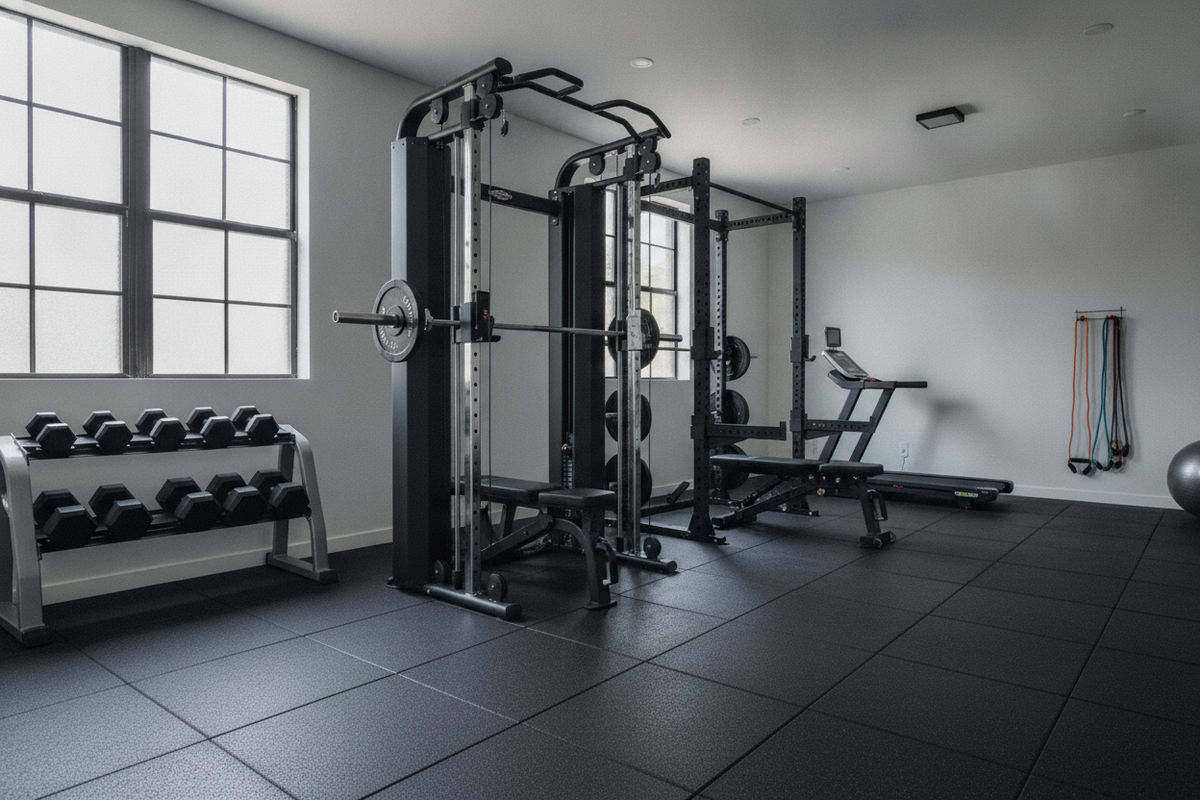
Home gym equipment, by contrast, prioritizes a compact footprint, multi-functionality, and modularity. Space-conscious lifters often turn to hybrid systems like functional trainers or a dual-pulley smith machine that consolidate multiple exercise stations into a single footprint. In our view, prioritizing versatile cable adjustments and combining them with adjustable dumbbells often yields greater overall utility in limited footprints than attempting to pack multiple single-station commercial units into a home space.
Home Weight Machine Floor Setup: Point Loads, Leveling, and Subfloor Defense
Installing heavy strength training machines on residential subfloors introduces significant structural considerations. Unlike free weights that distribute mass during storage on horizontal racks, multi-stack weight machines concentrate heavy static weight onto tiny rubber footings. When a lifter operates the equipment, dynamic loading increases the effective ground force, creating point loads that can crack garage concrete or depress interior wooden joists.
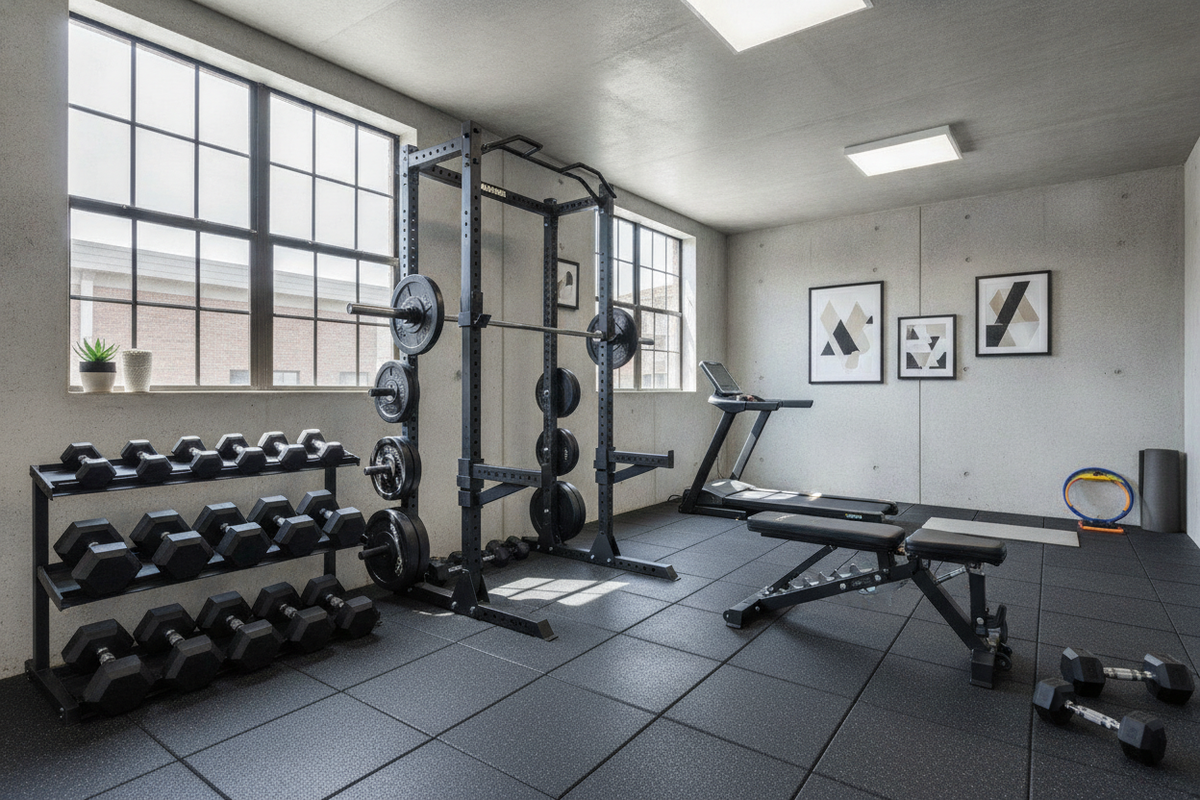
To safeguard structural integrity, install high-density gym flooring directly beneath machine contact points. Heavy vulcanized rubber mats disperse concentrated frame forces over a wider surface area, dampen mechanical vibrations, and prevent lateral frame shifting. If positioning an integrated power rack and weight plate product or a dedicated machine in a garage setting, verify floor levelness. Most garage slabs feature slight slope gradients for drainage. Using commercial-grade shims beneath machine feet prevents frame torquing and preserves smooth movement along guide rods.
Preventative Maintenance, Cable Calibration, and Guide Rod Care
To ensure smooth mechanical operation and prolong equipment longevity, consistent preventative maintenance protocols are essential:
- Guide Rod Lubrication: Wipe guide rods down regularly with a dry microfiber cloth to remove chalk, sweat, and environmental dust. Apply a thin layer of dry silicone spray or specialized guide rod lubricant; avoid standard petroleum-based oils that attract grime.
- Cable Tension Calibration: Inspect aircraft cables periodically for fraying, splitting nylon jacketing, or elongation. Adjust tension bolts at the selector stem to eliminate slack without raising the top weight plate off the stack.
- Pulley and Bearing Inspection: Verify that nylon and aluminum pulleys spin freely without wobble or grinding noises. Ensure pivot bearings remain tightly seated in their housings.
- Subfloor and Mat Hygiene: Clean rubber mats beneath machine frames to prevent salt and sweat accumulation, which can degrade protective coatings and subfloor materials over time.
Conclusion: Synthesizing Mechanical Selection and Resilient Foundation Design
Weight lifting machines offer controlled movement pathways, continuous mechanical tension, and safe loading for targeted muscle groups across both commercial facilities and residential spaces. Whether selecting pin-loaded selectorized stacks for rapid transitions or heavy plate loaded leverage arms for direct tactile resistance, equipment performance relies on mechanical alignment and proper room layout. By matching equipment footprints to structural floor capacities and installing dense protective rubber surfacing, training facilities can create a safe, durable, and biomechanically sound environment.