Gym Workout Equipment: Home & Garage Setup Guide
Essential Gym Workout Equipment for Strength Training
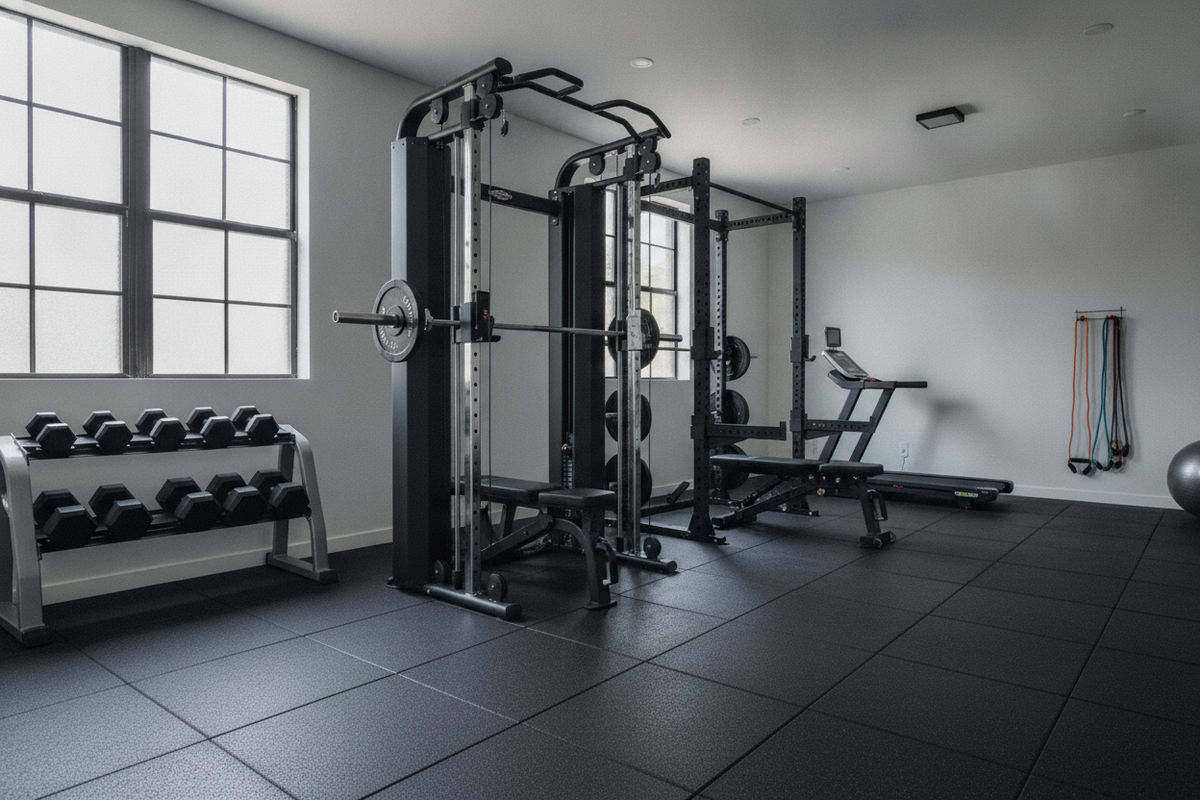
Assembling a reliable strength space begins by identifying pieces that deliver high exercise versatility within a manageable footprint. Quality gym workout equipment centers on foundational tools that accommodate progression over time rather than single-purpose gadgets that crowd available floor space. For an in-depth comparison of complete setups, consult our definitive home gym workout equipment guide.
Core Free Weights and Adjustable Dumbbells
Free weights remain the cornerstone of any balanced training routine. A single set of dumbbells allows an athlete to train unilateral movements, isolate smaller muscle groups, and perform pressing or rowing patterns with natural wrist positioning. For compact spaces, adjustable dumbbells offer the utility of an entire dumbbell rack while occupying a tiny fraction of the room.
Alongside dumbbells, a standard barbell accompanied by resilient weight plates unlocks compound movements such as squats, deadlifts, and overhead presses. When selecting plates, durable rubber or urethane-coated options help damp sound and reduce surface impact during lower-body sessions. Investing in a solid pair of kettlebells and elastic resistance bands provides portable resistance to complement your heavy lifting routine without demanding dedicated storage racks.
Power Rack and Adjustable FID Bench Foundations
A dependable power rack serves as the anchor of a serious strength corner. Racks provide stable uprights, integrated pull-up bars, and adjustable safety spotters that allow you to lift with confidence when training alone. When paired with an adjustable bench, your exercise library expands immediately.
An adjustable fid (flat, incline, decline) bench gives you the freedom to vary pressing angles to target distinct regions of the chest and shoulders. Make sure any bench you choose possesses a wide rear stabilizer, non-slip upholstery, and a firm foam core that resists bottoming out during heavy sets.
Cable Stations and Compact Gym Machines
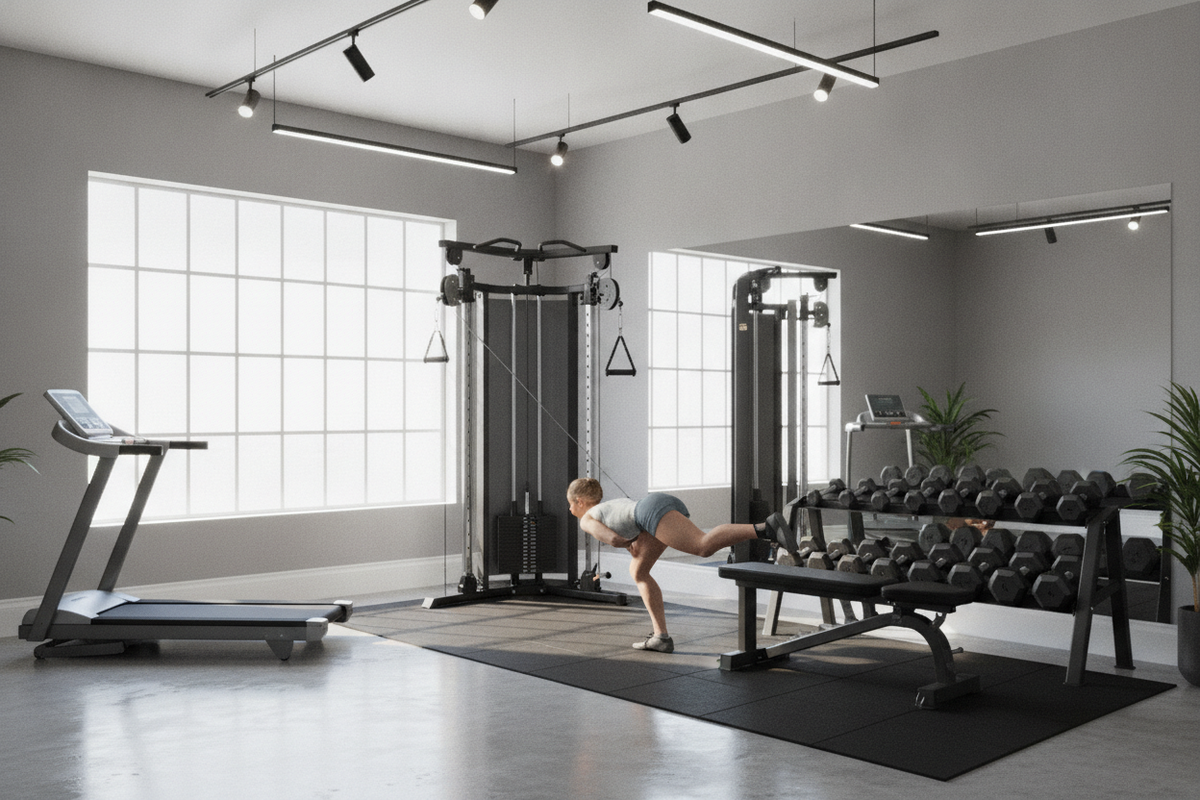
While free weights build foundational power, dedicated gym machines and pulley systems provide continuous mechanical tension through an entire range of motion. Compact plate-loaded cable towers or rack-attached pulleys allow for face pulls, triceps pushdowns, and lat pulldowns without requiring the extensive footprint of commercial selectorized units. Balancing free-weight stations with one or two multi-use cable attachments ensures well-rounded resistance training that matches diverse fitness goals.
Building a Garage Gym: Fitness Equipment Layout
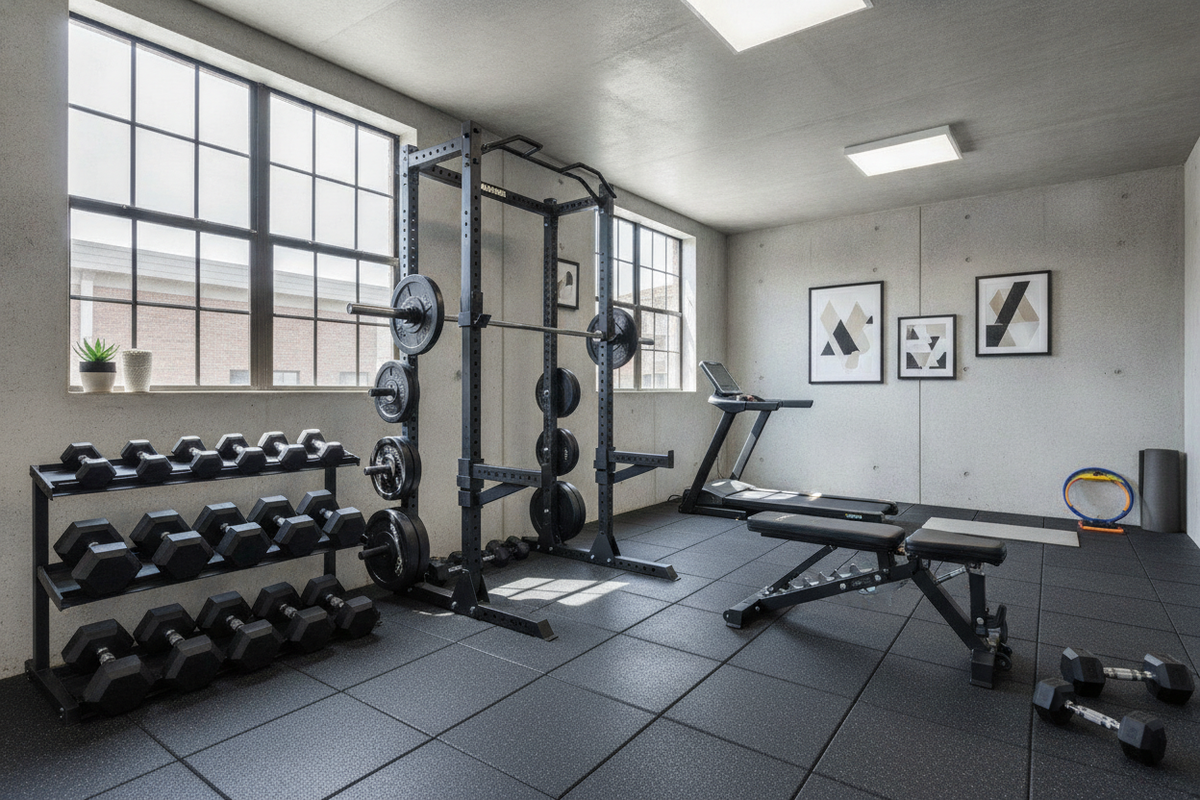
Transitioning from a commercial facility to a home workout area often leads lifters directly to the garage. A functional garage gym offers ceiling height for overhead work and concrete slabs suitable for heavy loads, but thoughtful layout planning is necessary to keep the area organized and pleasant to use.
Can You Put Gym Equipment in a Garage?
Yes, you can safely install fitness equipment in a garage, provided you account for environmental conditions. Unfinished garages regularly experience seasonal temperature shifts and natural humidity fluctuations. Condensation rising through an unsealed concrete slab can corrode bare steel over time, making it essential to choose powder-coated or galvanized steel frames and maintain good airflow with a shop fan or dehumidifier.
When planning your layout, some lifters adopt simple organizing principles like the 3-3-3 rule—often interpreted as focusing on three core movement patterns, three primary pieces of hardware, and three dedicated training blocks—to prevent overbuying before establishing a consistent habit.
Space Clearances and Equipment Flow
Safe barbell handling requires ample perimeter clearance. A standard Olympic bar demands room not only for its total length but also for loading and unloading weight plates comfortably from both sides without bumping into walls or parked vehicles.
Organize your garage training zone into distinct clusters: keep heavy structural pieces against load-bearing perimeter walls, allocate a clean open area for dynamic movement and stretching, and store smaller accessories like bands and collars on wall-mounted hooks. For inspiration on pairing gear packages with room dimensions, review our curated home gym equipment deals.
Gym Equipment Pricing and Budget Planning
Outfitting a personal gym involves a wide range of investment levels. Understanding gym equipment pricing helps you balance initial expenses against long-term durability, ensuring you do not compromise on the items that endure the most daily wear.
Starter Packages vs. Phased Additions
Rather than purchasing an entire commercial catalog on day one, phased acquisition allows your setup to grow alongside your routine. Starting with a set of dumbbells, an adjustable bench, and a versatile floor mat provides immediate workout capability at a manageable entry point.
When comparing retail listings, pay attention to the difference between a temporary sale price and standard regular price across seasonal promotions. For an itemized perspective on realistic outfitting expenses, explore our guide to gym equipment pricing before making major hardware commitments.
Investing in Long-Term Durability
How fitness equipment is built matters far more than cosmetic finishes. High-grade steel uprights, reinforced welds, and chip-resistant powder coatings withstand years of bar drops and re-racking. While a bargain price tag may look tempting initially, budget equipment with loose tolerances, wobbly bench hinges, or thin gauge metal often requires premature replacement. Prioritize quality for structural pieces like your rack and primary barbell, while sourcing accessories like jump ropes or bands economically.
Gym Equipment Flooring Protection and Care
Subfloor preservation is one of the most frequently overlooked aspects of building an athletic space. Dropping heavy dumbbells or resting a weighted rack directly on bare surfaces can cause costly cracking, gouging, and permanent aesthetic damage.
Why Heavy Equipment Needs Subfloor Defense
A power rack or fully loaded barbell exerts concentrated point loads over small contact areas. Concrete can chip or spall, while residential tile and hardwood can crack under moderate point impact. Dense protective matting absorbs mechanical vibration, dampens acoustic transfer throughout the home, and provides a reliable non-slip texture under sweaty training shoes.
Selecting the Right Protective Matting
Thin yoga mats or light foam tiles compress easily under heavy steel and tear when subjected to lateral movement. High-density rubber mats or heavy-gauge polymer surfaces distribute weight across a broader surface area, defending your foundation against dropped plates and kettlebell work. Placing your primary stations over a protective 6x10ft gym flooring mat creates an expansive, uninterrupted training zone that shields subfloors while providing steady footing during explosive lifts.
Cleaning and Maintaining Rubber Mats
Maintaining gym surfaces extends their usable life and keeps indoor air fresh. Garage concrete is often treated with epoxy coatings or acrylic dust-proofers; ensure your rubber mats do not react with these finishes by keeping moisture from getting trapped underneath. Many lifters ask whether they should seal rubber flooring: in general, applying topical acrylic floor waxes or liquid sealers is unnecessary and can create a slick, hazardous surface when wet. Instead, clean your mats regularly using a neutral pH cleaner, warm water, and a microfiber mop, allowing the surface to dry completely before your next session.