Training the Hip and Buttock Complex: Biomechanical Exercises, Programming Strategies, and Floor Protection
Understanding Hip and Buttock Functional Biomechanics
Developing balanced lower-body strength and stability requires understanding the multifaceted muscular anatomy of the pelvic girdle and posterior chain. The gluteal group—consisting of the gluteus maximus, gluteus medius, and gluteus minimus—works alongside deep hip rotators and stabilizer muscles to control movement across three distinct planes of motion: sagittal, frontal, and transverse. Selecting the best exercise for hips and buttocks involves identifying movements that challenge each of these muscular regions under load rather than relying on a single isolated lift or generic repetitive pattern.
The gluteus maximus serves as the body's primary hip extensor, driving horizontal thrusting patterns and vertical hip opening actions during loaded lifting, sprinting, and climbing. In contrast, the gluteus medius and minimus act primarily in the frontal and transverse planes, managing hip abduction and controlling pelvic levelness during single-leg actions like walking, running, and unilateral lunging. Neglecting lateral or rotational movements often leads to functional imbalances and poor movement economy, which is why a comprehensive approach outlined in this exercise hips buttocks guide emphasizes multi-angle movement patterns over repetitive single-plane drills to identify the best exercise for buttocks and hips.
Understanding muscle length-tension relationships also helps determine exercise selection. Some exercises produce maximum mechanical tension when the glute muscles are lengthened under deep hip flexion, while others create peak contraction when the hips reach full extension. Combining both tension profiles ensures complete muscular stimulus across full ranges of joint motion.
Primary Movement Categories for Hips and Buttocks
A structured approach organizes lower-body training into distinct functional categories: hip extension hinges, horizontal thrusts, single-leg unilateral patterns, and lateral abduction drills. Incorporating variation across these categories ensures comprehensive activation of primary movers and stabilizing musculature.
As explored in our detailed bum hip exercise guide, balancing these mechanical categories creates functional transfer to daily movement while developing strength. Selecting the best hip and bum exercises means curating movements from each category to form a well-rounded, adaptable routine.
Top Exercises for the Hip and Glute Complex
- Barbell and Dumbbell Hip Thrusts: Widely recognized for glute recruitment, the hip thrust places peak mechanical tension on the gluteus maximus in the fully shortened position at top lockout. By keeping the ribs down and rotating the pelvis into a neutral alignment at the peak of the lift, lifters maximize muscular engagement while minimizing lumbar extension.
- Romanian Deadlifts (RDL): This sagittal hinge emphasizes the glutes and hamstrings in the lengthened position under stretch. Maintaining a soft knee bend and pushing the hips backward against tension reinforces pure hip hinge mechanics and posterior chain control.
- Bulgarian Split Squats: Elevating the rear foot increases the demand on the forward hip musculature, challenging both single-leg hip extension and pelvic stabilization. A slight forward torso lean directs greater loading into the lead glute.
- Curtsy and Lateral Lunges: Stepping across or directly out to the side engages the gluteus medius and deep hip rotators, blending lateral stability with dynamic multi-planar hip loading.
- Side-Lying and Standing Cable Abductions: Dedicated abduction patterns maintain continuous tension on the outer hip complex, rounding out structural stability and supporting lateral knee alignment during heavy compound lifts.
- Step-Ups and Box Drives: Driving through the heel onto an elevated surface isolates unilateral hip extension, recruiting stabilizing fibers throughout the gluteus medius during transitional balance.
Structuring Balanced Home Workout Templates
To implement the best exercise for hips and buttocks effectively, home routines should blend heavy compound lifts with targeted accessory movements. Structuring sessions around progressive tension, movement variety, and adequate recovery supports steady strength progression without joint overload.
A balanced weekly template can alternate between hinge-dominant sessions and thrust-or-squat-dominant sessions:
- Session A (Hinge & Abduction Focus): Start with Romanian deadlifts to load the posterior chain in the stretched position. Follow with lateral band walks, Bulgarian split squats, and side-lying hip abductions to finish with high-tension muscular fatigue.
- Session B (Thrust & Multi-Plane Focus): Begin with heavy barbell or dumbbell hip thrusts to overload shortened-position glute extension. Follow with curtsy lunges, elevated step-ups, and standing cable or band abductions to reinforce multi-planar hip balance.
Adjusting external load, rep pacing, tempo pauses, and range of motion allows home lifters to continuously progress without requiring complex commercial machine suites.
Home Gym Floor Staging and Subfloor Protection
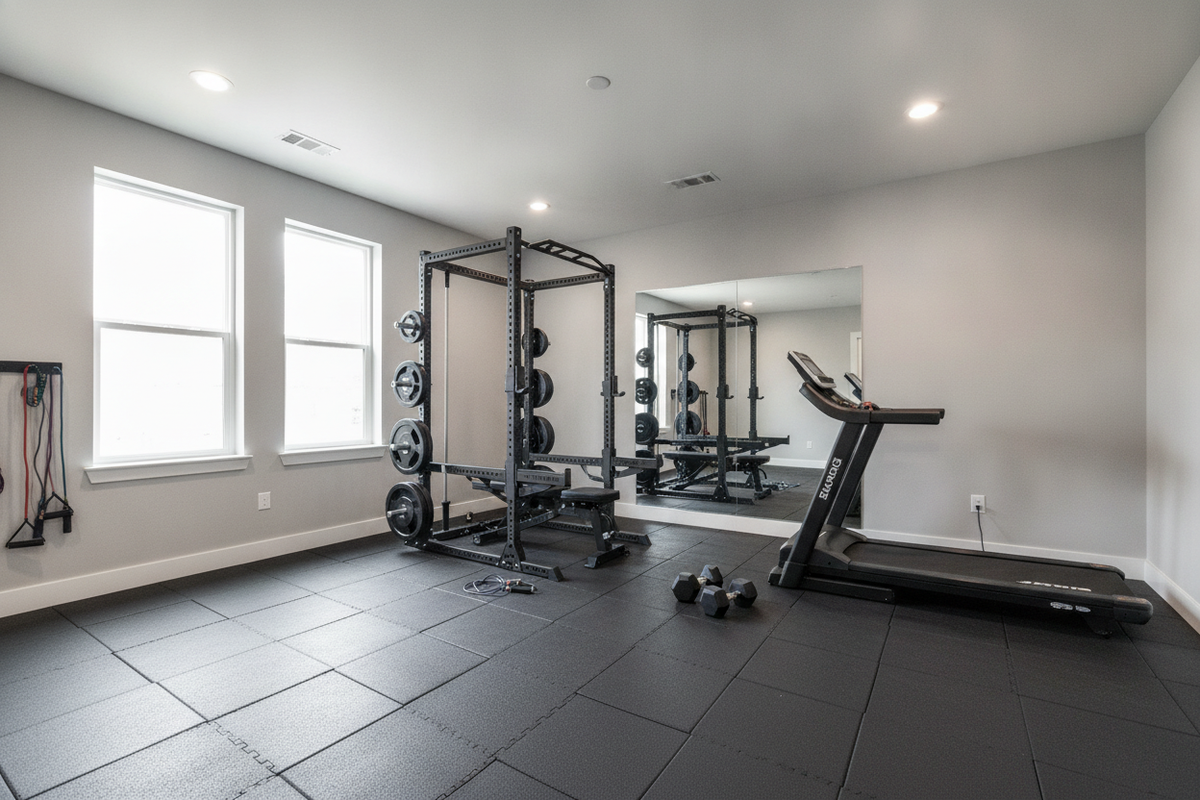
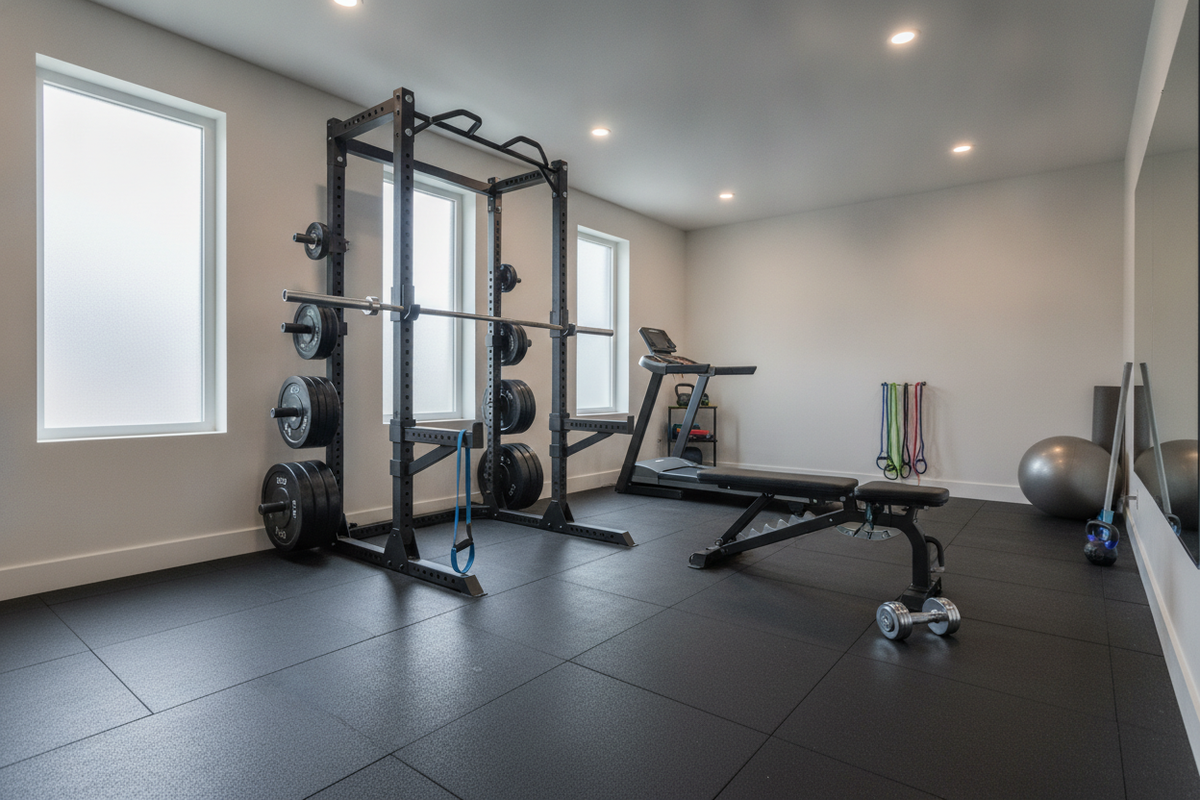
Executing heavy hip thrusts, dynamic lunges, and floor-based abduction drills requires a dedicated workout surface that provides firm footing and floor protection. A standard hard floor offers little traction and can suffer cosmetic wear under dropped free weights or shifted training benches. Establishing a stable foundation with a durable exercise collection mat creates an anchored surface for multi-directional footwork.
For training spaces where wide lunges, lateral traveling drills, or barbell staging occur, outfitting the space with a dedicated exercise collection option ensures generous surface coverage. The continuous surface area prevents edge-catching during multi-step agility and lateral abduction exercises while protecting underlying tile, hardwood, or laminate flooring from high-pressure bench feet, kettlebells, and heavy dumbbells.
A stable, dense mat also provides joint cushioning during bodyweight hip drills, kneeling fire hydrants, and bird-dogs, reducing uncomfortable pressure on knees and wrists during extended warm-ups and floor routines.
Equipment Placement, Stability, and Mat Care
When setting up for hip thrusts, positioning the back-support bench securely on a dense mat prevents the bench from sliding backward under heavy extension drive. Using a high-density, multi-purpose exercise product provides ample surface area for placing a weight bench, barbell, and foot stance entirely on one unified, non-slip plane.
Proper mat maintenance ensures consistent traction across lateral lunges and kneeling drills. Wipe down mat surfaces regularly using mild soap and warm water to remove dust, perspiration, and footwear residues, avoiding harsh chemical cleaners that could degrade surface grip. Proper mat care preserves both floor protection and reliable foot grip across every training cycle.