Stop Approaching Exercise for Hips and Buttocks Reduction Like This
You have likely spent hours on the floor doing side leg lifts until your muscles burned. You may have tried every specialized machine at the gym, hoping to target that specific area. Yet, the measurements haven't budged. It is incredibly frustrating, but you aren't alone.
The problem usually isn't your effort level; it is the physiological strategy behind your exercise for hips and buttocks reduction. Most people approach this goal backward, focusing on isolation movements before addressing the metabolic engine required to actually change body composition. Let’s fix that approach today.
Key Takeaways: The Reduction Checklist
If you want to skip the fluff and understand exactly what works, here is the core strategy summarized:
- Spot Reduction is a Myth: You cannot burn fat only from your hips by moving your hips. Fat loss is systemic.
- Compound Over Isolation: The best exercise to reduce hips and buttocks is one that recruits multiple muscle groups (like lunges) to spike caloric expenditure.
- Caloric Deficit is Mandatory: No amount of exercise corrects a calorie surplus. You must eat fewer calories than you burn.
- Progressive Overload: You must gradually increase weight or intensity to maintain muscle tone while losing fat.
The Science: Why "The Burn" Doesn't Equal Fat Loss
There is a prevailing misconception that if a muscle burns during a workout, the fat on top of it is melting away. Physiologically, this is incorrect.
When you perform high-repetition isolation movements—like clam shells or fire hydrants—you are building muscular endurance in the glutes. While this is good for stability, it does not require enough energy to signal your body to burn stored adipose tissue (fat). To reduce the size of the hips and buttocks, you need to strip away the fat layer, which requires a high metabolic demand.
The Compound Strategy: Moving Big Weight
To trigger fat loss that reveals a toned shape, you need exercises that demand massive amounts of oxygen and fuel. We call these compound movements.
The King of Reduction: The Walking Lunge
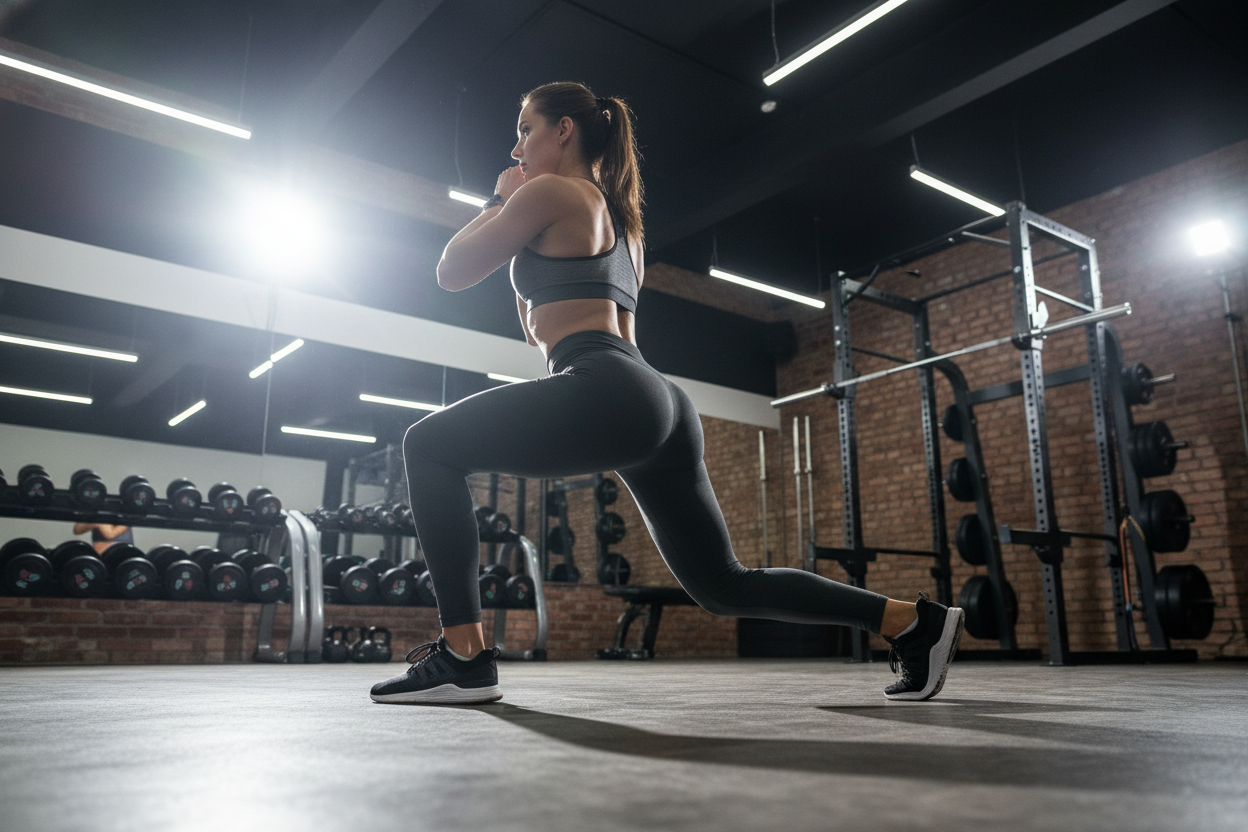
If I had to choose the single best exercise to reduce hips and buttocks via fat loss, it is the weighted walking lunge. Unlike a static squat, the lunge forces your glutes and hips to stabilize your body in motion. This recruits smaller stabilizer muscles while the large prime movers burn calories.
Because you are moving your entire body weight through space, your heart rate spikes. This creates an "afterburn" effect (EPOC), where your body continues burning calories for hours after you leave the gym.
Deadlifts for Posterior Chain Activation
Many people neglect the deadlift because it feels intimidating. However, it is essential for shaping the glute-hamstring tie-in. It strengthens the posterior chain without adding excessive bulk to the quads, helping to lift the buttocks visually, which can make the hip area appear tighter and more athletic.
Integrating HIIT for Efficiency
Standard cardio, like walking on a treadmill for an hour, is fine, but it’s not efficient for time-crunched individuals. To accelerate results, you should integrate High-Intensity Interval Training (HIIT) with exercises to reduce hips and buttocks.
For example, try 30 seconds of jump squats followed by 30 seconds of rest. Repeat this for 15 minutes. This type of explosive movement taps into type II muscle fibers and depletes glycogen stores rapidly, forcing the body to tap into fat reserves for recovery.
Common Mistakes That Halt Progress
Even with the right exercises, three specific errors often kill progress:
- Ignoring Protein: When you cut calories to lose hip fat, you risk losing muscle. This lowers your metabolism. Keep protein high (around 0.7g to 1g per pound of body weight) to protect muscle tissue.
- Overtraining the Glutes: Muscles grow and repair during rest, not during the workout. Hitting glutes every day leads to inflammation and water retention, which can actually make the area look swollen rather than lean.
- Sitting All Day: You cannot train for one hour and sit for 15. Prolonged sitting causes "gluteal amnesia," where your butt muscles forget how to fire properly, transferring the load to your lower back.
My Training Log: Real Talk
I want to be completely transparent about what this process actually feels like because the polished Instagram videos don't show the grit.
A few years ago, I was prepping for a photo shoot and needed to lean out my lower body. I abandoned the abduction machine entirely. Instead, I focused on high-volume walking lunges—4 sets of 20 steps per leg.
I’m not going to lie: the feeling wasn't a satisfying "pump." It was a deep, nauseating burn in the glutes that made walking down the gym stairs afterward feel dangerous. I remember specifically the moment my jeans started fitting differently. The waist didn't just get loose; the fabric around the upper thigh stopped bunching up when I sat down.
The scale didn't move for the first three weeks. I was panicked. But my training log showed I was lifting heavier weights, and the mirror showed the "saddlebag" area smoothing out. If I had relied on the scale or easy exercises, I would have quit. The magic was in the discomfort of those heavy lunges.
Conclusion
Reducing hip and buttock fat isn't about finding a secret movement; it's about shifting your focus from "spot toning" to "systemic burning." By prioritizing compound movements, maintaining a caloric deficit, and staying consistent, you will see changes. Trust the process, ignore the quick fixes, and get ready to work.
Frequently Asked Questions
Can walking help reduce hips and buttocks?
Yes, but it takes time. Walking is a low-intensity steady-state (LISS) activity. It burns fat primarily, but at a slow rate. To see significant changes in hip measurement, walking should be combined with a calorie-controlled diet and resistance training.
How long does it take to see results from these exercises?
With consistent nutrition and training, most people notice a change in how their clothes fit within 4 to 6 weeks. However, visible reduction in the mirror usually takes 8 to 12 weeks of consistent effort.
What if I build muscle and my hips get bigger?
This is a common fear. Muscle is much denser than fat. Even if you build glute muscle, if you are simultaneously losing fat through a caloric deficit, your overall circumference will likely decrease or stay the same, but the appearance will be much tighter and lifted.