Torch Your Quads: The Only 10-Minute Weighted Leg Routine You Need
Most people operate under the assumption that an effective leg day requires an hour of squat rack occupancy and endless isolation machines. That is simply not true. You can generate immense metabolic stress and stimulate muscle growth in a fraction of that time if you manipulate the intensity and rest periods correctly. If you are looking for a 10 minute leg workout with weights that leaves you unable to walk down the stairs comfortably, the secret lies in compound movements and density training.
The goal here isn't to leisurely move through a set of squats while checking your phone. To make ten minutes count, every second needs to be utilized under tension. By eliminating long rest breaks and focusing on exercises that recruit the maximum amount of muscle fibers—quads, hamstrings, glutes, and calves simultaneously—you trigger a hormonal response similar to a much longer session.
The Reality of Short, Heavy Workouts
I remember a specific period a few years ago when my schedule was absolute chaos. I was balancing a full-time demanding job with family obligations, and my usual 90-minute gym sessions were impossible. I had a pair of 50lb dumbbells in my garage and exactly fifteen minutes every morning before I had to shower. I was skeptical that I could maintain my leg size with such a short window.
I was wrong. I switched to high-intensity circuit training with those dumbbells, refusing to put them down for the duration of the workout. Within a month, my conditioning had improved, and my legs actually looked sharper and more defined than before. The lack of rest forced my body to adapt efficiently. It taught me that duration is often the enemy of intensity. You can work out long, or you can work out hard, but you rarely do both.
The Setup: What You Need
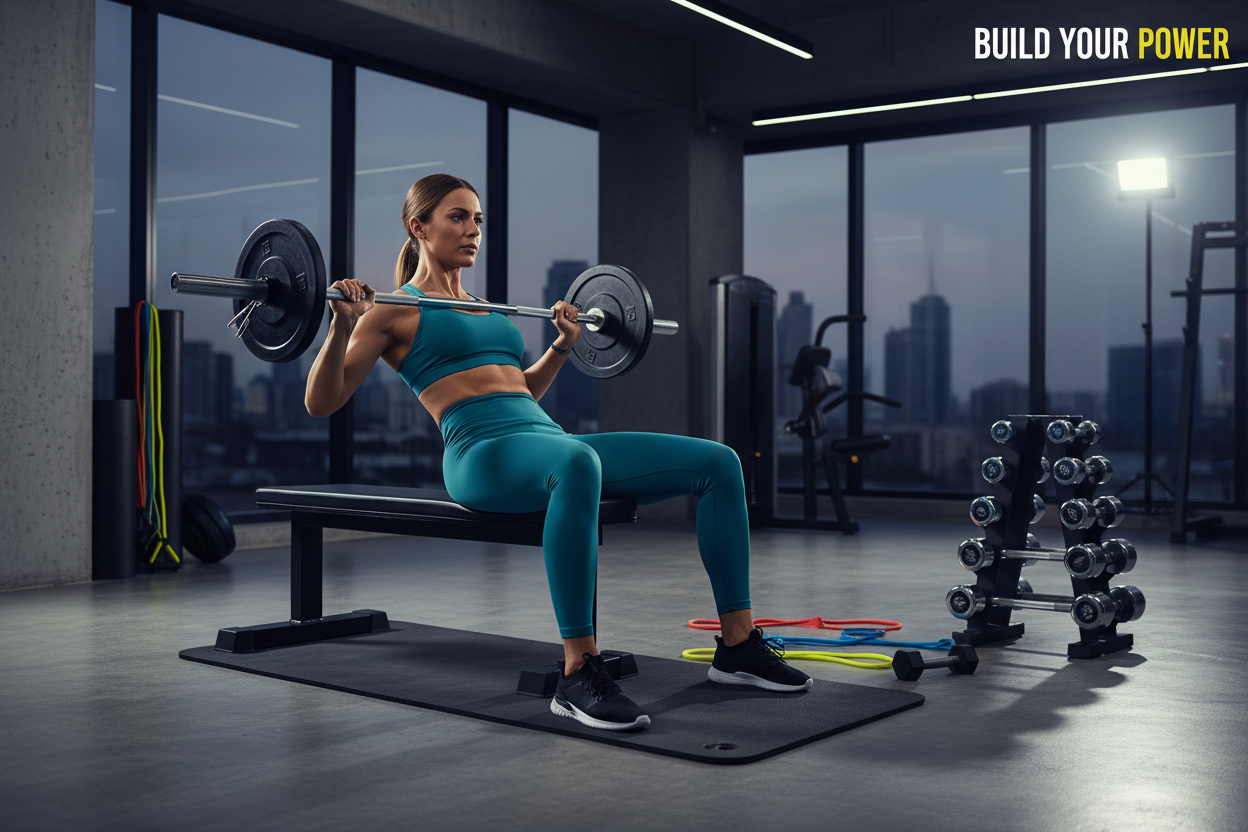
To execute 10 min legs with weights effectively, you need minimal equipment. A pair of dumbbells is ideal because they allow for a natural range of motion and are safer to drop if you reach muscular failure. Kettlebells work equally well, particularly for goblet squats and lunges. If you only have a barbell, that is fine too, though transitioning between exercises might take a few seconds longer.
The key is to pick a weight that is challenging for 10 to 12 reps but manageable enough that you can control the form when you are fatigued. Since we aren't taking traditional rest breaks, you might need to go slightly lighter than your usual 1-rep max percentages. Ego lifting here will only lead to injury or burning out in minute three.
The Routine: The "No-Drop" Leg Circuit
This routine follows an AMRAP (As Many Rounds As Possible) or a timed circuit format. We will use a timed circuit to keep you honest. Perform each exercise for 45 seconds, take 15 seconds to transition to the next movement, and repeat. Do not drop the weights during the 45-second work intervals.
1. Dumbbell Goblet Squats (0:00 - 1:00)
Hold one dumbbell vertically against your chest or two dumbbells at your shoulders. Sink deep into a squat, ensuring your elbows touch your knees or pass inside them. This movement prioritizes the quads and forces your core to engage to stay upright. Keep a steady tempo—two seconds down, one second up. Do not lock out your knees at the top; keep the tension on the muscles.
2. Romanian Deadlifts (RDLs) (1:00 - 2:00)
Transition immediately to RDLs to hammer the posterior chain. Hold the weights in front of your thighs, keep a slight bend in your knees, and hinge at the hips. Push your glutes back as if you are trying to close a car door with your butt. Lower the weights until you feel a deep stretch in your hamstrings, then snap your hips forward to return to the standing position. This gives your quads a momentary break while torching the hamstrings.
3. Alternating Reverse Lunges (2:00 - 3:00)
Holding the weights at your sides (suitcase carry), step one foot back and lower your back knee until it hovers just above the ground. Drive through the front heel to return to standing and switch legs. Reverse lunges are generally friendlier on the knees than forward lunges and place a heavy demand on the glutes and unilateral stability. By minute three, your grip strength and cardiovascular system will be tested.
4. Weighted Calf Raises (3:00 - 4:00)
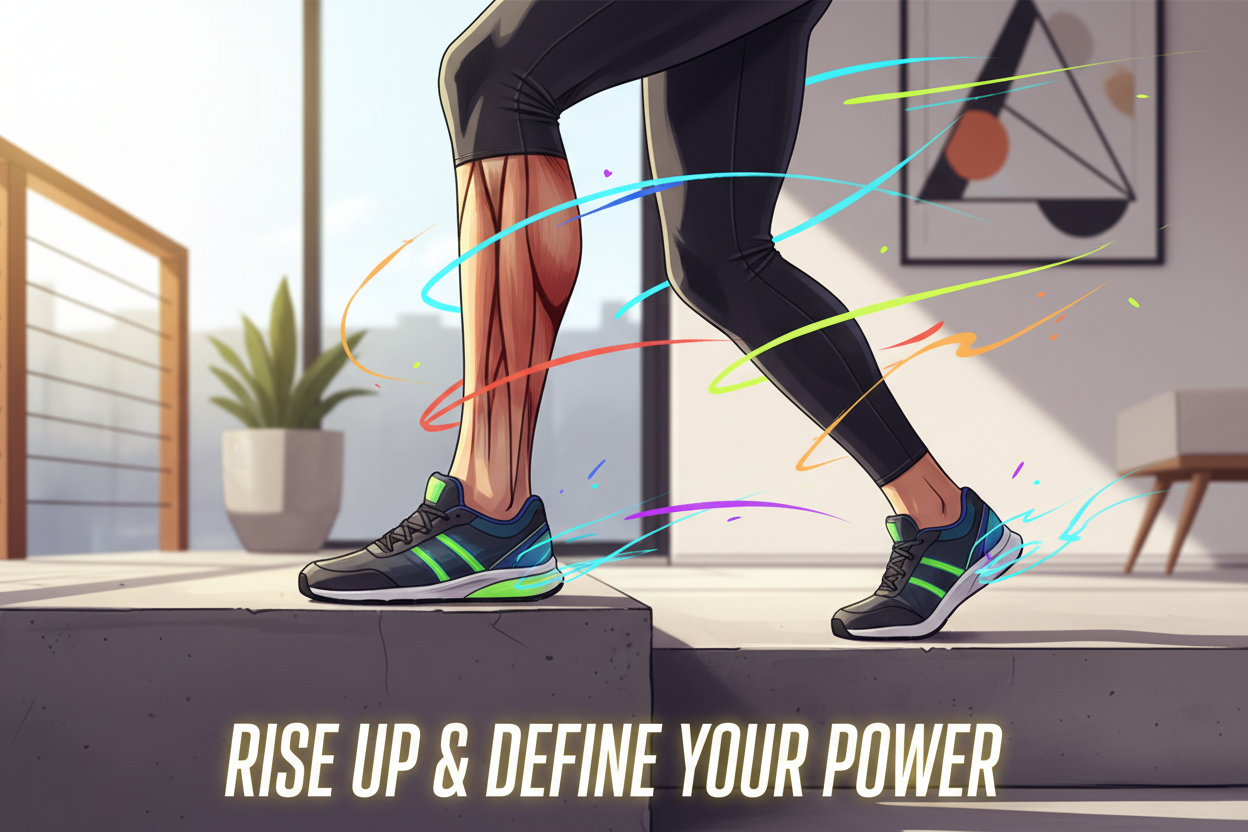
Stand still with weights at your sides. Drive up onto your toes, squeeze the calves hard at the top, and lower slowly. This serves as active recovery. Your heart rate might come down slightly, but your legs are still under load. If you have a ledge or a block to stand on for a deficit, use it. If not, floor raises are sufficient if you focus on the squeeze.
The Turnaround
At the 4:00 mark, put the weights down. Shake your legs out. You have exactly 60 seconds of rest. Breathe deeply and prepare your mind. At minute 5:00, you pick the weights back up and repeat the entire circuit one more time. This brings you to the 9-minute mark.
The Finisher: The Final Minute
You have one minute left. We aren't cooling down yet. For the final 60 seconds, perform a weighted wall sit or bodyweight jump squats if your grip is completely shot. This final burnout ensures you have fully exhausted the muscle fibers. If you choose the wall sit, hold a weight on your lap. If you choose jump squats, focus on explosive power. When the timer hits 10:00, you are done.
Technical Cues for Safety
When rushing against the clock, form often degrades. This is dangerous when doing 10 minute legs with weights. Maintain a neutral spine throughout the RDLs. Do not let your lower back round. During squats and lunges, ensure your knees are tracking over your toes and not caving inward. If you feel your form slipping, pause for two seconds, reset, and continue. It is better to miss one rep than to slip a disc.
Breathing is your metronome. Inhale on the eccentric (lowering) phase and exhale forcefully on the concentric (lifting) phase. This regulates your blood pressure and keeps your core braced, which protects your lower back.
Why This Works: Density Training
The science behind this approach is simple: you are increasing workout density. By doing a high volume of work in a short timeframe, you create significant metabolic damage and mechanical tension—the two primary drivers of hypertrophy (muscle growth). Furthermore, the limited rest creates an EPOC (Excess Post-exercise Oxygen Consumption) effect, meaning your metabolism stays elevated for hours after you finish.
Many lifters find that switching to these shorter, more intense bursts actually breaks through plateaus. It shocks the body. If you have been doing standard 3 sets of 10 with 2-minute rests for years, your body has adapted to that rhythm. Throwing it into a high-intensity fire for ten minutes forces new adaptations.
Scaling the Difficulty
As you get stronger, you don't need to increase the time; you need to increase the stress. You can do this by using heavier dumbbells, which is the most obvious method. However, you can also change the tempo. Try taking three seconds to lower into your squat and exploding up. Slow eccentrics cause more muscle damage (the good kind) and make lighter weights feel significantly heavier.
Another method is to remove the 15-second transition period, moving instantly from one move to the next, effectively turning the 4-minute circuit into one giant set. This requires exceptional cardiovascular conditioning but is incredibly effective for fat loss and muscle endurance.
Consistency Over Duration
The biggest barrier to fitness is the "all or nothing" mentality. We convince ourselves that if we can't do the perfect workout, we shouldn't do one at all. This 10-minute routine destroys that excuse. Everyone has ten minutes. You can do this in your living room in pajamas, in a hotel room, or in a corner of a crowded gym.
Building great legs isn't about the one magical two-hour session you do once a month; it's about the work you put in week after week. Short, heavy, and intense sessions done consistently will always outperform sporadic long workouts. Grab your weights, set your timer, and get to work.
Frequently Asked Questions
Can I actually build muscle with just 10 minutes of leg training?
Yes, provided the intensity is high enough. Muscle growth is stimulated by tension and metabolic stress, not just the duration of time spent in the gym. If you lift heavy enough weights with minimal rest to reach muscular failure within those 10 minutes, you will stimulate hypertrophy.
How heavy should the weights be for this workout?
Select a weight that allows you to complete 12-15 reps with perfect form but feels difficult by the 10th rep. Since you are moving quickly between exercises, you may need to use slightly less weight than you would for a standard set with long rest periods to maintain safety and technique.
How often can I do this 10-minute leg workout?
Because the volume is condensed, you can perform this routine 2 to 3 times per week. Ensure you have at least one rest day between sessions to allow your muscle fibers to repair and recover, which is when the actual growth happens.