The Unfiltered Truth About Building Bigger, Stronger Glutes
Most people spend years grinding away at the squat rack, expecting their posterior chain to magically transform, only to end up with impressive quadriceps and the same flat backside they started with. If you are chasing aesthetic development or athletic power, relying solely on compound leg movements often leads to disappointment. While squats and lunges are fantastic, they are not necessarily the primary drivers for glute hypertrophy. To actually change the shape and strength of your hips, you need to prioritize mechanics that specifically target hip extension.
The search for the best exercises for the glutes often leads down a rabbit hole of influencer workouts and resistance band gimmicks. While bands have their place for activation, building real tissue requires heavy resistance and progressive overload. Understanding the anatomy is half the battle. Your glutes are composed of three main muscles: the maximus, medius, and minimus. The maximus is the powerhouse responsible for the shape and size, while the medius and minimus handle stability and abduction. A routine that ignores any of these functions leaves potential gains on the table.
I learned this the hard way. For a long time, I treated the back squat as the holy grail of lower body training. I would load up the bar, hit parallel, and assume my glutes were doing the heavy lifting. In reality, my quads and lower back were taking the brunt of the load. My jeans got tighter in the thighs, but the back remained loose. It wasn't until I swallowed my pride and started performing awkward-looking hip thrusts in the middle of a crowded gym that things actually changed. My deadlift numbers went up, my chronic lower back tightness vanished, and I finally saw the physical changes I had been chasing for years.
The King of Posterior Power: The Hip Thrust
If you were forced to choose the single best exercise for glute strength, the Barbell Hip Thrust takes the crown. Biomechanically, it is superior to standing exercises for one specific reason: tension at peak contraction. When you squat or deadlift, there is very little tension on the glutes at the top of the movement (when you are standing straight up). Gravity is pulling the bar down through your skeleton, not against your glute muscles.
The hip thrust changes the leverage. The hardest part of the movement is at the very top, where the glutes are fully shortened. This creates a massive pump and stimulates growth through mechanical tension. To execute this correctly, position your upper back against a bench. The bench should hit just below your shoulder blades. With a padded barbell across your hips, drive your heels into the ground and lift your hips until your body forms a straight line from shoulders to knees.
A common mistake here is hyperextending the lower back. You want to keep your ribs down and chin tucked. Think about scooping your hips forward rather than arching your back upward. This subtle shift keeps the tension on the glutes and protects your lumbar spine.
The Stretch Component: Romanian Deadlifts (RDLs)
While the hip thrust focuses on the shortened position, you need an exercise that loads the muscles when they are lengthened. Romanian Deadlifts are arguably one of the best glute strength exercises because they allow you to handle heavy loads while placing the posterior chain under a massive stretch.
The cue here is "shutting the car door with your butt." Stand with a barbell or heavy dumbbells. Keep a soft bend in your knees—this is crucial because locking your knees shifts the focus entirely to the hamstrings. Push your hips backward as far as they can go while keeping the weight close to your shins. You should feel a deep stretch in your glutes and hamstrings. Once your hips stop moving back, the range of motion is over. Do not go lower just for the sake of hitting the floor; that usually just rounds your back. Squeeze your glutes to pull your torso back to the starting position.
Unilateral Stability: The Bulgarian Split Squat
We cannot talk about complete development without addressing imbalances. Most people have one side that is significantly stronger than the other. The Bulgarian Split Squat fixes this. It is a movement that everyone loves to hate because of the intensity, but it delivers undeniable results.
To make this glute-dominant rather than quad-dominant, you need to adjust your setup. A longer stride and a slight forward lean of the torso will shift the leverage to the hip of the working leg. If you stay upright with a short stance, your knee travels forward, and your quad takes over. By leaning forward (while keeping a flat back), you force the glute to work harder to extend the hip.
The "Shelf" Builder: 45-Degree Hyperextension
Often overlooked, the 45-degree back extension machine is a hidden gem. Many gym-goers use this strictly for lower back warm-ups, but with a few tweaks, it becomes a premier glute builder. The standard way to do this involves keeping a straight back, which targets the spinal erectors. To target the glutes, you actually want to round your upper back slightly and tuck your chin.
Turn your feet out about 45 degrees. As you lower yourself, allow your spine to round. As you come up, think about driving your hips into the pad and squeezing your glutes hard. Do not come up all the way to a hyperextended spine; stop when your torso is in line with your legs. This modification takes the lower back out of the equation and isolates the glutes effectively.
Abduction and the "Upper Glute" Illusion
The Gluteus Medius is located on the upper, outer section of the hip. Developing this muscle creates the appearance of a higher, rounder shelf. Heavy compound lifts don't always hit this area effectively. This is where cable abductions or seated abduction machines come into play. These shouldn't necessarily be your primary heavy lifts, but they are essential for structural balance and aesthetics.
Perform these movements with high control. Momentum kills the effectiveness of abduction exercises. If you are swinging the weight, you are using your hip flexors and lower back. Slow down the eccentric (lowering) phase to maximize the burn.
Structuring the Routine
You do not need to do every exercise in every session. A solid approach is to pick one heavy compound movement (like the Hip Thrust or RDL) to start your workout. This is where you focus on progressive overload—adding weight or reps over time. Follow this with a unilateral movement like the Split Squat or lunges. Finish with a high-repetition isolation movement like the 45-degree extension or cable kickbacks to fully exhaust the fibers.
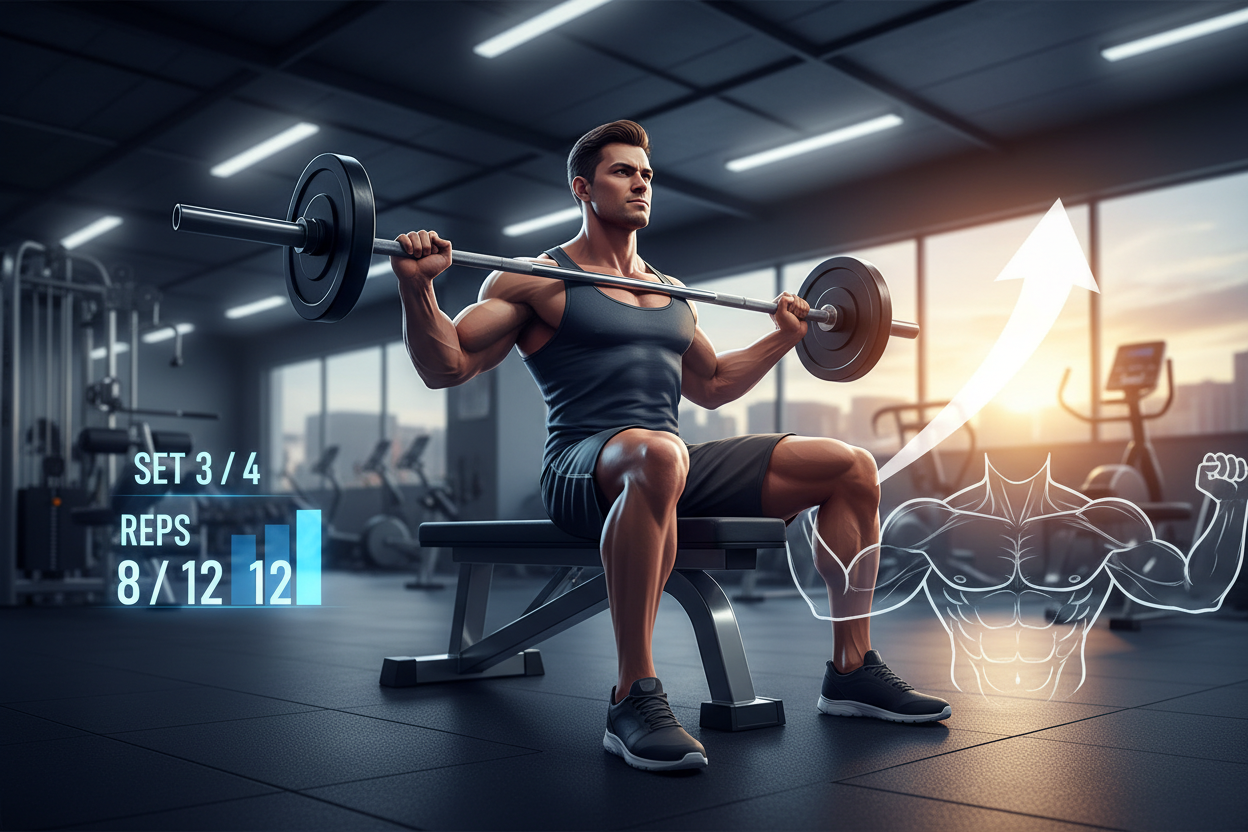
Consistency creates adaptation. Jumping from one random workout to another prevents you from tracking progress. Stick to the basics, master the form, and focus on getting stronger in the 8-12 rep range for hypertrophy, and the 5-8 rep range for raw strength. The combination of heavy tension, deep stretching, and metabolic stress is the formula that works.
Frequently Asked Questions
How often should I train glutes for maximum growth?
For most lifters, training glutes 2 to 3 times per week allows for optimal frequency. This frequency strikes a balance between stimulating protein synthesis and allowing enough recovery time for the muscle tissue to repair and grow.
Why do I feel squats in my legs but not my glutes?
Squats are knee-dominant by nature, meaning the quadriceps are the primary movers. If you have dominant quads or poor hip connection, your body will naturally rely on your leg strength; switching to hip-dominant movements like thrusts and RDLs usually solves this activation issue.
Can I build glutes without heavy weights?
You can improve shape and tone with bodyweight and high reps, but significant muscle growth generally requires heavy resistance. Progressive overload is the primary driver of hypertrophy, so eventually, you will need to add external load to continue seeing results.