Chest Workout Machines: Guide to Gym Presses and Flys
When organizing a training split, chest workout machines provide dedicated stability and consistent resistance profiles that complement traditional free weight exercises. While barbells and dumbbells require substantial joint stabilization, machine-guided tracks isolate the pectoral muscles cleanly. For lifters working through high volume, recovering from fatigue, or aiming to balance development across the upper body, incorporating dedicated gym equipment allows targeted muscular exertion with controlled motion.
Understanding the functional setup of each station helps you select the right apparatus for your specific goals, whether you want to emphasize the upper chest, prioritize horizontal pressing power, or add adduction movements like flys.
Comparing Free Weights to Modern Chest Machines
Both free weights and chest machines serve distinct roles in building pressing power and upper body muscle mass. A traditional barbell bench press requires full-body tension, shoulder girdle stabilization, and careful bar tracking. In contrast, fixed-track units guide the movement pattern, reducing the recruitment required from secondary muscle groups so you can focus entirely on peak muscle activation across the chest muscles.
Using chest workout machines allows lifters to train close to muscular fatigue without needing an attentive spotter. Selectorized stacks and plate-loaded levers maintain tension smoothly throughout the entire range of motion, whereas dumbbells can lose mechanical tension at the very top of a press. Integrating both formats into an overall workout routine offers balanced hypertrophy and steady progress.
Core Chest Press Machine Styles for Pressing Power
Pressing movements form the foundation of any comprehensive routine. Modern fitness facilities feature several styles of press stations, each tailored toward different pressing angles and biomechanical paths.
Seated Chest Press Machine
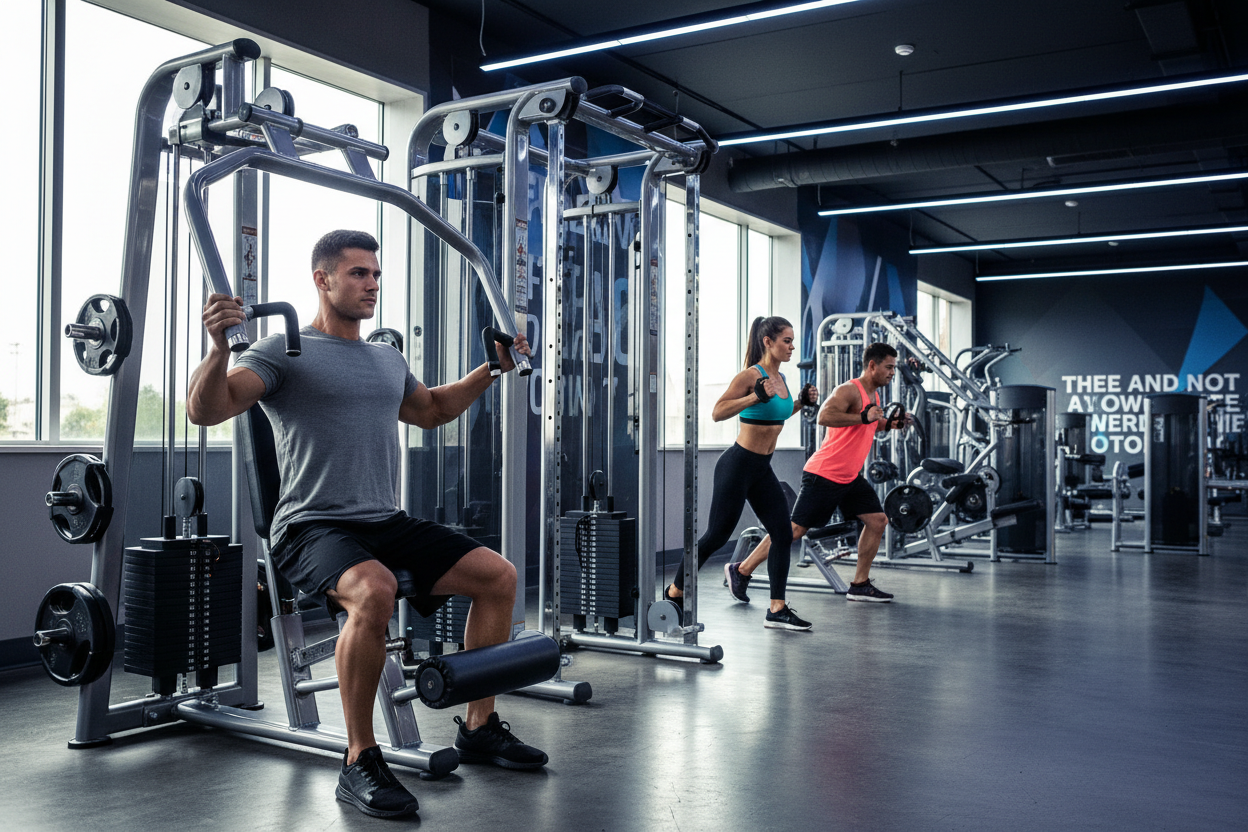
The standard seated chest press machine mimics the horizontal movement pattern of a flat barbell bench press. Lifters sit upright with their back firmly pressed against the pad, gripping horizontal or neutral handles set level with the mid-chest.
To establish proper form, adjust the seat height so the handles align directly with the lower border of your pectoral muscles. From this starting position, push the handles forward smoothly without locking out the elbows abruptly, then return under control. This setup distributes force evenly across the sternal head while involving the anterior deltoids and triceps.
Incline Chest Press Machine for Upper Pecs
Focusing on the clavicular head, or upper portion of the chest, often requires an upward pressing trajectory. An incline chest press directs the line of force diagonally upward, emphasizing the upper pecs while minimizing excessive strain on the shoulder joints.
Ensure the seat height keeps the handles below shoulder level at the bottom of the stroke. Adjusting your grip allows you to press upward along the natural arc of the machine. For lifters comparing different incline stations, reviewing an incline press machine guide can clarify handle angles and seat positions.
Multi-Purpose Smith Machine Pressing
The smith machine features a barbell fixed between two vertical or slightly angled guide rails. It bridges the gap between free weights and selectorized equipment, allowing for flat, incline bench press, and decline angles on an adjustable bench.
Because the bar travels along a rigid path, setting your body position relative to the bar path is critical. Position yourself so the bar lowers cleanly toward your mid-sternum without forcing your wrists backward. Rotating the safety hooks locks the bar at any point in the movement, making it a reliable option for heavy compound pressing.
Isolation Stations: Pec Deck and Chest Fly Machine
Pressing mechanics combine shoulder flexion, horizontal adduction, and elbow extension. However, complete muscle engagement of the pectorals benefits from pure horizontal adduction, where the elbows remain fixed and the arms sweep inward across the torso.
Using the Pec Deck Machine
The pec deck machine, also called a machine chest fly, places the arms into fixed lever pads or pivoting handles. This setup delivers steady tension directly across the inner chest and outer fibers without taxing the triceps.
Set the seat so your elbows rest comfortably at or slightly below mid-chest level. Draw your arms forward in a wide hugging motion, squeezing the pectorals firmly together at peak contraction. Maintain a slight, soft bend in the elbows throughout the return stroke to preserve muscle isolation and avoid overstretching the shoulder joint capsule.
Cable Machine Fly Variations
A dual-pulley cable machine provides unmatched versatility for targeting the chest from varied angles. By altering pulley heights, you can shift emphasis across muscle regions:
- High-to-Low Cable Fly: Sets the pulleys above head height, pressing downward and inward to target the lower chest.
- Mid-Pulley Cable Crossover: Pulls directly across the center of the chest to challenge horizontal adduction.
- Low-to-High Cable Fly: Sweeps upward from the floor, placing selective emphasis on the upper chest.
Cables maintain continuous diagonal tension even when your hands meet, offering distinct resistance curves that standard dumbbells cannot match.
Integrating Chest and Shoulder Machines in Upper Body Splits
Because pressing exercises naturally engage both the deltoids and pectorals, training programs often group chest and shoulder machines together. Overhead shoulder press machines and seated lateral raise units share structural demands with incline and flat pressing equipment. Balancing horizontal pushing movements with overhead pressing maintains balanced shoulder mechanics and supports posture.
When selecting gym equipment for commercial facilities or a well-equipped garage gym, explore dedicated weight lifting machines that offer durable frames and adjustable seats. For additional routine planning, you can study a dedicated chest workout machines guide to sequence multiple apparatuses effectively.
Designing a Machine-Focused Chest Workout Routine
A structured routine combines compound presses with targeted isolation movements to promote balanced muscle growth. Adjust the resistance using selectorized weight stacks or loaded weight plates to maintain progressive overload over time.
- Primary Heavy Press: Seated Chest Press – 3 to 4 sets of 8 to 10 repetitions, focusing on a strong concentric push and a slow, controlled negative.
- Upper Pec Focus: Incline Chest Press or Smith Machine Incline Press – 3 sets of 10 to 12 repetitions.
- Targeted Adduction: Pec Deck Machine or Cable Chest Fly – 3 sets of 12 to 15 repetitions, emphasizing peak contraction.
- Lower Pec Finish: High-to-Low Cable Fly – 2 to 3 sets of 15 repetitions with steady cadence.
Lifters looking to organize their long-term calendar can reference a comprehensive chest workout guide to balance weekly training volume across different movement planes.
Setup Guidelines and Proper Technique
To get the most value from gym chest machines and avoid common movement errors, follow these operational habits:
- Seat Alignment: Always align the machine handles with the middle or lower chest rather than the clavicles or neck, keeping unnecessary shear forces off the shoulder joints.
- Retract the Scapulae: Pin your shoulder blades back and down against the backrest before starting each repetition. This creates a solid base of support and isolates the pectoral muscles.
- Control the Eccentric Phase: Lower the weight under control rather than allowing the weight stack to slam down between repetitions.
- Avoid Full Elbow Hyperextension: Maintain a soft, micro-bend in the elbows at full extension to keep continuous tension on the muscle belly.
In my own training, swapping to machine-guided pressing after heavy barbell sessions has offered an ideal way to accumulate clean volume while keeping joint stress manageable.
By learning how to set up the seated press, pec deck, smith machine, and cable stations with proper technique, you can build a resilient, well-proportioned upper body through reliable mechanical support.