The Truth About Building Glutes: Why Squats Aren't Enough
Building a stronger, more defined backside is one of the most common goals in the gym, yet it remains one of the most misunderstood aspects of fitness. Many lifters spend years grinding out heavy squats, assuming that compound leg movements are sufficient for glute development. While squats are excellent for overall leg strength, they are primarily knee-dominant movements. If your goal is specifically to target the posterior chain, you need a strategy that prioritizes hip extension and abduction rather than just knee flexion. Understanding the mechanics of how your glutes actually fire is the bridge between spinning your wheels and seeing actual physical changes.
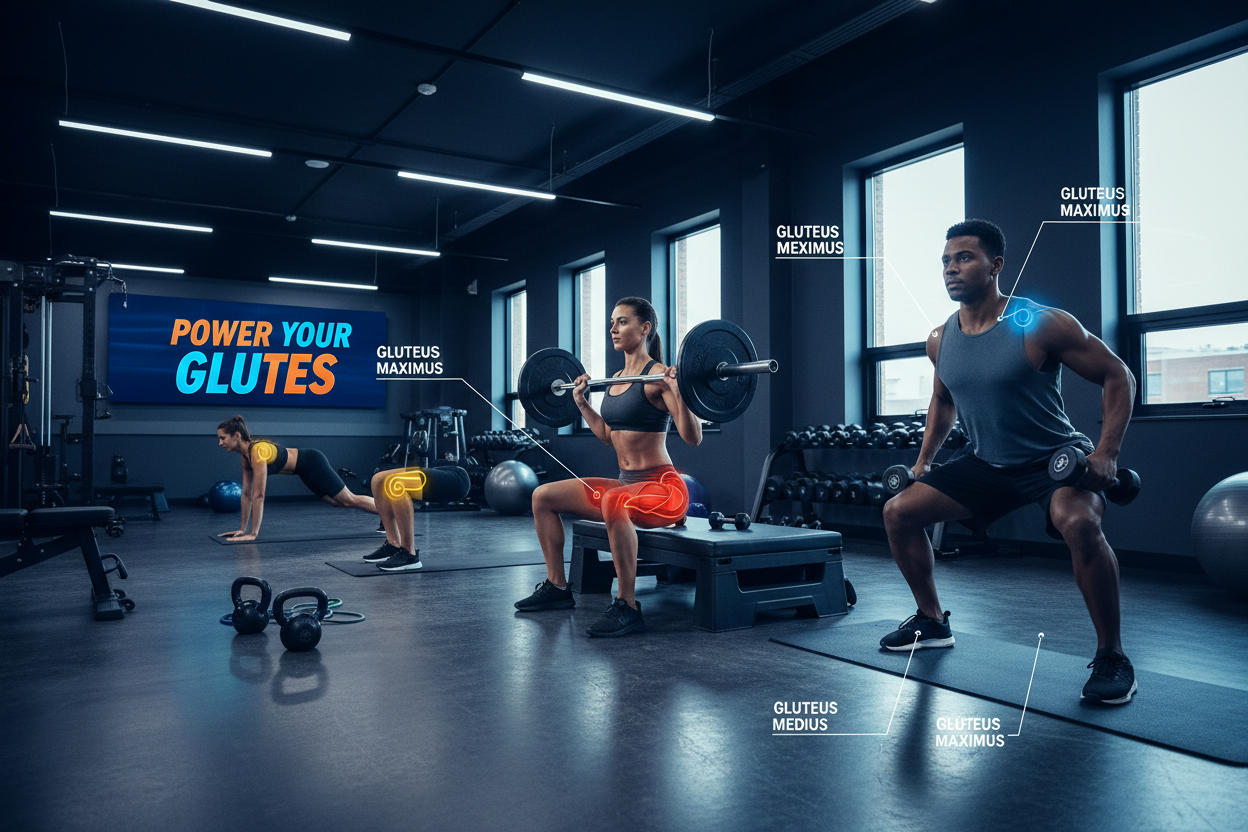
The gluteal muscle group is composed of three main players: the gluteus maximus, medius, and minimus. The maximus is the powerhouse responsible for the shape and size, while the medius and minimus stabilize the pelvis and handle abduction. To build a complete physique, your training needs to hit all three heads through various vectors. Relying solely on vertical movements like squats and leg presses often leaves the glutes understimulated because the quadriceps tend to take over. This is often why people experience knee pain but see little change in their glute measurements.
The Mechanics of Glute Growth
Before diving into specific movements, it is vital to understand the different types of glute exercises available to you. We generally categorize these movements based on the direction of force. You have vertical loading (like squats), horizontal loading (like hip thrusts), and lateral/rotational movements (like clamshells or cable abductions). A well-rounded routine requires a mix of all three. If you only perform vertical movements, you are missing out on the peak tension point that horizontal movements provide at full hip extension.
I recall my own frustration early in my lifting journey. I was obsessed with the idea that the squat was the king of all exercises. I pushed my numbers up, but my physique didn't reflect the effort, and my lower back was constantly tight. It wasn't until I stopped treating the squat as a glute exercise and started incorporating dedicated hip hinges and thrusts that the pain vanished and the progress appeared. That shift in mindset—moving from moving weight to feeling muscle contraction—was the turning point. It taught me that mechanical tension on the specific muscle is far more valuable than simply moving a barbell from point A to point B.
Essential Glute Exercises Names and How to Perform Them
When curating a list of effective glute exercises names, we have to look at high-yield movements that offer the best return on investment for your energy. These are the staples that should form the foundation of your routine.
The Hip Thrust
If you had to pick just one glute exercises name to remember for maximum hypertrophy, it is the Hip Thrust. Unlike standing exercises where tension drops off at the top of the movement, the hip thrust creates maximum tension when the glutes are fully shortened (contracted). To perform this, position your upper back against a bench, roll a barbell over your hips, and drive upward through your heels. Keep your chin tucked and your ribs down to prevent your lower back from arching. The goal is to lock out the hips using only the glutes.
The Romanian Deadlift (RDL)
The RDL is the queen of stretch-mediated hypertrophy. This movement challenges the glutes in their lengthened position. Stand with feet hip-width apart, holding a barbell or dumbbells. Unlock your knees slightly, but do not squat. Push your hips back as far as they can go, imagining you are trying to close a car door with your butt. The bar should travel down your legs, staying close to the shins. Once your hips stop moving back, drive them forward to return to the start. You should feel a deep stretch in the hamstrings and glutes.
Bulgarian Split Squats
While technically a squat pattern, adjusting your stance can make this a lethal glute builder. By taking a slightly longer stride and leaning your torso forward (hinging at the hips), you shift the load from the quads to the glute max. This creates a massive stability challenge for the glute medius as well. It is a unilateral exercise, meaning it corrects imbalances between your left and right sides.
45-Degree Hyperextension
Often used for the lower back, this machine is fantastic for the glutes if modified. Round your upper back slightly (slouching) and flare your toes out to 45 degrees. As you lower yourself and come back up, focus entirely on driving your hips into the pad. This takes the erectors out of the equation and isolates the posterior chain.
Structuring Your Routine
Knowing the moves is only half the battle; programming them correctly is where the magic happens. Different types of glute workouts serve different goals, but for most people, frequency is key. Glutes are large, resilient muscles that can handle a lot of volume. Training them 2 to 3 times a week usually yields better results than a single "leg day" that leaves you unable to walk for a week.
A solid approach is to categorize your days. You might have a "Heavy Hinge" day focusing on RDLs and heavy Hip Thrusts, and a "Unilateral/Pump" day focusing on lunges, step-ups, and high-repetition abduction work. This allows you to hit the muscle from different angles without overtaxing your central nervous system. Recovery is just as important as the stimulus; if you are constantly sore, you cannot perform with the intensity required for growth.
Common Mistakes to Avoid
The most frequent error in glute training is using the lower back to compensate for weak hips. This usually manifests as hyperextension—arching the back excessively at the top of a thrust or deadlift. Your spine should remain neutral throughout these movements. Think of your torso as a solid cylinder that moves as one unit. Another common issue is neglecting progressive overload. Doing endless bodyweight kickbacks might burn, but without increasing resistance over time, the muscles have no reason to adapt and grow.
Mind-muscle connection is also critical here. If you are doing a lunge but only feel it in your front thigh, you need to adjust your mechanics. Slow down the tempo. Pause at the bottom of the movement. Make sure your weight is in your heel, not your toe. These small adjustments effectively shift the tension to the target area.
Optimizing for Aesthetics and Function
While aesthetics are a major driver for glute training, the functional benefits are undeniable. Strong glutes protect the lower back, improve posture, and enhance athletic performance in running and jumping. By incorporating the various types of glute exercises discussed—hinges, thrusts, and abductions—you build a body that looks capable and actually is. Consistency with these compound movements, combined with adequate protein intake and rest, will produce the results you are looking for.
Frequently Asked Questions
How often should I train my glutes to see results?
For most intermediate lifters, training glutes 2 to 3 times per week is optimal. This frequency allows for sufficient volume to stimulate growth while providing enough recovery time between sessions. It is generally more effective than doing one massive session once a week.
Can I build glutes without using heavy weights?
You can make progress with bodyweight and high repetitions initially, but eventually, you will need external resistance to continue growing. Progressive overload is the primary driver of muscle hypertrophy, so adding weights like dumbbells, barbells, or bands is necessary for long-term development.
Why do I feel leg exercises in my lower back instead of my glutes?
This usually indicates that your core is not properly braced or you are hyperextending your spine to complete the movement. Try lowering the weight, tucking your pelvis slightly to ensure a neutral spine, and focusing on squeezing the glutes to initiate the lift rather than just moving the weight.