The "Lazy" Leg Day: A Simple Routine You Can Actually Stick To
Most people treat leg training like a dental appointment: something to be dreaded, endured, and put off for as long as possible. The prevailing mentality in fitness culture suggests that if you aren't waddling out of the gym with jelly legs and nausea, you didn't work hard enough. That mindset is exactly why so many people skip the lower body entirely. The truth is, effective training doesn't require misery. An easy legs workout performed consistently will always outperform a brutal session that you only do once a month because you're too traumatized to go back.
You want to build strength and definition without needing a wheelchair the next day. The secret isn't adding more weight; it is mastering movement patterns and frequency. By shifting the focus from intensity to consistency, you can integrate lower body training into your life without it taking over your week. Let’s strip away the complications and look at how a simplified approach can actually yield better long-term results.
Why My Heavy Lifting Days Are Over
A few years ago, I fell into the trap of ego lifting. I was obsessed with the numbers on the barbell, convinced that a heavy back squat was the only metric that mattered. It worked for a while until my lower back started sending me warning signals I ignored. Eventually, a minor injury sidelined me for six weeks. I couldn't touch a weight, but I could move my body.
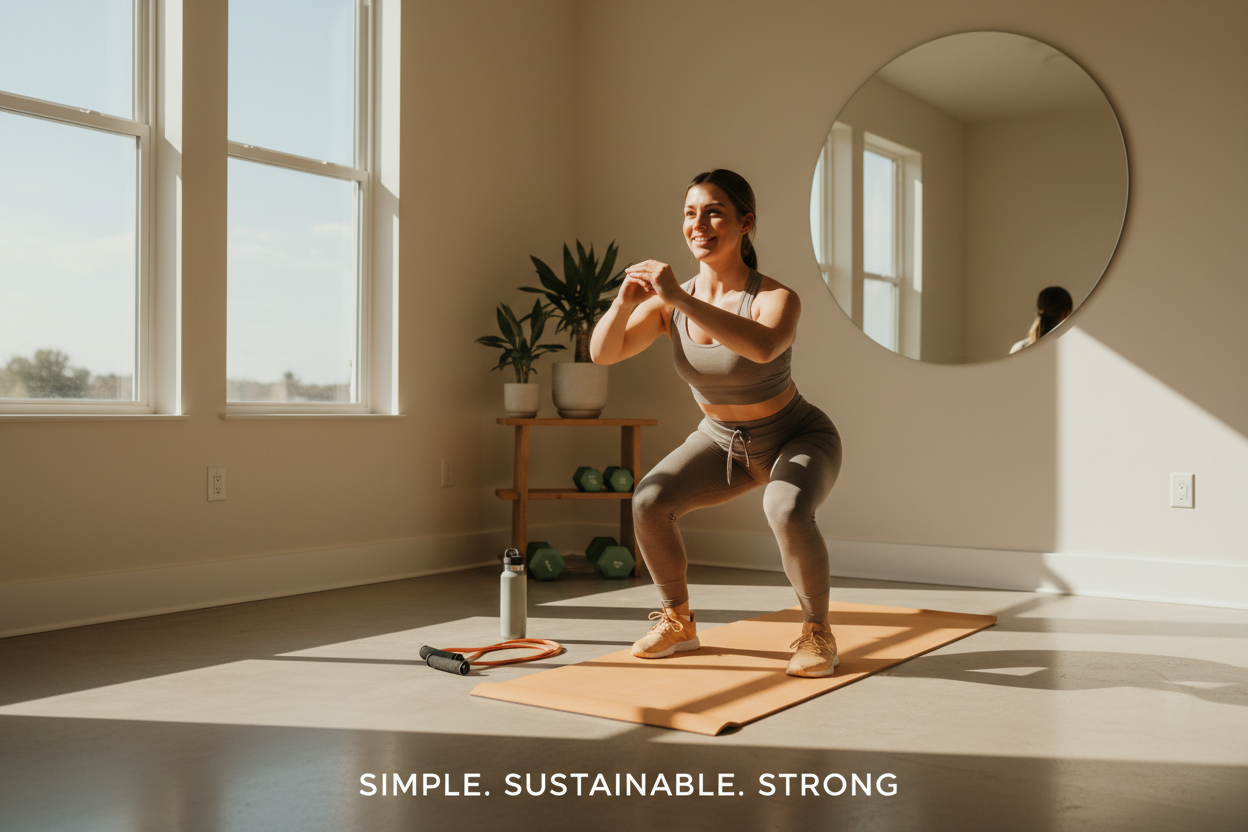
I started doing high-repetition bodyweight squats and lunges in my living room just to keep the blood flowing. I wasn't expecting much, but something surprising happened. My knee pain vanished, my hip mobility skyrocketed, and my legs actually looked more defined than they did during my heavy lifting phase. I realized that daily leg workouts focusing on control and volume were sustainable in a way that heavy lifting never was for me. I wasn't exhausted for the rest of the day; I felt energized. That shift in perspective changed everything about how I program training.
The Philosophy of Low-Impact Training
The goal here is "stimulation, not annihilation." When you keep the intensity moderate, you recover faster. Faster recovery means you can train more often. This creates a compounding effect. Doing 50 squats every day for a week yields 350 reps of volume. Doing one brutal leg day might only get you 50 heavy reps, followed by four days of soreness where you barely move. The math favors frequency.
This approach also removes the mental barrier to entry. Knowing your workout will only take 15 minutes and won't leave you in pain makes it infinitely easier to start. You don't need to hype yourself up with caffeine or loud music. You just stand up and move.
The Core Routine
This circuit is designed to hit the quads, hamstrings, glutes, and calves. You can perform this as a continuous circuit or as straight sets. Aim for 2-3 rounds. If you want to make this leg workout easy enough for a rest day, just do one round at a slower tempo.
1. The Bodyweight Squat
The squat remains the foundational movement for lower body health. However, most people rush it. Without a barbell on your back, you have the freedom to perfect your mechanics.
Stand with feet shoulder-width apart, toes slightly pointed out. Initiate the movement by pushing your hips back before bending your knees. Descend until your thighs are at least parallel to the floor. The key here is tension; don't just drop down and bounce up. Lower yourself for a count of three, pause for one second at the bottom, and drive back up. This tempo forces your muscles to work harder without external weight. Keep your heels glued to the floor throughout the rep to engage the posterior chain properly.
2. Reverse Lunges
Forward lunges can be tough on the knees, especially if you have tight quads. Reverse lunges are generally more joint-friendly and do a fantastic job of targeting the glutes and hamstrings alongside the quads.
Start standing tall. Take a deliberate step back with your right foot. Lower your back knee until it hovers an inch off the ground. Your front shin should remain relatively vertical. Push through the heel of your front foot to return to the starting position. Balance is often the limiting factor here, so feel free to hold onto a wall or a sturdy chair. This isn't a balance test; it's a strength exercise. Stability allows you to focus on the muscle contraction rather than trying not to fall over.
3. Glute Bridges
If you sit at a desk all day, your hip flexors are likely tight and your glutes are asleep. This movement wakes them up. It acts as the perfect counter-balance to the squat and lunge.
Lie on your back with your knees bent and feet flat on the floor, close enough that you can almost graze your heels with your fingertips. Press your lower back into the floor to engage your core, then drive through your heels to lift your hips toward the ceiling. Squeeze your glutes hard at the top position. If you feel this mostly in your lower back, you are hyperextending; try not to bridge up as high. If you feel it in your hamstrings, try moving your feet closer to your body.
4. Standing Calf Raises
The calves are stubborn, accustomed to carrying your body weight all day. To make them grow or get stronger, you need full range of motion. Find a step, a thick book, or a block.
Stand with the balls of your feet on the edge of the step, letting your heels drop down as far as comfortable. This stretch is crucial. Drive up onto your tiptoes as high as possible and hold for two full seconds. That pause is where the magic happens. Bouncing through calf raises is a waste of time; the Achilles tendon acts like a spring and takes the load off the muscle. Eliminate the bounce to force the muscle to do the work.
Scaling the Difficulty
Eventually, this routine might feel too comfortable. You don't necessarily need to buy weights to progress. You can alter the density of the workout. Decrease the rest time between exercises to keep your heart rate up. Alternatively, increase the time under tension. Try taking five seconds to lower yourself into a squat. The burn will return instantly.
Another method is the "1.5 rep" style. For a squat, go all the way down, come up halfway, go back down, and then stand up fully. That counts as one repetition. This keeps the muscle under tension for longer and removes the mechanical advantage of the top "lockout" position.
Consistency Over Intensity
The beauty of this routine lies in its accessibility. You can do this in a hotel room, a park, or your kitchen while waiting for coffee to brew. By removing the friction of traveling to a gym and setting up equipment, you remove the excuses.
Treat these movements as daily hygiene for your body, similar to brushing your teeth. You don't need to scrub your teeth until your gums bleed for it to be effective; you just need to do it every day. The same applies here. A moderate, consistent effort will keep your joints oiled, your muscles toned, and your mobility sharp for years to come.
Frequently Asked Questions
Can I really do this leg workout every day?
Yes, because this routine relies on body weight and controlled movements, it causes less muscle damage than heavy weightlifting. However, listen to your body. If you feel sharp pain or extreme fatigue, take a rest day or focus solely on stretching.
Will I build muscle without heavy weights?
You can absolutely build muscle with bodyweight training, especially if you are a beginner or returning from a break. To continue building muscle over time, you must progressively make the exercises harder by increasing reps, slowing down the tempo, or decreasing rest times.
How long does it take to see results from bodyweight leg exercises?
You will likely feel better mobility and muscle activation within the first week. Visible changes in muscle tone usually take 4 to 8 weeks of consistent training, coupled with adequate nutrition and sleep.