Is Your Home Gym a Hazard Zone? How to Choose the Right Storage for Your Weights
Nothing kills the momentum of a workout faster than tripping over a stray 25-pound weight or wasting five minutes searching for the matching partner to your 15-pound dumbbell. If you are training at home, organization isn't just about aesthetics; it is a critical safety measure. A proper storage solution protects your floor, saves your toes, and actually extends the lifespan of your equipment. Whether you are working with a full set of heavy iron or a few neoprene-coated hand weights, getting the gear off the floor is the first step toward a professional-grade home setup.
Understanding Your Storage Needs
Before you start browsing through weights racks for sale, take a hard look at your current inventory and your future goals. Not all racks are created equal. The storage requirements for a set of adjustable dumbbells differ vastly from a full run of fixed hex dumbbells. If you are tight on space, a vertical A-frame stand is often the best choice. These minimize the footprint by stacking weights vertically. However, they can be tricky to unload if the gaps between the holders are too tight, leading to pinched fingers.
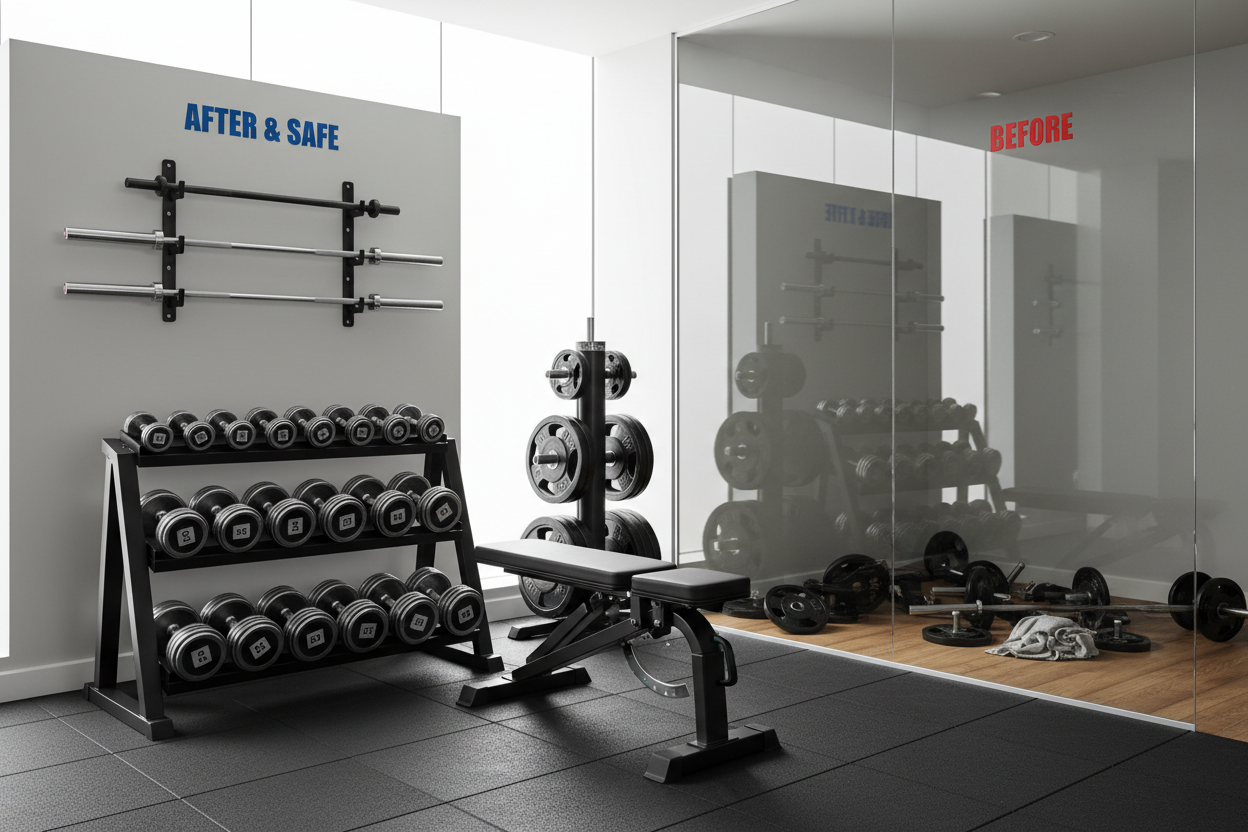
For those with a dedicated garage gym or a larger basement area, horizontal tiered racks are the gold standard. A two or three-tier weights rack offers easier access and better stability for heavier loads. When you are lifting heavy, you don't want to be bending into awkward positions to rack your weights. A horizontal shelf allows you to drop the weight back into its cradle using proper body mechanics, reducing the risk of lower back strain.
The Aesthetic Factor: Function Meets Form
Home gyms often share space with living rooms, offices, or bedrooms. In these multi-use spaces, industrial steel might clash with your decor. Fortunately, the market has evolved. You can now find a stylish weight rack designed with wood finishes or sleek, matte powder coats that look more like furniture than gym equipment. These are particularly popular for storing lighter equipment. A well-designed hand weights rack can sit in the corner of a home office without looking out of place, making it easier to grab a quick set of curls during a conference call break.
Evaluating Build Quality and Capacity
I learned the hard way that skimping on quality is a mistake. Years ago, when I first started building out my basement setup, I bought the cheapest dumbbells rack for sale I could find online. It was a flimsy piece of metal held together by questionable bolts. One evening, after racking a pair of 50s, the entire structure swayed ominously. A week later, the bottom shelf buckled under the load. It was a terrifying moment that could have resulted in a broken foot or a shattered tile floor. Since then, I prioritize weld quality and weight capacity over price tags. You want a dumbbell weight holder that feels like a tank, not a tin can.
When assessing a weight rack dumbbell stand, check the total weight capacity rating. If you have a set ranging from 5 to 50 pounds, you are looking at roughly 550 pounds of total weight. Ensure your rack is rated for at least 20% more than your current total load to account for structural integrity and future expansion. Look for racks with rubber inserts on the rails. These simple additions prevent metal-on-metal contact, protecting the knurling on your dumbbell handles and reducing noise.
Specialized Racks for Different Equipment
If your training style leans towards high-repetition aerobics or barre classes, you likely use smaller, vinyl or neoprene-coated weights. A standard heavy-duty rack might be overkill and the rails might be too wide to securely hold small handles. In this case, a specialized rack for hand weights is essential. These often feature vertical slots or smaller cradles designed specifically to prevent smaller weights from slipping through.
For the lifter who does it all, a dumbbell and weight rack combo unit is a massive space saver. These hybrid units usually feature rails for dumbbells on the top tier and storage pegs for weight plates on the sides or bottom. Some even include storage for kettlebells or medicine balls. By consolidating a weight holder for dumbbells with plate storage, you clear up significant floor space, allowing more room for your bench or squat rack.
Buying Smart: What to Look For
Searching for weight racks with dumbbells included can be a cost-effective way to start a gym from scratch. Manufacturers often bundle these to save on shipping logistics. However, be wary of the rack quality in these bundles. Sometimes the weights are high quality, but the rack is an afterthought. Always read the specifications of the rack independently of the weights.
Key features to inspect include:
- Footprint dimensions: Measure your space twice. Remember you need clearance around the rack to actually pick up the weights.
- Rail width: If you have dumbbells with short handles, ensure the rack rails aren't so wide that the weights rest on the plates rather than the handle, which is unstable.
- Angled shelves: A weight rack dumbbell stand with angled shelves makes it significantly easier to wrist-curl the weights off the rack. Flat shelves require more awkward maneuvering.
Ultimately, the goal is to create a frictionless environment. If your gym is messy, you are less likely to use it. If you have to dig a 30-pound weight out from under a pile of laundry or other equipment, you might skip the set entirely. A dedicated dumbbells racks system signals to your brain that this is a place for work, focus, and discipline.
Safety and Maintenance
Once you have your weights racks for sale delivered and assembled, maintenance is low but necessary. Check the bolts every few months. The vibration from constantly racking and unracking heavy iron can loosen hardware over time. If your rack sits in a garage, keep an eye out for rust, especially if you live in a humid climate. A quick wipe down with a silicone-based lubricant can keep a steel rack looking new for decades.
Investing in the right storage is investing in your consistency. Whether you choose a massive three-tier commercial unit or a compact, stylish weight rack for your apartment, the result is the same: a safer, more inviting space to crush your fitness goals.
Frequently Asked Questions
Do all dumbbells fit on standard racks?
Not necessarily. While most hex dumbbells fit standard horizontal racks, round urethane or pro-style dumbbells often require a saddle-style rack to prevent rolling. Additionally, smaller neoprene weights may fall through the rails of a heavy-duty rack, requiring a specific hand weights rack designed for narrower handles.
How much space should I leave around my weight rack?
You should aim for at least two to three feet of clearance in front of the rack. This ensures you have enough room to safely pull the weights off the shelf and step back without hitting your bench or tripping. Tight spaces increase the risk of injury during the un-racking process.
Can I place a heavy weight rack on a second floor or apartment?
Yes, but you must be mindful of the load distribution. A fully loaded rack can weigh upwards of 1,000 pounds, concentrating that mass on a small footprint. It is advisable to place the rack near a load-bearing wall and use a rubber gym mat underneath to disperse the weight and protect the subfloor.