The Shoulders Traps and Forearms Workout That Fixed My Grip
I remember the day I realized my back was bigger than my grip could handle. I was pulling 405 for reps, but my hands were basically just hooks held together by nylon straps. That was when I realized I needed a dedicated shoulders traps and forearms workout that didn't rely on crutches. If you can't hold it, you can't lift it.
I decided to stop being a strap-dependent lifter and built a routine that actually translates to moving heavy objects in the real world. This routine is about building that thick, yoked look that starts at the ears and ends at the wrists. No fluff, just heavy iron and high tension.
- Ditch the straps to force forearm adaptation.
- Combine isometric holds with explosive pulls.
- Protect your floor—dropping heavy iron is part of the process.
- Frequency matters: hit these small muscles 2-3 times a week.
Why I Threw My Lifting Straps in the Trash
Lifting straps are a lie. They tell your brain you are stronger than you actually are. For years, I used them for every row, pull-up, and deadlift in my garage. The result? I had decent lats but the grip strength of a toddler. When I finally tried to move a heavy dresser or a piece of gym equipment without my nylon crutches, I realized I was functionally useless.
The forearm is a stubborn muscle group. It is like the calves of the upper body. If you do not force it to work under extreme tension, it will not grow. By ditching the straps, every heavy pull becomes a grip exercise. You will have to drop the weight at first—maybe by 20%—but the long-term payoff in forearm thickness and old man strength is worth the ego hit. You start feeling the weight in your bones, not just the muscle.
How the Yoke and Grip Actually Work Together
The yoke refers to the traps, upper back, and deltoids. There is a direct neural connection between a white-knuckle grip and trap engagement. Try it right now: squeeze your fist as hard as you can. You will feel your forearm fire, but you will also feel tension creep up into your shoulder and trap. When you carry something heavy, your traps act as the suspension system while your forearms are the anchors.
Isolating these on a fancy cable machine is a waste of time for home gym owners. You need free weights. When you are integrating this into a broader shoulders workout plan for mass, you realize that heavy carries and pulls do more for your lateral delts and traps than a dozen sets of light side raises ever could. It is about systemic tension. Your body grows as a unit, and the grip is the gateway to that growth. If your hands are weak, your traps never get the signal to reach their full potential.
The Shoulders Traps and Forearms Workout Blueprint
This is not a high-rep toning circuit. We are aiming for mechanical tension and metabolic stress. We start with the most taxing movement—the carry—and work our way down to isolation. You will need a solid pair of dumbbells or a barbell, and ideally, a bit of space to walk. The sequence is designed to pre-fatigue the grip so that by the time you reach the isolation work, every fiber in your forearm is screaming.
We are not just looking for a pump; we are looking for structural change. Keep your rest periods short—60 to 90 seconds—to keep the intensity high. If you can still hold your phone to check Instagram between sets, you are not gripping the bar hard enough. This should feel like a battle from the first rep to the last.
Heavy Farmer's Carries: The Ultimate Primer
Nothing builds a yoke like walking with heavy weight. It is the most basic human movement, and it is brutal. I use a pair of 100-lb dumbbells for these. The goal is to walk for 40 yards without dropping them. Your traps have to fight to keep your arms from being pulled out of their sockets, while your forearms are fighting to keep your fingers closed.
If you do not have enough floor space, do marching in place or timed holds. Stand there for 60 seconds with the heaviest weight you can manage. By the end of the third set, your traps will be on fire and your veins will be popping. It sets the tone for the rest of the session and wakes up the central nervous system.
Snatch-Grip High Pulls for Explosive Trap Growth
This is my favorite secret for massive traps. Take a wide, snatch-style grip on a barbell. Using your hips for a bit of pop, pull the bar toward your chin, leading with the elbows. Because the grip is so wide, it forces the lateral delts and the upper traps to do the heavy lifting. It is an explosive move, which recruits high-threshold motor units.
Your grip will be tested here because you are fighting the momentum of the bar. Don't use straps. Hold that bar like it owes you money. Aim for 4 sets of 8 reps. If your form breaks down and you start curling it, the weight is too heavy. The snap should come from the hips and the finish from the traps.
Reverse Barbell Curls to Fry the Brachioradialis
Most people focus on the biceps, but the brachioradialis—the muscle on the top of your forearm—is what gives you that thick look. Reverse curls are the king here. Use an overhand grip on an EZ-bar or straight bar. Keep your elbows tucked and curl the weight up. This exercise also bulletproofs your elbows, balancing out the tension from heavy pressing.
I usually finish with 3 sets of 12-15 reps. The burn is localized and intense. This is where you finish off whatever energy your forearms have left. By the time you are done, your arms should feel like lead pipes. It is a humbling way to end a session, but the forearm development is undeniable.
How to Program This Into Your Weekly Garage Gym Routine
You don't need a dedicated Forearm Day. That is a bit overkill for most people. Instead, I recommend tacking this routine onto the end of your pull day or a dedicated upper-body session. If you are looking for how to balance this with other goals, check out our Workout Hub for ideas on how to slot this into a 4-day or 5-day split.
The key is consistency. Grip strength recovers relatively quickly compared to your legs, so you can hit it with higher frequency. Just be mindful of your heavy deadlift days. If you fry your grip on Tuesday, your heavy triples on Wednesday might suffer. I personally like doing this on Saturdays when I have more time to recover over the weekend and I don't have to worry about my hands being too tired for work the next day.
Protecting Your Concrete When Your Forearms Finally Give Out
Let's be real: when you train grip to failure, you are going to drop things. It is not a matter of if, it is when. I once tried to show off with some 120-lb farmer's handles without checking my floor. I got about ten feet before my left hand gave out. The handle hit the concrete like a bomb, leaving a divot I still look at every time I bench.
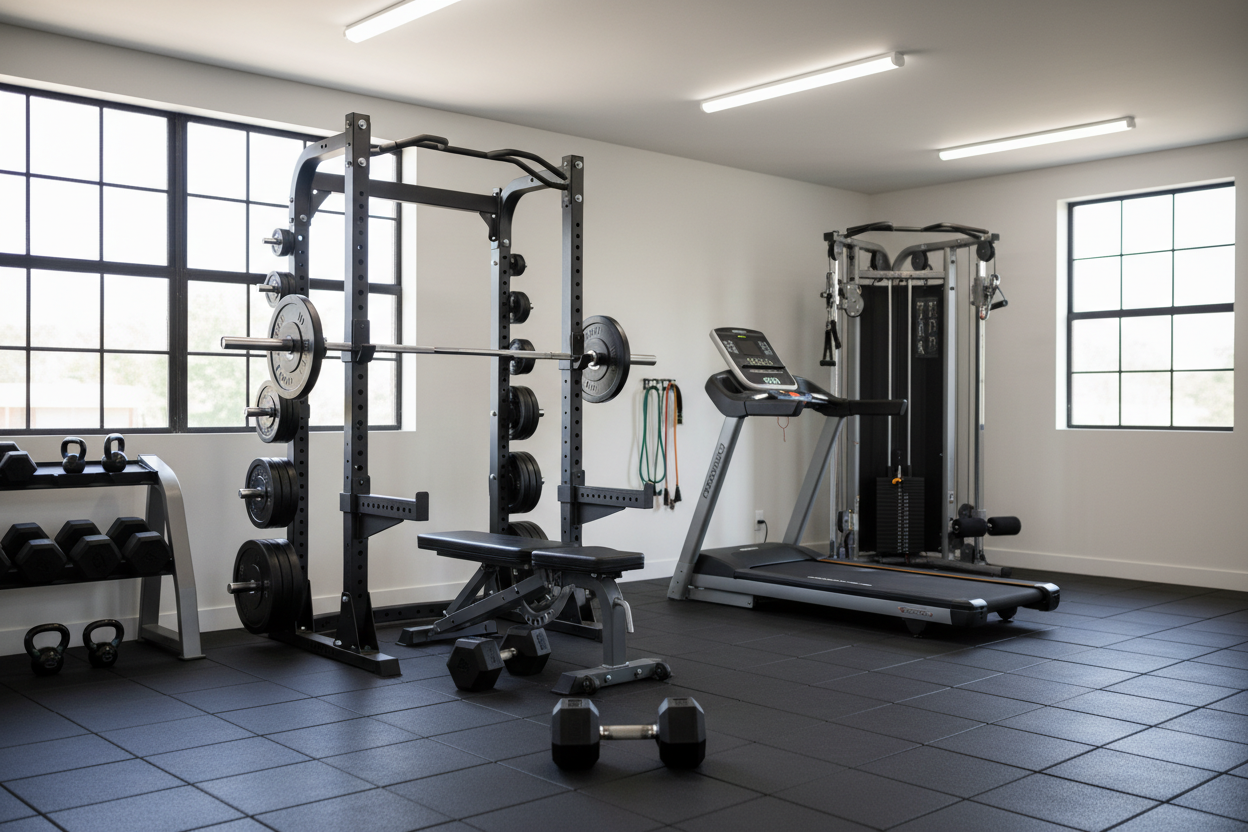
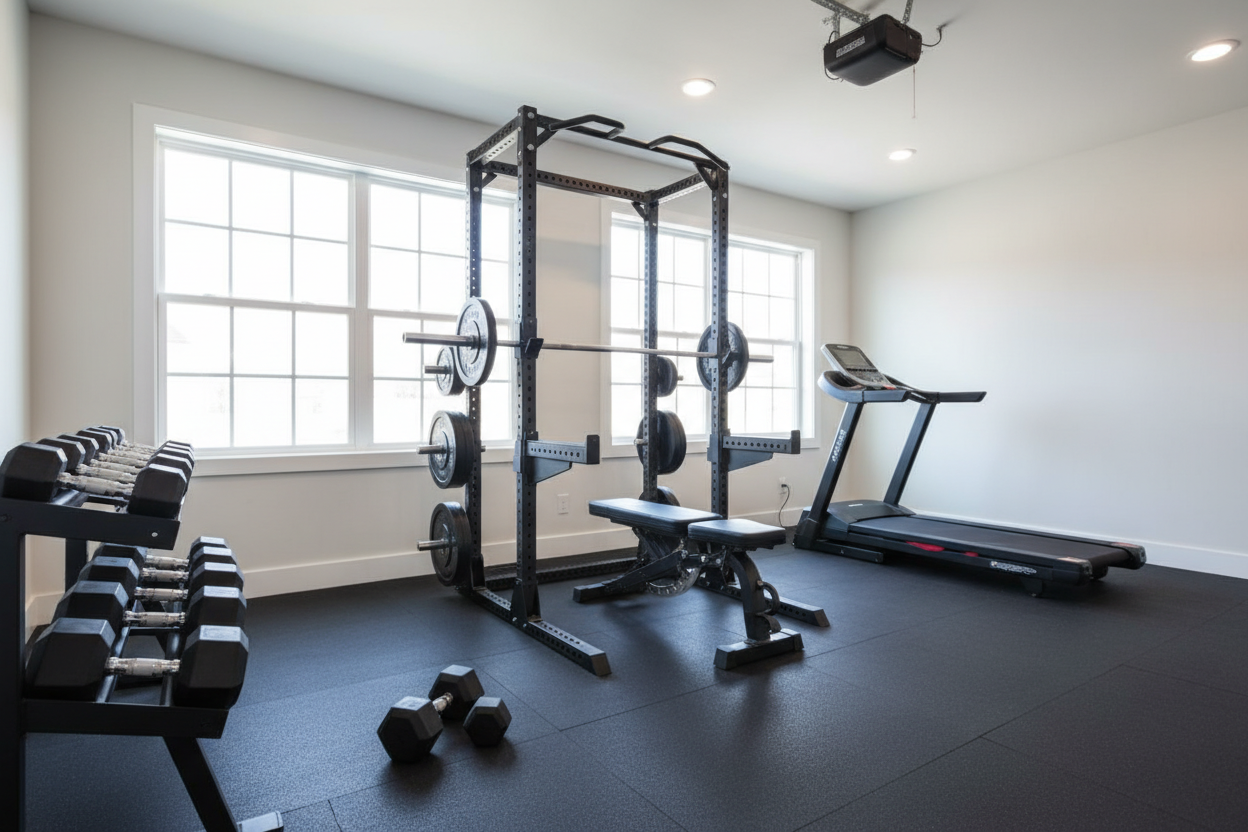
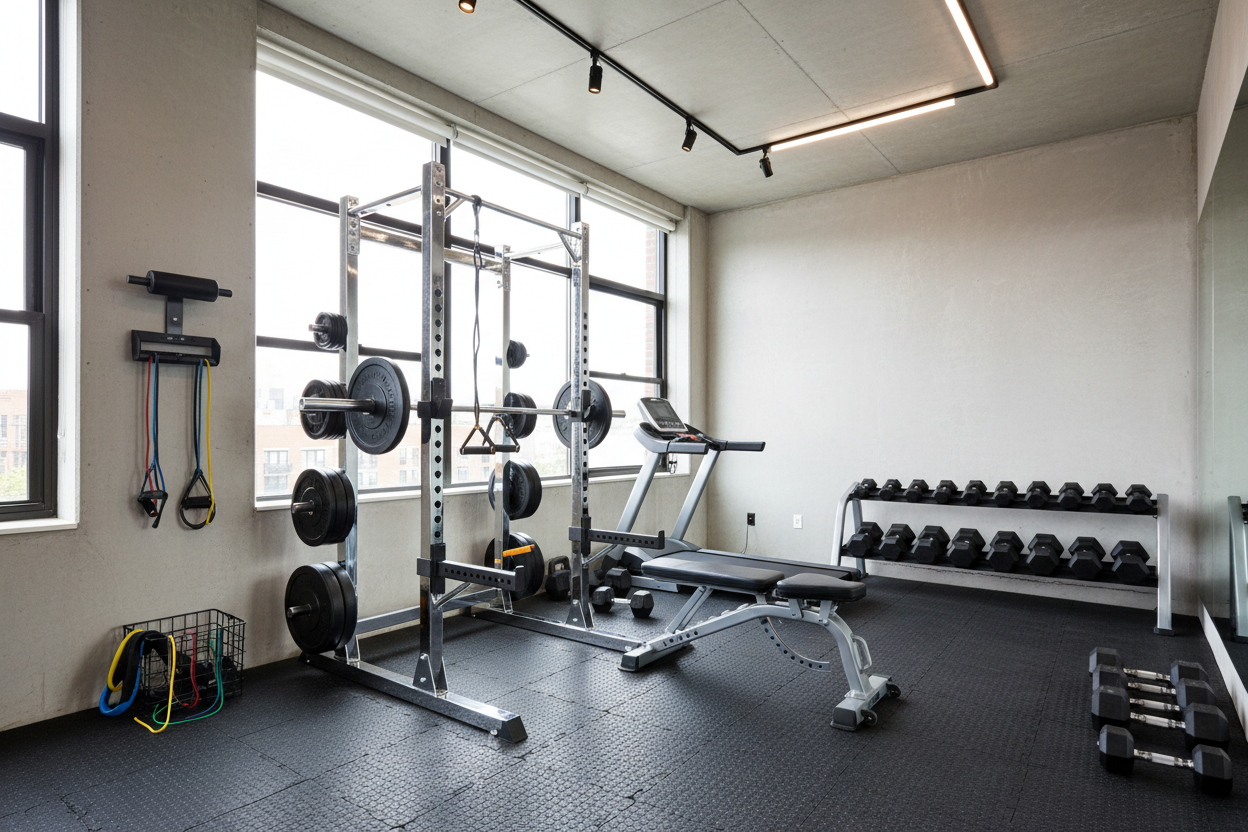
Do yourself a favor and get some high-density gym flooring for home workout. I use the 6x8 mats because they are thick enough to absorb the impact of a dropped kettlebell or plate. It saves your concrete, dampens the noise so you don't wake the neighbors, and gives you a much better surface for those farmer’s carries. Don’t wait until you see a crack in the slab to buy protection.
FAQ
Can I do this every day?
No. Your tendons need time to adapt. Start with twice a week and see how your elbows feel. If you start feeling achy in the joints, back off. Muscle grows faster than connective tissue, and tendonitis will set you back months.
What if my gym doesn't have heavy dumbbells?
Use a barbell for frame carries or just load up two buckets with rocks or sand. Necessity is the mother of invention in a garage gym. You can also use fat grips on lighter weights to make them significantly harder to hold.
How long until I see results?
Grip strength improves fast—you will notice a difference in 2-3 weeks. Visual thickness in the traps and forearms usually takes 8-12 weeks of consistent work. Stick with it and stop reaching for the straps.