The Secret to Making Exercises for Home Actually Feel Heavy
I remember the first time I tried to get a serious leg pump in my living room during a snowstorm. I did about 200 air squats and a hundred lunges. I was sweating, my heart was racing, but my muscles didn't feel 'worked'—they just felt tired. It was a exercises for home epiphany: sweating is not the same thing as building strength.
If you are stuck training in a spare bedroom without a 500-pound stack of iron, you have to stop thinking about reps and start thinking about physics. You can make bodyweight movements feel like a heavy triple if you know how to manipulate leverage and time. Here is how I stopped doing 'cardio disguised as lifting' and started actually getting stronger with a home-based workout.
Quick Takeaways
- Slow down the eccentric phase to at least three seconds to increase mechanical tension.
- Switch from bilateral to unilateral movements to effectively double the load on a single limb.
- Pause at the bottom of movements to remove momentum and force more muscle fiber recruitment.
- Focus on hip mobility before attempting advanced single-leg variations.
The Problem With Most Living Room Routines
Most people approach an in home exercise routine by trying to do as many reps as possible. They treat their workout like a HIIT class. While that is great for your heart, it is terrible for building actual muscle. To grow, your muscles need mechanical tension. Doing fifty air squats is conditioning; doing five slow, deep pistol squats is strength training.
The goal of a great home workout should be to make the movement so difficult that you fail between 8 and 12 reps. If you can do 30 reps of something, it is too light. You are no longer building a resilient physique; you are just practicing being tired. To fix this, we have to change the 'weight' without adding any plates.
Tempo: The Easiest Way to Fake Heavy Weight
Tempo is the most underrated tool in your kit. When you see someone bouncing at the bottom of a push-up, they are using the 'stretch reflex'—basically a built-in spring—to help them back up. If you want at home exercises to feel heavy, you have to kill that spring.
Try a 3-0-3-0 tempo. That means three seconds on the way down, zero seconds at the bottom, and three seconds on the way up. By slowing down the eccentric (the lowering part), you create micro-tears in the muscle that lead to growth. I have seen guys who bench 315 lbs struggle to finish ten push-ups when they actually follow a strict four-second descent. This is how you turn a basic in home workout routine into a muscle-building session.
Leverage: Changing Angles to Increase the Load
Physics is your best friend when you do exercise at home. The easiest way to increase resistance is to move from two limbs to one. A Bulgarian split squat puts roughly 80% of your weight on one leg, which is a massive jump from a standard squat. However, when you start shifting your center of gravity for types of workout at home like archer push-ups or staggered-stance deadlifts, stability becomes your bottleneck.
I have learned the hard way that doing these on a slick hardwood floor is a recipe for a groin pull. You need a stable, high-traction surface. I personally use a large exercise mat for home gym setups because it provides enough grip to really drive your foot into the floor without the mat sliding across the room. Without that stability, you will subconsciously hold back on the intensity to avoid falling.
My Go-To Heavy Bodyweight Movements
If I only had 20 minutes for an exercise routine to do at home, I would focus on three high-tension movements: deficit push-ups, sliding hamstring curls, and the holy grail of leg training—the pistol squat. Deficit push-ups (using books or handles to go deeper than floor level) increase the range of motion, making every rep significantly harder on the chest.
For the legs, pistol squats are king, but they are technically demanding. Most people fail them not because of strength, but because their hips are locked up. I always recommend a quick stretching workout at home specifically targeting hip and ankle mobility before you dive into deep unilateral work. If you can't sit in a deep crouch with your heels down, you aren't ready for heavy single-leg work yet. Master the mobility, then master the tension.
When You Actually Need to Buy Equipment
Eventually, you will hit a wall. While you can make push-ups and squats feel incredibly heavy through leverage, the posterior chain (your back and hamstrings) is harder to tax with just bodyweight. You can only do so many pull-ups on a door frame before you need real resistance. Pulling movements are usually where a working out at home routine starts to lag behind a commercial gym.
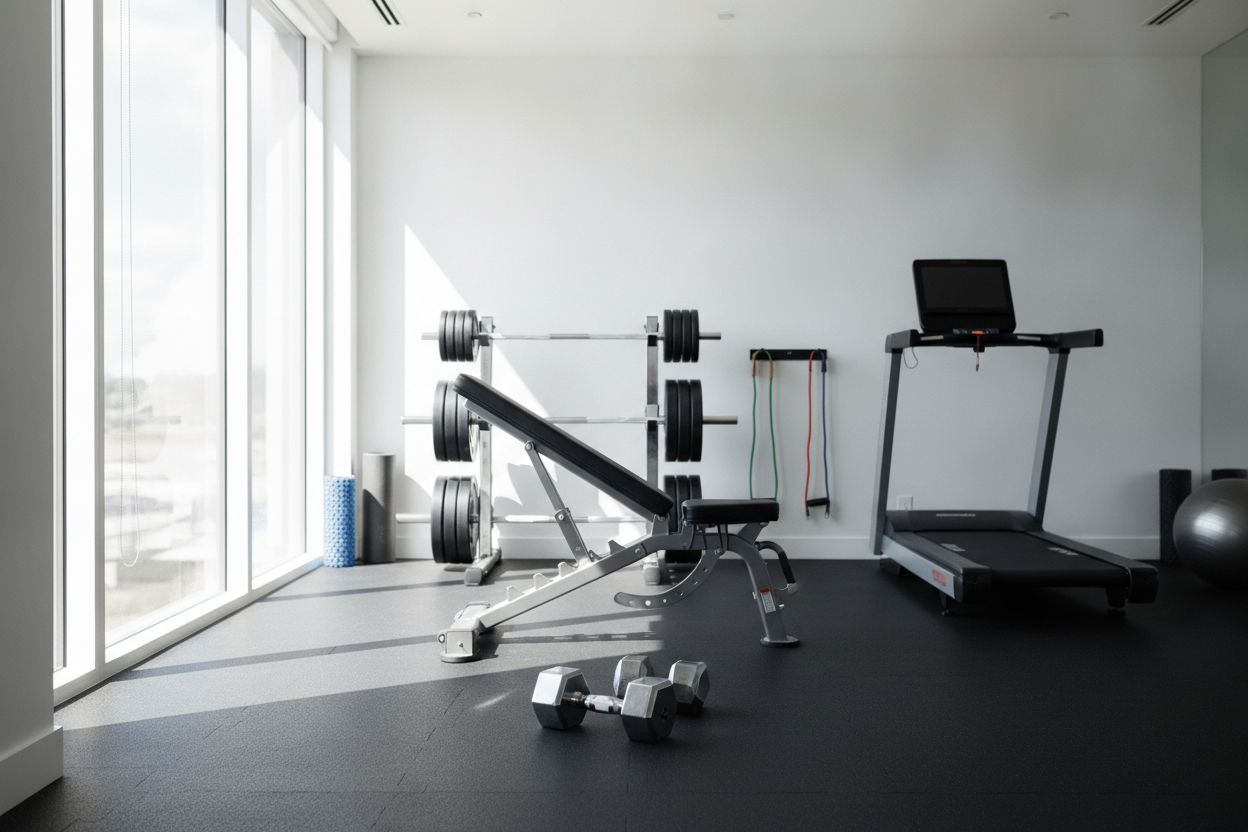
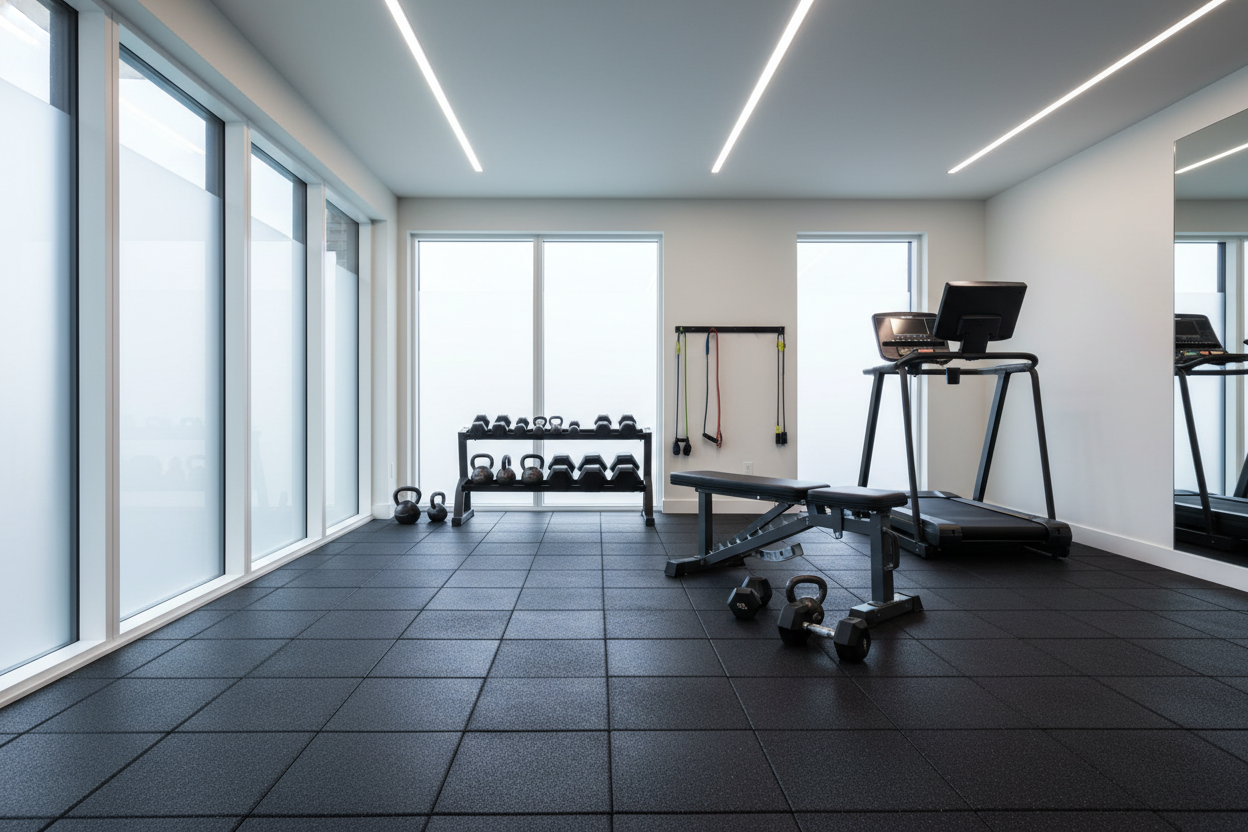
When you can comfortably perform 15 slow, controlled reps of your hardest bodyweight variations, it is time to look at external resistance. Whether that is a set of adjustable dumbbells or some of the best at home exercise machines, adding hardware is the logical next step. Don't buy a cheap, flimsy tower that shakes when you touch it. Look for something with a high weight capacity and a small footprint that fits your space.
Personal Experience: The 100-Rep Mistake
Years ago, I thought I could maintain my squat max by just doing high-rep bodyweight lunges while traveling. I did hundreds of them every day. When I finally got back to a barbell, I had lost 40 pounds off my max. Why? Because I hadn't been training for strength; I'd been training for endurance. I realized then that five reps of a 'one-and-a-half' rep squat (going all the way down, halfway up, back down, then all the way up) did more for my muscle mass than an hour of mindless lunging ever could. Quality of tension beats quantity of reps every single time.
FAQ
How do I make push-ups harder without weights?
Change the leverage by elevating your feet on a chair or couch. This shifts more of your body weight onto your upper chest and shoulders. Combine this with a 3-second lowering phase to maximize tension.
Are home workouts exercises as effective as gym workouts?
For muscle growth, yes—provided you reach a point of near-failure. Your muscles don't know if you are holding a calibrated plate or if you are doing a difficult yoga-inspired press. They only know tension and fatigue.
How often should I do fitness exercises at home?
Treat it like the gym. Three to five times a week is the sweet spot. Just because you are in your living room doesn't mean you don't need recovery days. Muscle grows while you sleep, not while you're training.