The Secret to explosive exercises for upper body Is How You Land
I spent three years trying to turn myself into a human catapult using nothing but heavy dumbbells and a 'move it fast' mentality. It didn't work. My bench stayed stagnant, and my elbows felt like they were filled with crushed glass. I was doing explosive exercises for upper body the way most people do: by holding onto the weight so hard I was actually slowing myself down. If you’re training in a garage, you’ve probably felt that weird jarring sensation at the top of a fast rep—that's your body telling you you're doing it wrong.
- Stop holding the weight; start projecting it.
- Your brain has a built-in speed limiter called the Golgi Tendon Organ that fights fast iron.
- Concrete floors kill your wrists during plyos; get a mat.
- Keep reps low (3-5) to avoid 'junk' volume and CNS fatigue.
Why Fast Dumbbell Reps Are a Terrible Idea
If you pick up a 50-pound dumbbell and try to punch the ceiling with it, your brain does something annoying. It realizes that if that weight keeps moving at peak velocity, your elbow joint is going to hyperextending and probably exit your arm. To prevent this, your nervous system fires your antagonist muscles—your biceps and lats—to 'brake' the movement before you reach the top.
You think you're doing explosive upper body training, but you're actually training your body to hit the brakes. It’s like trying to drag race with your emergency brake halfway up. You never hit true peak velocity because you’re forced to decelerate. This is why most 'speed work' with standard iron is just a recipe for tendonitis and mediocre power output. You aren't building snap; you're building a flinch response.
The Missing Power Ingredient: Joint Absorption
Most garage lifters think they can just drop into a set of clapping pushups on their bare concrete floor. Bad move. I’ve seen guys develop chronic wrist issues in a month because they didn't respect the impact. When you land an explosive movement, that force has to go somewhere. On concrete, it goes straight into your carpal bones and elbows.
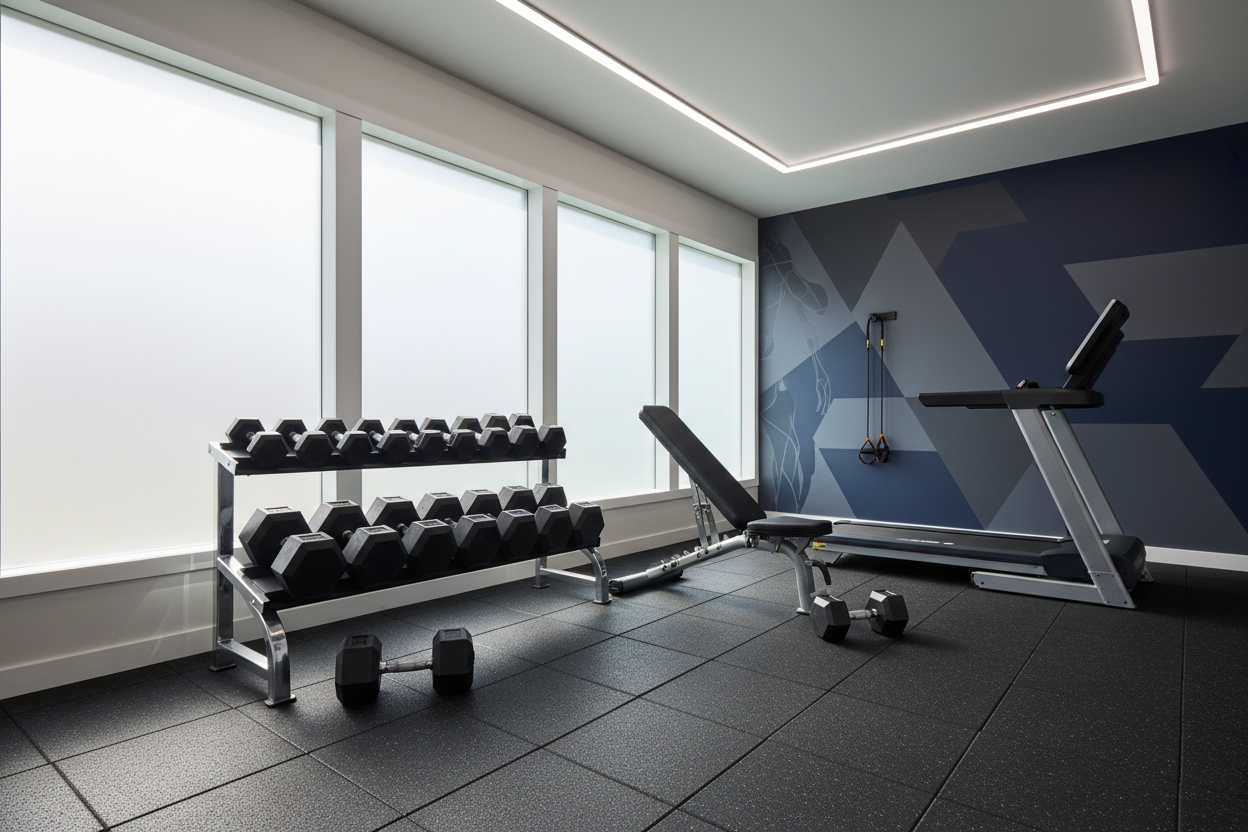
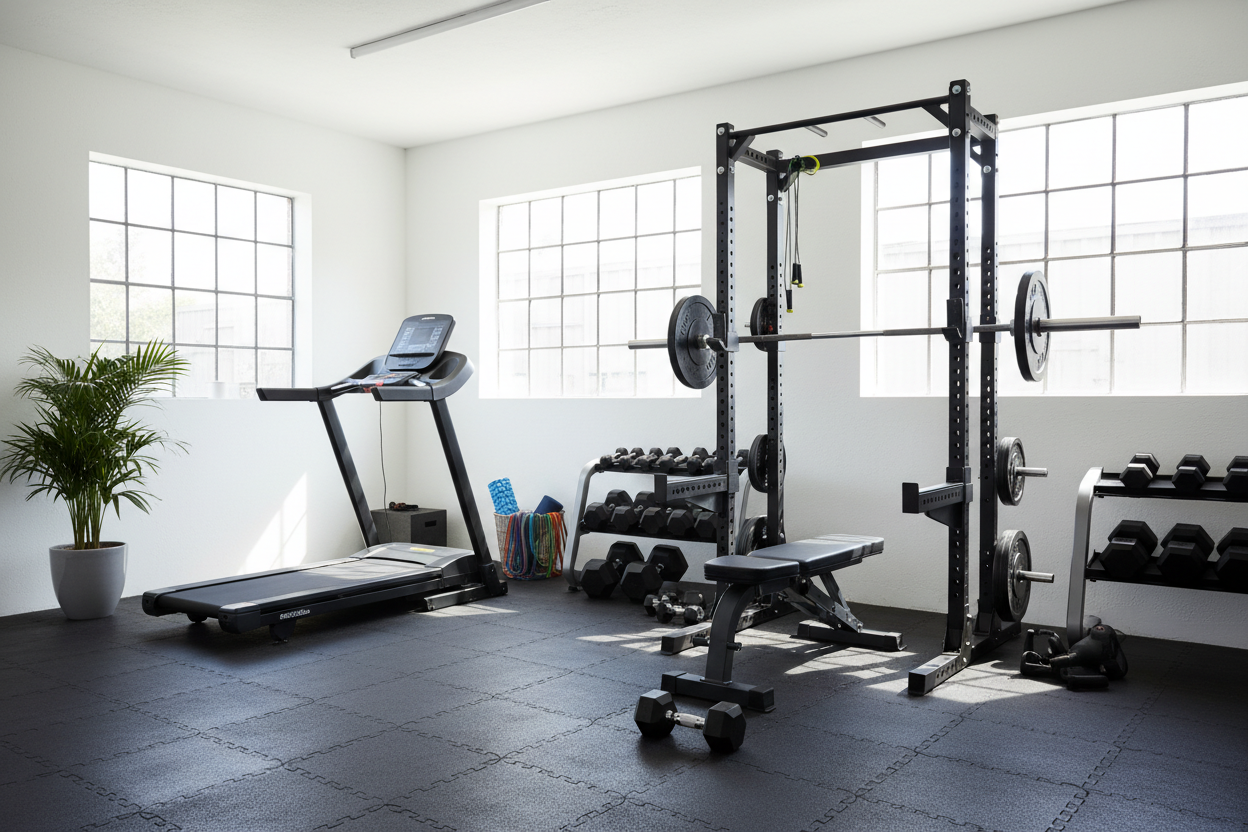
If you want a real upper body explosive workout, you need a surface that gives. I eventually had to stop being a tough guy and invest in high-density gym flooring for home workout because my joints couldn't handle the shockwaves. A good 7mm to 10mm mat acts as the 'squish' your joints need so you can focus on the 'pop.' Without it, your CNS will subconsciously hold back on the jump because it knows the landing is going to hurt. You can't produce max force if your brain is terrified of the impact.
3 Movements That Build Power Without the Tax
First, the Medicine Ball Chest Pass. This is the gold standard for explosive upper body exercises for athletes. Why? Because you actually let go of the ball. There is no deceleration phase. You can push with 100% intent through the entire range of motion. Use an 8-lb or 12-lb slam ball and try to put it through the wall.
Second, Band-Resisted Speed Presses. By using bands, the resistance increases as you reach the top. This 'accommodating resistance' allows you to push hard without the jarring 'snap' at the lockout. Use a light band—think 20-30 lbs of tension—and a barbell loaded to about 40-50% of your max. It’s much safer than trying to 'speed' raw weight.
Third, Depth Pushups. Start with your hands on two 45-lb plates or small blocks. Drop your hands to the floor, catch yourself, and immediately explode back up onto the plates. This trains the 'stretch-shortening cycle,' which is the secret sauce for explosive push exercises. It teaches your muscles to store and release energy like a spring.
How to Program Power Work So It Actually Works
Explosive upper body work is not cardio. If you're huffing and puffing, you're doing it wrong. This is about the Central Nervous System (CNS). I program these movements at the absolute start of the session, right after a dynamic warmup but before any heavy lifting. If your CNS is fried from a 5x5 squat session, you won't have the 'zip' needed for power work.
Keep your sets to 3-5 reps. If you do 10 reps, the last five are going to be slower, and you’re just training your body to be slow. Take 2-3 minutes of rest between sets. It feels like a lot of standing around, but you need your ATP stores to fully reset so every rep is a true max-effort expression of power. This isn't about the 'burn'; it's about the 'snap.'
You Still Need to Build the Brakes
You can't put a Ferrari engine in a Honda Civic and expect the frame to hold together. If you're building massive output, you need the structural integrity to support it. Once you finish your power work, you need to transition into some effective alternative chest exercises that focus on hypertrophy and eccentric control.
Think slow, controlled dumbbell flyes or weighted dips. This builds the 'brakes'—the muscular density in your chest and upper back—that keeps your shoulders stable when you're throwing 100% effort into a med ball. Balance your explosive work with heavy, boring, structural work, and you'll stay in the game for decades instead of months. A big engine is useless if the chassis snaps the first time you floor it.
My Personal Lesson in 'Speed'
I remember the winter I tried to build punching power by doing high-rep explosive kettlebell presses. By week three, my right shoulder felt like it was being poked with a hot needle every time I reached for a coffee mug. I was ignoring the deceleration phase and my joints paid the price. It wasn't until I switched to medicine ball throws against a reinforced garage wall that my power actually jumped. I realized I didn't need heavier explosive work; I needed faster work where I could actually release the object. My bench press lockout went from a grind to a snap in about six weeks once I stopped fighting my own anatomy.
FAQ
How heavy should the medicine ball be?
Light. Most guys grab a 30-lb ball and move like a turtle. For true power, use an 8-lb to 12-lb ball. Speed is the priority, not the weight. If it doesn't look fast, it isn't building power.
Can I do explosive work every day?
No. Your CNS takes significantly longer to recover than your muscles. Twice a week is plenty for most people. Any more and you'll start seeing your main lift numbers tank.
Do I need a special bar for speed work?
A standard Olympic bar is fine, but make sure your plates are secured with high-quality collars. You don't want 45s sliding around when you're moving with max intent. If you have access to a specialty 'multi-grip' or Swiss bar, those are even better for saving the shoulders during speed work.