The Push Press Isn't a Shoulder Exercise (And Why That's Great)
I remember the first time I tried to grind out a 225-lb overhead press in my garage. My back arched like a bridge, my feet did a frantic little jig, and I barely locked it out. It was a garbage rep because I was trying to strict press weight I hadn't earned yet. Then I discovered the push press.
The push press isn't just a 'sloppy' version of the strict press. It’s a violent, coordinated expression of total-body power. If you’re treating it as a way to cheat through a plateau, you’re missing the point of why this movement belongs in every serious strength program.
Quick Takeaways
- It is a power movement, not a failed strict press.
- The leg drive allows for 20-30% more weight than a standard overhead lift.
- Mastering the 'dip and drive' is the secret to total-body coordination.
- It builds massive triceps and overhead stability.
Stop Calling It a Cheat Rep
In the purist circles of the iron game, using your legs to move a weight overhead is often looked down upon. That’s nonsense. A push and press exercise is a specific tool designed to teach you how to transfer force from the ground, through your core, and into the implement. It’s the bridge between a static lift and a full-blown jerk.
When you perform a push to press, you aren't just 'helping' your shoulders. You are creating a kinetic chain. The pushpress exercise allows you to handle loads that would normally crush you in a strict position. This overloads the triceps and the lockout phase, which actually makes your strict press stronger in the long run.
Stop thinking of it as a push and press exercise you do when you're tired. Think of it as a dedicated power lift. You shouldn't be grinding these out; they should be explosive. If the bar is moving slowly, you aren't doing a push press exercise correctly.
The Anatomy of the Lift: What Are You Actually Working?
People always ask, 'push press works what muscles?' While it looks like a shoulder move, the initial horsepower comes from the basement. Your quads and glutes are the primary movers during the 'dip' phase. They generate the vertical momentum that gets the bar off your shoulders and past your chin.
The push press muscles worked include the entire posterior chain and core for stabilization. Once the legs have done their job, the deltoids and triceps take over to finish the lift. It’s a massive stimulus for the upper back and traps as well, as they have to support a heavy load overhead.
If you're looking for pure hypertrophy, you might stick to shoulder push exercises that isolate the muscle. But if you want to know what muscle does push press work in a real-world scenario, the answer is everything from your floor-gripping toes to your lockout-ready triceps. It is the ultimate push press for shoulders and total-body explosiveness.
How to Nail the Dip and Drive (Without Getting Sloppy)
The biggest mistake I see in home gyms is people turning the standing push press into a squat. If you go too deep, you lose the 'spring' effect. You want a shallow, 2-to-4 inch dip where your knees move forward and out, but your torso stays perfectly vertical. If you lean forward, that bar is going to drift in front of you, and you’ll miss the lift.
Footing is everything here. If you're lifting on a slippery concrete floor, you’re losing power. I always recommend a large exercise mat for home gym use to ensure your feet stay glued to the ground. That solid connection allows for maximum force transfer during the push press lift.
To master the push press technique, think about 'punching' the floor. As you drive up from the dip, the bar should feel weightless for a split second. That’s when you punch your arms through to the ceiling. This over head push press rhythm is what separates the pros from the people just flailing around with a barbell.
Dumbbells vs. Barbells for the Overhead Drive
The barbell push press is the king of weight. If you want to move 250+ lbs overhead, you need a bar. However, the dumbbell push press muscles worked are slightly different because each arm has to stabilize the load independently. It’s great for fixing imbalances and is much easier on the wrists if you have mobility issues.
One of the main dumbbell push press benefits is the neutral grip option. If your shoulders are cranky, rotating the palms inward can save you a lot of grief. But for raw power, the push press barbell version is unmatched. You can simply load more plates and generate more force.
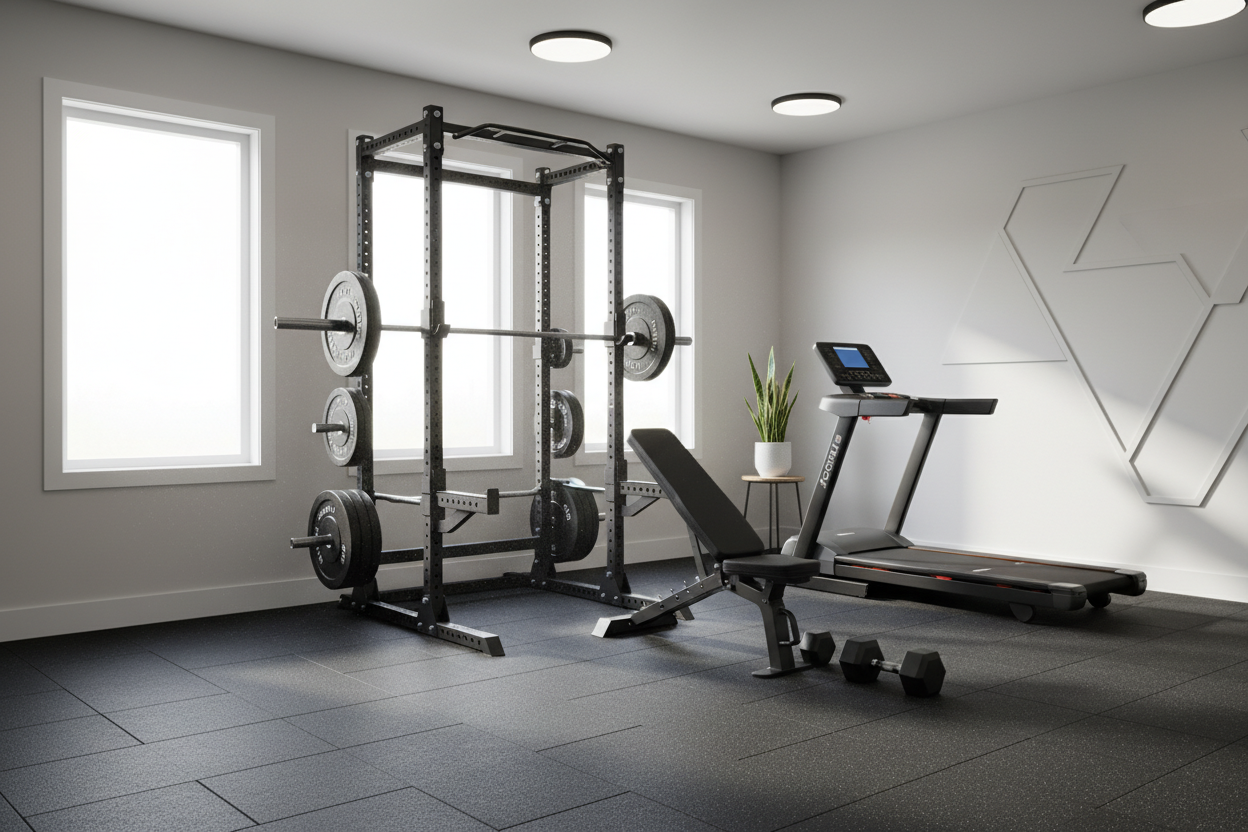
For a home setup, I’m a fan of a solid power rack barbell bumper plate package. Having a rack means you can set the bar at shoulder height and get right into your bb push press sets without having to clean the weight from the floor every time. It’s safer and lets you focus entirely on the overhead push press itself.
Where Does This Belong in Your Garage Gym Routine?
Don't treat a push press workout as an afterthought at the end of a session. Because it’s an explosive movement, it requires a fresh central nervous system. I like to program push press workouts right after a warm-up, or as the primary 'strength-power' movement of the day.
A typical push press with barbell session might look like 5 sets of 3 to 5 reps. You want the quality to be high. If you start 'grinding' the reps, you’ve lost the benefits of push press training. The goal is speed. If you can't move the bar fast, take some weight off.
The standing barbell push press is a foundational move. Whether you call it a barbell push or a push press with bar, the mechanics remain the same: dip, drive, and dominate. It’s the fastest way to get comfortable with heavy weight over your head.
Personal Experience: My 'Aha' Moment
I used to be a strict press snob. I thought if I couldn't move it with just my shoulders, I shouldn't be moving it at all. Then I hit a plateau at 185 lbs that lasted a year. I finally swallowed my pride and started doing push press shoulder work. Within two months, I was push-pressing 225 lbs for triples. When I went back to test my strict press, it had jumped to 205 lbs. The push press benefits are real; the heavy overhead time under tension simply makes you stronger everywhere.
FAQ
What's a push press vs a jerk?
In a push press, your feet stay planted and your legs finish straight after the drive. In a jerk, you 're-dip' or move your feet to catch the bar with bent knees or in a split. The push press is simpler and better for general strength.
What muscles do push press work most?
The quads generate the initial power, the core transfers it, and the triceps and medial delts finish the lockout. It's a total-body movement.
Is the push press better than the strict press?
Neither is 'better,' but they serve different goals. Strict pressing is better for pure shoulder hypertrophy; the push press is better for power, athleticism, and handling heavier loads.
How deep should I dip?
Keep it shallow—about 10% of your height. Think of it like a jump prep, not a squat. A deep dip kills your momentum and turns the move into a slow grind.