The Piston Fix for Dumbbell Overhead Press Shoulders
I spent years wondering why my front delts were screaming while my side delts looked like they belonged on a high school freshman. I was moving 80-pound dumbbells, my face was turning purple, and I was hitting every rep. But I had one habit that was killing my gains: I was 'clinking' the weights together at the top of every dumbbell overhead press shoulders session. I thought that extra inch of movement meant a better contraction, but I was actually just giving my muscles a vacation.
Quick Takeaways
- Stop the 'clink': Tapping dumbbells together removes tension from the deltoids.
- Vertical Path: Keep your hands stacked directly over your elbows throughout the movement.
- Stability Matters: A solid floor and a braced core are non-negotiable for heavy presses.
- Piston Tempo: Focus on a constant, rhythmic movement rather than a hard lockout.
Why the 'Clink' is Ruining Your Reps
Most people treat the shoulder press movement like they are drawing a triangle in the air. They start wide at the shoulders and end with the dumbbells touching over their head. It looks complete, but from a physics standpoint, it’s a disaster for hypertrophy. When those weights move inward toward your midline, the load shifts from your muscles onto your skeletal structure. You are essentially 'stacking' the weight over your joints, which gives your delts a micro-rest at the peak of the rep.
If you want real growth, you need to keep the weight out in the 'active' range. By stopping the dumbbells just short of that inward arc, you force the muscle to stay under tension for the entire duration of the set. That 'clink' is the sound of your gains escaping. It feels satisfying to hear the iron hit, but it’s a signal that you’ve offloaded the work. Your shoulders don't need a rest mid-set; they need a reason to adapt.
What Are Shoulder Press Mechanics Supposed to Be?
When we ask what does shoulder press workout tension actually require, the answer is a straight line. Gravity only works in one direction: down. To maximize the work your deltoids do, you need to push directly against that force. A converging arc—where the weights move toward each other—actually reduces the effective load on the side delts as you reach the top.
What is shoulder press form supposed to look like? Imagine your forearms are pistons in an engine. They should remain perfectly vertical. If your elbows flare too far out or your wrists tuck inward, you’re leaking power. A proper exercise press requires the dumbbells to move in a straight vertical path, staying roughly shoulder-width apart from the bottom to the top. This keeps the lateral and anterior deltoids fully engaged without the joint-stress that comes from awkward internal rotation.
The Piston Technique: A Better Shoulder Press at Home
The 'Piston' method is simple but brutal. Start with the dumbbells at about ear level. Instead of pressing them toward each other, press them straight up. Your hands should stay wider than your head at the top. This might feel 'incomplete' at first because you aren't locking out your elbows and touching the weights, but your shoulders will tell a different story by rep eight. This is the secret to a high-intensity dumbbell shoulder workout at home where you might be limited by the weight of your adjustable dumbbells.
By maintaining this stacked position—wrist over elbow, elbow over shoulder—you turn the exercise shoulder press into a constant-tension movement. You aren't just moving weight from point A to point B; you are keeping the muscle under fire. I’ve found that using this method with 50s feels harder and more productive than using 70s with sloppy, clinking form. It’s about making the weight feel heavier than it actually is.
Creating a Stable Base for Heavy Lifts
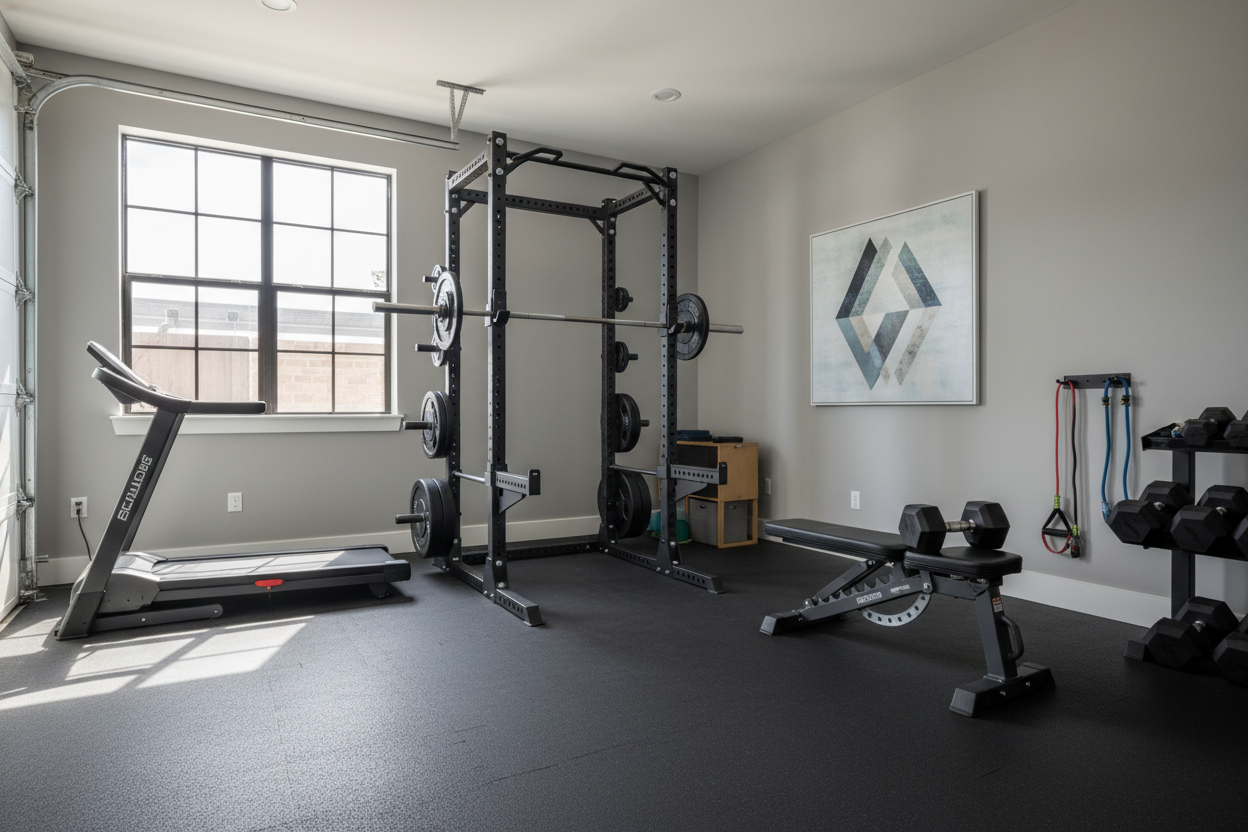
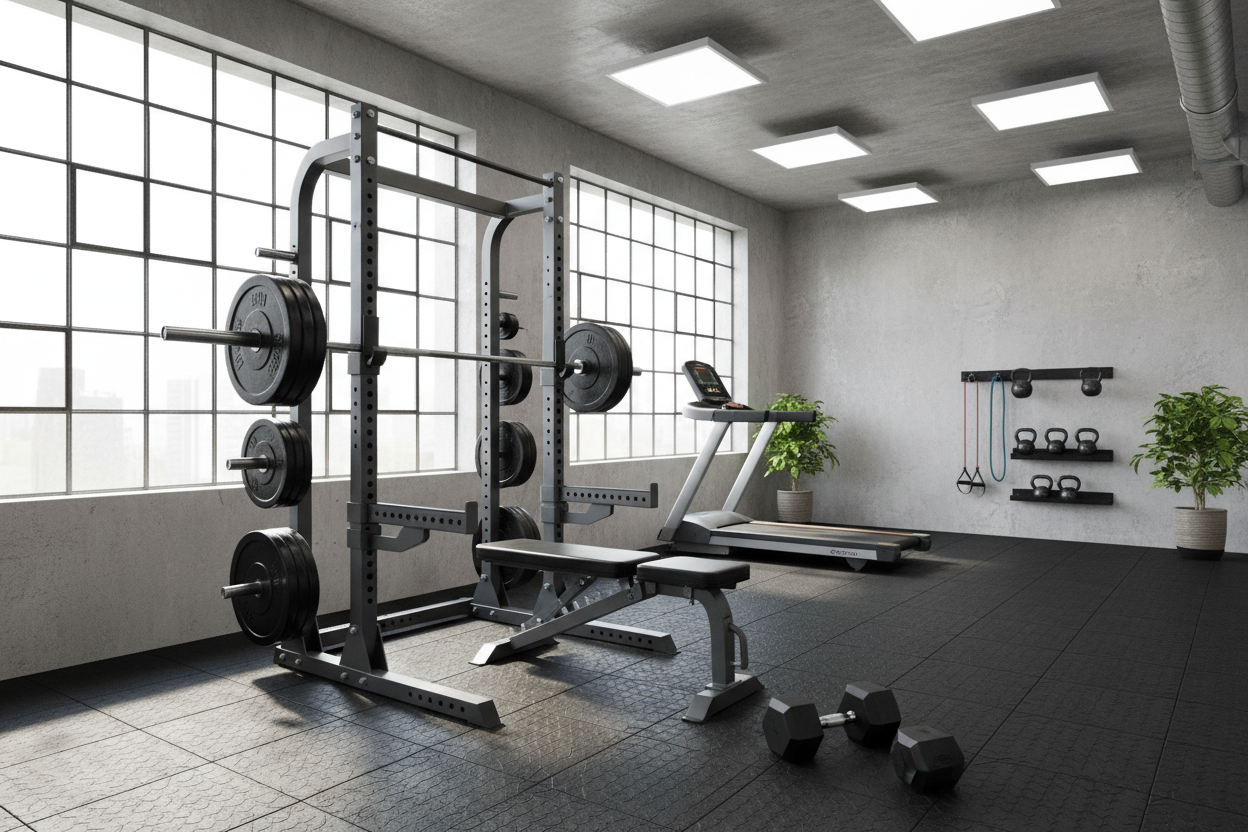
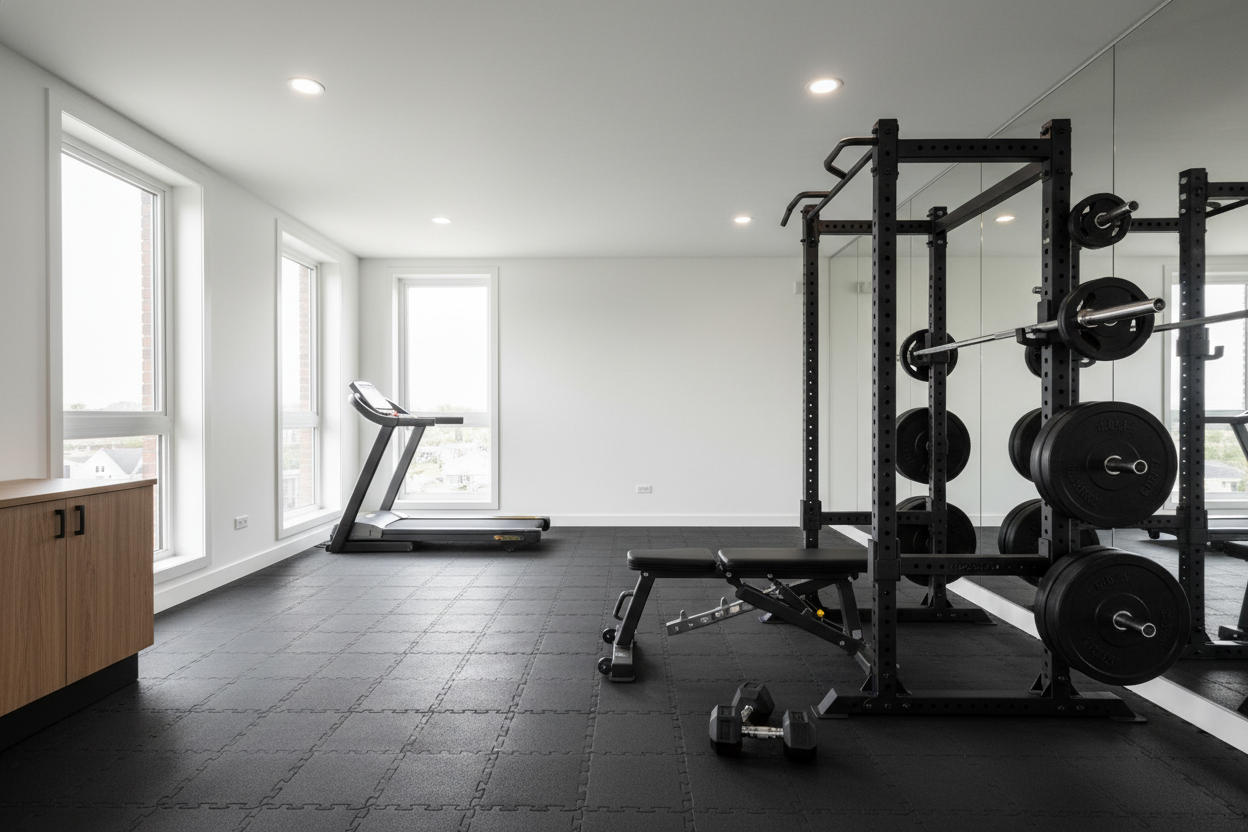
You can't fire a cannon from a canoe. If you’re doing a shoulder press at home, your floor matters as much as your form. When you start pushing heavy presses workout volume, you need a surface that won't compress or slide. I’ve seen guys try to press heavy on plush carpet or cheap foam tiles, and their ankles wobble like they’re on a Bosu ball. That instability kills your force production.
If you’re training to failure—which you should be on your final sets—you also need to know you can bail safely. Dropping a pair of 60-pound hex dumbbells on bare concrete is a great way to crack your foundation or ruin your weights. Investing in solid gym flooring for home workout setups gives you the confidence to push that last piston rep knowing that if you have to drop the weights, your house (and your gear) will survive.
How to Program This Exercise Press Variation
So, what's shoulder press volume supposed to look like with the piston method? Since you’re eliminating the rest at the top, you’ll likely need to drop your usual weight by 10-15%. Aim for 3 to 4 sets in the 8-12 rep range. Focus on a controlled 2-second eccentric (lowering) phase and a powerful, but controlled, 1-second concentric (lifting) phase. Do not pause at the top or bottom.
As you build out your space with a large exercise mat for home gym use, you'll find that having the room to set your stance wide and drive through your legs (if doing standing presses) makes a massive difference. This isn't just about the shoulders; it's about the entire kinetic chain. Keep the tension on the delts, keep the weights parallel, and stop the clink.
Personal Experience: My Ego vs. My Delts
I remember the day I realized my overhead press was a lie. I was at a local warehouse gym, ego-lifting the 90-pounders and making a scene with how loud I could clack them together. A veteran powerlifter watched me for one set and just said, 'You're resting at the top, kid.' I was annoyed, but the next set I tried the piston method with the 65s. I couldn't even finish 10 reps. My delts were on fire in a way I’d never felt. It was a humbling lesson: moving the weight is easy; making the muscle do the work is the hard part.
FAQ
What is shoulder press exercise meant to target?
Primarily the anterior (front) and medial (side) deltoids. It also heavily involves the triceps and the upper trapezius, especially if you are pressing to a full lockout.
What is shoulder press vs overhead press?
They are often used interchangeably. Generally, 'overhead press' is a broad term that includes barbell presses, whereas 'shoulder press' frequently refers to the dumbbell or machine variation. Both involve pressing weight vertically over the head.
What's shoulder press safety like for beginners?
It's very safe if you don't ego-lift. Use a weight you can control for 10 reps. If your lower back starts to arch excessively, the weight is too heavy or your core isn't braced enough. Seated variations can help if you find your back is taking over.