The Only Front Delt Dumbbell Exercise That Actually Makes Sense
I remember staring at my reflection in a cracked gym mirror, swinging 15-lb dumbbells like a pendulum. I thought those burning front raises were the ticket to 'cannonball delts,' but all I got was a nagging pinch in my right rotator cuff and zero extra size. If you are chasing a real front delt dumbbell exercise, you need to stop thinking about isolation and start thinking about load.
Quick Takeaways
- Stop doing front raises; your bench press already hits your front delts.
- The high-incline neutral-grip press is the king of front delt recruitment.
- A 75-degree bench angle targets the shoulders without the chest taking over.
- Neutral grip (palms facing) protects the subacromial space from impingement.
Why Most 'Front Delt' Isolation Is Complete Junk Volume
Most front deltoid dumbbell exercises are just junk volume. Your front delts are already the primary movers in your bench press, your overhead press, and even your heavy dips. Adding six sets of front raises on top of that is a recipe for chronic inflammation. I realized this after years of fixing your dumbbell lifts for shoulders by stripping away the fluff.
If you can bench 225 lbs, your front delts are already doing a massive amount of work. Isolating them with a 20-lb dumbbell is like trying to fill a swimming pool with a teaspoon. It feels like a burn, sure, but it is not driving any real hypertrophy. You need a front delt dumbbell workout that respects your recovery capacity.
The Only Front Delt Dumbbell Exercise I Still Do
The move I swear by is the 75-degree incline neutral-grip dumbbell press. It is the ultimate front delt dumbbell staple because it lets you move actual weight. Unlike a front raise where the lever arm makes a light weight feel heavy, this press lets you load up 60, 70, or 80-lb bells. That is where the growth happens.
This movement bridges the gap between a standard overhead press and an incline bench. By keeping the angle steep, you force the front delts dumbbells to carry the load while the upper chest acts as a secondary supporter. It is the most efficient way to build thickness in the front of the shoulder.
How to Execute the Movement Without Chest Takeover
Set your bench to about 75 degrees—usually one or two notches below vertical. If you go too flat, it becomes a chest press. If you go perfectly vertical, you might find your lower back arching excessively. Tuck your elbows slightly toward your midline rather than flaring them out wide.
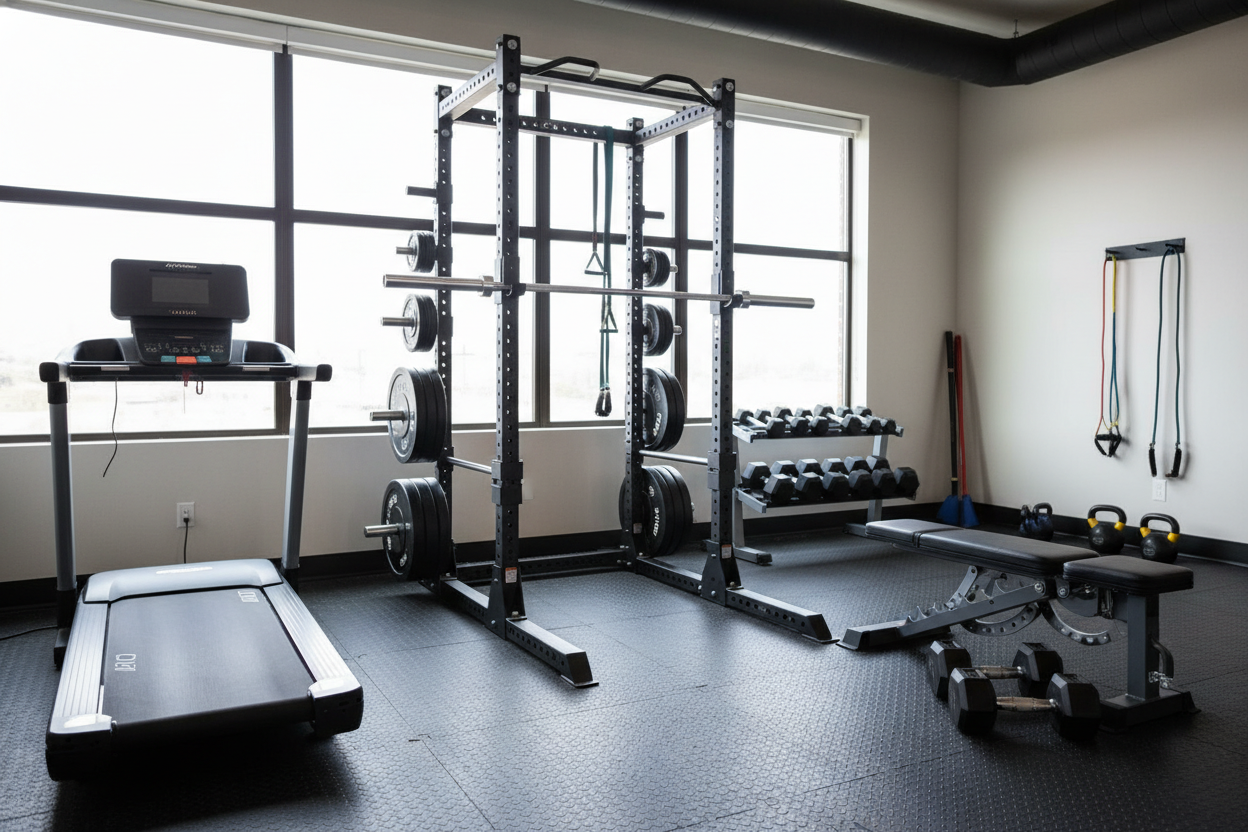
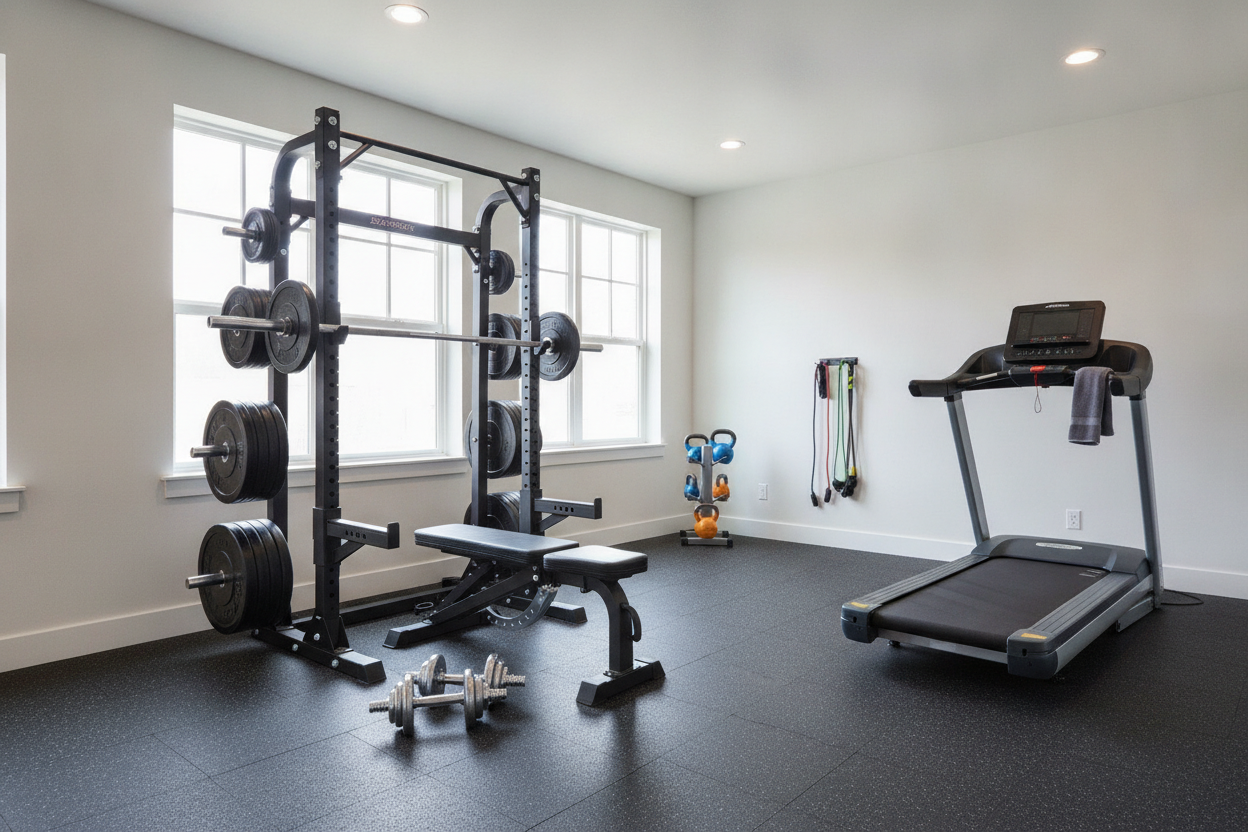
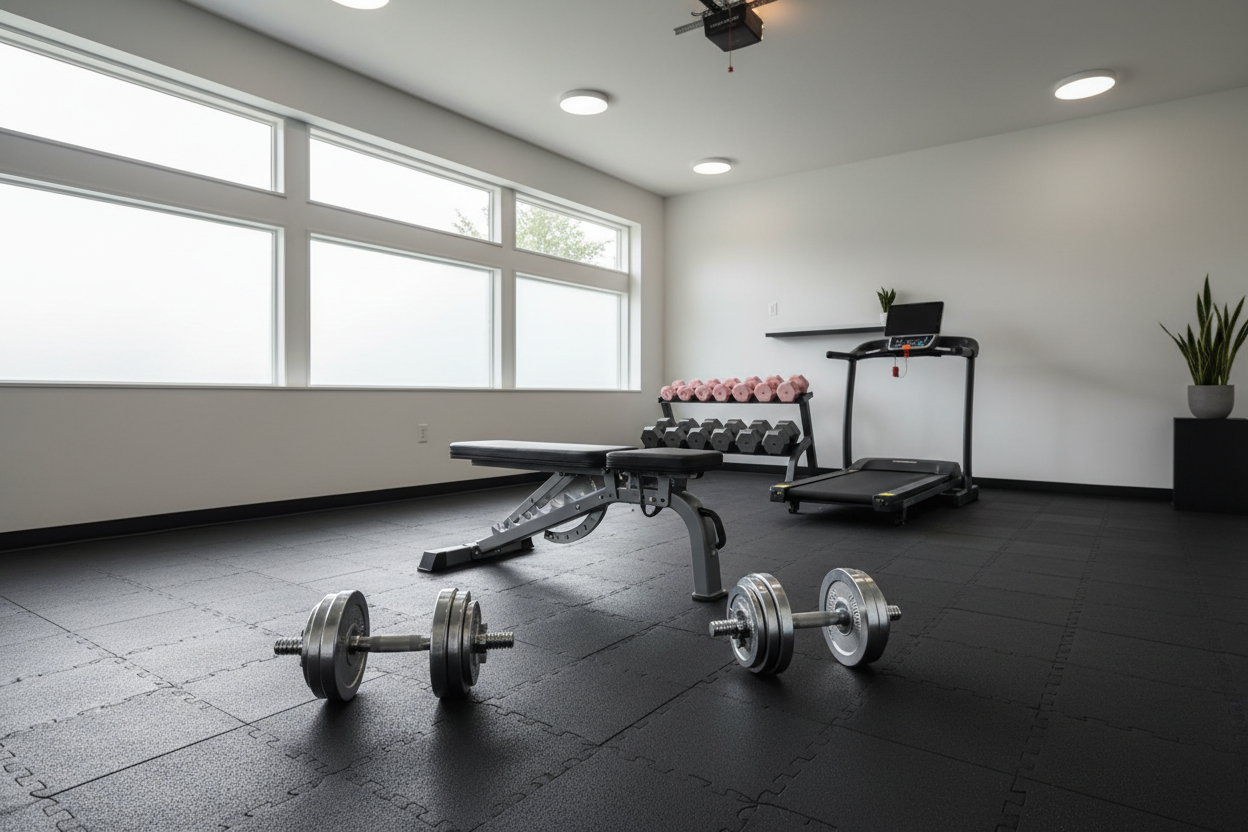
To get the most out of front shoulder dumbbell exercises, you need a stable base. I drive my heels into my gym flooring for home workout to create full-body tension. If your feet are sliding on a dusty garage floor, your shoulders are wasting energy trying to stabilize you instead of pushing the weight. Plant your feet, squeeze your glutes, and drive.
Why the Neutral Grip Saves Your Rotator Cuffs
Why the neutral grip? It keeps your shoulders in what we call the 'scapular plane.' Most front delt exercises with dumbbells force you into internal rotation, which can grind the tendons in your shoulder. By turning the palms in to face each other, you open up the joint space.
I have found that even lifters with 'bad shoulders' can usually handle heavy weight with a neutral grip. It is a biomechanical hack that allows for massive front deltoid dumbbell workout intensity without the post-workout ibuprofen. Your rotator cuffs will thank you for the extra breathing room.
Programming a Front Shoulder Workout Dumbbells Actually Enhance
Do not do this the day after a heavy barbell bench session. I usually slot this into a dedicated front shoulder dumbbell workout or a push day when I am fresh. Keep it to 3 sets of 8-12 reps. I have found that when I simplified my delt dumbbell workout, my strength actually shot up because I was not constantly overtrained.
Focus on a slow, controlled eccentric (the way down) and an explosive drive. If you are looking for more ways to structure your home training, check out our Workout Hub for full routines. The goal is to do less, but do it with more intensity and better form.
Personal Experience: My Shoulder Recovery Story
I once tried a 'shoulder day' that had four different front deltoid workout with dumbbells variations. By week three, I could not even reach into the backseat of my car without a sharp pain. I was doing front raises, lateral raises, and overhead presses all in one go. I dropped the raises, switched to heavy braced neutral-grip presses, and the pain vanished in a month. My shoulders actually looked wider because I was finally using weights that challenged my muscle fibers.
FAQ
Can I do this exercise standing?
I do not recommend it. Sitting and bracing against a bench allows you to move significantly more weight because your core does not have to work as hard to stabilize your spine. More weight on the muscle equals more growth.
How heavy should I go?
Go heavy enough that the last two reps of a set of 10 are a struggle, but not so heavy that your form breaks down. If you start arching your back like a bridge to finish the rep, the weight is too heavy.
What if my bench does not have a 75-degree setting?
Most adjustable benches have a notch that is close enough. If yours only has 45 or 90, go with 90 but keep your elbows tucked very tight to your ribs to keep the focus on the front delts rather than the side delts.