The Only Fitness Program For Beginners Free From BS and Junk Volume
I remember scrolling through Instagram at 2 AM, looking at a $67 'custom' PDF that promised to reveal the secrets of muscle growth. I bought it, opened the file, and realized I’d just paid for a basic 5x5 routine I could have found on any forum in 1998. It’s a racket. You don’t need a celebrity trainer’s secret sauce; you need a fitness program for beginners free of the fluff that clogs up modern social media feeds.
Most people quit because they start with too much. They try to do six days a week of 'functional' movements that look more like circus acts than strength training. If you're just starting, your goal isn't to look cool—it's to build a foundation that won't crumble the first time you try to move a heavy box. I’ve tested enough gear and routines to know that simplicity wins every single time.
Quick Takeaways
- Stop paying for PDFs; basic biomechanics are free and public domain.
- Focus on the 'Big Five' movements: Squat, Hinge, Push, Pull, and Carry.
- Consistency for 12 weeks beats a 'perfect' plan for two weeks.
- If training at home, your floor is your most important piece of equipment.
Stop Paying Fitness Influencers for the Basics
The fitness industry is built on the idea that you are one 'secret' exercise away from your goal. It’s a lie. Most free fitness plans for beginners you find on TikTok are just lead magnets. They give you a watered-down version of a real program to get your email, then hit you with a $200 video course upsell. It’s predatory and, frankly, unnecessary.
Hypertrophy and strength aren't mysterious. They happen because of progressive overload—doing a little more today than you did last week. You don't need a proprietary 'glute-activating' sequence or a $50-a-month app to track your sets. You need a notebook and the discipline to show up. I’ve seen guys in garage gyms with nothing but a rusty barbell and a squat rack get stronger than people in $200-a-month boutique gyms because they stopped chasing 'new' and started chasing 'better.'
What a Real No-Cost Routine Actually Looks Like
A legitimate free workout program for beginners should fit on an index card. If it requires a 20-page manual to explain the exercises, it’s too complicated. At this stage, your central nervous system is learning how to fire muscles in coordination. You don't need 12 different variations of a bicep curl; you need to learn how to keep your back flat during a deadlift.
The real drivers of gain are frequency and simplicity. You want to hit your major muscle groups at least twice a week. This doesn't mean spending two hours in the gym. It means doing 3 to 5 high-quality sets of a few movements and going home. I've found that the more 'junk volume'—extra sets that don't actually contribute to growth—you add, the more likely you are to burn out before you see real results.
The Bare-Metal 3-Day Split (Do This First)
This is the meat of the routine. It’s an A/B split. You’ll perform Workout A, rest a day, perform Workout B, rest a day, and repeat. It’s a workout plan for beginners at gym or home that strips away the nonsense. Here is your workout plan for beginners free of charge:
Workout A:
1. Goblet Squats or Barbell Back Squats: 3 sets of 8-10 reps
2. Push-ups or Bench Press: 3 sets of 8-10 reps
3. Dumbbell or Barbell Rows: 3 sets of 10-12 reps
4. Planks: 3 sets, hold for 45 seconds
Workout B:
1. Romanian Deadlifts: 3 sets of 8-10 reps
2. Overhead Press (Dumbbell or Barbell): 3 sets of 8-10 reps
3. Lat Pulldowns or Assisted Pull-ups: 3 sets of 10-12 reps
4. Farmer’s Carries: 3 sets, walk 40 yards with heavy weights
The key here is the 'Farmer's Carry.' It’s the most underrated move in the gym. Pick up something heavy and walk. It builds grip strength, core stability, and mental toughness. If you don't have heavy weights, use two five-gallon water jugs. Just move.
Setting Up Your Space (Without Spending a Fortune)
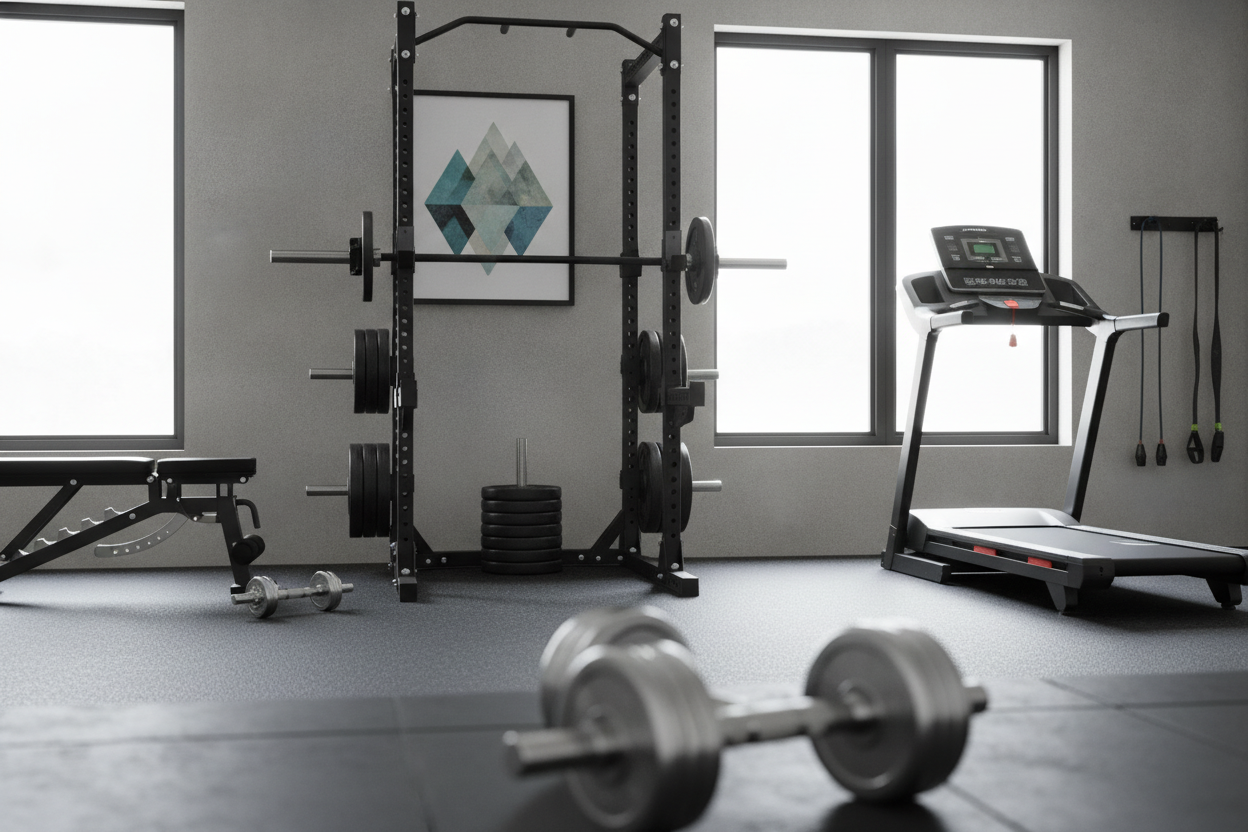
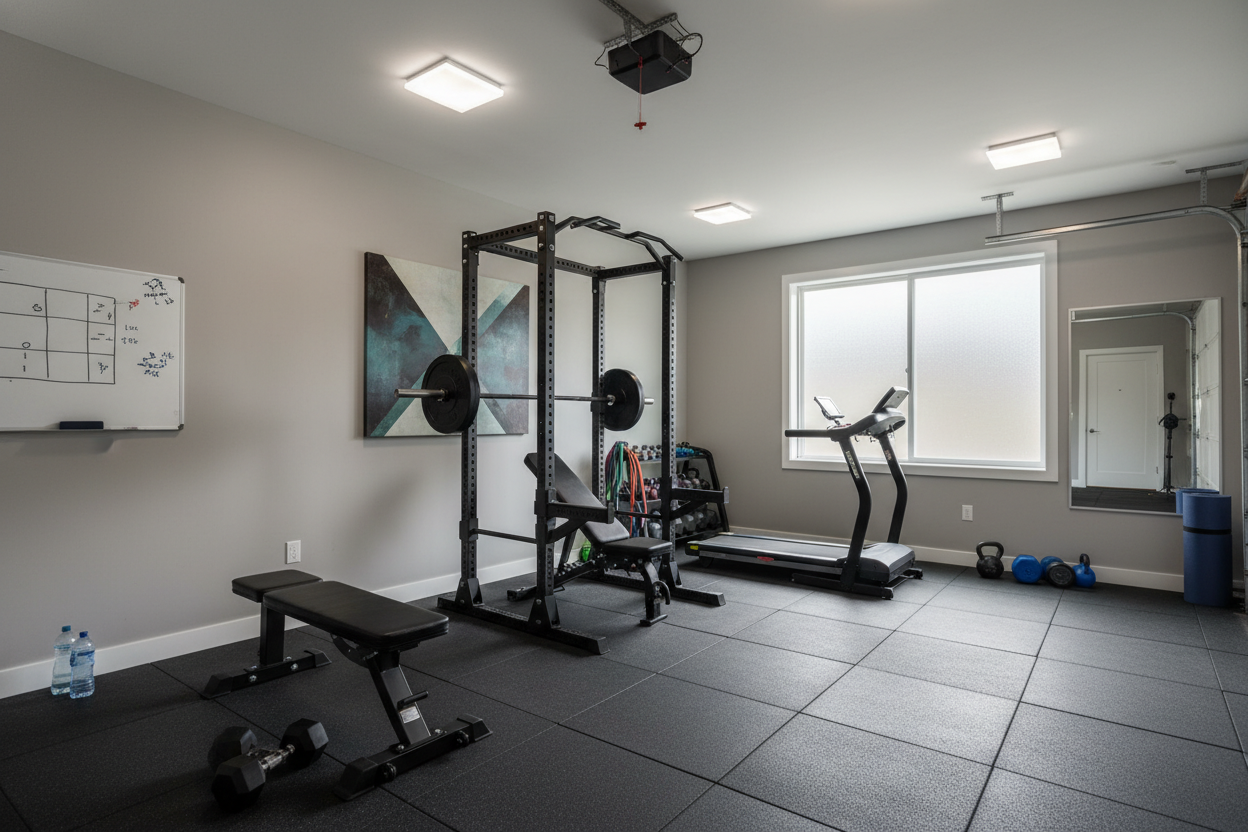
If you aren't heading to a commercial facility, you can do this entire routine in a 6x8 ft corner of your garage or spare room. But don't just lift on bare concrete or carpet. I’ve made the mistake of doing floor presses on thin carpet and ended up with bruised elbows and a pissed-off landlord. You need a solid foundation.
I highly recommend getting a large exercise mat for home gym use. It protects your joints during floor work and keeps your equipment from sliding around. If you’re planning on using a bench and a set of adjustable dumbbells, a 6x8ft exercise mat is the perfect footprint. It’s enough space to move through your full range of motion without having to constantly readjust your position. Plus, it deadens the noise so you aren't waking up the whole house during your 6 AM session.
When to Finally Change Your Routine
The biggest mistake beginners make is 'program hopping.' They do a free beginner gym workout plan for two weeks, don't see a six-pack, and switch to something else. This is how you stay weak. You need to milk your 'newbie gains' for all they're worth. These are the rapid strength increases you get in the first 3-6 months of lifting.
Stay on this plan for at least 12 weeks. If you can still add weight to the bar or do one more rep than last week, the program is still working. Only change it when you’ve truly plateaued for three weeks straight. By then, you’ll have the foundation to tackle more advanced free gym workout plans for beginners without getting injured.
Personal Experience: The 'Influencer' Trap
Early in my lifting career, I fell for a '30-Day Shred' program sold by a guy who clearly spent more time on his lighting than his coaching. It was 45 minutes of high-intensity jumping around. I didn't get stronger; I just got tired and developed a nagging pain in my left patella. I went back to a basic 3-day full-body split, similar to the one above, and my strength exploded. I realized that 'feeling the burn' isn't the same as making progress. Don't mistake fatigue for productivity.
FAQ
Do I need a gym membership for this?
No. You can run this with a pair of adjustable dumbbells and a sturdy floor. However, a gym membership makes it easier to access heavier weights as you get stronger.
How long should I rest between sets?
Rest 90 seconds to 2 minutes. You want your heart rate to come down enough that you can put maximum effort into the next set. This isn't cardio; it's strength training.
What if I can't do a push-up?
Start with your hands on a bench or a sturdy table. As you get stronger, move your hands closer to the floor. Everyone starts somewhere; the only shame is staying where you started.