I Built a Workout for Beginners Schedule Around Just 3 Days a Week
I remember my first week training in a cramped garage. I had a $50 bench from a big-box store that wobbled every time I breathed, and I was trying to follow a pro bodybuilder's six-day 'crush it' program. By Wednesday, my joints felt like they were filled with sand. By Friday, I quit. Most people fail because they think volume equals results, but for a novice, consistency is the only metric that matters. That is why I designed this workout for beginners schedule to be dead simple, brutally effective, and sustainable.
Quick Takeaways
- Three days a week is the sweet spot for recovery and habit-building.
- Rest days are when your muscle tissue actually repairs and grows.
- A home setup eliminates the friction of commuting to a commercial gym.
- Focus on compound movements like squats and rows over isolation exercises.
The 5-Day Split Is Ruining Your Progress
You see it every day on social media: influencers posting five, six, or even seven-day training splits. They have the genetics, the 'supplements,' and the eight hours of sleep to recover from that. You probably don't. When you try to force a high-frequency routine right out of the gate, you aren't just taxing your muscles; you are redlining your central nervous system. This is why most fail early on because the fatigue accumulates faster than the results appear.
Realistic gym schedules for beginners need to account for the fact that life happens. You have a job, maybe kids, and definitely a need for sleep. If you miss one day of a five-day split, the whole week feels like a failure. If you miss one day of a three-day plan, you just shift it to the next morning. It is about psychological wins as much as physical ones. Stop trying to train like a pro athlete before you have even mastered the basic air squat.
Why 3 Days Is the Magic Number for Novices
A 3-day working out schedule for beginners provides the perfect balance of stimulus and recovery. By training on non-consecutive days—like Monday, Wednesday, and Friday—you give your body a full 48 hours to recover between sessions. This isn't just about 'feeling' better. It is about allowing your glycogen stores to replenish and your connective tissues to adapt to the new stress you're putting on them.
I have coached guys who insisted they needed to be in the gym every day to see changes. They usually end up with nagging shoulder pain or 'golfer's elbow' within a month. When we scaled them back to three days, their strength numbers actually shot up. Why? Because they were finally recovered enough to put 100% effort into their lifts instead of 60% effort across six mediocre days. Quality over quantity isn't just a cliché; it's a physiological requirement for the unconditioned trainee.
You Only Grow When You Aren't Lifting
Lifting weights is a catabolic process—you are literally tearing muscle fibers apart. The anabolic process, or muscle protein synthesis, happens while you sleep and eat. If you don't respect the rest periods in your gym training schedule for beginners, you are essentially digging a hole and never giving yourself time to fill it back in with new dirt. You want to walk into the gym feeling hungry for the iron, not dragging your feet because your lower back is still fried from Tuesday.
The Exact 3-Day Framework to Follow
This isn't a complex spreadsheet. This is a exercise schedule for gym beginners designed to hit every major muscle group twice a week without leaving you incapacitated. We are looking at a Tuesday, Thursday, Saturday rotation, or Monday, Wednesday, Friday. Pick one and stick to it for three months. No hopping between plans because you saw a new TikTok video.
The weekly gym schedule for beginners focuses on the 'Big Six' movements: squat, hinge, push, pull, lunge, and carry. We distribute these across three days to ensure you are getting a full-body stimulus without the localized fatigue of a 'leg day' that leaves you unable to walk for a week. We want you mobile, not miserable.
Day 1: Upper Body Push and Pull
The first session of your gym workout timetable for beginners is all about building the foundation of the torso. We start with a horizontal press (like a dumbbell bench press) and a horizontal row (like a seated cable row or a one-arm dumbbell row). Dumbbells are better than barbells for beginners because they force each side of your body to work independently, fixing those strength imbalances we all have. Keep the reps in the 8-12 range. You don't need to find your one-rep max today. You need to find your form.
Day 2: Legs, Core, and Stability
Thursday is for the engine room. We focus on goblet squats and Romanian deadlifts. These movements teach you how to hinge at the hips and brace your core, which is vital for long-term back health. For the core work, I skip the sit-ups and go straight for planks and deadbugs. If you are doing this at home, I highly recommend getting a 6x8ft exercise mat. Doing core work on a cold, hard garage floor or a slippery carpet is a great way to lose motivation. A dedicated, high-density surface makes a massive difference in how your spine feels during floor-based movements.
Day 3: Full Body Sweep
Saturday is the 'Full Body Sweep.' We combine a vertical press (overhead dumbbell press) with a vertical pull (lat pulldowns or assisted pull-ups) and finish with a lunging variation. This session reinforces the mechanics from earlier in the week but uses different angles to ensure we aren't creating repetitive stress injuries. It is a lighter, higher-tempo session that leaves you feeling energized for the weekend rather than crushed.
Setting Up Your Space to Eliminate Excuses
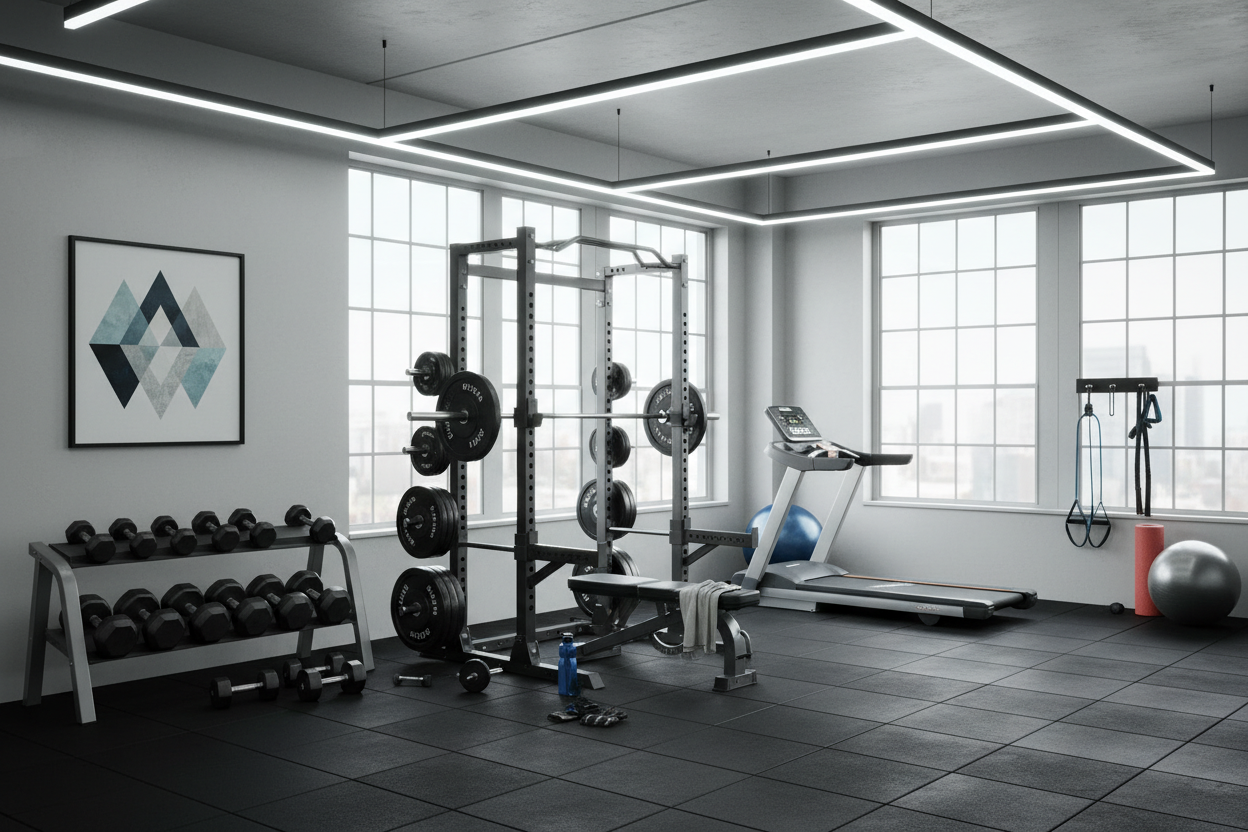
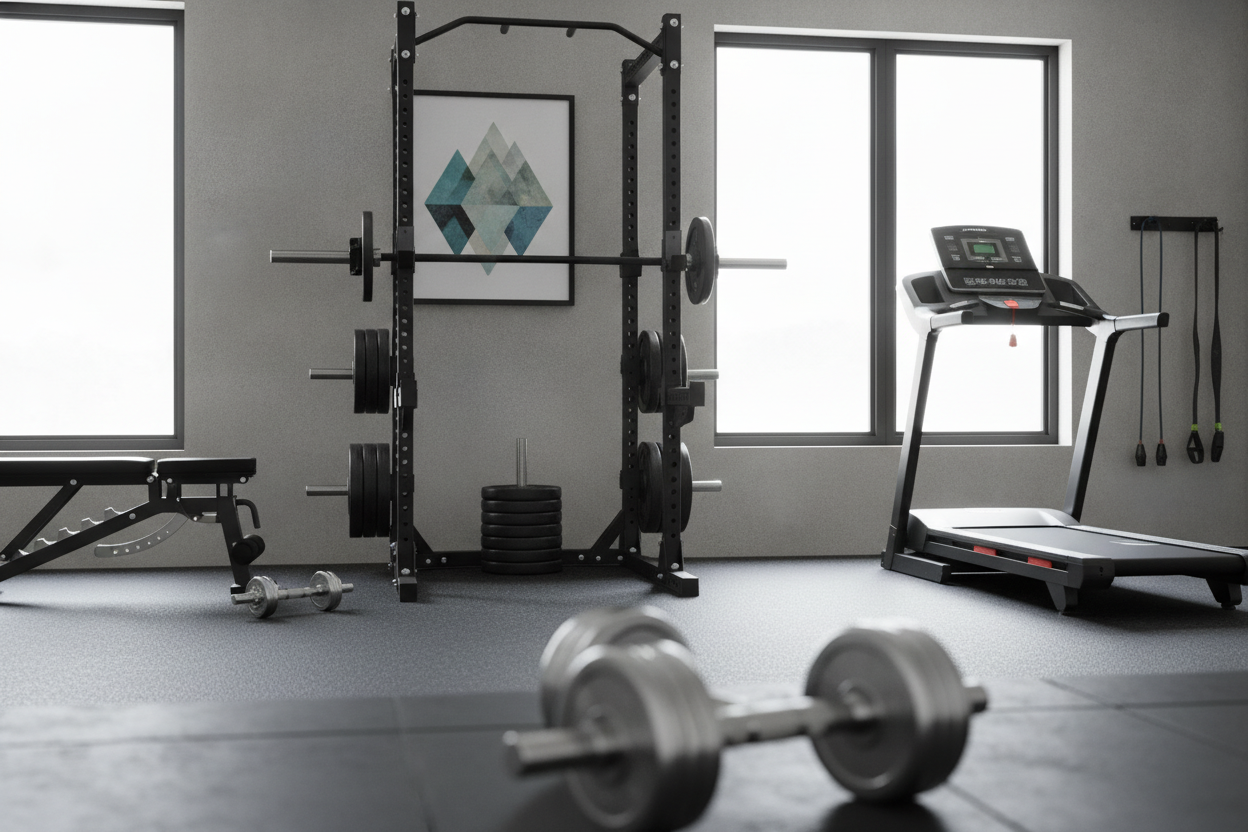
The biggest hurdle to any gym workout schedule for beginners is the commute. When it's raining or you've had a long day, that 20-minute drive feels like an hour. Building a small home setup is the ultimate 'hack' for consistency. You don't need a $5,000 power rack. You need a set of adjustable dumbbells and a large exercise mat for home gym use to define your territory. Having that dedicated 48-square-foot space means the gym is always open. No waiting for the guy on his phone to finish his sets on the only bench in the building.
How Long Should You Run This Plan?
Commit to this workout schedule for beginners in gym or at home for at least 12 weeks. Most people jump ship at week three because they don't see a six-pack yet. Strength is a skill, and like any skill, it takes time for your brain to learn how to fire those muscles efficiently. After 12 weeks, if you are consistently hitting all three days and your weights are going up, then—and only then—can you think about adding a fourth day or more advanced movements.
Personal Experience: My Ego Almost Ended My Training
Years ago, I thought I was 'built different.' I jumped into a high-volume powerlifting program as a novice. I was squatting heavy three times a week and pressing four times. Within six weeks, my knees felt like they had glass in them and I couldn't lift my arms above my head without wincing. I had to take two full months off just to heal. That's two months of zero progress because I was too stubborn to follow a sustainable schedule. Don't be that guy. Start with three days. Own those three days. The results will follow.
FAQ
Do I need to do cardio on my off days?
You can, but keep it low impact. A 30-minute walk or a light bike ride is great for blood flow and recovery. Just don't go out and run a half-marathon on your rest days; you'll interfere with the muscle-building process.
What if I miss a day?
Don't double up the next day. Just shift the schedule. If you miss Wednesday, do it Thursday and move your Friday workout to Saturday. The goal is three quality sessions per week, regardless of which specific days they fall on.
Can I do this with just bodyweight?
Initially, yes. But you will eventually need resistance to keep progressing. Even a single pair of 25-lb dumbbells will take you much further than air squats alone once your body adapts to your own weight.