The Only Exercise Plan to Gain Weight I Trust for a Home Gym
I remember staring at my reflection in a commercial gym locker room years ago, wondering why I was eating 3,500 calories a day but only gaining a soft gut and zero shoulder width. I was following a generic exercise plan to gain weight that I'd found in a glossy magazine, and it was mostly cable flyes and leg extensions. It was a waste of my time and a waste of my groceries.
Quick Takeaways
- Focus on big compound movements like squats, deadlifts, and presses.
- Train three days a week to allow for maximum recovery and growth.
- Prioritize progressive overload—add weight to the bar every single week.
- Invest in a sturdy power rack; safety is paramount when lifting heavy alone.
Why the 'Just Eat More' Advice Fails Home Gym Lifters
You hear it all the time in the forums: 'You're not growing because you aren't eating enough.' That's only half the story. If you eat like a horse but train like a bird, you'll just end up a fat bird. To force your body to build muscle, you need a heavy mechanical stimulus. Your body doesn't want to carry extra muscle; it's metabolically expensive and heavy. You have to give it a survival reason to adapt.
This means moving heavy iron that makes your central nervous system take notice. In a home gym, you don't have the luxury of twenty different machines to hit a muscle from every angle. You have to make the few movements you do count. If your gym program for gaining weight doesn't involve a barbell and a lot of sweat, you're just doing expensive cardio.
Ditch the Body Part Bro Split
Most guys starting a workout program for gaining weight try to copy the IFBB pros with a five-day 'bro split.' Monday is chest, Tuesday is back, and so on. If you're a hardgainer, hitting a muscle once a week isn't enough frequency. You need a full body workout for weight gain to keep protein synthesis spiked throughout the week.
By the time your next 'Chest Monday' rolls around in a standard split, your muscles have been sitting idle for four or five days. In a home gym setting, efficiency is king. We want to trigger growth as often as possible without burning out. A high-frequency weight gain training program focusing on the entire body is the fastest way to see the scale move in the right direction.
The 3-Day Exercise Plan to Gain Weight
This is the exact weight gain exercise schedule I used to finally break through my plateau. It's a minimalist A/B split, performed three days a week (Monday, Wednesday, Friday). You alternate between Workout A and Workout B.
Workout A: Squat (3x5), Bench Press (3x5), Barbell Row (3x5). Workout B: Squat (3x5), Overhead Press (3x5), Deadlift (1x5). That is it. It sounds simple because it is. If you are adding 5 lbs to the bar every session, this weight gain gym routine will yield more results in three months than three years of 'confusing the muscle.' This workout schedule for weight gain ensures you hit the big movers frequently and with enough intensity to actually grow.
The Bare Minimum Gear You Need to Progress
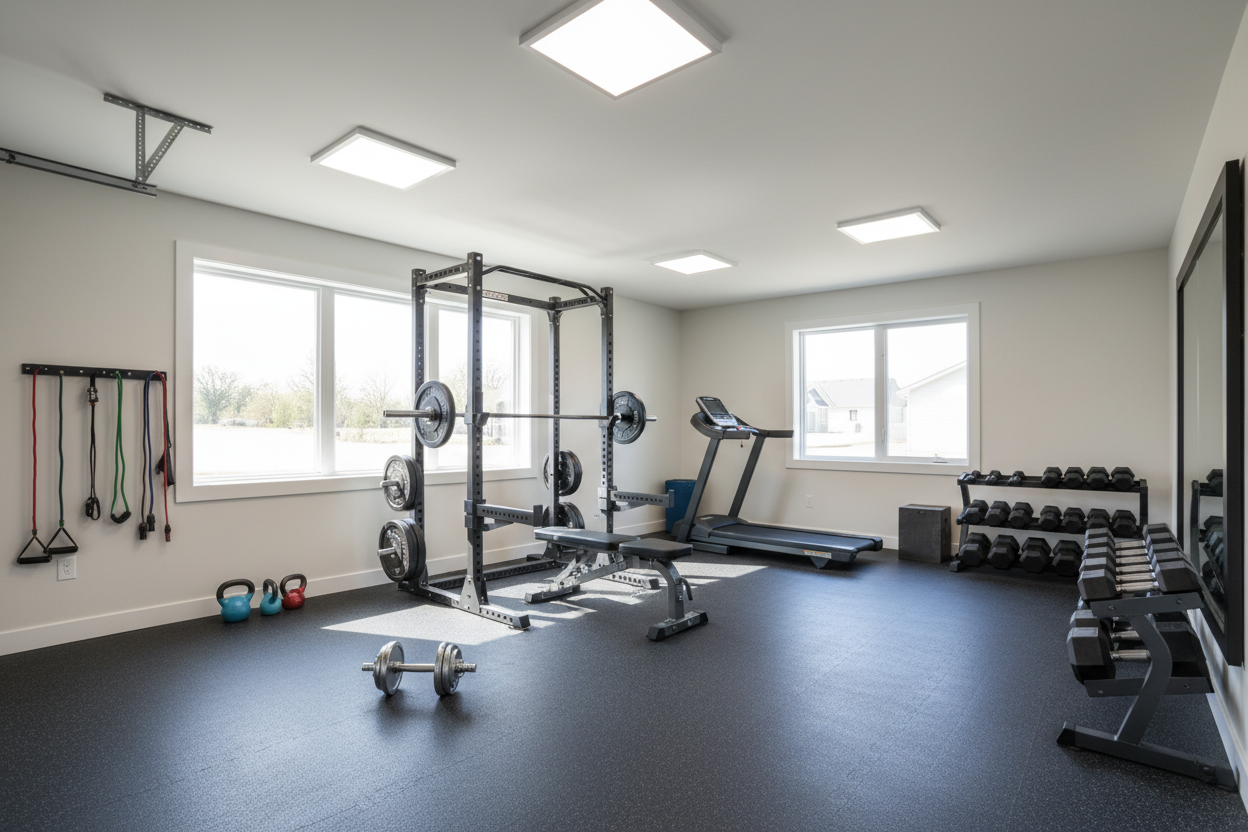
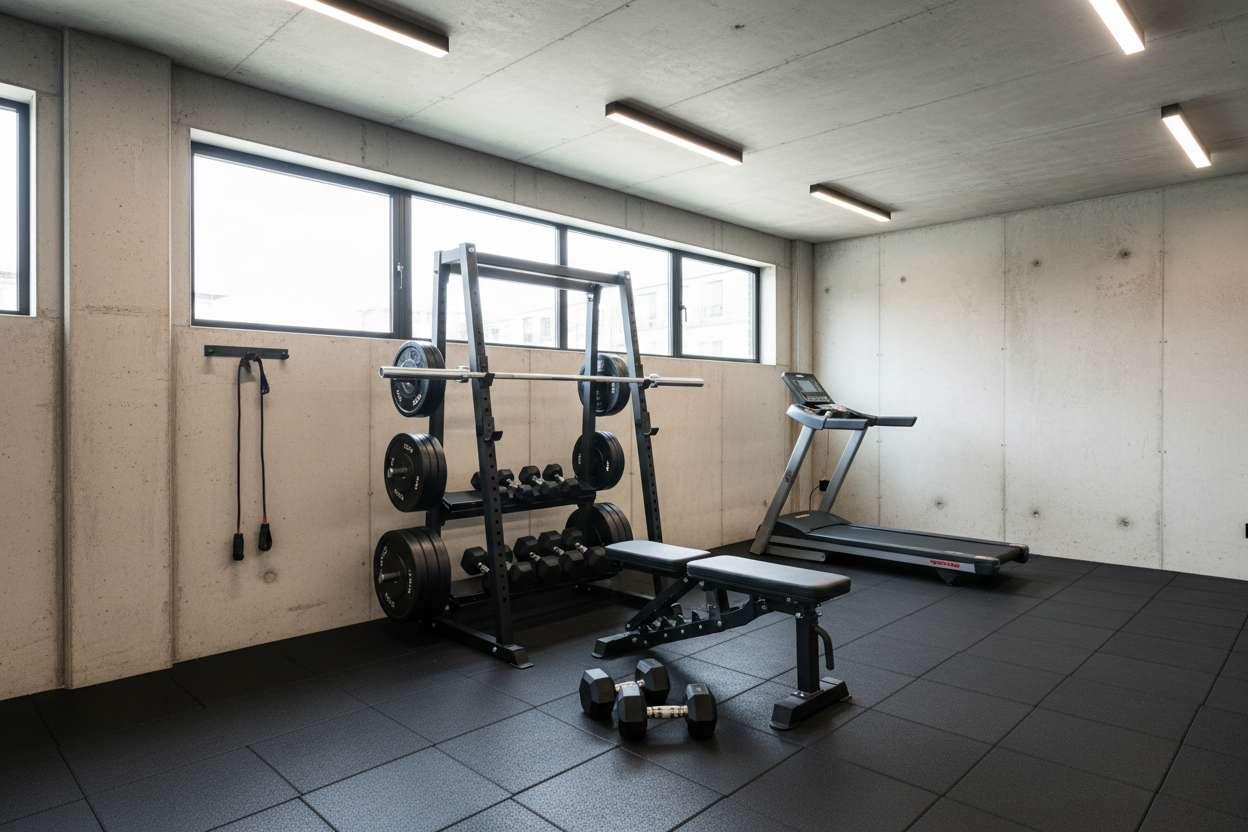
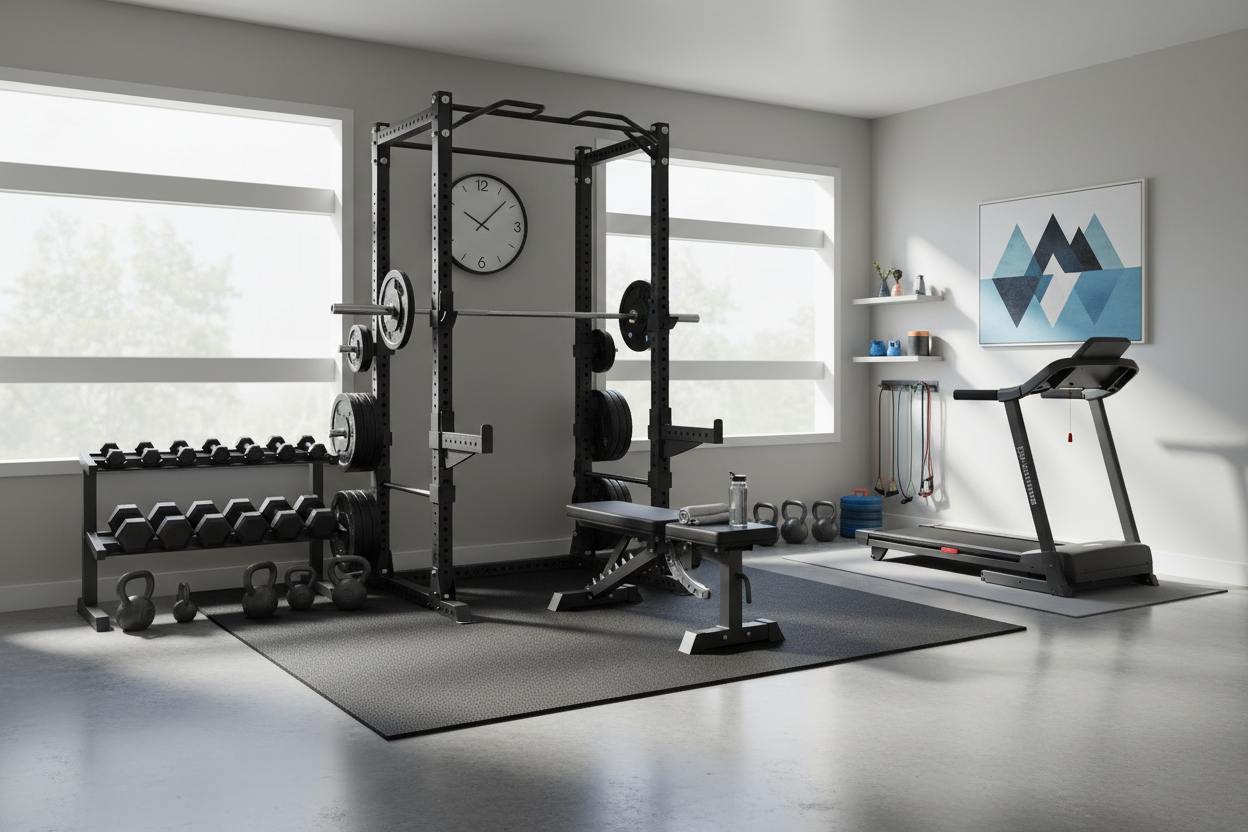
You don't need a 12-station cable machine that takes up half your garage. You need a cage and a slab of steel. I always recommend a power rack weight bench package because it gives you the safety of spotter arms. When you’re grinding out that last rep of a heavy squat alone, those metal arms are the only thing between you and a trip to the ER.
If you’re tight on space but want to hit different angles for your chest and shoulders, an adjustable weight bench is the smartest move you can make. It lets you swap from flat benching to incline work for your overhead press or seated curls without needing two separate pieces of furniture. Look for something with at least a 600-lb capacity; you'll be surprised how fast you hit that when you factor in your body weight plus the bar.
Micro-Loading: The Secret to Long-Term Mass
Eventually, you won't be able to add 5 lbs every single time you lift. That's where most people quit. They hit a wall and think their gym program for weight gain is broken. It’s not; you just need smaller jumps. Investing in a solid weight set and bench that includes fractional plates—those tiny 0.5 lb or 1.25 lb discs—is the secret to never-ending progress.
Adding just 2 lbs a week might seem slow, but that is 100 lbs a year on your squat. That is how you turn a fitness program to gain weight into actual, permanent mass. Don't let your ego stop you from using the small plates. The guy adding 1 lb a week is going to lap the guy who stays at the same weight for six months because he refuses to look 'weak' with small plates.
Personal Experience: The Hardgainer Trap
I spent two years doing 'junk volume.' I’d do 4 sets of 12 on six different machines and wonder why my bench was stuck at 135 lbs. I was exhausted but I wasn't getting stronger. Once I stripped it back to just three movements per session and focused entirely on the logbook, I put on 15 lbs of muscle in a single winter. My biggest mistake was thinking I needed more variety. I didn't need variety; I needed more weight on the bar and more rest between sets.
FAQ
How long should I rest between sets?
Forget the 60-second rule you read in fitness magazines. If you are lifting heavy, you need 3 to 5 minutes to let your ATP stores recover. You are building strength and mass, not training for a 5k.
Can I do cardio on this plan?
Keep it to a minimum. A 20-minute walk is fine for health, but if you're out there running five miles a day, you're burning the very calories your body needs to build muscle. Prioritize the lifting.
What if I miss a workout?
Don't double up the next day. Just pick up exactly where you left off. Consistency over months matters way more than one missed Monday.