The Only Cable Shoulder Exercise I Actually Bother Doing
I remember staring at my 15-lb dumbbells in my garage, wondering why my side delts looked like a flat piece of plywood despite doing hundreds of lateral raises every week. You know the drill—swinging the weights up, feeling a massive burn in your traps, but never actually seeing that capped look. It is a common trap. Most guys just heave the weight until they lose control, often dropping them hard enough to test the durability of their gym flooring for home workout rather than actually working the muscle.
After years of wasted effort, I realized the problem wasn't my work ethic. It was the resistance curve. If you want real growth, you need a cable shoulder exercise that doesn't let the muscle relax for even a millisecond. This is where the leaning cable lateral raise comes in.
Quick Takeaways
- Cables provide constant tension that dumbbells simply cannot match due to gravity.
- Leaning away from the machine increases the range of motion and the stretch on the medial delt.
- Setting the pulley at hip height maximizes the mechanical advantage for the shoulder.
- High reps (12-20) and slow eccentrics are the secret to building thickness without joint pain.
Why Your Dumbbell Raises Are Probably Failing You
Dumbbell lateral raises have a fundamental flaw: physics. At the bottom of the movement, when your arms are by your sides, the resistance is essentially zero. You are just holding a weight against gravity. This leads most people to use a 'hitch' or momentum to cheat the weight through the first 30 degrees of the movement.
By the time the delt is actually doing the work at the top, the momentum has already carried most of the load. I see people in commercial gyms all the time heaving 50-lb dumbbells with terrible form. They end up slamming them down, and if they don't have a solid gym flooring for home workout, they are going to leave a dent in the concrete. The side delt is a small muscle; it doesn't need ego-lifting; it needs time under tension.
The Magic of the Pulley: Unlocking Constant Tension
The beauty of a cable machine is that the resistance is determined by the direction of the cable, not just the pull of gravity. When you perform a lateral raise on a pulley, the weight stack is pulling against you from the very start of the rep. There is no 'dead zone' at the bottom.
While I love heavy barbell exercises for upper body development, they are often limited by your weakest link—usually your lower back or grip. Cables isolate the medial deltoid in a way a barbell never can. The uninterrupted tension creates more metabolic stress, which is the primary driver for those 'boulder shoulders' everyone claims to want.
How to Set Up the Leaning Single-Arm Cable Lateral Raise
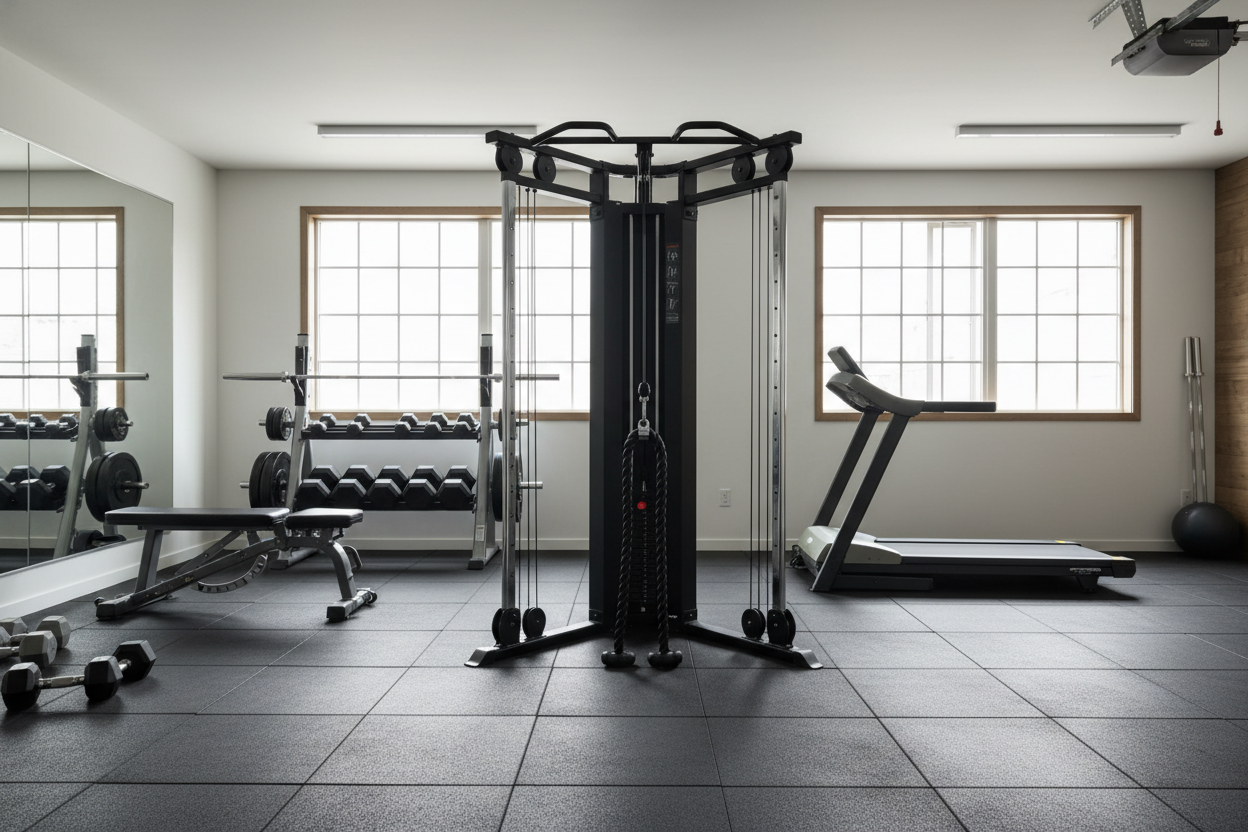
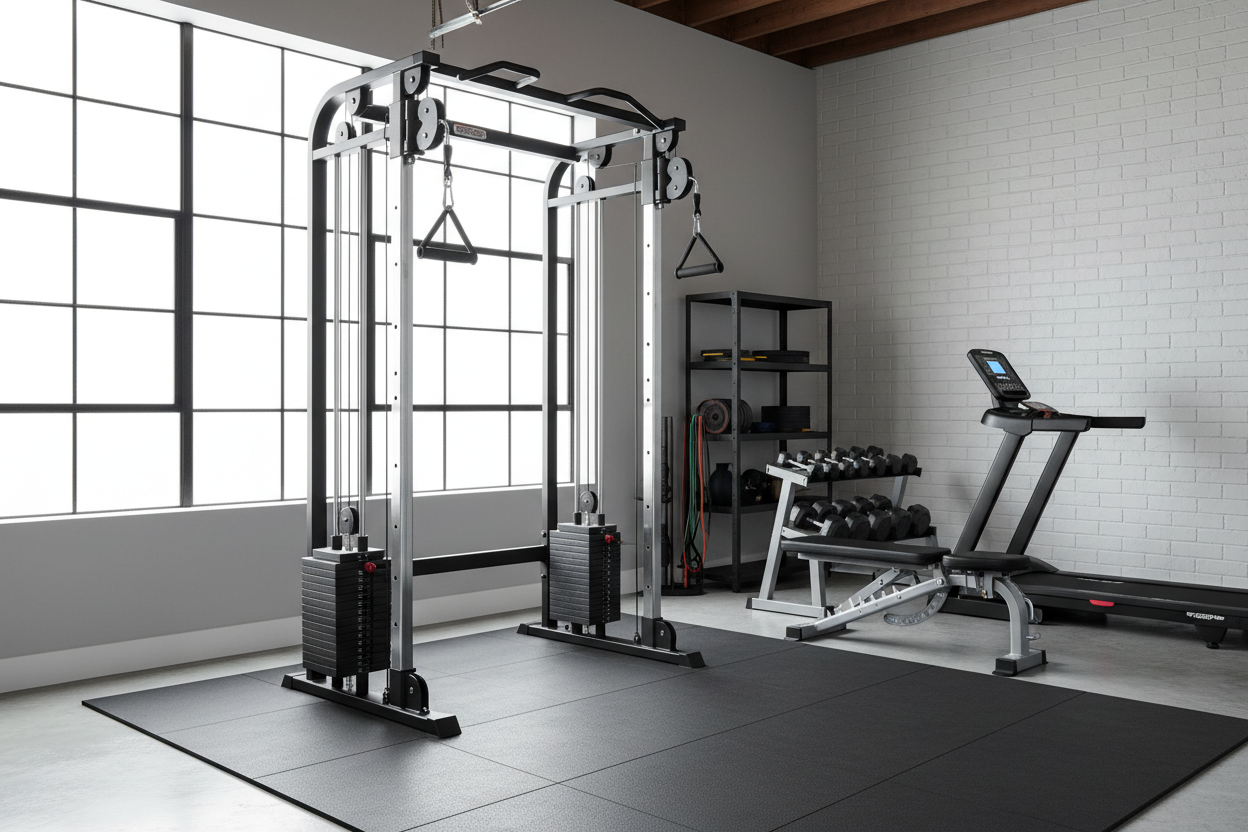
This is the gold standard of cable shoulder exercise variations. First, set the pulley to roughly hip height. Most people set it too low, which makes the beginning of the move too difficult. Attach a standard D-handle. Stand sideways to the machine and grab the handle with your outside arm.
Here is the secret: grab the upright of the cable tower with your inside hand and lean your body away at a 15-to-20-degree angle. This lean puts the side delt under a massive stretch at the bottom. Keep your feet tucked close to the base of the machine. As you raise the handle, think about pushing the weight 'out' toward the walls rather than 'up.' Stop when your arm is parallel to the floor, squeeze for a second, and take a full three seconds to lower the weight back down.
Three Common Mistakes Ruining Your Cable Delt Workout
The most frequent mistake I see is setting the pulley at the very bottom. This creates a harsh angle that puts unnecessary stress on the rotator cuff before the delt even wakes up. Keep it at hip level. Second, stop letting your traps do the work. If your shrug muscles are touching your ears, the weight is too heavy.
Finally, don't rush the eccentric. The 'negative' portion of the rep is where the most muscle damage and subsequent growth happen. If you are just letting the weight stack slam back down, you are cutting your results in half. Control the cable; don't let the cable control you.
Where to Fit This Into Your Current Routine
I don't recommend leading with this. Save your heavy presses for the start of your workout. This movement is the perfect finisher. If you are running a full body workout using cable machine, slot this in at the very end for 3 sets of 15 reps per arm. It will flush the muscle with blood and give you a pump that actually lasts.
For those looking to structure a more complex split, you can find more ideas in our workout hub. The key is consistency. You don't need ten different movements; you need one or two that you can progress on over time by adding five pounds or an extra two reps.
My Personal Experience
I spent years stuck on 40-lb dumbbell lateral raises. My shoulders were constantly cranky, and I had zero 'pop' in my shirts. I finally swallowed my ego, dropped the dumbbells, and moved to the cable tower. I started with just 15 lbs on the stack. Within six months of focusing on the leaning cable raise, my shoulders actually started to round out. The constant tension was the stimulus I had been missing for a decade. My only regret was not switching sooner.
FAQ
What height should the cable be for side raises?
Set the pulley at hip height. This ensures the resistance is pulling across your body at the start, providing the best mechanical tension on the side delt without overstressing the joint.
Is the cable lateral raise better than dumbbells?
For hypertrophy, yes. Cables provide constant tension throughout the entire range of motion, whereas dumbbells have a 'dead spot' at the bottom where the muscle isn't doing any work.
Can I do this with a resistance band?
You can, but it is not as effective. Bands get harder as they stretch, meaning the hardest part is at the top. Cables provide a more uniform resistance throughout the entire movement.